
Page 36
LIVE INDIANS.
Buffalo Bill and His Dusky Warriors--Their Appearance at Ford's To-night--Sketch of the Troupe, etc.
The Buffalo Bill dramatic combination will open for the week, to-night, at Ford's Grand Opera House. The combination under the management of Buffalo Bill, (Hon. W. F. Cody,) has been entirely reorganized for this season, and will give their first representation to-night. The company is composed of twenty persons, including Mr. Cody, Harry Mainhall, H. J. Holmes, J. Burton, Miss Lydia Denier, Mrs. G. W. Jones and others, all selected with special reference to their personal resemblance to the characters personated and adaptability to the parts to be taken by them.
The drama selected is "Mat Cody; or, Lost and Won," the same produced by Buffalo Bill last season, but greatly improved, embracing several new features. Attached to the company is a delegation of Indians from the plains, who give a special entertainment at the conclusion of the drama. These Indians are fine specimens of the race, and have come directly from the plains with Mr. Cody. Follow the Sun, Nez Perce chief, 35 years of age, is a tall, dark-looking savage. Eagle That Flies High is a friendly Pawnee chief, 45 years of age.
Little Warrior, a Pawnee brave, 25 years of age, is accompanied by his squaw, 26 years old. They have their own ponies, and will give an exhibition of war dances, Indian riding, shooting glass balls with the bow and arrow, and other sports. There are two interpreters with the Indians. Eddie Burgess, 18 years of age, is called the "Boy Chief," having been made a chief by the Pawnees when only 14 years of age. He was bown among the Indians on the plains, and is an adept in all of their sports and customs. Charles A. Burgess, called the "Napoleon Interpreter" on account of his resemblance to the French Emperor, has been among the Nez Percs for a number of years.
Mr Cody is a fine-looking man, and a fine specimen of the better class of frontiersmen. His father, Isaac Cody, settled in Kansas in 1853, and was one of the proprietors of the site of the city of Fort Leavenworth. His father took an active part in the Kansas border troubled, and was once wounded during the border wars incident to the sttlement of that State. He was a memeber of the Kansas Legislature. He died from exposure, having been forced by his enemies to flee from his hom.
Wm. F. Cody, who at this time was a mere boy, went into the employ of Russell, Majors & Waddell, the celebrated overland stage and transportation company, and made many trips across the plains. His widowed mother kept and inn at Salt Creek Valley, known as the "Valley Grove House," a famous resort for settlers and travelers on the plains. Mr. Cody served a short time in the Seventh Kansas Calvalry and obtained a thorough knowledge of the country. He is an expert with the rifle. For his expertiness in killing buffalo he was employed by Messrs. Shoemaker, Miller & Co., contractors of the Pacific railroad, and while in their employ he was given the name of "Buffalo Bill."
In 1868 he was appointed by General Sheridan as chief of scouts in the department of the Missouri and the Platte. He acted int hat capacity until 1872, having his headquarters at Fort McPherson, Nebraska. While stationed there he was elected to the Nebraska Legislature. During the visit of the Grand Duke Alexis to this country, to the West, Mr. Cody acted as a guide for his part on their extensive buffalo hunt, piloting them safely through a successful and esciting chase of several weeks. For this Cody was liberally rewarded.
Mr. Cody's last and crowning achievement on the plains was the killing of Yellow Hand , a Cheyenne chief, on the 17th of July, 1877. This painted warrior, at the head of 800 Indians was attempting to unite with Sitting Bull's forces after the death of General Custer. Cody was serving at the time with the Fifth United States Calvalry as a scout. He succeeded in cutting off the leader and his principal allies in their primary movement, putting to flight the remainder of the enemy, who were lost without their leaders. For this act Cody was liberally rewarded by the Government at Washington.
At the solicitation of his friends some years ago Cody was induced to give illustrations of frontier life on the stage, and has been very successful. He has been received by large and appreciative audiences here and elsewhere, and this season has been engaged by Mr. Ford for a ten-week's tour, beginning at the Grand Opera House to-night, and to include the southern circuit, embracing the principal cities of the South. Mr. Cody is one of the msot expert marksmen in America, and believes that he can rival Bogardus and Dr. Carver in glassball shooting, in which he has been successfully practicing lately.
Page 37
expression of his thanks and the entertainment closed with short and pertinent addresses from Capt. Crocker, of Battery B, and other military gentlemen.
"Buffalo Bill's Best Trail."
Blood and thunder plays are rather apt to be satisfacatory. In order to have them suffuciently [?sational], the are made so absurd that even youth fresh from a dime novel cannot easily [?ent] to the extrordinary performances of a hero in slaughtering villians. Buffalo Bill, wise in his stage ventures as upon the Plains, a new departure at the first and maintained it. His plays, while freely producing the ready revolver, are seldom seriously overdone. The plots, the expressions, the [?ss], the gambling scenes, are all natural. Bill, talks about the stage as if the events taking place are real occurrences; and, of course, is natural [?] easy. His company catch the spirit and [?rly] all are noticable for the natural way of which they act. The play presented at [?w's] Opera House, last evening, was a new one, [?ed] the Knight of the Plains. The audience was very large, the gallery being packed. Mr. Cody, Buffalo Bill, was of course, the central figure, although sharing his honors with his Indian chiefs, who are warranted genuine. There are [?wnees] and one a Nez Perce. Of other characters, Ralph Royston, Moses Molock and Judge [?ster] were esepecially satisfactory. The characters of Rose Melton and "Wild Neilie" were also [?d] taken. The scenery was good and events followed each other in succession rapid enough to [?sty] the most impatient. The entertainment be repeated this evening, and any one wishing [?ee] a bit of border life can do so as satisfactorly and much more pleasantly than by a trip to Cheyenne.
Providence Opera House.
Page 40
GENTLEMEN BRAVOS OF EARLY DAYS.
Some of the "Bad" Ones of our Day.
Las Vegas Optic. First we will speak of "Wild Bill" whose career is too well known to dwell upon. It is said that he had a notch cut on his pistol handle for each man he had killed, numbering twenty-six. He finally met a violent death at the gambling table at the hands of Jack McCall, who was hung at Yankton. Wild Bill's real name was Hickock: he was a native of Indiana, having been in the Western country at the time of his death over twenty-five years. We next speak of Buffalo Bill, of whom we know little except that he was a desperate man, but within the past few years, his adopted state, Kansas, becoming civilized, he has simmered down, and finally settled down in Nebraska, where he has once represented his district in the Legislature. His real name is Wm. F. Cody, and he chiefly won his fame through his exploits as a hunter. Both him and Wild Bill are well known by the old residents of Hays City, Kansas. Cherokee Bill is unknown as a killer and an outlaw, making his home most of the time in the Indian Territory. But little is known to the writer of the character of "Prairie Dog Dave," except for a long time that he was a "rounder-up" and a knave. Mysterious Dave is too well known in this community to dwell upon at length; we believe he too hails from Hays City, and we don't just know how many men he has killed. "Fat Jack" was not a bad man; always wore good clothes and belonged to the gang. Slap Jack Bill, Fly Spec Sam, and Bull Shank Jack all came to Las Vegas about the time the railroad got here, and were soon run in the quay on a charge of train and coach robbery. Cock Eyed Frank is not considered a bad man, though he drowned his man about two years ago at an eastern town called Dodge City, but the act was adjudged by the courts of that country to be justifiable. Corn Hole Johnny hails from Texas, and his special forte is three card monte. The homesteaders around Newton, Kan., will remember him in the years of 1871-72. Slim Jim was shot at Leadville about two years ago. Slit Nose Redd is at present in El Paso getting his work on tender feet. Six Shooter Bill, we understand, is doing good work in his line. One-armed Kelly, who was out lawed from the town of Leadville about six months ago, came to Las Vegas, shot the windows out of Burton's restaurant, and was run in for three months, went to Tombstone, where it was reported he was handed down as food for the worms of that consecrated spot. Alkali Charlie whilst at Canon City was regarded as an honest youth. He certainly was trying to make an honest living blacking hoots; but when he came down to Las Vegas he manifested a desire to be a shootist. He cut a hole in the leg of his boot, at the wee sma hors of morn, went out on the plaza and fired his pistol several times, literally perforating the front of "Toe Jam" saloon, and reported that some one had shot at him, showing up the wound in his boot. Judge Steele did not think he could get to the joint as a killer, and wisely ordered Alkali to leave town instantly. He has never been heard of since.
Dutchy, who killed Kellie after he was dead, slipped out of the country in company with "[word] Brown." Dutch Henry with far wider range than all the [word] extending from Fort Sedgwick at Taos, N. M., was a thief and a murderer, his operations extending east as far as Dodge and Hays City. He was a bold, fearless, bravado, treacherous and inhuman by instinct and, if we remember right, was [word] either at Otero or El Moro, about 3 years ago, and taken to Ar[word] where he was wanted. "Sh[word] Frank" is said to be at Lamy [word]tion making war on peaceful citizens. "Hurricane Bill" we believe has been regarded as a killer, we don't know whether he is al[word] at present or not. "Texas Franks[word] hardley worth the mentioning. He would like at one time to have acquired the reputation of a "bad man" but "Mysterious Dave" sat down upon him, and had no use for him, so he left Las Vegas over a year ago for parts unknown. It is believed by many of the fraternity that if he did not kill himself he ought to have done it long before this. "Monta Bob" died at Alamosa over a year ago. Curry, the murderer of Porter, is reported killed in a street brawl in Arizona. "Diaz" the "peeler" is in the Black Hills-- and "Billy the Kid" is-- at large.
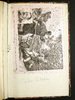
Page 41
BEN THOMPSON'S FINAL EXIT.
THE LAST ACT OF A FIERCE AND DESPERATE CAREER, AS PERFORMED IN A SAN ANTONIO, TEXAS, TEMPLE OF THE WILD AND UNTRAM-MELED DRAMA.
Garlow Colletion