
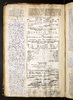
Page 26
New York Sun.
A Noteworthy Meeting. The Hon. W. F. Cody was introduced to the Chinese giant yesterday by the Original Lightning Calculator. Chang did not say that he had often heard of the statesman, and add that he was pleased to have made his acquaintancy; but when Mr. Cody announced himself to the giant as Buffalo Bill, Chang welcomed him warmly and told him that he had "pretty long hair." "And you," said the Hon. Mr. Cody, "are pretty long all over." The hero of frontier exploits then strolled over and shook hands witht he tattooed man, whom he complimented as being able to appear well dressed with less outlay than any man he had met outside of Omaha.
THE BUFFALO BILL BOWERY DRAMA. HOW VIRTUE TRIUMPHS AND VICE GETS BADLY LEFT EVERY TIME Log house. Sutler's store. Typical ftontiersman, all beard and boots, enters, drinks and talks about General Brown, U.S.A., whose daughter has been carried out by Indians. Sympathy and sentiment therefore mixed with Sutler's whiskey. Drinks and departs. Enter two United States soldiers. More whiskey and sentiment. Enter Buffalo Bill. More whiskey and sentiment. Enter one Dutchman and one donkey. More whiskey. Parting toast from Buffalo Bill. "May we all die like brave men." Exit. Enter villians. Two mormons plot against the heroine, General Brown's daughter. In custody of old Indian chief. Mormon plot completed. Bogus rescue from cief. General Brown's daughter and Indian chief discovered. Wigwam on the prairie. Blank verse and much Great Spirit talk from chief. General Brown's daughter retires to wigwam. Chief blank verses alone. Goes to sleep on a rock. Enter "Morom Danites." Capture of cheif and General Brown's daughter. Enter Buffalo Bill on horseback. Just in tune. Rescue. Mormon plotters disappear. "How shall I ever thank you?" By General Brown's daughter. Buffalo Bill and chief talk while Mormon plotters shoot chief from ambush. Chief concludes to die Buffalo Bill means to avenge his death. Act II.-- Frontiersman's cabin. Dutchman up a tree and Irish servant girl. Courtship. Enter General Brown's rescued daughter in pink. Irish maiden accuses her of being in love with B. Bill. "O my! Now you just stop." Enter B. Bill and wild Irishman with dead deer. B. Bill hunts in elegant Mexican costume. Long love scene. B. Bill and General Brown's daughter. Shows her some fancy shooting. Repeating rifle. Shoots at oyster shells. Prairie oyster beds. Shoots with one hand. Shoots over his shoulder. Shoots back to mark, aiming by a mirror. Shoots from between his legs. At this General Brown's daughter surrenders and will become Mrs. Buffalo Bill. All exit. Enter three Mormon plotters. One drunkard. Drinks every two minutes. Drunkard to be submitted to General Brown's daugter as bogus General Brown, her father. Rehearses paternal speech. General Brown's daughter called out. Presented to bogus father. Doubts him. Father insists on her leaving. Refuses. Attempts to carry her off. Again Buffalo Bill, with pistols, in the nick of time. Rescue. Act III.-- Girl somehow abuducted, after all by Mormon Danites. "Beating her life away against prison bars." Bogus drunken General Brown evercome by sympathy and remorse for her, but in power of Mormon plotters, who keep him in whiskey. Mormon wishes to make General Brown's daughter his sixth wife. Bogus father's business at argue her to said marraige. Gets sick of the job. Determines to help her. Goes for B. Bill Mormon enters General Brown's daughter's room. "I love you!" General Brown's daughter goes for carving knife. Stand back, villian. Villian stands back. General Brown's daughter goes to room. Re-enter B. Bill, disguised as bogus drunked father. Falls drunk on the floor. Mormons plot again. Will set house on fire and carry off General Brown's daughter by hght of flames. Visit of Irish servant girl to General Brown's daughter for no particular purpose. All arranged. House fired B. Bill tears off gray beard of bogus drunen General Brown and rescues General Brown's daughter once more. House afire and lots of Mormon [word]diers. B. Bill dares them all. Act closes with sentiment from B. Bill: "To God, to Liberty, to Uncle Sam!" Act IV.-- Scene-- General Brown's parlor. Real General Brown. Chronic grief for loss of daughter. Like Count Arnheim (Italicized) in "Bohemian Girl." Heart permanently bowed down. Enter B. Bill. Good news! General Brown-- "What is it? Tell me quick! Is it my daughter? Daughter found. Ha! Ha! Ha!" Real General Brown hystericky. Falls into B. Bill's arms. But all not serene. Daughter not out of woods yet. "What, Indians?" "No; worse. Mormons got her." More misery. B. Bill in trouble also. Has courted General Brown's daughter and engaged her before knowing she was General Brown's daughter. Tells General Brown he expects he must lose her. "Why?" "Son-in-law, you know. Can't expect it. Difference in station." General Brown calls Bill a fool. Also, "the noblest type of manhood he could find for son-in-law." B. Bill believes him. But there are conditions. Daughter must be rescued from "Mormon Danites" in three days. B. Bill takes contract. Indian camp discovered. Mormons. Red Indians. Stage Indians. Great chief talking blank verse. General Brown's daughter on hand. Real Indian war dance. Cheyennes. B. Bill in disguise enters camp. Comes to tell the chief he must give up General Brown's daughter or rivers of blood will flow. Chief refuses. B. Bill whistles and undisguises himself. United States [word] all about. Band strikes up "Star Spangled
Banner." United States army march into Mormon camp. General Brown's daughter safe. B. Bill's contract fulfilled with the fourth rescue. Curtain.
To-morrow evening, the Hon. W. F. Cody, better known as "Buffalo Bill," will open in a new drama written for him by Mr. John A. Stevens, entitled "The Prairie Waif." He will be supported by his town company and a genuine band of Cheyenne Indians. Mr. Cody will also give an exhibition of fancy shooting, in fact serveral specialities will be introduced. Monday evening, Jan. 31, the Harrisons will appear in "Photos." Afternoon performances on Wednesday and Saturday.
Windsor Theater-- "Buffalo Bill." Mr. William F. Cody, otherwise "Buffalo Bill," appeared last night at the Windsor in John A. Stevens.' "Prairie Waif," the best play in his repertoire by all ods. The star, the Cheyenne Indians, the rifle shooting and the company, which includes a clever woman, Miss Connie Thompson, were all received with great favor by a very large audience.
BROOKLYN DAILY STAGE. NOVELT THEATRE. FIFTH AND SOUTH FOURTH STREETS, BROOKLYN, E. D. THEALL & WILLIAMS ...................................................................Managers JOSEPH B. AYERS......................................Scenic Artist and Stage Director
PROGRAMME FOR WEEK, COMMECNING JANUARY 24, 1881. EVERY EVENING AT 8 Wednesday and Saturday Matinees at 2 The Renowned Government Scout and Guide, BUFFALO BILL, (Hon. WILLIAM F. CODY,) And his SUPERB NEW COMBINATION of TWENTY-FOUR FIRST CLASS DRAMATIC ARTISTS, Engaged expressly for Buffalo Bill's New and Powerful Border Drama, which will be produced for the first time in this city, taken from scenes in Buffalo Bill's past life, and written expressly for his by JOHN A. STEVENS, author of "UNKOWN," entitled THE PRAIRIE WAIF STORY OF THE FAR WEST. NOTE CAREFULLY THE STRONG CAST: BUFFALO BILL.........................................................................Hon. W. F. CODY Mark Stanley.....................................................................................R. C. White Jim Hardie.............Danites.............................................................Harry Clifton Jack Hardie............ Danites............................................................Geo. T. James Hans.........................................................................................Bonnie Runnels Captain Russell.......................................................................C. Wilson Charles General Brown............................................................................Ralph Delmore E. Overton, a sutler...........................................................................Robert Neil Lone Deer...................................................................................William Wright Major Saunders...............................................................................Harry Irving Yellow Hand, Cheyenne Chief.........................................................Chas. Vedder Lieutenant White..................................................................................E. Booth Jack Cass...................................................................................................Jerry ONITA...........................................................................Miss LIZZIE FLETCHER SADIE........................................................................Miss CONNIE THOMPSON
Danites, Indians, Soldiers, etc.
SYNOPSIS. ACT I-- Prairie Waif (Lapse of One Year between First and Second Acts.) ACT II.-- Home of Buffalo Bill. ACT III.-- The Attack and Defiance. ACT IV.-- The Rescue.
In ACT IV, a Genuine Band of Cheyenne Indian Chiefs will appear in the Scalp and War Dances, assisted by C. A. BURGESS, Indian Interpreter.
MR. CODY ("Buffalo Bill") will give an exhibition of Fancy Rifle Shooting, in which he is acknowledged pre-eminent and alone.
During the Evening the following selections will be performed by the Orchestra, under the direction of Mr. HARRY WALKER: OVERTURE-- "Romantique"............................................................KELEE BELA WALTE--"Hydropaten".............................................................................GUNGL OVERTURE--"Guy Mannering".................................................................BISHOP GALOP.....................................................................................................FAUST
The Furniture used at this Theatre is from HOWE'S Extensive Warehouse, 148 Fourth Street.
THE CELEBRATED WERBER PIANO USED IN THIS THEATRE. The Celebrated MASON & HAMLIN ORGAN used in this Theatre.
FAMILY MATINEES EVERY WEDNESDAY AND SATURDAY AT 2 NO HALF PRICE. CHILDREN IN ARMS NOT ADMITTED. SECURE YOUR SEATS.--Box Office open for the Sale of Reserved Seats from 8 A.M. to 7 P. M. and from 8:30 to 10 in the Evening.
SCRANTON gave Buffalo Bill an 8830 house. Wilkesbarre 8880, and Danville came to the front Saturday night with 8337. Those intending to go to the Academy to-night should secure their seats at once, as there will be a jam.
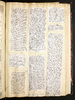
Page 27
Novelty Theatre. "The Prairie Waif" in which Buffalo Bill, the well known government scout and guide, is now performing at the Novelty Theatre, is by long odds the best play of the class known as border drama. While there is sufficient introduction of the pistol, the rifle and the bowie knife to satisfy the most exacting lovers of stage slaughter, there is less of it that is customary in those drama, and when some one is shot to the death, or wounded, there always seems to be some reason for it. There is a plot to the play which runs through every act and scene, something never before heard of in any Indian drama. The parquet of the Novelty was well filled last night and the best compliment that can be paid to piece and performance was that every intelligent people sat the play out with evident interest and enjoyment. Buffalo Bill, of course, plays the leading role. He is the same picturesque hero as of old; the protector of right and innocence, the overthrower of villanous plots and strategies, the rescuer of virtue, and finally the signally rewarded friend of the government. The gentleman plays with more force than heretofore and is greatly improved in his elecution. The best of him however, is his magnificent physique, his piercing, clear eye, and his expansive chest. The second of these tood him in good stead in some exhibitions of fancy rifle shooting, which were really marvelous. He has not dropped into the clap-trap custom of shooting at objects in the hands or on the heads of human beings. One thing about the gentleman's make-up deserves correction: while wearing a costume chiefly Indian, and after being exposed to the elements in a long hunt, the pantaloons of a Mexican bidalgo are not exactly the right thing to grace his stalwart left. The most meritorious of the company that supports Hon. William F. Cody is is Bonnie Runnells, who makes Hans a feature of the piece. His rich German accent, his funny positions, his broad humor, all help to make his performance extremely amusing. Mr. R. C. White amply fills the role of Mark Stanley; Harry Clifton and George T. James make a sufficiently interesting pair of Danites: C. Wilson Charles rollicks through the part of Captain Russell, with a rich Irish accent, and Robert Neil is a dignified General Brown. The drama only provides parts for two ladies--Miss Lizzie Fletcher and Miss Connie Thompson. The former is a graceful, pretty, petite blonde with a peculiarly sumpathetic voice and excellent ideas of acting. She is worthy of a place in more elevated drama. Miss Thompson is a good soubrette, and her business with Hans is very amusing, without being coarse. A live donkey and three genuine Cheyenne Chiefs add to the attractions of the performance. Next week, the Harrisons, in their eccentric musical comedy, "Photos."
NOVELTY THEATRE, WILLIAMSBURG--"PRAIRIE WAIF." There were wild scenes and incidents, portrayal of life on the plains, enacted on the boards of Messrs. Theal & Williams' cosey Novelty Theatre, Williamsburg, last evening. The patrons of the only legitimate place or amusement in the Eastern District of the City of [Churches?] devoted to the drama were treated to a representaton of John A. Stevens' "Prairie Waif," the central figure of the play being the redoubtable government guide and scout, "Buffalo Bill" (William Cody). The boys were fairly wild with delight upon beholding the hero of so many dime novel stories in the flesh, and flanked by a genuine troupe of Cheyenne Indian Chiefs. The tomahawk and the war whoop will captivate the worthy 'Burgers under the wooing influence of the "Prairie Waif" throughout the present week.
NOVELTY THEATRE WILLIAMSBURGH.--This cosy home theatre, which has produced so many popular successes during the present season, and which is always well filled by [the?] elite of Brooklyn Society, will present for the consideration of their patrons on Monday Jan. 24th, and during the week, Hon. Wm. H. Cody, as "Buffalo Bill," which has always met with the greatest success wherever it has been produced, it is one of those few plays which never fails to instruct and amuse, and we have but little doubt but what it will draw good houses, and make glad the hearts of those enterprising managers Messrs. Theall & Williams, who are ever endeavoring to produce what is best calculated to be appreciated by their patrons. The usual matinees will be given on Wednesday and Saturday.
Haverly's Theatre. Buffalo Bill (William F.Cody) and his dramatic company and a troupe of Indians appeared in the drama of border life, entitled " The Prairie Waif," at Haverly's Theatre last evening, before a fair downstairs audience and a crowded gallery. As a play there there is not much in "The Prairie Waif." It is supposed to be founded on incidents in the life of Mr. Cody, when living the life of a hunter and acting as government scout and guide in the Far West. In the first act Buffalo Bill rescues from the Indians a young girl called Onita, who, it subsequently transpires, is a daughter of a General Brown, and who had been stolen when a child. In the second act Buffalo Bill, not yet knowing who Onita really is, falls in love with her, and tells her so in an awkward fashion. She reciprocates, and they would have been married at once had not some Danties just then carried off Onita. The third act is devoted to the efforts of Buffalo Bill to rescue Onita from the Danites, but he fails for the time being. In the fourth and last act Buffalo Bill tells General Brown that he had found his long lost daughter and that he loves her, but that both the Danites and the Indians have possession of her. Bill, of course, goes to her rescue, with U.S. troops, and succeeds in his self-appointed task. The curtain falls on happy Buffalo Bill, happy Onita and happy General Brown, surrounded by a half score of dead and wounded Indians, over whom U. S. Troops flourish swords and bayonets and wave the Stars and Stripes. Inciedental to the play are the usual Dutch and Irish witticisms by the low comedian element, several songs, some fine rifle shooting by Buffalo Bill and a war dance by real Indians. There are also several very funny scenes, and the audience have ample provocation for laughter. The play appeals strongly to the gallery element, by whom it will doubtless be largely patronized. The acting, what there is of it, is fair, but Buffalo Bill took to the page too late in life to ever be good and as he is a handsome specimen of perfec manhood physically. Next week the latest success of the Union Square Theatre, "Daniel Rochert," will be produced with a strong cast.
Harverly's Brooklyn Theatre. Last week, the patrons of the Harverly's Theatre were treated to an excellent performance of a well written drama, descriptive of scenes and incidents peculiar to border life in the Far West. Last night the curtain rose on a representation of another phase of the history of the progress of civilization toward the extreme western section of the country; but this time the dramatic story was presented in a very different form, being told in mediocre language, while its characters were performed by a company no better than the play they appear in. The "Prarie Waif" is a drama written expressly for the Western hero, W.F. Cody; it is simply a gallery play, and of an inferior order at that; and the "boys" who worship at the shrine of "Buffalo Bill" seemed to realize the fact intuitively, for they crowded the gallery to excess. But this was done at the cost of a meagre attendance in the parquet and dress circle, the lower part of the house not being half full. The play runs through four acts, during which three actractive set scenes are presented-- that in the second act being act being a very pretty picture. There are two redeeming features in the performance of the tragic comedy, and these are the presence of the Indian guide and army scout, Buffalo Bill whose manly and handsome physique is seen to advantage, and the appearance of the Cheyenne Indians--there are two of them and an interpreter. The former imparts interest to one act of the play by the exhibition of the Buffalo Bill's skill with the rifle, and the war dance of the Indians in the last act are attractive novelties. Beyond this the play drags wearily, except to the gallery audience, who are gratified with the rather common variety business introduced, and with the stereotyped blood and thunder business which characterizes portions of the drama. The actors played only to the crowded part of the house, and one of them pitched his voice as if he desired to be heard in the street. Such a play and such a performance following in the wake of the "Danites" and other attractice dramas which have been presented at this theatre this season so far, naturally cause a reaction which must necessarily tell badly upon the receipts at the box office. Variety in the make up of a theatrical season's programme is an essential requisite; but due regard should always be had to the nature of the representation so as to keep up the high standard of general excellence aimed at.
BUFFALO BILL says Brooklyn is the City of Ash Barrels.
Haverly's Theatre. The howling storm last evening did not prevent the attendance of a large gallery audience at Haverly's Theatre, but the down stairs seats were not well patronized. Buffalo Bill's trained donkey added to the amusement of the evening by an exhibition of its tricks. As the Indian who carries Connie Thompson off the stage seems to have more than he can do comfortably, and makes Connie laugh in her sleep, Buffalo Bill might transfer the job to the donkey, who is evidently stronger than the Indian. Something far better than "The Prairie Waif" may be expected next week, when "Daniel Rochat," the Union Square Theatre success, will be produced with a strong cast of characters and the original scenery and effects.
Haverly's Brooklyn Theaatre. One recommendation to favor that can be predicted of the fine handsome scout now playing himself at Haverly's Theater lies in the fact that his skillw ith the rifly is exhibited without placing anybody in jeopardy. He proves not only that he is a dead shot, but also that he has good sense.
BUFFALO BILL.-- A new play written expressly for Mr. W. F. Cody (Buffalo Bill) 'is to be played at the Olympic Theatre. "The title of the drama is the prairie Waif, a Story of the Far West," and isfrom the pen of Mr. John A. Stevens. The following is the story of the drama. The curtain riseson the twenty-fifth anniversary of Gen. Brown's wedding day, who, some ten years previous, had lost his daughter named Bertha, some five years old, who, while walking with her nurse one day, was stolen by concealted men, and the nurse killed. The disappearance of the child was to the father a dark mystery. An adventurer named Hardi, a territorial offical under Mormon sway, had, by a dying confession, obtained the secret to the girl's history, and tracks her to her concealment. He determined to gain possession of her person, marry her, and thereby gain position and wealth; to accomplish which, by threats and bribes he acquires the agency of a worthless drunken renegade. He finds the girl under protection of an aged Indian chief called Lone Deer, who is on his way with the waif to the fort, to seek the protection of the commandant. On their way they are intercepted by Hardi and his satillites. who are about to seize the girl and carry her off, when Buffalo Bill suddenly appears, a fight ensues, and in the struggle Lone Deer is mortally wounded. The ruffians being discomfited run away and leave Buffalo Bill and the little waif who sadly bemoans the death of her faithful Indian. Bill, being touched by her loneliness and grief, offers her his protection, and bringsher to his homestead and places her in the charge of his mother, who faithfully and affectionately watches over her while she lives. But at the length the old lady dies, and the little waif having developed into a beautiful girl, is sincerly beloved by Bill. She reciprocates his affection and they become man and wife. The villainous Hardi, relentless in his hatred, with his Mormon Danites set fire to the homestead and burn [word] to the ground. Bill fights his way out and with his wife and a couple of companions make a forced march across the plains. At length, after many vicissitudes the waif is restored to happiness, and a doting father regains his lost child. Mr. Cody will sustain the character of Buffalo Bill, and the other characters in the drama will be sustained by an efficient company.
BUFFALO BILL is a genuine, and the following scrap of his history will show what kind of chap he is: In August, 1868, he rode in 12 hours from Fort Larned to Fort Zarah and back, 65 miles; in the succeeding 12 hours he carried dispatches to Gen. Sheridan from Fort Larned to Fort Hayes, 65 miles. From Fort Hayes he rode in the next 24 hours to Fort Dodge,95 miles; on the next night he went to Fort Larned, 35 miles on foot and 30 miles on a mule; and, again, the next night from Fort Larned to Fort Hayes, 65 miles. He made on horses, mules, and afoot 355 miles, andhe was in the saddle or afoot 58 hours. These successive rides were made through a rough, irregular country swarming with hostile Indians, where there were no roads and hardly a perceptible trail, which had to be followed in the obscurity of the night.
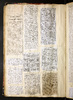
Page 28
HE TOOK THEM IN.
THE INDIAN SCOUT DIDN'T KNOW THE GAME
A Biter Bitten at His Own Game--The Wife Appears and Begs the Return of Winnings from Her Lord.
STEUBENVILLE, Ohio, April 6.--It seems from recent developments that Buffalo Bill is not only in the show business, but occasionally stops long enough in a town to give "the boys" a few lessons in cards. A few nights ago he gave an entertainment in this city to a crowded house, and after the show repaired to his hotel, where he was met by several of Steubenville's "sly old chaps," some of whom wear long faces and pay pew-rent in some of the fine churches. One of the party, who takes more interest in fast horses than he does in church creeds, accosted Mr. Cody and invited him to take a hand at poker, a game dear to the loyal few. Mr. Cody informed the gentleman that he was not familiar with the game, when it was suggested that THE WHEEL OF FORTUNE be introduced, to which he consesnted, at the same time expressing himself in language that conveyed the idea that his knowledge of such a device was rather limited. To epitomize the story, Buffalo Bill suceeded in winning from the man all his money, which is said to have amounted to several hundred, and finaly won the machine, which he forwarded to a friend of his in the far West. The man and his friends, feeling quite crestfallen at their bad luck, retired. The next morning Mr. Cody was called upon by the man's wife, who earnestly begged of him to return the money he had won from her husband. He smiled at the good lady's request and handed her $100, at the same time advising her to tighten the apron strings on her lord. It is probable that when Buffalo Bill visits Stenbenville again the "bald heads of poker corner" will give him a wide berth.
A. W. Gates and Frank Morley, both of Andover, were in the city last evening and paid their respects to the NEWS office. Mr. Gates is a personal friend of W. F. Cody, and with Mr. Morley, attended the presentation of the "Prairie Waif," at the Opera House last evening.
--Buffalo Bill played to an immense house in the Academy of Music last evening, and as usual with the class of audiences he attracts, created the utmost enthusiasm. "The Prairie Waif" is really one of the best of his sort of plays, but combines enough of the sensational and impossible to stir up the gallery gods to ecstasies of delight. In the last scene Buffalo Bill throws off his disguise as an old man, peppers seven savages, gives the signal for the troops to arrive, knifes the heavy villain, clasps his best girl to his ample breast, and the curtain descends amid a blinding blaze of red-fire. Tumultuous applause!
--Now that Buffalo Bill has got far enough away to be safe from violence at our hands, we might majestically suggest that the cheap and thrilling drama, and Comanche war dance and chilling whoop which is being whooped up for the edification of various juveniles, seems to lack something in thickness.
BUFFALO BILL. (From the New York Sunday Courier, Aug. 22, 1880.) An immense audience, numbering over 3,800, filled this house last Monday evening to witness the first representation of John A. Stevens' new play, "The Prairie Waif," with Buffalo Bill in the chief role. We will venture to say that he has never appeared before a more enthusiastic or demonstrative audience. The "Prairie Waif" is a four-act border drama of the most thrilling description, and treats of the adventures of the heroine, Onita, the daughter of General Brown, who is lost in childhood and adopted and finally married by Buffalo Bill. It is an exceedingly strong play of its kind; in fact, it is the best one Mr. Cody has ever played in. Every act closes with a hair-lifting situation, to the great delight of the audience. Of Mr. Cody's acting we can only say that the part was written expressly for him and fits him like a glove. In his romantic apparel and broad slouched hat he was all that a critical audience could desire. It is impossible to decribe the thrill of excitement which ran through the house and culminated in a burst of applause which fairly shook the building, when a great scout who in the guise of a drunken old man had overheard the plotting of the conspirators, suddenly stripped off his disguise and appeared before them with drawn weapons. The company supporting Mr. Cody is an excellent one. Miss Lizzie Fletcher, who made her New York debut in the role of Onita, is a very pretty and graceful actress. She gave an intelligent and chraming portrayal of her part, which was received by general favor by her auditors. Miss Connie Thompson, who will be remembered as having taken the emotional "cake" in "Suspected," also deserves credit for her excellent acting in the soubrette role of Sadie. As Mark Stanley Mr. R. C. White showed decided ability, and played the part of a weak, drunken old man with real feeling and power, Ralph Delmore as General Brown created a favorable impression by the intelligent rendering of his role.
Buffalo Bill. Buffalo Bill had a full house last night. Indeed, it was a question which was the fuller, the Leland, with the queenly Mary Anderson, or Martin Hall, with the renowned Western scout, his band of Indian chiefs and the accompanying "blood and thunder." Thus do tastes and temperaments differ; for, with radically different entertainments, both audiences were evidently quite satisfied. "The Prairie Waif" was written by Mr. John A. Stevens, the author of "Unknown," and is a fair representative of its class, affording the Western hero of the plains and his company ample opportunities for the display of their peculiar powers. The readers of yellow covered literature, and the New York weekly papers, were liberally represented in the gallery, which was crowded to suffocation, and applause was almost incessant. Score another for Manager Oliver, whose shiboleth "Nothing succeeds like success," received another exemplification last night.
Buffalo Bill.
If any proof was required of Buffalo Bill's popularity, the vast audience at Wieting Opera House, supplied it. The Opera House was packed to suffocation, fully seven hundred boys and men paying for admission to the gallery alone. The play was the "Prairie Waif," written by John A. Stevens, especially for Buffalo Bill. It has less of the sensational than plays in which he has previously apppeared, and is quite an interesting drama. The third and fourth acts are particularly interesting, and Buffalo Bill makes the most of the exciting scenes. There is no blood-curdling-wholesale slaughter in the play, although Buffalo Bill gives some splendid exhibitions of target shooting. The vast audience was wild with delight when Bill was on the stage and manifested their delight with the most vigorous applause which broke out at times into yells of approval. Buffalo Bill's company is the best he has ever had and contributes very materially to the success of the performance. Mr. Cody is always sure of a crowded house in Syracuse.
Buffalo Bill's opening performance at the Academy was marked by an overflowing audience and an enthusiasm that carried everything before it. Not only the galleries but the lower portion of the theater was packed with curious people not one of whom could be persuaded to leave the building before the curtain descended on the last act. The weather was extremely unfavorable, a heavy snow storm prevailing all the evening, and it was a matter of much surprise that even Buffalo Bill succeeded in drawing such an immense crowd together. The presence of such an audience, in which a fair sprinkling of ladies was observed, was really a compliment to the well known star. "Prairie Waif," the new play written for Mr. Cody by John L. Stevens, is the best drama of its kind the noted scout ever appeared in. He has better opportunities and grasps them so readily that the performance is made attractive from the very beginning. Undoubtedly it is the best play of its kind in existence. Aside from Mr. Cody, who is successful in his own character of "Buffalo Bill," may be mentioned Mr. R. C. White as "Mark Stanley," Mr. Harry Clifton and Mr. George T. James as "The Danites," Mr. Jule Keene as "Hans," Mr. Charles as "Capt. Russell," Mr. Wright as "Lone Deer" and Mr. Melmer as "Yellow Hand," all of whom played very acceptably. Miss Lizzie Fletcher, a pretty and talented young lady, appeared as "Onita," with excellent results. Miss Connie Thompson in the soubrette role of "Sadie" was also pleasing in her work. Buffalo Bill and his company will be at the Academy the balance of the week.
Academy of Music. The famous scout, and now popular actor' Wm. F. Cody, (Buffalo Bill) appeared before an immense audience at the Acacemy of Music last evening, in the new drama of life on the plains entitled "The Prairie Waif," written especially for him by John A. Stevens of "Unknown" fame. The play is a good one of its class, full of exciting and interesting situations, without being unduly sensational, and has some clever characters. Buffalo Bill has greatly improved in his acting, and is, of course, the chief attraction of the pierce; his exhibition of fancy rifly-shooting was wonderful, and showed him to be a crack shot. Miss Lizzie Fletcher played Oneta very prettily, and Miss Connie Thompson, formerly soubrette of the Academy stock company, was entertaining as Sadie. The other characters were well taken. Incidentally, a band of Indians were introduced and gave a war dance. "The Prairie Waif," will be repeated for the last time this evening. Tomorrow evening the "Alvin Joslyn Comedy Company," will begin an engagement for the remainder of one week.
Buffalo Bill. A large audience enjoyed the Prairie Waif, with Buffalo Bill as the hero, at the Opera House last evening. The gallery alone was occupied by over seven hundred people. The play, which was written by John A. Stevens and for Mr. Cody, is admirably adapted for the purposed of the well-known scout. The scene is laid on the Western plains and the developments are such as to satisfy the most enthusiastic admirer of Indian fights, bowie-knife encounters, feats of marksmanship, &c. It was easy to perceive that since his last visit here Buffalo Bill has made a marked improvement in his acting. This, added to the merits of the new drama as compared with his others, had the effect of leaving the audience well satisfied with his efforts last evening. His skillful shooting in the first act called out the wildest applause. Mr. Cody has realized largely from his performances during the season, and it is evident that he is always sure of a paying house in Utica. His support was the best he has ever brought to this city. Bonnie Runnels, as the Dutchman, kept the gallery in manifest good humor. The dramatic honors of the evening were borne off by R. C. White, Mark Stanley, who is well known in Utica and who is, we think, one of the best stock actors in the country. The donkey, of course, created more than his share of merriment.
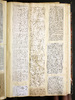
Page 29
Buffalo Bill Combination at the Arcade Opera House-The "Prairie Waif" to an Overflowing House. The largest audience that has favored anytroupe in Lockport for a long time, greeted the Bufalo Bill Combination last Saturday evening. Long before the ticket office was open the crowd commenced to assemble in the hallway, and when the doors were finally opened, which was early full three hundred men, women, and children rushed forward for seats. For the next hour the ticket agent was taxed to his utmost capacity to meet the demand for tickets. Many of those who came late did not attempt to gain admission, the house was so crowded. The play and plot is by far the best and most attractive of any of Mr. Cody's former plays, while off the stage Mr. Cody appears the same genial, whole-souled fellow that he did the first time he visited Lockport. It is the general opinion that his stage appearance is decidedly improved. Space forbids us making special mention of each one who took part in the play. Of course Buffalo Bill was the centre of attraction, and he performed his part admirably. His support was first class and gave general satisfaction.
Last evening Capt. W. W. Bush enterained Mr. Cody and a few frineds at his hotel Mr. Cody related many interesting and musing incidents of life on the plains.
After the entertainment a reporter learned the following concerning Mr. Cody's early life: He was born in Iowa in 1843, and at an early age went with his father to Kansas, and was reared amid scenes of danger, and met many thrilling adventures ere he reached his thirteenth year becoming a "boy hero" when killing his first Indian before he entered his teens. The death of is father, from the result of wounds received in the Kansas war left the by the support of his mother and sister.
Of his numerous adventures, narrow escapes, Indian battles and hardships, volumes could be writen, for he made his name famous along the border from Utah to Texas, and though a mere boy in years, few men were his superior in strength and endurance, while the cunning of the red man he watched with equal cunning, and, in fact, won the name of being able to "un-Injun and Injun." Receiving only a common-school education, Buffalo Bill has since educated himself for a thorough reader of human nature and close observer of men. He naturally falls into the ways of polite society, and is a gentleman under any and all circumstances. Mr. Cody received the title of Hon. by serving as a member of the Nebraska Legislature, which position he filled with credit to his constituents, and honor to himself. He owns a large cattle ranch on the North Platte, Nebraska, which yields him a handsome sum anually, and is known there as the "Cattle King." During the sojourn of the Company we received a pleasant call from C.A. Burgess, Interpeter, and Josh E. Ogden. When next the company visits Lockport we predict that there will not be a house large enough to hold those who wish to see Buffalo Bill and his wonderful show.
Thursday night, an immense audience greeted Buffalo Bill and company in Prairie Waif. The house was packed, not even standing room being left. Hundreds were refused admittance. The audience was noticeable for the number of ladies present. Prairie Waif is about the best of Buffalo Bill's dramas. It contains all the elements of popularity, and is a huge success. All our readers know full well the character of Buffalo Bill's exciting and imensely interesting dramas; so that that acritique from us is not necessary.
Hon. Wm. F. Cody, alias "Buffalo Bill." Once again the noted scout, guide and actor has decided to show himself in Cleveland. The life of W. F. Cody has indeed been an eventful once, reared amid scenes of danger, with many a thrilling adventure, narrow esapes, Indian battles and hardship on the plain, it is more than probable that Wm. F. Cody knows more pertaining to the West than any other living man-- having been for several years Chief of Scouts and Guide to the United Sates Army, and of his valuable service too muh canot be said in way of praise. In August, 1868, "Buffalo Bill" rode in 12 hours from Fort Larned to Fort Zarah and back, 65 miles; in the suceeding 12 hours he caried dispatches to General Sheridan from Fort Larned to Fort Hayes, 65 miles. From Fort Hayes he rode in the next 24 hours to Fort Dodge, 95 miles; on the next night he went to Fort Larned, 35 miles on foot and 30 miles on the mule; and and again the next night from Fort Larned to Fort Hayes, 65 miles. He made on horses, mules and on foot 355 miles, and he was in the saddle or afoot 58 hours. These successive rides were made through a rough, irregular country, swarming with hostile Indians, where there were no roads and hardly a perceptible trail, which had to be followed in the obscurity of the night. Early in life Buffalo Bill made a continuous ride of 322 miles, making that distance in the incredibly short ime of 22 hours, a wonderful feat of human endurance. Buffalo Bill apeears at the Academy of Music for three night only and Saturday matinee, commencing Thursday evening next, Feb. 24, with is mammoth combination, which comprises a star dramatic company, a troupe of Cheyenne Indians chiefs, and a superb band and orchestra, producing John A. Steven's new drama entitled "Prairie Waif," a story of the Far West, written expressly for Mr. Cody, and taken from real scenes of his past life. The scene in the second act being a fac simile of his home in Utah. During this act Mr. Cody will give an exhibition of his fancy rifle shooting, in which he is aknowledged foremost and alone. In the fourth act the Indians will give their scalp and war dance, assisted by Chas. A. Burgess, their interpretor. We clip the following from the Syracuse Standard: The audience at Wieting Opera House on Saturday night was not only queezed tight into the farthest corner of the theatre, but it hung over the edges like the froth on the top of a schooner of eer. In all respects it was a reproduction of the old assembly ages which made the Mechanics Fair memorable. The occasion of this popular demonstration was the appearance of that hero of the plains Bufalo Bill. A wild shout of approbation lifted itself from the throats of the great crowd, while the timid ladies trembled lest the roof be rent from its fastenings, when its idol, he stalwart Indian fighter, stalked out of the wings. Buffalo Bill as an actor, shows marked evidence of improvements in his art during his short theatrical career. He has an excellent company and a play that keeps the figure of the idolized scout in the eye a good part of the time, a requisite that meets with general approval. Bufalo Bill's author is not so prodigal of powder and ball as he was wont to be, the number of slain being comparatively small in the present play. Still the Indians are made to bite the dust with sufficient expedition to satisfy the gallery gods' appetite for gore. People who have neither a wild desire to see the sturdy son of the forest, whose unerring aim and magnificent prowess are the theme of song and sory, nor an insatiable longing to witness a thrilling depiction in the far west, where life is as cheap as dirt and grit is better than gold, should go to see Buffalo Bill's play to catch a glimpse of an audience of 1,500 people moved to ecstacy by the simplest word of the untrained eloquence of one man. No small part of the show is in front of the footlights.
LYCEUM-Buffalo Bill comenced an engagement at this house last night in a so called new play. He paraded though the streets previously, and drew a large audience of Arabs and others. The crusade against the cheap, trashy fiction which destroys the mental faculties of the youth and others who feed upon it, should extend to this alleged actor and his so-called plays. He gives a matinee Saturday.
BUFFALO BILL Buffalo Bill drew a five hundred dollar audience to the Opera House last night, and for two hours and a half held them in a most delightful mood. "Prairie Waif" is a border play, but is shorn of much of the blood and thunder that characterized Cody's former plays, and being thus tempered down is much more acceptable to the refined ear. He has a better company than when he visited this city before, some of whom are decidedly talented. Both Miss Lizzie Fletcher and Miss Connie Thompson are pleasing actresses, the latter particularly being very pretty and fascinating. Jule Keen is a roaring Dutch comedian, and Mark Stanly is one of the best old men we have seen. Harry Clifton and George James (the Danties) played the Hardy's (villians) very acceptably. The rifle shooting of Buffalo Bill was remarkable. At every crack the potato flew and the audience cheered. The trained donkey was an interesting feature of the play, and the Indian was dance lent variety to it. Buffalo Bill has become quite a favorite in Zanesville, and will return again in December.
Indians of the Plains The vicinity of the Opera House was fairly swarming with small boys yesterday afternoon. You couldn't pass along the sidewalk without stepping on six or nine, or knocking over a row of them. They ranged from four years old to twenty, but the hollering was mostly youthful. About three o' clock, the circus come out of the Opera House. Part of it entered a band waon, and the rest got on horses. There was a handsome and manly Bufalo Bill, the man who knocked down Fred May in New York, several weeks ago. He rode a horse adorned with Mexican trappings; following him in "Indian file" were three red men, Camanches, we were told, attired in habiliments with more colors than aunt Ruth's brightest rag carpet; there were feathers on their heads and down their backs, and war paint on their faces; with uplifted tomahawk in one hand and a spear in the other, these "noble representatives of a race fast fading away," were a subject of awe and wonder for the excited small boys who followed the band but kept at a safe distance from the savages; and the source of a good opportunity for the enjoyment by adults of the absurdly ridiculous. Armenius Clayton Johnson was an interested spectator and follower of the procession, and he stated that it was his intention to start for the plains next week.
"The Prairie Waif." A good sized audience filled the lower opart of the Opera Huuse last night, and the gallery was completely packed, to listen to the play, 'Prairie Waif," and view the famous Buffalo Bill and his "live" Indians. The play of its class, is good, although some parts are overdone. Mr. Cody as an actor in his line of business is first-class, and his support good, especially Mr. Alstadt as "Hans," and Miss Thompson as "Sadie," the latter being particularly bright and vivacious, and much superior as an actress to Miss Fletcher as "Onita." The piece is replete with exciting situations, which continually bring Buffalo Bill into prominence, which is just what his audience enjoy, and to all such as are interested in border drama the play of "Prairie Waif" can be highly commended.
Page 30
AT THE AMUSEMENT HALLS. Buffalo Bill's "Prairie Waif"-Apollo Club Concert-Theatrical Talk. The readers of dime novels and weekly story papers turned out en masse at the Grand Opera House, last evening, to witness the delectable and blood-curdling adventures of Buffalo Bill and his band of Cheyenne Indians. The galleries were so densly packed that wails of anguish from the numerous small boy, who, like Atlas, was forced to bear the weight of those behind and above him, continually mingled with the dialogue on the stage. Every seat in the lower part of the house was taken, and if this be the sign of success the entertainment provided by Buffalo Bill must be classed as strong. There is no doubt that to the lovers of yellow-covered literature--thanks to the graphic pen of Ned Buntline--Mr. Cody is a great hero. To them he is also a great actor, for he simply reproduces scenes and incidents in which during his perilous experience as a Western scout and guide, he took an active part. It may be said that what literature was prior to the birth of ten-cent scalping romances the stage was without its Buffalo Bill. The performance of the latter, therefore, like that of other heroes of the plains who have essayed the stage, must be judged from a corresponding standpoint. Those who regard the dimenovel as an unhealthy growth will have the same opinion of the stage performances so closely akin to it; and the impressionable small boy who loves on will worship the other. When we read that each performance of the "Beggar's Opera" in London invariably increased the number of thefts committed, and when we remember how many youths, after reading the thrilling imposssible adventures of western heroes, steal a sum of money and depart for the supposed land of romance, there can be no doubt that the influence exerted by exaggerations of western lifeover the minds of the rising generation is not the very best. It is some satisfaction, therefore, to be able to say that in "The Prairie Waif" Buffalo Bill has considerably lessened the blood-and-thunder effects of his former play. The term play is, perhaps, too dignified to apply to this production from the pen of John A. Stevens, a playwright who has done better work. It is simply the story of the captured maiden, the struggle for her rescue, and the final triumph of Buffalo Bill, in a new form. There are thrown in a laughable Dutchman and a pair of Danites taken from McKee Rankin's play of that name. We miss, however, the Quaker Peace Commissioner, who was much better in his encounter with the redskins than the present Dutchman is with the dusky son of the forest. The piece has also one or two good dramatic situations which remind one of Mr. Stevens at his best. But after all, the drama is of little consequence, for Buffalo Bill and his Cheyenne Indians are attractions which would draw even in a museum of living natural wonders. It is due to Mr. Cody to say that his acting has greatly improved of late years. He has acquired an easy stage presence, and his tall, manly form brings vividly to mind the ideal scout and Indian fighter. His skill with his rifle was as wonderful, and as much admired, as of old. Of his company much need not be said. With one or two exceptions, the men and, without exception, the women are utterly devoid of anything approaching to dramatic art. The "Prairie Waif" will be repeated this afternoon and evening.
Mr. Josh. Ogden, to whose business management Buffalo Bill owes much of his financial success, is still at the head of that department.
GRAND OPERA HOUSE. The galleries of the Opera House were crowded last evening and there was a fair audience in the dress circle. The play entitled "The Prairie Waif" is furnished with the opportunities for the display of all the interesting points of border life and yet there is no unpleasant redundancy of blood curdling scenes. In this respect it is greatly toned down from the standard of former plays of the kind. There is much humor in the general make-up and enough of songs and dances to impart sparkling vivacity to the entertainment. The opportunity for a display of Buffalo Bill's marksmanship is not omitted and is an interesting feaeture of the latter part of the play. Not the least attractive portion is the Indian war dances, which is an accurate reproduction of that savage custom by genuine Indian chiefs. Today there are two performances-- afternoon and evening-- which close the engagement.
HOW HE HIT HIM.
Buffalo Bill Tells the Story of His Recent Encounter With Fred. May to An Evening Express Reporter--Western Versus Eastern Muscle.
A few days ago there appeared in THE EXPRESS an account of an encounter between "Buffalo Bill" and Fredrick May, whose horsewhipping of and duel with James Gordon Bennett, of the New York Herald, will be remembered by many. A reporter of THE EXPRESS called this morning on Hon. W. F. Cody, the "Buffalo Bill" of the far west, to ascertain the facts in regard to his late personal encounter in New York with Frederick May, the bloodless duelist.
Whatever maybe said of the dramatic quanlities of "Buffalo Bill," it cannot be denied that he is a gentleman into whose presence a stanger feels perfectly at home. His experience among men of he world affords him a quick and ready comprehension of their motives, which frequently gives him an advantage over his enemies, as in the case above mentioned.
Frederick May, who is much taller and heavier han "Buffalo Bill," and who is in charge of a trainer, evidenly made a mistake in his attack on the hero of the prairies. It appears that "Buffalo Bill" and a few friends went over to New York after the close of his performance in Brooklyn, on the evening of Feb. 2d, and found congenial associates in West Thirty-first street. The party consisting of a few gentlemen were occupying the parlor of a house frequented by Fredrick May. On the arrival of the latter with his friends, "Buffalo Bill" was asked to move out. The prescence of May was enough to terrorize an ordinary man, but "Buffalo Bill," who had met all kinds of animals in the West, was not easily scarred. The two men met in the hall and stood before each other like giants. May, who had been drinking, accosted "Buffalo Bill," with "Hello Buff." Cody not knowig who his assailant was, put his keen eagle eye upon him, and concluded at once that he had run against a snag. May began clawing at Cody's long hair, taking out larger quanities than was agreeable on so short an acquaintance. Cody pushed him away saying he did not know him. Upon is resentment of undue familiarity, May demanded an apology. "Bufalo Bill," who never apologizes only when he is the offending party, had just learned that it was the bully, "Fred May" with whom he was having trouble, and he at once determined to get the best of the fight. Stepping back a few feet he advanced upon the enemy and planted his fist between May's eyes, the blow knocking him over the sofa, and leaving his face in a condition that would have pleased James Gordon Bennett, had he seen him. The friends of either party did not interfere, those of May's knowing the fighting qulaities of their man, were content, while the friends of "Buffalo Bill" stood back and saw him punish the man whom so many in sporting circles in New York city dread because of his physical powers and acknowleded willingness to fight. "Buffalo Bill" is not proud of the distinction he won in the contest, and considers that he did only what any man would do under the circumstances. He is not quarrelsome, but is capable of taking care of himself whenever it is necessary.
"BUFFALO BILL." The Academy of Music was packed from pit to dome last night, the seats were all occupied and the lobbies were crowded. The enthusiasm opened with the rise of the curtain, increased with each act, and was at white heat at the close. The audience came to their hearts' content. Of course there are a great many theater-goes to whom the border drama has no attraction, but those who take pleasure in that line can find nothing better than Mr. W. F. Cody and his "Prairie Waif."
The play is a new one for this season, and has some very pretty scenes. There is less blood-letting, fewer scalps taken and not so many Indian forays as have occurred in pieces of the sort presented before. The second act contains a love making scene which "Bill" plays with a naturalness that suggests great experience in younger days. His fancy shooting is admirable. He has a very good support, especially in Miss Fletcher as "Onita," Mr. Keene as "Hans," and Mr. Charles as "Captain Russell." The rest of the support is good, and the Indians add a most attractive picture. Cody himself is the same cool, natural, and handsome fellow that Cleveland has become so well acquainted with, and his play is clean and pretty. It will be presented tonight and tomorrow night, and at the Saturday's matinee.
BUFFFALO BILL. In his wildest dreams of ambition "Buffalo Bill" probably never flattered himself that be was much of an actor, but he has estimated well his wide reputation as a border scout, and the irresiatible fascination presented to the juvenile mind by the appearance of the hero who has actually figured in some or the thrilling scenes mimicked in miniature upon the stage. It is a little surprising that the novelty of his performance has not become tarnished by constant repetition; but most assuredly it has not, for upon each reappearance Mr. Cody is given the same boisterous reception which marked his first dramatic tour through the country eight years ago. His plays are little more than vivid illustrations of ordinary dime literature, and from a dramatic standpoint, worthless, but they please the class for whom they are written, attract large crowds of cheering people, and, of course, upon the stage as elsewhere, there is nothing so successful as success. Mr. Cody's new piece, "The Prairie Waif," written for him by John A Steavens, is deciededly better than anything in which he has had an opportunity to appear, distributing the blood and thunder very judiciously, and introducing the different characters with a fair degree of consistancy. Of its kind it is good, and it is well played by Mr. Cody's company. "Buffalo Bill" himself, appears in three different characters, exhibits his skill with his rifle and is always the manly ideal of a western frontiersman. He has a good German comedian in Jule Kean, and the others play their sensational parts fairly well. The applause last night was tremendous, and the galleries were crowded to suffocation. The seats down stairs were also well filled, and the enthusiasm was not by any means confined to the upper parts of the house
The same programme will be repeated tonight.
BUFFALO BILL. The border hero, Buffalo Bill, otherwise the Hon. William F. Cody, and of late years further known to the American world as an actor, was the bright particular subject of interest at the Academy of Music last evening, where with his company he appeared in his new drama, "The Prairie Waif." At all times and everywhere there is much curiosity to see the redoubtable and genial slayer of red skins, and on this particular occasion the theatre was crowded with people of all classes and conditions. It was in truth a very large audience, tiered up until the last row in the gallery fairly bumped their heads against the ceiling. The play is rather interesting, its main purpose of course being to introduce Buffalo Bill, the Indians, and other sped=cial features. It is produced with nice scenery, some escpecially belonging to it, and apart from the exhibition of Mr. Cody's remarkable skill with the rifle--an exhibition of itself very surprising and worth going a long way to see--there is an absence of the shooting and murdering business common to sensational border dramas and to a good many folks very offensive.
Mr. Cody, as a famous scout and Indian fighter, is unquestionably the strong attraction, still he has made marked improvement as an actor, acquiting himself with grace and quite effectively. His present company is, we think, the best he has yet organized. Miss Lizzie Fletcher, who appears as Oneta, is a handsome little lady who plays her part very nicely. Miss Connie Thompson as Sadie acts with her accustomed vivacity, and her duet and dance with Hans, Mr. Jule Keen, were last evening enthusiastically encored. Mr. R. C. White as Mark Stanley, Mr. Harry Clifton as Jim Hardie, and the other gentlemen of the company in their respective parts, all did as well as could be asked. Incidental to the play several genuine Cheyenne Indians are introduced. They perform a wardance, and enlist the close attention of the curious. All through the performance was tumultuously applauded. The audience apparently enjoyed it greatly, the best of humor prevailing.
The second and last entertainment by Buffalo Bill and his company in this city will be given this evening. That the Academy will again be crowded to its uttermost is a foregone conclusion.
What We'en's Caught. Buffalo Bill's entertainment at the opera-house last night was greeted with a large audience, who left at the close fully satisfied.
The business manager wish us to state that of cheeky newspaper publishers he considered that the Herald and Transcript "take the cake."