
Page 6
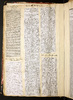
It is encouraging to the frequenters of our east side theaters, where we have so magnificent a temple of the drama as that with the above title, to recognize the positive improvements which theatrical representations have recently undergone in this elegant and spacious establishment. We had hardly recorded the clever representation of "A Celebrated Case," with a cast of signal excellence, when we were attracted to the first product on in the same theater of a drama written by Mr. John A. Stevens, one of its managers entitled "The Prairie Waif," and prepared expressly for exhibition by the new dramatic combination organized by Buffalo Bill. The title is an expressive one, and suggests the story on which it is founded, as well as the character of the artists engaged in its performance. It manifests also an improvement in the taste of the chief actor, and a disposition to make the east side theaters consonant with the desires of the people who frequent them, and who would become more numerous as the character of the plays represented in them acquired additional literary and dramatic merit. In "The Prairie Waif" we have a well-digested plot and an exceptional list of entertaining and talented artists. Mr. Cody, who prides himself in his accepted name of Buffalo Bill, assumes the chief character, and does so with a full recognition of its stage demands. His style of acting has been conformed to a better model, and he has selected for his company artists who are mindful of the public demand for clever acting. His elocution is more comformable to good taste, and his stage associates have been chosen for their personal qualifications as well as for their dramatic experience and skill. In "The Prairie Waif" we have several artists who are worthy of the name, and whose novicate has doubtless been perfected in the school which introduced the thrilling drama of "The Dantes" to theatrical consideration. Of these we may mention as worthy of note R. C. White, Harry Clifton and G. T. James, who have made that drama their model for imitation. A pretty and interesting young lady of no common presentations to both beauty and talent, named Miss. Lizzie Fletcher, assumes the responsibility of representing Onita, the heroine of the play, while the comedy part is judiciously assigned to Miss Connie Thompson, who may be said to have been almost literally born on the stage and is the daughter of parents who were at one time noted as talented artists, both in this city and in some of our larger Western theatrical towns. In the selection of, this drama its comedy necessities have been liberally supplied by the engagement of Mr. Jule Keen, who is assigned to the low comedy dialect part of Hans, in whichn Miss Connie Thompson plays the opposite character of Sadie. These are the main characters who appear conspicuously in the plot of the drama, and who contribute their by no means unwelcome aid to render it an exciting and impressive entertainment. Mr. Cody's participation in the performance deserves more than mere passing mention. He has become an actor who has learnt the valuable secret of repose, and has cultivatod an elocution which is devoid of the [banbast?] so peculiar to artists of limited experience. The story of the play is especially sympathetic and picturesque, and the scenes are surrounded by an atmosphere of romance that adds to its effectiveness; while Mr. Cody does not fail to avail himself of the [use?] of accomplishments as a rifle shot, which imparts an additional interest to the stiring incidents of the representation. The lighter portions of the performance are made especially amusing by the comic humor of Mr. Keen and Miss Connie Thompson, the latter of whom adds several comic songs to her repertoire, and sings them with humor and spirit. As Mr. Cody's benefit will take place here to-morrow night, an opportunity will be afforded the numerous frequents of the house to pay him such a profssional compliment as he justly deserves.
Last night Buffalo Bill and his company presented his new play, The Prairie Waif, at the Opera House before a large and highly pleased audience. The Praire Waif is a decided improvement on Buffalo Bill's former plays, and is full of interest that chains the attention of the audience from first to last. Buffalo Bill appears to better advantage than ever before, and his support is very good indeed. Each of the company played their parts to perfection and the whole was a very creditable performance. Buffalo Bill is the central figure and should be, for his acting is not only good, but some of the situations he makes, are very fine, and his fancy shooting is the best we have ever seen. Onieta, the "Prairie Wait" of Miss Lizzie Fletcher, deserves special mention, the part being one which gives her a chance to show the fine qualities of an actress, and in the emotional scenes, some clever acting is done by this charming little lady. The Sadie of Miss Connie Thompson was exceptionally good. The Hans of Jule Keene, the Mark Stanly of R. White, the characters of Harry D. Clifton and Geo. James by Geo. Brown and James Neil were all well sustained. The Captain Russell of C. W. Charles, was a clever piece of character acting. Suffice to say this is the best company Buffalo Bill has ever had and the piece far excells any border drama we have seen. People will go to see this noted man just as often as he goes through the country. He succeeds in drawing crowds here every time he appears.
Buffalo Bill's Belief
UPON THE TROUBLE WITH THE UTES.
He Does Not Apprehend Any Serious Results- His Opinions of the Indians.
Buffalo Bill and troupe arrived in the city yesterday morning, and took quarters at the Oliver house. In the evening a TELEGRAM reporter called upon Mr. Cody at the hotel, and found him comfortably seated in room 37, relating some of his western experiences to Mr. Lewis Leppleman of Fremont, and Mr. Maurice Judd, of this city.
Buffalo Bill is as fine a specimen of his race and class as could anywhere be found, and that is saying a good deal, for honest hearts and stalwart frames and handsome features are not rare among the pioneers of western civilization. It might be supposed that these hunters and Indian traiters are disagreeable people to come across. That is not the case at all. There are of course some rough characters, regular desperadoes, among them, and they occasionally shoot each other pretty freely in gambling-quarrels and drunken sprees; but to a stranger who knows how to behave himself they are as far as experience goes, most civil and obliging. If a man is civil to them they will be civil to him, and if he does not interfere about their affairs they won't bother about his, unless he wants their assistance, and then they will be ready and willling to give it. The manly sense of independence, the self respect, and that feeling of respect for others engendered by it which so strongly characterize the American people, are as deeply marked and have as good an effect among the nomads of the west as in any other class of the population.
Buffalo Bill made his first trip east of the Mississippi in the winter of 1872, and since that time he has appeared in all the principal theatres of the east and west. As an actor he has gained a world-wide reputation second to none. He confines himself exclusively to border dramas, which give him an excellent opportunity to display his great skill as a marksman.
As soon as the gentlemen present had taken their leave, the reporter struck up a conversation with Mr. Cody, by first referring to that never exhausted subject, the weather, which was thoroughly discussed, as well as the probabilities for the future, and then the question as to when he had opened the season was broached.
'I opened in New York on the 23d of August," replied Mr. Cody, "and have met with a good reception wherever I have appeared. The worst engagement I have filled this season was at Cincinnati last week. The election excitement was too much for the theatres, but still I did a very fair business in that city."
"Where do you go from here?"
"I fill an engagement of two nights in Detroit, and from there I shall make a tour of the Canadas until after the political excitement subsides. I shall then return to the states and travel eastward again."
The amusement subject having become exhausted, the reporter was compelled to turn his thoughts in search of a new subject upon which to converse. Happily he thought of the difficulty at present being experienced with the Indians in the west, and ventured to ask of Mr. Cody his opinion concerning it.
"In fact," replied Mr. Cody, "I know very little about it. I have not been keeping posted upon the subject as I should have, but I do not apprehend any serious trouble."
'What do you suppose has become of Jackson?"
"I am not prepared to say. He seems to have been gotten away with in some manner, but whether he is dead or only secreted somewhere, I cannot say. Why Meacham and Berry were arrested I do not understand. They have always been good friends of the Indians, but I suppose that it comes from the fact that they did not afford Jackson the necessary protection at the time he was captured from the Indians."
"Are you acquainted with the Ute tribe?"
"Yes, I have known them intimately for the past thirty years."
"How do you regard them; are they a warlike race?"
"Not in the least, but they are like every other class of people, they like to defend their rights. I believe the Indians are more sinned against than sinning. The Indians hate miners. They would rather see ten companies of soldiers up on their reservations than one miner, and the reason for this is that they know soldiers will not remain long, they simply hang around a few days and then return to the posts, but when they see a miner coming among them with a pick on his shoulder and a spade in his hand, they at once come to the conclusion that he as come to stay, and if they try to maintain their rights and some one happens to be killed the story is at once set afloat that the Indians are on the war-path. During my aquaintance with the Indians I hace never known a treaty to be broken but what the whites were as much at fault as the red skins. You remember, said Mr. Cody, of a few years ago when the government had trouble with the Ponco tribe. They were always considered as the most peaceful tribe in the west. They had a nice reservation in Nebraska upon which they had built houses and expected to live and die there. But as civilization was wanted by the whites, and the government made them a position to exchange for one in the Indian territory and a certain sum of money. The Ponco's refused the proposition, as they had lived there a great while, and their friends who had died were buried there, and there were a great many like incidents connected with the place which made it as a home to them. But the government was determined, and actually picked them up bodily, so to speak, and sent them down into Indian territory. The climate there proved too warm the fact that the people of Colorado are anxious to get rid of them, and should they show the least warlike disposition, the governor could raise an army of 20,000 within twenty-four hours, and with such an opposition it would be an easy matter to exterminate them. Nothing more suggesting iteself, the reporter, after thanking Mr. Cody for the valuable information he had received, withdrew. Mr. Cody and company will leave at 8:40 o'clock this morning for Detroit, where he appears this and tomorrow evenings.
Buffalo Bill's Entertainment. An unusually large audience, in point of numbers, assembled at Davis Opera House Tuesday evening and enjoyed the mirth-inspiring and deeply interesting drama of "The Prairie Waif," with its stirring presentation of border life. The play, although critics have declared its lack of plot, forms nevertheless a well connected story, the central figures being the inimitable "Buffalo Bill," with his manly form, a indomitable spirit, generous impulses and trusty rifle, by W. F. Cody; "Onita," a charming delineation of maiden simplicity and piquancy, by Miss Lizzie Fletcher; "Sadie," a pert and pretty American lass, by Miss Connie Thompson; "Mark Stanley," the drunken yet not wholly depraved tool of the Danites, by R. C. White; "Jim" and "Jack Hardie," the unscrupulous Mormon villains, by Harry Clifton and Geo. T. James; "Hans," the rollicking German, by Jule Keen; "Capt. Russell," the jolly Irishman, by C. W. Charles; the gorgeously-trapped Indians, and the demure mule, while other characters made up a varied and meritorious cast. During one act Mr. Cody gave an admirable exhibition of fancy rifle shooting, and in another the Cheyennes executed a real war dance, while the whole play abounded in interest and called forth repeated roars of appause. The fine orchestra won general praise.
"CINCHO-QUININE,"
Page 7
A ROMANCE. A STORY FROM REAL LIFE.
SINGULAR COINCIDENCE OF NAMES AND CIRCUMSTANCES CONNECTED WITH THE BUFFALO BILL COMBINATION.
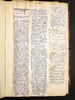
The Buffalo Bill Combination, which appeared in the Opera House last evening in the drama of the "Prairie Waif," played in Davenport, Iowa, a week ago last Thursday evening. A day or two later a lady called at the Davenport Gazette office and related a story, which, garnished by the facile pen of some novel writer, would make an intensely interesting romance. She appeared deeply agitated, and, after introducing herself, propounded the following query: "Can you describe Miss Lizzie Fletcher who personated "Ouita" in the "Prairie Wailf," and do you know the route of Buffalo Bill's Combination? The reporter became interested and elicited the following narrative. The questioner's name is Mrs. Amanda M. Cook, who is now living in Davenport, and her maiden name was Fletcher. Her father's family lived in Derbyshire, England, where Mrs. C. was born in 1850, the eldest of five children, three boys and two girls. Lizzie was the youngest, having been born in August, 1862, in this country. Her parents had crossed the water and settled at a place on the Rock Island branch of the C., B. & Q. railroad, in Henry country, Illinois, called Briar Bluff, between Cambridge and Coal Valley. In 1865, on the 10th of May, Mr. and Mrs. Fletcher and their family of children started by the emigrants' overland route of that time for the fnr West. They had traveled without difficulty to Denver where a train of 75 teams was made up to proceed on further West. On the 1st of August, 1865, they had reached within one-half mile of Rock Creeks stage station as it was then known, in Wyoming Territory. There the train camped for dinner with Mr. Fletcher's wagon in the lead, as he was driving horses, while the balance was made up of ox teams. They were suddenly surprised at midday by a band of some three hundred Cheyenne Indians, who at once proceeded in their work of killing and capturing. Mrs. Cook, then a girl of 15 years, saw the savages strike down her mother in quick death and cripple her father. Herself and Lizzie, then just two years of age, were made captives and kept by the Indians until the next April. At the time Mrs. Cook. after several unavailing efforts, was ransomed by an Indian trader near that locality, who is now Mr. Charles Hanger, a prominent citizen of Clinton, Iowa. Lizzie was left to grow up with the Indians, and became a great favorits with the chiefs of the tribe. She was owned by one of the chiefs named Cut Nose. From that day to this, Mrs. Cook, acting by the impulse of humanity, and in accordance with the dying request of her father, who breathed his last in Ohio some five years ago, has persevered in her efforts to find some trace of the captive sister, Lizzie Fletcher. And she has been so successful as to believe no thtat she is still alive. In 1869 General Custer wrote Mrs. Cook that he had word of a scout named Comstock to the effect that he (the scout) had seen Lizzie, but so closely was she watched that he could not get near her. Four years ago, only, another trace came through a guide and army officer that the captive child was still with the Cheyennes.
Mrs. Cook has some reasons for believing that the "Onita" who represents "The Prairie Waif," and whose name is down on the bills as Miss Lizzie Fletcher, is none other than her own sister, Lizzie Fletcher, who at two years of age was separated from her. And among them are these: The names are the same, and this can be accounted for from the fact at the time of the capture there were two half-breeds with the Cheyennes who could talk English and to them Mrs. Cook told her sister's full name. She thinks it would easily have been preserved. The apparent age of "Onita" compared with that of the lost Lizzie, who would not if alive be 18 years old. The plot of the play is
most exactly in accordance with Mrs. Cook's experience in some of its parts. And again, in the fourth act of the play a band of Cheyenne Indians appeared in some of these scalp and way dances. Once more, Mr. Cook says that she remembers that Mr. Cody, (Buffalo Bill) was then famous in that country as an Indiana scout and guide.
With all these resemblances one thing seems quite true and that is if "Onita" is not the Lizze Fletcher of the massacre the character that she represents in founded upon history. By spreading this information western papers may be of some assistance in recuing the Indian girl, who is certainly thought to be alive. The story is an any event on stranger than fiction, while no attempt has been made to go outside the bare and the main facts in the case. Mrs. Cook became so firmly convinced that Miss Fletcher was her long lost sister that she sent a representative to Bloomington and he was here when the Buffalo Bill party arrived this morning. He proceeded to interview Miss Fletcher but that young lady traced back her family relations, demonstrating beyond a doubt that she was another person of the same name, and the gentleman left for Davenport this afternoon, carrying to the anxious sister the sad news of hope agaia deferred.
The above article was sent to Mr. Cody, with the following letter: OFFICE OF THE DAVENPORT GAZETTE, DAVENPORT, Ia, Sept. 26, 1880. Hon. W. F. Cody, Bloomington, Ill.: MY DEAR SIR:--I enclose you a clipping from the Gazette, which partially explains itself. The lady mentioned, Mrs. Cook, desired to have me write to see if theere is anything more than the identy of names. Will you show the article to Miss Fletcher, and write me if you or she knows anything in connection with the case, and much oblige. Yours, very truly, B. F. TILLINGHAST, City Editor Davenport Gazette. To which Mr Cody replied: BLOOMINGTON, Sept. 30, 1880 B. F. Tillinghast: DEAR SIR:--Your favor of the 26th and clipping of the Gazette at hand, I am very sorry to say that the Miss Lizzie Fletcher of my company, who is playing the part of Onieta, is not Mrs. Cook's sister, although the circumstances connected with her capture are very similar to the story of my drama, "The Prairie Waif," I will have "John A. Stevens," the author, write Mrs. Cook where he obtained the incidents connected with the plot and story of the play. I knew of the massacre of the Fletchers and the capture of the two girls, but had forgotten it until it was brought to my mind through the columns of your paper. I knew "Comstock," the scout that "Custer" spoke of, very well. he was killed in July, 1868, by the Cheyenne dog Soldier's While, scouting in Western Kansas. I know other interpreters and scouts now with the Cheyennes, and will do all in my power to find the whereabouts of her long lost sister. The white men Mrs. Cook speaks of must have been Charlie and George Bent. Charlie is dead, but George still lives. I will write him and forward to you whatever information I can learn. It is more than probable that Miss Lizzie Fletcher still lives and is yet a captive among the Indinas. In the year of 1869 I rescued two white women from the Cheyennes. One was wounded by a squaw while attempting her excape, and afterwards died from the effects. The other is living. If I cann lean her address I will write her the full particulars of the case. I know that she will do all that is possible to learn the fate of Miss Lizzie Fletcher. In 1868 I was a prisoner among the "Kiawas." While there I saw two white girls, but could not get a chance to speak to them or effect their escape at the time I made mine, so closely were they watched. I think that General Nelson Miles afterwards rescued them. One of them might have been Miss Cook's sister, as the Kiawas and Cheyennes used to trade together, and the Kiawas might have bought her from the Cheyennes. Mrs. Cook might gain some very important information by writing to General Nelson Miles, headquarters Department Dacota. St. Paul, Minn. Assure Mrs. Cook that I shall try to learn some clue that will lead to the recovery of the missing girl, and whatever I may learn in the future I will immediately forward to you. My present address is North Platte, Lincoln county, Nebraska. All letters addressed to me there will receive prompt attention. Trusting that success will soon be Mrs. Cook's reward, I remain, Yours truly, HON. Wm. F. Cody, (Buffalo Bill.)
St. Louis Times
Buffalo Bill at Pope's Theater. A better selection for fair week could hardly ahve been made than that to which Pope's theatre is given up. It is calculated to fill the country cousins with delight, and draws a large and unusual element of the home population. The house was packed last evening, and the thrilling scenes of border tragedy elicited unstinted applause. The gods went wild over so much bloodshed, and became at times uproarious. The central figure is, of course, "Buffalo Bill," or as he is known in civilized communities, W. F. Cody. He is the hero in one adventure after another, and gives a pretty exhibition of his powers in rifle shooting. The principal feminie characters, Onita and Sadie, are well sustained by Miss Lizzie Fletcher and Miss Connie Thompson. The play is made realistic and exciting by the intoducrtion of war and scalp dances by Cheyenne Indians. The scenery is an entertainment of itself. The second act shows Buffalo Bill's home in the mountain gorge, and is a fine piece of work. The management recognized the fact that nobody wishes to be shut up while Veiled Prophets' procession is in progress, and hence announce that the performance will not commence to night till 9:30. This will give visitors in the city full time to see the pageant and enjoy the unusual attraction at the theatre.
[Word]; Omaha [Word]
DISTINGUISHED DINERS.
A "Herald" Man Comes Across Them on a Trip East.
Overland With Buffalo Bill----Garfield's Processional Pose.
NEW YORK, August 11, 1860. To The Herald. Somehow or other--perhaps through the same occult attraction which draws the members of the HERALD staff toward the biggest fight or the loudest racket--the laying-off one found his feet under the mahogany with two distinguished diners on a late trip east, and found them so interesting--the diners--that he is impelled to record what our late friend, A. Ward, would call "big impresshuns." W. F. CODY, whose business name is Bufalo Bill, was a fellow-traveler over the Northwestern road from Omaha to Chicago, making the trip in that royal way which, as he observes, is "necessary in my business." He was on his way to New York, where he opens the season with his theatrical company on the 23d inst. Mr. Fant, the Texas cattle dealer, was on the train and rallied the gentleman from Nebraska regarding his devotions, which brought out this little story: Shortly before Mr. Cody started east he yielded to the solicitations of his family to attend church, and went with them to a service at North Platte. The leader of the choir--a lady--missed the proper pitch in the opening hymn: "My soul be on they guard, Ten thousand foes arise!" and her voice "arose" to a shrill falsetto above high C. She scored for another start with no better success, and yet a third time warbled "Ten thousand foes ari-i-ise." When the impulsive Mr. Cody sung out, "make it five thousnad and maybe I can start in." There was a tableau, and he hasen't been to church since. Uniformly polite as he is toward the fair sex, Mr. Cody yet was constrained on this trip to place one of them in an embarrasing predscament. The luxuriant locks which fall over his shoulders became annoying, and forthwith their owner summoned one of the [Puliman?] porters to get him a hairpin. "Fore de Lor, Mr. Cody, dere isn't no hairpin." "Must have one. It's necessary in my business," rejoined Mr. Cody. The porter left the state room, went through both cars, found that all of the ladies had either retired for the night or were dozing in their seats, and returned empty handed to the state room. He did not dare enter, and after standing outside irresolutely started for a rear seat where a lady say asleep with her head bent foaward. The porter stealthily removed the coveted toilet "property" from her back hair, and returned triumphatly with it to Mr. Cody, who thanked him without asking where it ceme from, and proceeded to do up his own tresses. DE GLOYER GARFIELD
Page 8
Detroit Free Press.
nee.
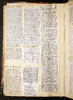
WHITNEY'S--W. F. Cody, "Buffalo Bill," appeared at Whitney's Opera House last evening in a new play entitled "The Prairie Waif," written for him by John A. Stevens, who is principally known as the author and impersonator of "Unknown." No person who goes to see this celebrated individual expects to see a drama, but the present play has more of a right to the title than those which preceded it. "The Prairie Waif" is "Ouita," a white girl stolen from her father, Gen. Brown, by the Indians and rescued from the persecutions of two Danites by Buffalo Bill. It has nearly all the incidents of the of the other border dramas heretofore presented by Mr. Cody, but is put together a little more artistically and the red light seems to blaze with more effect. The performance last evening was received with yells of delight from the unterrified gods of the packed gallery and was, after its fashion, altogether satisfactory. Nobody has ever yet had the temerity to accuse the brave and handsome scout, whom Ned Buntline made famous long ago, of being an actor, but certain it is that Mr. Cody has wonderfully improved in his stage business within the past year. His love scene with "Ouita" in the second act was a pleasant little episode and the one bright memory of the performance. His feats of marksmanship were loudly applauded. It is almost a pity that so pretty and grceful a little lady as Miss Lizzie Fletcher should be so woefully ignorant or misguided as to the requirements of the part of "Ouita." In the first two acts she was very pleasing, but in the third act she ws positvely painful. If emotion can be measured, as a Unitarian clergyman yesterday said, the Miss Fletcher's emotion in this play will certainly overbalance a whole stage full of "Lady Isabels" and "Camilles." The audience at times were in momentary fear that the little lady in her passion would throw herself upon the scenery and tear it in pieces. She should reform her tendency to over-act. Miss Thompson, Messrs. White, Clifton and Keen did good work and the band of Indians whooped and danced successfully.
The play has some very striking sets and is nicely put on. With this evening the "Buffalo Bill" engagement will close.
Toronto b. Mail
GRAND OPERA HOUSE. The Buffalo Bill combination appeared last night at this theatre in the play of the "Prairie Waif." There was a large audience. The "Prairie Waif" is a capital border drama, abounding both in humorous situations and sentimental incidents. The plot turns upon the capture of a girl by Indians, her rescue, and her subsequent love episodes with her deliverer. Mr. Coady, as Buffalo Bill, was naturally the principal attraction, and acted with all his accustomed vigour and ability. Jules Keen, as Hans, was particularly good, while Miss Fletcher, as Onita, exhibits some good acting in the emotional scenes. The bill will be repeated this afternoon and evening.
Milwaukee P. Chronicle ACADEMY OF MUSIC TO-NIGHT. Buffalo Bill and his company of 24 artists arrived in town the noon, and are quartered at the Newhall house. They appear at the Academy of Music to-night in the new drama entitled, The Prairie Waif. The New York Herald says: Buffalo Bill made a triumphant dubut in his new play The Prairie Waif which ws produced for the first time at the Windsor theatre last evening, It is the best border drama we have ever seen. Buffalo Bill was, of couse, the central figure and deservedly obtained the recognition of the large audience present. His sharp shooting was excellent and his acting was vigorous and natural. Some of the points he made last night were very effective and artistic. It is but just to say that he has wonderfully improved as an actor. He has selected for his company artists who are mindful of the public demand for clever acting. To-morrow a matinee will be given. The admission will be only 25 cents to all parts of the house. To-morrow morning at 11 o'clock a grand street parade will be given by the company, headed by Buffalo Bill's famous military band, and including the scouts and Indians.
WHITNEY'S.--W. F. Cody, "Buffalo Bill," appeared at Whitney's Opera House last evening in a new play entitled "The Prairie Waif," written for him by John A. Stevens, who is principally known as the author and impersonator of "Unknown." No person who goes to see this celebrated individual expects to see a drama, but the present play has more of a right to the title than those which preceded it. "The Prairie Waif is "Ouita," a white girl stolen from her father, Gen. Brown, by the Indians and rescued from the persecutions of two Danites by Buffalo Bill. It has nearly all the incidents of the other border dramas heretofore presented by Mr. Cody, but is put together a little more artistically and red light seems to blaze with more effect. The performance last evening was received with yells of delight from the unterrified gods of the packed gallery and was, after its fashion, altogether satisfactory. Nobody has ever yet had the temerity to accuse the brave and handsome scout, whom Ned Buntline made famous long ago, of being an actor, but certain it is that Mr. Cody has wonderfully improved in his stage business within the past year. His love scene with "Ouita" in the second act was a pleasant little episode and the one bright memory of the performance. His feats of marksmanship were loudly applauded. It is almost a pity that so pretty and graceful a little lady as Miss Lizzie Fletcher should be so woefully ignorant or misguided as to the requirements of the part of "Ouita." In the first two acts she was very pleasing, but in the third act she was positively painful. If emotion can be measured, as a Unitarian clergyman yesterday said, then Miss Fletcher's emotion in this play will certainly overbalance a whole stage full of "Lady Isabels" and "Camilles." The audience at times were in momentary fear that the little lady in her passion would throw herself upon the scenery and tear it in pieces. She should reform her tendency to over-act. Miss Thompson, Messrs. White, Clifton and Keen did good work and the band of Indians whooped and danced successfully. The play has some very striking sets and is nicely put on. With this eveing the "Buffalo Bill" engagement will close. Col. T. E. Snellbaker's Majestic Consolidation,
Toronto Telegram --At the Grand Opera House last night the "Prairie Waif," a drama written by John A. Stevens, the author of "Unkown," was presented. As its name implies, the play deals with life on the great land-seas, and is of necessity full of stirring movement, which the autor has relieved by the intoduction of humour and pathos. The plot is the capture of a prairie flower by the Indians, her rescue and her love's young dream. Mr. Cody plays the leading character with ability, his capacity for given expression to force and tenderness being marked. Miss Fletcher's Onita is characterized by considerable emotional power. The caste is equal to the demands of the drama. One usually associates border-drama with knives and pistols; but that the association may be erroneous any one can discover who attends either the matinee or evening performance to-day.
Buffalo Bill. When the curtain rang up last evening the Opera house contained one of the largest audiences that has been assembled there this season, all of whom had been drawn there by the magic name Buffalo Bill. The drama, "The Prairie Waif," which was written expressly for Buffalo Bill by that renowned actor, John A. Stevens, is an entirely new one, having been first produced in New York about six weeks ago. The drama, which is a border one, abounds in hair breadth escapes and blood curdling incidents. The usual number of desperadoes and Indians are killed, and Bill comes out victor every time, without even receiving a scratch. During the evening he gave an exhibition of facy rifle shooting, in which he is acknowledged to be pre-eminent.
KISMET. BY MIZPAH. And so at last we meet again, But, oh, too late! too late! And those who look know not the pain. For, smiling, we both bow to fate- Humbly kneeling we kiss the rod, Saying, "Thy will be done, of, God!"
We smile to hide the bitter sigh- Say we are content, and happy, too; The world hears not the heartbroken cry, For we seem honest, yet are so untrue! We smile tho' the heart is full of pain; We have lost so much there's naught to gain.
Hope's flowers have died ere they have lived; The world seems bleak and cold; We have scarcely tasted Youth's sweet fruit Yet already we're tired and old; And longing to climb the golden stair, For tho' parted on earth we will meet up there.
LIZZIE FLETCHER. A Brave Letter From Buffalo Bill--He Will do all He can to Rescue the Long Lost One--Mr. Cody hasn't a Doubt but She Still Lives.
Reader of THE GAZETTE will remember an article which appeared in this paper a week ago last Friday morning. The article has since been widely copied and the history of the painfully interesting case brought before thousands. The facts presented have been variously commented upon on the streets sicne and a great variety of views expressed. It was hardly thought possible that that "Onita" in the "Prairie Waif" could be the long captive sister of Mrs. Amanda M. Cook, of this ciry, or Miss Lizzie Fletcher. But it was more than probable that Buffalo Bill knew something of the circumstances of her capture. His familiarity with the Indians, the interpreters, and the scouts mentioned were thought sufficient to throw some light upon it. A letter was written Mr. Cody from this office and a copy of the paper forwarded to him. Yesterday his reply came and it will be read with particular interest in Scott county, the scene of his early home. The letter shows that Mr. Cody has a heart quick to sympathize and a will ready to act. No man living, perhaps, is capable of doing more than the renowned actor and Government Scout, Wm. F. Cody. He says that he will do all he can to learn the whereabouts of Mrs. Lizzie Fletcher. He hasn't a doubt she is still alive. Mr. Cody's letter is as follows: PEORIA, ILL., Sept. 30th 1880. Editor Davenport Gazette. DEAR SIR-Your favor of the 25th and clipping of THE GAZETTE at hand. I am very sorry to say that the Miss Lizzie Fletcher of my company who is playing the part of Onita is not Mrs. Cook's sister, although the circumstances connected with her capture are very similar to the story of my drama "The Prairie Waif" and I will have "John A. Stevens," the author, wqrite Mrs. Cook where he obtained the incidents connected with the plot and story of the play. I knew of the massacre of the Fletchers and the capture of the two girls but had forgotten it until it was brought to my mind through the columns of your paper. I knew "Comstock," the scout that Custer speaks of, very well. He was killed in July, 1868, by the Cheyenne dog soldiers while scouting in western Kansas. I know other scouts and interpreters that are now with the Cheyennes, and I will do all that I can to find the whereabouts of her long lost sister. The white men Mrs. Cook speaks of must have been George and Charlie Bent. Charlie Bent is dead, but George still lives. I will write him and forward to you whatever information I can learn from him. It is more than probable that Miss Lizzie Flether still lives and is yet a captive among the Indians. In the year 1869 I rescued two white women from the Cheyennes; one of them is still living. If I can learn her address I write the full particulars of the case, and I know that she will do whatever lays in her power to find some clue to the missing girl. The other woman was wounded by a squaw while attempting her escape and afterwards died from the effects. In 1868 I was a prisoner among the Kiowas. While there I was two white girls, but could not get a chance to speak to them, so closely were they watched, or effected their escape when I made mine; but I think that Gen. Miles afterwards rescued them. One of them might have been Miss Lizzie Fletcher, as the Kiowas and Cheyennes used to trade together and the Kiowas might have bought her from the Cheyennes. Mrs. Cook might gain some important information by writing to Gen. Nelson Miles Headquaters Department Dakota, St. Paul, Minn. Assure Mrs. Cook that I will do all I can to learn of the whereabouts of Miss Lizzie Fletcher. I have'nt a doubt but what she still lives. Whatever I may learn in the nature of the case. I will immediately forward to you. My permanent address is North Platte, Lincoln, Co., Neb. Letters adressed there will receive prompt attention. Trusting that success will soon be Mrs. Cook's reward, I remain, Yours truly, HON. WM. F. Cody "Buffalo Bill."
Page 9
St. Paul Globe Daily.
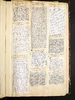
Buffalo Bill. The Opera House was crowded to its utmost capacity last evening on the occasion of the first appearance here of Buffalo Bill in his new sensation of "The Prairie Waif." The play is one that takes in a crowd. It is replete with thrilling situations throughout. Being a border play, and a border man being the central figure, it partakes, of course, of "blood and thunder," but is nevertheless worthy of more than usual attention. All the actors filled their parts well, and the audience was pleased from the rise to the fall of the curtain. The company will play in Minneaplois this evening, and will give a matinee performance on Saturday afternoon, concluding the season in this section by an evening entertainment Saturday.
New York [?] News
Notwithstanding the intense heat on Monday night, 3,800 people were at the Windsor Theatre, to witness Buffalo Bill in his new border drama, written by John A. Stevens, entitled Prairie Waif, a Story of the Far West. The play is the best in his repertoire and met with instantaneous success. It deals in heavy villians, Indians, virtue, etc., and is played in four acts, each terminating in a sanguianry tableau, which bring down the house. The author has not forgotten (per order of Buffalo Bill) to have in the play an Irishman, a Dutchman, a jackass and some moutains. The company embraces twenty-four people, including a number of genuine Indians, who amuse the audience with a real war dance. Of couse Buffalo Bill is the hero of the piece, and in the chracter of the scout has made a great hit. Harry Clifton, the heavy villain of the play, is well suited by nature as well as training to his part; and George T. James as a Danite, Lizzie Fletcher and Connie Thompson were also well received. The rest of the company do fairly well. Next week, Ada Gray in East Lynne. Mr. Stevens' play is admirably adapted to Mr. B. Bill's requirements, and will undoubtedly bring him in heaps of scalps--we mean shekels.
British Whig Kingston, Ont.
"PRAIRIE WAIF." Buffalo Bill and his Braves in Rather Entertaining Mood. Buffalo Bill's Company performed the "Prairie Waif" in the Opera House last evening to an audience repectable in size and satisfired in feeling. Hon. W. F. Cody is the central figure in the play. For him it was expressly written, and in it he assumes the role of Indian fighter, Government scout, hunter and hero, and in dramatic form gave an exhibition of some scenes very like those through which he has passed in the execution of important commissions. There are four acts in the drama, representing four different phases of a plot whose origin, development and final collapse, by force of adverse circumstances, constitute interesting details. At different times there are hostile meeting when rifles, pistols and bowie knives flourished in a manner that would be decidedly unpleasant contemplate were the weapons in other than expert hands. As the saviour, protector and husband of the prairie waif (Miss Lizzie Fletcher) Buffalo Bill merited favour, has fine physique, fair acting, but especially his fancy shooting being features that elicited general compliment. The support was passably good, the orchestra far above the average.
Hamilton D Spectator, Ont.
BUFFALO BILL.--Hon. Bill Cody's Company of ladies, gentlemen, Indians and Jackass filled the Academy of Music last evening, with a highly appreciative, much crowded, intensely boisterous, and highly demonstrative audience. The gallery was full to overflowing. Boys were piled upon boys in every available seat. Boys sat in a row around the balustrade, and dangled their lags in mid air. Boys perched upon the cornice and rubbed their heads against the roof. And all these boys yelled, and whistled, and cheered and applauded almost continuously during the entire performance. The "Prairie Waif" is Onita, a white girl stolen from her father, General Brown, by the Indians, and rescued by Buffalo Bill from the persection of the Mormon Danites, who subsequently became possessed of her. The story is pretty well put together by John A. Stevens, the author of "Unkown," was written expressly for Mr. Cody, and embraces a number of startling incidents in the border life of the celebrated scout. Nobody will accuse Cody of being a first class actor, but the brave and handsome scout, whom Ned Buntline's pen long since made famous, has improved wonderfully in his stage business, and the performance as a whole was quite as satisfactoy as the most intense admirer of the dime novel could possibly wish it to be. His love scene in the second set was decidedly well wrought up, and his marksmanship created unbounded applause. Lizzie Fletcher is a pretty and graceful little actress, and in the first two acts was very pleasing; but she rather tore a passion to tatters in the third act. Miss Thompson was extremely lively and evidently enjoyed the performance as well as did any of the audience. Jule Keen, as Hans, was very funny, and the trained ass did his full share towards the success of the play. The band of Indians whooped, and tom-tomed, and war-danced, and yelled, and performed all sorts of grotesquely ridiculous actions in a highly successful and extremely noisy manner. The play has some very striking sets, is nicely put on, and exhibits an abundance of properties which smack sufficiently of the prairie and forest to be the genuine thing. The house was the largest of the season, there being $410 in the hall. Six hundred gallery tickets were sold, and 550 people packed themselves into the gallery. Over a hundered people were turned away from the door.
Port Hope, Out. D. Guide
BUFFALO BILL.--Owing to other business engaging our attention yesterday, we regret to say that we omitted to notice the performance of the Buffalo Bill Combination in the Music Hall, on Tuesday evening. It appeared to be the unanimous opinion of those present that a more moral and interesting entertainment was never given in Port Hope. Mr. Cody took, of course, the leading charcter, and he was supported by an admirable company. The orchestral music was also good. There was a tolerably large audience in attendance, but no doubt a great many were kept at home through the disagreeable state of the weather.
Hamilton, Ont. Daily Times
BUFFALO BILL. When the curtain rang up last evening the Academy of Music contained the largest audience that has been assembled there this season, and it is safe to say that at no time in the history of the building was there such a crowd in the gallery. There was not room for a ploiceman. All were drawn there by the magic name of "Buffalo Bill." "The Prairie Waif," which was written expressly for Buffalo Bill by that renowned actor John A. Stevens, is an entirely new drama, having been first produced in New York about seven weeks ago. It abounds in hair-breadth escapes and blood-curdling incidents. The usual number of desperadoes and Indians were killed, and Bill comes out victor every time, without even receiving a scratch. He was, of course, the central figure, and deservedly obtained the recognition of the large audience present. His sharpshooting was very good and his acting was vigorous and realistic. When the Buffalo Bill Combination comes again they will draw another bumper house.
Peterboro, Ont. D. Review
The "Prairie Waif." Last evening the Opera Hall was extra well filled by an appreciative audience to witness the production of the above play by "Buffalo Bill" and his troupe. The play itself, as the name would imply, belongs to the class commonly known as the "border drama." Contrary, however, to the general run of such plays, the "blood and thunder" business was conspicuous by its absence. Mr. Cody, as Buffalo Bill, was naturally the centre of attraction, and acted three different characters in a manner that gained for him the rapturous applause of the audience. Jule Keen, as Hans, the Dutchman, was far ahead of the average, and by his songs, dances and witty saying kept the audience in roars of laughter from the beginning to the end of the play. Miss Lizzie Fletcher, as Onita, acted her part in an excellent manner, and soon won the sympathy of the whole house. Suffice to say that all the characters were well taken and the support was very good, the parts of General Brown and Sadie being particularly good. Incidental to the play are songs, dances and fancy rifle shooting, in the latter of which Buffalo Bill did some marvellous shooting, holding the rifle in almost every conceivable position. The Cheyenne Indians, in full costume, performed some war dances in the last act, which were looked on with great interest by the spectators.
Port Hope Out. D. Times
--Had the night been more favorable there would no doubt have been a far larger assemblage at the Music Hall last night, but it may be safely said that should Buffalo Bill and his talented troupe again visit Port Hope they will find a packed house, even if it should rain cats and dogs. Every one who was present expresses himself well satisfied with the entertainment, or with some particular part of it. Some gush in praise of the pathetic plot, others are as enthusiastic about the music, while others, in fact all, are enthusiastic over Bill's skill as a "shootist." His feats with his rifle filled every one with amazement. The stage accommodation is of couse too limited for the representation of such melodrama, but the performance was as good as it could be under such disadvantages.
Ottowa Ont. D. [Citizen?]
"Buffalo Bill" will appear at the Grand Opera House Monday, Tuesday and Wednesday evenings and Wednesday (Thanksgiving) afternoon matinee of next week. An exchange says of this actor:--"For years a Government scout and Indian fighter, his life upon the plains has developed in him a magnificent specimen of rugged manly beauty, tall, agile and muscular. In his trapper's costume he presents a picture worthy the brush of any artist." His Excellency the Governor General has consented to bestow his patronage, and will honor the entertainment with his presence.
Hamilton D. Times
OFF HIS BASE.--The Spec. this morning, in speaking of the Buffalo Bill entertainment last night, says: "The house was the largest of the season, there being $410 in the hall. Six hundred gallery tickets were sold, and 550 people packed themselves into the gallery." Hold on. Let's see. One week this season three entertainments were given, the receipts of each being larger than those of last night, on being $434, another $457 and the of [Lotts?] was nearly $500.
Page 10
Ottowa Ont. Free Press
His Excellency the Governor-General of Canada has consented to bestow his patronage and will honor the entertainment with his presence. The following letter has been recieved:
GOVERNMENT HOUSE, Ottawa, October 26th, 1830 Henry Sellers, Business Agent, Buffalo Bill. SIR,- I am requested to inform you that His Excellency the Governor-General will be happy to patronize, and to be present, at the performance of Hon. Wm. F. Cody, (Buffalo Bill) on the evening of the 2nd of November. Faithfully yous, CHARLES HARBORD, A.D.C.
New York Telegram
Windsor Theatre-"The Prairie Waif." Buffalo Bill made a triumphant debut in a new play entitled the "Prairie Waif," which was produced for the first time at the Windsor Theatre last night. It was written especially for him by Mr. John A. Stevens, and is one of the best of that kind of lurid Western blood and thunder drama we have seen for some time. Buffalo Bill, of course, was the central figure, and deservedly obtained the recognition of the large audience present. His sharp-shooting was very good, and his acting was vigorous and natural. By the way, it is but just to say of this Western hero that he has wonderfully improved as an actor. Some of the points he made last night were effective and artistic. Buffalo Bill well do well in a first class Western drama. He was ably supported by the following ladies and gentlemen, and the management put the piece well on the stage:-- Buffalo Bill, Hon. W. F. Cody; Mark Stanley, R. C. White; Jim Hardie, a Danite, Harry Clifton; Jack Hardie, a Danite, George T. James; Hans. Jule Keen; Captain Russell, C. Wilson Charles; General Brown, Ralph Delmore; E. Overton, a sutler, Robert Neil; Lone Deer, William Wright; Major Saunders, Harry Irving; Yellow Hand, Cheyenne chief, Charles Vedder; Lieutenant White, E. Booth; Jack Cass, Jerry; Onita, Miss Lizzie Fletcher; Sadie, Miss Connie Thomson. Miss Lizzie Fletcher and Miss Connie Thompson deserve special mention.
Port Hope Daily Times
-Had the night been morefavorable there would no doubt have been a far larger assemblage at the Music Hall last night, but it may be safely said that should Buffalo Bill and his talented troupe again visit Port Hope they will find a packed house, even if it should rain cats and dogs. Every one who was present expresses himself well satisfied with the entertainment, or with some particular part of it. Some gush in praise of the pathetic plot, others are as enthusiastic about the music, while others, in fact all, are enthusiastic over Bill's skill as a "shootist." His feats with his rifle filled every one with amazement. The stage accommodation is of course too limited for the representation of such melodrama, but the performance was as good as it could be under such disadvantages.
Montreal Daily Star
NORDHEIMER'S HALL. - The Buffalo Bill Combination appeared at this popular hall last evening an presented the "Prairie Waif" as a candidate for popular sympathy and approval. The play hangs upon the abduction of a young girl by Indians, who carry her into the fastnesses of the Western wilds, where she is placed in the tent of the chief fo the tribe. "Buffalo Bill" (Hon. W. F. Cody), finally gets on the trail, and ultimately succeeds in rescuing her from the hands of the red men. The representation of border life is true to nature, little being wanting to carry the spectator in imagination through the almost interminable forests of the great West. During the last act Mr. Cody gave a spendid exhibition of fancy rifle shooting. The play will be repeated this evening.
"SCIENCE." WRITTEN FOR THE NEW YORK CLIPPER, BY JAMES OWEN O'CONNOR.
He doubting of the whale and Jonah, She read it to him from the Bible; "Of such a 'faith' are you the owner ?- The 'yarn' on reason is a libel!"
He told her, ere the moon's next quarter (In apt accordance with her wishes): "This little drop of crystal water Contains some forty thousand fishes!"
"Of such a faith (?) are you the owner The 'yarn' on reason is a libel; If you reject my whale and Jonah, And despite do unto my Bible,
"I scout your 'forty thousand fishes,' Your microscope hath my derision!" And (in accordance with her wishes) He blushed and won Faith's clearer vision.
Blind with excess of light, O Science! Strive with Religion's eyes to see; Let Faith and Reason form alliance, And Truth the same to all shall be.
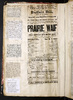
4th Year. New York, August 23, 1880. -- A New and Powerful Drama.- The Renowned Government Scout and Guide, Buffalo Bill, (HON. W. F. CODY.) In his Superb NEW COMBINATION OF 24 First Class Dramatic Artists 24 Engaged expressly for Buffalo Bill's New and Powerful Border Drama, which will be produced FOR THE FIRST TIME ON ANY STAGE, taken froms cenes in Buffalo Bill's past life, and written expressly for him by JOHN A. STEVENS, author of "UNKNOWN," entitled THE PRAIRIE WAIF A STORY OF THE FAR WEST. NOTE CAREFULLY THE STRONG CAST, Which has been made up with special regard to the fitness of every Actor to the part assigned them: BUFFALO BILL.. HON. W. F. CODY Mark Stanley..................................................................................R. C. White Jim Hardie {Danites}.....................................................................Harry Clifton Jack Hardie {Danites}................................................................... Geo. T. James Hans................................................................................................Jule Keen Capt. Russell.........................................................................C. Wilson Charles General Brown...........................................................................Ralph Delmore E. Overton, a Sutler.........................................................................Robert Neil Lone Deer...................................................................................William Wright Maj. Saunders..............................................................................Harry Irving Yellow Hand, Cheyenne Chief.......................................................Chas. Vedder Lieut. White......................................................................................E. Booth Jack Cass.................................................................................................Jerry ONITA...........................................................................MISS LIZZIE FLETCHER SADIE.......................................................................MISS CONNIE THOMPSON Danites, Indians, Soldiers, etc. Remainder of Programme See 3d Page. PROGRAMME. ACT 1.-- Prairie Waif (Lapse of one year between 1st and 2d Acts.) ACT 2.-- Home of Buffalo Bill. ACT 3-- The attack and Defiance ACT 4.-- The Rescue In Act 4th a Genuine Band of CHEYENNE INDIAN CHIEFS will appear in their Scalp adp War Dances, assisted by C. A. BURGESS, Indian Interpreter
MR. CODY, "Buffalo Bill," will give an exhibition of Fancy Rifle Shooting in which he is acknowledge pre-eminent and alone.
Friday, BENEFIT of BUFFALO BILL