
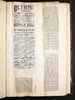
Page 21
Olympic Theatre Clark Street. Opp. Sherman House Z.W. SPRAGUE, ......... Proprieter and Manager JAS. BARNES ........... Director of Amusements Monday, September 13, Every Night during the Week, and Matinees Wednesday, Saturday and Sunday Warning! Citizens of Chicago, (Bridgeport included), also denizens of the North, South, and West Sides; not down in the last census, we deem it but fair to notify you that the Box Office will be open from 9:30 A.M., in order that you may secure your seats. Avoid the crush, and be in time for the Greatest of all Events. The Evening and Matinee performance of BUFFALO BILL! (Hon WM. F. Cody,) And His Star Combination of 24 Artists Not mentioning the CHEYENNE INDIANS CHIEFS and the Great Trained Donkey JACK CASS! READ THIS! From the Kokomo Daily Gall.] "Talk of CYCLONES, HURRICANES, and TORNADOS;" Well, they pale to insignificance before the whirlwind of popular enthusiasm, engendered by the Famous Indian-fighter Scout and Military Guide, BUFFALO BILL. Yesterday he came upon [word] in all his Wild, Weird Grandeus and magnificence. To-day he is gone, but the wrecks that strew his pathway are a tribute to his great genius. The audience at the Opera House last night was a seething mass of human beings. Two hours before the curtain rose every inch of room was packed to suffocation, and a howling mob pushed, yelled, and crushed each other for blocks outside the buiding, stopped the horse cars, and all other traffic. The play is one of the best of its kind ever written, and the entertainment, as a whole, is "Bully." BUFFALO BILL'S RIFLE SHOOTING was the admiration of all; while the SCALP DANCE of the Cheyene Indians made our very flesh creep But the JACKASS! "Well, we should smile," and we not only smiled, we laughed, and then doubled ourselves up and yelled. And now we have just come from the Opera House; the sad eyed weary janitor is shovelling up buttons by the bushel, the wreck of last night's laughter; while the entire population of small boys are practicing Scalp Dances and fancy Rifle Shooting The broken down signs, awnings, and empty beer kegs about the vicinity of the building attest the fury of the mob who did not get it. ALLAH ILL ALLAH, Great is BUFFALO BILL, and JOSH OGDEN is his Prophet. Seriously this is no laughing matter, allthe money has gone from pockets of our citizens, and deposited in the bank to thecredit of "BUFFALO WILLIAM." No one can get change for a 10 cent piece to-day. We had foadly hoped, that the "book sale on the next block" would have held our citizens, as of yore. But the dam gave way, and the flood came, and now those who did not see "SWEET WILLIAM," are damning to an extent which bodes no good to the Opera House people. Gentlemen, you must get a MAMMOTH CIRCUS TENT to hold 20,000 people, ere the returns,or we forsee the downfall of your present buildings.
MONDAY, SEPT. 20, ONE WEEK ONLY DALZIEL,LINGARD BUSLEQUE CO. OXYGEN! TAKE NOTICE--We give a MATINEE EVERY SUNDAY AT 2:30 ADMISSION, EVERY EVENING 75, 50, 35 & 25 cts BOYS UNDER 12 YEARS, 15 CENTS. TO ALL MATINEES, - 50 and 25 cts. CHILDREN UNDER 12 YEARS, 15c. WABASH PRINT,138-140 Lake Street.
---HOWARD ATHENEUM-- William F. Cody, known as Buffalo Bill, always draws large houses up Boston,and his appearance at the Howard Atheneum last evening was no exception to the general rule, the theatre being packed from pit to dome. The upper galley was filled with youthful admirers of Buffalo Bill, and they were among his most enthusiastic auditors. They followed the thrilling scenes which were being enacted on the stage with all the interest that an excited imagination and longing desire to be a "free trapper," roving over boundless prairies, could generate. The signs of approval were not shown in the galley alone, the really fine acting of Mr. Cody, and his splendid support, bringing out rounds of applause all over the house. "The Prairie Waif' is an exciting drama abounding in fine hits of humor, and full of thrilling adventure. Mr. Cody fills the position of the hero with his accustomed ease and grace, and was several times called before the curtain. Miss Lizzie Fletcher, as Oneta, is both beautiful and at ractive, and was at once made a favorite. Miss Connie Thompson, as Sadie, was all that could be wished. The company supporting Mr. Cody is well adapted to the several parts and by their upity and promptness of action make the piece the success that is has proved. One of the features of the evening was the introduction of a band of genuine Cheyenne Indian chiefs, who gave an exhibition of their former savage life by going through their scalp and war dances, assisted by C. A. Burgess, the Indian interpreter. During the evening, Mr. Cody gave an exhibition of fancy shooting with the rifle.
Buffalo Bill as "Prairie Waif." To say that Buffalo Bill and his combination played to a packed house would give but a faint idea of the immense throng which greeted them as the Howard Atheneum last evening. The performance commenced with Buffalo Bill's new border drama, taken from scenes in his past life, and written by Mr. John A. Stevens, entitled "The Prairie Waif." Buffalo Bill was supprted by his recently-organized dramtic combination. The story from which the play has been dramatized is familiar to all. The opening act represents the twenty-fifth anniversary of the wedding day of General Brown (Robert Neal), who some years previous had lost his daughter Oneta (Lizzie Fletcher), who, while walking with her purse, was stolen by some concealed men and the nurse killed. The sudden disappearance of the child was a dark mystery to her father. An adventurer, named Jim Hardie (Harry Clifton) a territorial official under Mormon sway, had by a dying confession obtained the secret to the girl's history, and tracked her to the place of concealment. He determined to gain possession ofher person and marry her. To accomplish this, however, he secures the agency of a worthless, drunken fellow named Mark Stanley (R. C. White). He finds the object of his search under the protection of an aged Indian chief, Lone Deer (William Wright), who is on the way with the waif to the fort to seek the protection of the commandant. On the way they are met by Hardie and his confederates, who are about to seize the girl and carry her off, when Buffalo Bill suddenly comes to the rescue. A fight ensues, and in the struggle Lone Deer is mortally wounded. Oneta is left alone with Buffalo Bill, sadly bemoaning the death of her faithful Indian. Bill offers her his protection and brings her to his homestead, where their close companionship ripens into warm affection. Hardie and his companions attack the homestead and carry off Oneta to the house of Mark Stanley, who is made to personate her father. He shakes off at last the hypo critical part he had taken and informs Buffalo Bill of her whereabouts. He seeks the aid of her father, General Brown, and gains his consent to give him the daughter's hand in marriage, on condition that she be restored to him within three days. Bill follows on the trail of Hardie, and, after severe fighting, secures the object of his search, restoring her to happiness and a distressed father his lost child. Mr. Cody assumes the chief character of Buffalo Bill in his wonted manly style. He have a fine exhibition in fancy rifle shooting incidental to the play. The character of Sadie was well sustained by Miss Connie Thompson, and the low comedy dialect part of Hans was taken by William Alstead, who interpretation of it was by no means up to the mark. The part of Captain Russell was very cleverly delincated [word] Mr.C. Wilson Charles. In fact, all the characters were very creditably sustained throughout. An interesting incident of the evening was the appearance of a genuine land of Cheyenne Indian chiefs in their scalp and war dances, assisted by C. A. Burgess, Indian interpreter. No little amusement was occasioned by the trained donkey, Jack Cass, who displayed much intelligence. Mr. Cody and his excellent combination will continue throughout the present week, and, we have no doubt, will meet with merited success.
Howard Atheneum. Seldom, if ever, was there in the Howard Atheneum a larger audience than that there gathered Monday night. Few, if any, modern Gavroches who had 15 cents per capita were absent from the gallery, and,in that Olympian altiude they swarmed, surged, crowded, swayed, quarrelled and criticised. Never were there less vacant seats in the dress circle; rarely more spectators in the orchestra, parquet and parquet circle and never, or, at least, "hardly ever," a larger crowd of "standees" on the first floor. It is a fact that there was neither a vacant seat nor a square foot of standing room offering a view of the stage that was not occupied, and many a patron who had purchased a billet for "standing room only," left the house early because he stood not the "ghost of chance" to see the show. The house was literally crammed. The attraction which brought this crowd together was primarily the Hon. William F. Cody, more popularly known as "Buffalo Bill." He has always been a magnet here for theatrical managers, and he appeared last night in a drama alleged to have been written by John A. Stevens, entitled "The Prairie Waif." This drama differs from those in wich Mr. Cody has previously appeared here in which Mr. Cody does not involve a sumptuous slaughter of "the noble red;" does not rely entirely for effect upon "deeds of noble daring" on the part of the hero; does not call into requisition, on unexpected and improbable opportunities, the use of the lariat, the bullet and the scalping knife for the purpose of annihilating the copper colored aborigine; does not please the gallery gods with such a liberal expenditure of gunpowder that one can smell its evolved gases and, in a word, does not appeal largely to the taste for the ridiculously sensational and exaggerated clements that have characterized some other pieces in which Mr. Cody has here to fore been the central figure. On the contrary, it is a subdued creation, so to speak. The scenes are laid in Mormon territory, and Buffalo Bill is, as in days of yore, always opportunely on hand to rescue his beloved girl from the hands of certain Danites who seekher ruin. His deeds are heroic. He wins every time. His allies are numerous and faithful. He accomplishes wonders, is the terror of the heavy villian, whom he eventually gets "sqaure" with, and wins the noisy plaudits of his auditors in a variety of tableaux which are thrilling in the extreme. The drama is better in many repects than any other in which Mr. Cody has appeared here. It has an interst apart from the character that he personates. It is well cast and handsomely mounted, and is well worth seeing by any one who desires an evening of unalloyed enjoyment.
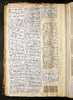
Page 22
THE NOTED SCOUT. A Herald Reporter's Visit to the Renowned Buffalo Bill Yesterday. A Chat on Inians, Scalp-Raising, and the stage Business.
A Ohat on Indians, Scalp Raising, and the Stage Business.
A Herald representative called last evening on the redoubtable "Buffalo Bill," Hon. William F. Cody, the renowned Indian fighter and hunter, whose handsome personal appearance and genial bearing is well known to the citizens of Cleveland, and questioned him in regard to the many strange and romantic incidents of a life which is more fit to adorn the pages of romantic reality than any fancy of the brain which could suggest any of the heroes of the "Leather Stockings" tales. Born upon the Western prairies, and reared amid wild scenes of tumult, his father murdered in the early days when Kansas with the struggle of a young giant was shaking off the yoke of African slavery, a trained Indian fighter TAKING HIS FIRST SCALP at the age of twelve, and having served his young State in earliest manhood as a trusted and an honored member of the Legislature, it is probable that William F. Cody is as well accquainted with all that pertains to the West as any other living man. "What do you think, Mr. Cody, would secure a better or more successful or economical management of the Indian tribes by the Government?" was asked. "I think I can sum up my policy in a single sentence. It is this: Never make a single promise to the Indians that is not fullfilled. Agents promise too much. Men of calm, prudent determination must be sent among the Indians as agents. Those who are sent often know nothing of the Indian character, and either through fear, ignorance, or dishonesty are led into making promises which the Government cannot or will not fulfill. Every Indian outbreak that I have ever known has RESULTED FROM BROKEN PROMISES and broken treaties by the Government." "What are your ideas concerning the idea of encouraging agricultural pursuits among the Indians." "It has already resulted in good and will result in still greater good if honestly and intelligently pursued. You cannot make and Indian work by standing over him with a shotgun. He must be taught that it is to his interest to do so, and brought into it by degrees. Too much cannot be accomplished all at once. But if a wise, firm policy is pursued the Indians will gradually drift into agricultural pursuits." Mr. Cody thought that the recent outbreak among the Utes was caused by the Indians being badly treated. He knew that for years miners, contrary to treaty, had been settling upon their lands. The Utes had protested and the Government paid no attention to them, and they had finally taken the matter into their own hands. Mr. Cody had been with the Fifth Cavalry for six years, and he was consequently well acquainted with the Utes. He had taken the first scalp to avenge the Custer massacre. On the same day he also killed Red Knife. HOW HE GAINED THE TITLE. The euphonious title of "Buffalo Bill" was gained in this way: In 1867 when the Kansas Pacific road was being built, I was in the service of the Government. One of the managers of the road came to me and said the men were out of meat, and asked me what I would contract to furnish twenty-five buffaloes a day for. I told him I was in the service of the Government and could not work for him at any price. The company, however, made an arrangement with the Government so that I got off. and he hired me at $500 a month to shoot buffalos. I thought $500 per month was the biggest salary any man ever received. I went to work, and in eighteen months I had killed 4,280 buffalos. The "Paddys" employed on the road as a consequence became very tired of buffalo meat. When they saw me coming they knew my appearance heralded a fresh supply of tough buffalo meat, and they said one to another, "Beded, here comes 'Buffalo Bill' agin; sharpen up your grinders, we'll have more buffalo meat now." I soon became known along the entire line of the Kansas Pacific as "Buffalo Bill."
HIS STAGE CAREER. How the great hunter came to be connected with the stage is as follows, told in his own language: "It was in the fall of '71," said Bill, "that General Sheridan came to the plains with a party of gentlemen for the purpose of engaging in a buffalo hunt, to extend from Fort McPherson, Nebraska, to Fort Hayes, Kansas, on the Kansas Pacific Railroad, a distance of 228 miles, through the finest hunting country in the world. In the party were James Gordon Bennett, of the New York Herald, Lawrence and Leonard Jerome, Carl Livingstone, S. G. Heckshire, General Fitzhugh, of Pittsburgh, General Anson Stager of the Western Union Telegraph Company, and other noted gentlemen. I guided the party, and when the hunt was finished I received an invitation from to go to New York and make them a visit, as they wanted to show me the East, as I had showed them the West. I was then
CHIEF OF SCOUTS in the Department of the Platte. And in January, 1872, just after the Grand Duke Alexis ' hunt, which, by the way, I organized, I got a leave of absence, and for the first time in my life found myself east of the Mississippi river. Stopping at Chicago two days, where I was the guest of General Sheridan, I proceeded to New York, where I was shown the 'elephant.' During my visit I attended the performance at the Bowery Theater, in company with Colonel E. Z. C. Judson (Ned Buntline), and witnessed a dramatization of Judson's story, entitled 'Buffalo Bill, King of Border Men.' The part of 'Buffalo Bill' was impersonated by J. B. Studley, an excellent actor, and I must say the fellow looked like me, as his make up was a perfect picture of myself. I had not watched my self very long before the audience discovered that the origional Buffalo Bill was in the private box, and they commenced cheering, which stopped the performance, and they would not cease until I had shown myself and spoken a few words. "At the time I had no idea of going on the stage, such a thought having never entered my head. But some enterprising managers, believing there was money in me, offered me as high as $1,000 per week to go on the stage. I told them I would rather face 1,000 Indians than attempt to open my mouth before all those people. I returned to my duties as a scout and during the summer of 1872 Ned Buntline was constantly writing to me to come East and go on the stage, offering large inducements. As scouting business was a little dull, I concluded to try it for awhile, and started East in company with Texas Jack. Met Buntline in Chicago with a company ready to support me. "We were to open in Chicago in Nixon Amphitheatre on December 16th, 1872. I arrived in Chicago December 12th, 1872. We were driven to the theater where I was introduced to Jim Nixon, who said, 'Mr. Buntline, give me your drama, as I am ready to cast your piece, and we have no time to lose, if you are to open Monday, and these men who have never been on the stage will require several rehearsals.' Buntline surprised us all by saying that he HAD NOT WRITTEN THE DRAMA yet, but would do so at once. Mr. Nixon said, 'No drama! and this is Thursday. Well, I will cancel your date.' But Buntline was not to be balked in this way, and asked Nixon what he would rent the theater one week for. 'One thousand dollars," said Nixon. "It's my theater," said Buntline. making out a check for the amount. He rushed to the hotel, secured the services of several clerks to copy the parts, and in four hours had written the "The Scouts of the Prairie." He handed Texas Jack and I our parts, told is to commit them to memory and report next morning for rehearsal. I looked at Jack's and then at my part. Jack looked at me and said, 'Bill, how long will it take you to commit your part?" 'About seven years, if I have good luck.' Buntline said, 'Go to work.' I studied hard, and next morning recited the lines, cues and all, to Buntline. Buntline said, 'You must not recite cues; they are for you to speak from the last words of the persons who speak before you.' I said, 'Cues bed-d; I never heard of anything but a billiard cue.' Well, night came. The house was packed. Up went the curtain. Buntline appeared as Cale Durg, AN OLD TRAPPER, and at a certain time Jack and I were to come on. But we were a little late, and when I made my appearance, facing 3,000 people, among them General Sheridan and a number of army officers, it broke me all up and I could not remember a word. All that saved me was my answer to a question put by Buntline. He asked, 'What detained you?' I told him I had been on a hunt with Milligan. You see Milligan was a prominent Chicago gentleman who had been hunting with me a short time before on the plains, and had been chased by the Indians, and the papers had been full of his hunt for some time, Buntline saw that I was 'up a stump,' for I had forgotten my lines, and he told me to tell him about the hunt. I told the story in a very funny way, and it took like wild-fire with the audience. "While I was telling the story, Buntline had whispered to the stage manager that when I got through with my story to send on the Indians. Presently Buntline sang out, 'The Indians are upon us.' Now this was 'pie' for Jack and I, and we went at those bogus Indians red hot until we killed the last one and the curtain went down amid a most tremendous applause, while the audience went wild. The other actors never got a chance to appear in the first act. Buntline said, 'Go ahead with the second act, it's going splendid.' I think that during the entire performance neither Jack nor myself spoke a line of our original parts. But the next morning the press said it was the best show ever given in Chicago, as it was so bad it was good, and they could not see what Buntline was doing all the time if it took him four hours to write that drama. "Our business was immense all that season, and if we had been managed properly we would have each made a small fortune. As it was I came out $10,000 ahead. In June, 1873, I returned to the plains, came east again in the fall, this time my own manager. I got a company, took the noted 'Wild Bill' with me, but could not do much with him as he was
Buffalo Bill while in this city on Wednesday will take tea at the residence of Philip H. Creasey, who was with the famous scout for two years on the plains of the far west.
NOT AN EASY MAN TO HANDLE, and would insist on shooting the supers in the legs with powder, just to see them jump. He left a few months later and returned to the plains. He was killed in August, 1876, in Deadwood. "In the summer of 1876 I was Chief of Scouts under General Carr, afterward with General Crooks and General Terry. "On the 17th of July I killed Yellow Hand, a noted Cheyenne chief, and took the first scalp for Custer. I returned to the stage in October, 1876, and during the season of 1876 and 1879 I [word] $38,000. I have generally been successful financially on the stage. I am now in the cattle business in Nebraska, to which place I will return as soon as the season is over, providing nothing serious occurs to call me home earlier."
BUFFALO BILL. Yesterday Young America's soul was fired. Buffalo Bill and his troupe of Cheyenne Indians had arrived in town and Fourth of July was nowhere. So eager were they to see the great hero, and redskins, that they congregated in vast numbers, in front of the United States Hotel, blocking the sidewalks and making such a rumpus that the porter proceeded to cool their ardor with a stream of Sebago from the hotel engine, and a policeman did stalwart service with a rattan. When however the superb William and his decorated Cheyennes mounted their prancing steeds to parade the town, then the excitement rose to the highest pitch. One boy who had been suffering from a raging toothache for a week, making not only himself but his whole family uncomfortable because he could not muster the courage to have the grinder out, begged his sure for fifty cents to see the "Prairie Waif." "My son," said the aged parent, "to induce me to produce the necessary shekel in order that you may see Mr. Bison that tooth must first come out. No tooth drawing, no shekel." The youth was conquered. What was a moment of agony compared with an evening of bliss. Out came the tooth and last night the brave boy sat in the front row of the balcony. At 7:30 p.m. the doors of the theatre were besieged. At 8 p.m. the gallery was crowded to repletion and no more money taken at the gallery window. A few moments later down stairs the house was crowded, and standing room sought for. There were over 1200 people in the house and its capacity fully tested Mr. Cody, who prides himself in his accepted name of Buffalo Bill, assumed the chief character in the "Prairie Waif" with a full recognition of its stage demands. His style of acting has conformed to a better model, and he has selected for his company artists who are mindful of the public demand for clever acting. His elocution is in better taste, and his stage associates have been chosen for their 'personal qualifcations as well as for their dramatic experience and skill. Messrs. R. C. White, Henry Clifton, George T. James, Mr. Allstadt, Miss Lizzie Fletcher and Miss Connie Thompson are well known and gave good satisfaction. The story of the play is especially sympathetic and picturesque, and the scenes are surrounded by an atmosphere of romance that adds to its effectiveness; while Mr. Cody does not fail to avail himself of the use of accomplishments as a rifle shot, which imparts an additional interest to the stirring incidents of the representation. The lighter portions of the performance are made especially amusing by the comic humor of Mr. Allstadt and Miss Connie Thompson, the latter of whom adds several comic songs to her repertoire, and sings them with humor and spirit.
Last evening City Hall was packed to witness the grand entertainment given by the "Buffalo Bill Dramatic Company" and band of Cheyenne Indian Chiefs. It was an immense success. The drama of "The Praire Waif" proved of most thrilling interest, while the scalp and war dances of the Indian possessed a weirdness which held the spectators almost spell-bound. The fancy shooting of Buffalo Bill won warm encomiums, and the audience expressed their delight by frequent and long-continued applause. The street parade in the forenoon was a grand feature.
"The Prairie Waif," the new play written for Buffalo Bill by John A. Stevens, drew an audience of 3800 people at the Windsor, New York, last Monday. It deals, says the Dramatic News, in villians, Indians, virtue, etc., and is played in four acts, each terminating in a sanguinary tableau, which bring down the house. The author has not forgotten (per order of Buffalo Bill) to have in the play an Irishman, a Dutchman, a jackass and some mountains.
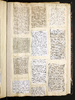
Page 23
HOWARD ATHENEUM. Buffalo Bill furnishes in his border drama, "The Prairie Waif," a play which literally packed last evening with an audience which, if it did not weep with oppressed virtue, shrieked for joy when it rose triumphant above the schemes of villainy, as, to do the drama justice, it constantly did. It is this tribute of natural feeling, unrestrained by the principles of severe and critical taste, that most powerfully appeals to the susceptibilities of an actor. There is no restricted art in this play; the wells of pure emotion bubble up from a fount from whose brim the grasses and flowers of nature have not yet been trimmed by the keen edge of education, and all the impressions of the hour spring direct from the emotions. Buffalo Bill, however, respresents something of value in his portrayal of the wild life of the plains, and introduces us to a type of manhood which will always have its fascinations for impetuous youth. The thrill of suspense when the hero is menaced by the arrows of scalp-decked savages or covered by the guns of depraved Mormons, is anon succeeded lay the welcome relief of feeling when he leaps unharmed from a window, or empties his rapid revolvers into the forces of the astonished foe, and although the critical mind is prone to inquire how it happens that all the bowstrins are constantly powerless and the hostile guns persistently refuse to go off, it is apt to conclude that the adventures and escapes of the scout are really not more remarkable than those of the Homeric heroes, which the whole world admires. Indeed, the critical mind is somewhat out of place here, but any one who has cause to dislike Indians or Mormons is likely to find his strongest craving for vengeance satisfied. The carnage among these unhappy beings is prodigious, and they are slaughtered right and left in a peculiarly merciless and agreeable way. The machinations of the evil constantly react upon their own heads and however severe the oppressions of the good and the just, one can depend upon their being properly rescued at the end of every act by the miraculous and unexpected interposition of Buffalo Bill. Thus the play constantly inculcates deep lessons of morality and spreads abroad a benign influence whereever it is enacted. It will continue to instruct and entertain the patrons of the Howard during the remainder of the week. GAIETY THEATRE
---HOWARD ATHENAEUM.--William F. Cody, known as Buffalo Bill, always draws large houses in Boston, and his appearance at the Howard Athenaeum last evening was no exception to the general rule, the theatre being packed from pit to dome. The upper gallery was filled with youthful admirers of Buffalo Bill, and they were among his most enthusiastic auditors. They followed the thrilling scenes which were being enacted on the stage with all the interest that an excited imagination and longing desire to be a "free trapper," roving over boundless praries, could generate. The signs of approval were not shown in the fallery alone, the really fine acting of Mr. Cody, and his splendid support, bringing out rounds of applause all over the house, "The Prairie Waif" is an exciting drama, abounding in fine hits of humor, and full of thrilling adeventure. Mr. Cody fills the position of the hero with his accustomed ease and grace, and was several times called before the curtain. Miss Lizzie Fletcher, as Oneta, is both beautiful and attractive, and was at once made a favorite. Miss Connie Thompson, as Sadie, was all that could be wished. The company supporting Mr. Cody is well adapted to the several parts, and by their unity and promptness of action make the piece the success that it has proved. One of the features of the evening was the introduction of a band of genuine Cheyenne Indian chiefs, who gave an exhibition of their foruner savage life by going through their scalp and war dances, assisted by C. A. Burgess, the Indian interpreter. During the evening, Mr. Cody gave an exhibition of fancy shooting with the rifle.
LOW'S OPERA HOUSE.--The new play of Buffalo Bill, "The Prairie Waif," is designed, as have been all the plays of this noted scout and actor, to illustrate life on the plains and in the backwoods, but the illustration now given is not quite so extravagent as those heretofore presented. It is more consistent, and the situations admit of a possibility in the minds or people accustomed to quiet lives, that they paint actual occurrences. To those who have never known life in the West, never seen cow-boys and their lik, it is impossible for them to realize that such noise, hubbub and confusion can occur as is represented by the dramas that Mr. Cody has brought before the public, and "The Prairie Waif" is better calculated to find favor with the public, from the fact that it is a little tame compared to actual occurrences. The company, as a whole, is a very good one. The "Oneta" of Lizzie Fletcher, and the "Sadie" of Connie Thompson are particularly good, and Mr. Alstead's "Hans," is true to nature, and he makes as fine a little Dutchman as one could wish to see. If anything Buffalo Bill has improved as an actor--as a marksman there was and is no opportunity for improvement. There was a large audience present who, by their frequent applause, testified their unqualified aproval of the performance. There is to be a matinee performance in the evening for the last time.
BUFFALO BILL AT THE HOWARD. At the Howard Buffalo Bill came back with all his wildwood grace, and though he is still an illustration of nature unadorned rather than of the art which conceals art, he now treads the stage with more ease than formerly. He brought with him a new peice called The Prairie Waif, but it does not differ from his other dramas enough to call for detailed notice. Like them it has plenty of hair breadth escapes and like them it is a glorification of trapper life. The familiar real live Indian, who does not perform as well before the footlights as the imitation one, was seen in some of his characteristic songs and dances, and the Hon. William F. Cody made himself a man of mark by a display of his skill with a rifle.
Low's Opera House. An excellent audience gathered at Low's Opera House, yesterday evening, to see "Buffalo Bill," the Hon. Wm. F. Cody, in his new drama from the pen of John Stevens, of "Unknown" fame; entitled "The Prairie Waif." Unlike the dramas hitherto brought out by this noted scout, trapper and Indian fighter, "The Prairie Waif" has a fine underlying sentiment, and abounds with interesting situations. Ripples of merriment break out at times, and the audience is spared the wholesale slaying of red-skins, and the choking fumes of burned powder. Mr. Cody has become quite an actor since his last appearance here. He has lost the frigidity and nervousness of the past, and renders his lines in a most acceptable manner. The support was most satisfactory, and the applause bestowed was generous, honest and spontaneous. "Buffalo Bill" rather astonished the natives by his wonderful marksmanship in the second act, handling his rifle beautifully. During the fourth act, a band of Cheyenne Indians treated the audience to a war-dance, accompanying their gyrations with ear-splitting howls and the incessant thumping of a tamborine. One of the features of the evening was Wm. Alstead's Hans, whose low-comedy dialect and specialties were warmly recognized. Miss Connie Thompson's Sadie was a painstaking piece of acting. "The Prairie Waif" will be repeated this afternoon and evening.
The Prairie Waif. The presentation of "The Prairie Waif" by the Buffalo Bill troupe at Breed hall, last night, was a grand success. Those who procured their tickets early saw the advantage of it. For an hour before and some time after the play commenced it was more than a ticket was worth to work one's way to the office to purchase it. Buffalo Bill fills a hall in Norwich as no other man can. The house was packed. The play passed off pleasantly, and although largely made up of love scenes, had enough of the rash and romantic about it to make it lively and interesting. Anything that smacks of frontier life and the Indians always pleases the boys, and hundreds of them were there. The old folks criticising the play thought there "was too much love and too little Indian" in it, but the blooming youth of both sexes sighed and remarked "It was just lovely." Buffalo Bill is the hero young America doffs its hat to, and if he is pleased who can grumble? The announcement of his coming here is a sure guaranteee of a full house.
BUFFALO BILL.--The noted scout, Buffalo Bill, will appear at Music Hall this evening in "The Prairie Waif," supported by his popular company. In an interview the great scout says, speaking of his first season on the stage: "Our business was immense all that season, and if we had been managed properly we would have each made a small fortune. As it was I came out $10,000 ahead. In June, 1873, I returned to the plains, came east again in the fall, this time my own manager. I got a company, took the noted Wild Bill with me, but could not do much with him as he was not an easy man to handle, and would insist on shooting the supers in the legs with powder, just to see them jump. He left a few months later and returned to the plains. He was killed in August, 1876, in Deadwood. "In summer of 1876 I was Chief of the Scouts under Gen. Carr, afterward with Gen. Crook and Gen. Terry. "On the 17th of July I killed Yellow Hand, a noted Cheyenne chief, and took the first scalp for Custer. I returned to the stage in October, 1876, and during the seasons of 1876 and 1879 I cleared $38,000. I have generally been successful financially on the stage. I am now in the cattle business in Nebraska, to which place I will return as soon as the season is over, providing nothing serious occurs to call me home earlier."
There was a large and enthusiastic audience in the dress circle and gallery of the Opera House, Monday night to witness the performance of Buffalo Bill's "Prairie Waif." Special features of attraction were the orchestra, Buffalo Bill's fancy shots at sliced potatoes, and Hans' performance with the donkey. The play is good, and the several characters were well taken. The audience was delighted.
--The Buffalo Bill company at the Opera house last evening, in point of attendance was immense, the cash receipts being one of the largest of the season. The audience seemed delighted and by the frequent applause, Mr. Cody must be convinced that Bridgeport has voted him a favorite. Some of the scenes potray actual events in his life on the plains. The supporting company is well adapted to their several parts. Mr. Cody is a wonderful man. His show season closes May 1st, and then he goes to Nebraska, where he has a large cattle ranche, sees to affairs there and then spends the summer in hunting and visiting various military stations, where he is a general favorite.
BUFFALO BILL LAST NIGHT "The Prairie Waif" was presented by the Buffalo Bill combination, last night, to a large audience, and gave very general satisfaction. The plot turns upon the abduction of a young girl (Onita) by the Danites and her rescue by Buffalo Bill, who kills her abductors, restores her to her loving father, marries her-- and they live happily ever afterwards. There is a comic Dutchman who sings and dances, a bright little woman to whom the aforesaid Dutchman makes love, and who sings and dances, also a highly trained donkey, and a company of Indians, who dance and howel and flourish knives and tomahawks in an unpleasantly devilish manner. The Prairie Waif is well played by Miss Lizzie Fletcher looks the part to perfection, and acts with intelligence and vivacity. Nobody could play the part of Buffalo Bill better than Buffalo Bill himself, who makes a very handsome stage picture, and does his love making with the modesty and his fighting with the gallantry and dash of a hero. His rifle shooting feats displayed the extraordinary skill for which he is famous, and the precision of his aim from all sorts of difficult positions elicited the applause of the audience. The entertainment was interesting throughout, and Buffalo Bill and his company added many friends to the long lost of those the handsome scout had already gained for himself in Easton.
Amusements. Buffalo Bill.-At the Able opera house on next Thursday evening, January 13, the noted scout will apear with his monster combination, when they will produce his new drama entitle the "Prairie Waif," a story of the Far West, written expressly for Mr. Cody and taken from scenes of his past life, embracing as it does many strange and romantic incidents of a life which is more fit to adorn the pages of romantic reality than any fancy of the brain which could suggest any of the heroes of the "Leather Stocking" tales. Born upon the Western prairies, and reared amid wild scenes of tumult, his father murdered in those early days when Kansas with the struggle of a young giant was shaking off the yoke of African slavery, a trained Indian fighter taking his first scalp at the age of twelve, and having served his young state in earliest manhood as a trusted and an honored member of the Legislature, it is probable that William F. Cody is as well acquainted with all that pertains to the West as any other living man. The "Prairie Waif" was first produced at te Windsor theatre, New York city, where it met with great success. Chicago, St. Louis, Cincinatti and Boston audiences have also applauded it to the echo.
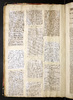
Page 24
BUFFALO BILL TONIGHT At the Opera House, tonight, the renowned Indian fighter and hunter, Buffalo Bill, will appear with a very excellent company in the celebrated drama entitled, "Prairie Waif," which was written expressly for him and founded upon incidents in his career while chief of scouts and guide to the United States Army. During the progressof the drama a genuine band of Indian chiefs will appear and Mr. Cody (Buffalo Bill) will give some exhibitions of his extraordinary skill with the rifle. In a recent interview with a Herald reporter, Buffalo Bill told how he gained his title:
In 1867 when the Kansas Pacific road was being built, I was in the service of the Government. One of the managers of the road came to me and said the men were out of meat, and asked me what I would contract to furnish twenty-five buffaloes a day for. I told him I was in the service of the Government and could not work for him at any price. The company, however, made an arrangement with the Government so that I got off, and he hired me at $500 a month to shoot buffalo. I thought $500 a month was the biggest salary any man ever received. I went to work, and in eighteen months I had killed 4,280 buffalos. The "Paddys" employed on the road as a consequence became very tired of buffalo meat. When they saw me coming they knew my appearance heralded a fresh supply of tough buffalo meat, and then they said, one to another, "Bedad, here comes "Buffalo Bill" agin; sharpen up yout grinders, we'll have more buffalo meat now." I soon becomaeknown along the entire line of the Kansas Pacific Railroad as "Buffalo Bill."
The company is a good one and Buffalo Bill is a favorite in Easton, so that the probabilities are strongly in favor of a large audience at the Opera House to-night. Reserved seats may be secured at Riegel's book store.
BUFFALO BILL." -In Music Hall this evening Hon. Wm. F. Cody, better known as "Buffalo Bill," will appear with a strong company, and of them two exchanges speak thus:
We didn't expect to see so good a performance as we did at Rouse's Hall last night. Buffalo Bill was never so well equipped to do his many admirers' justice.
"The Prairie Waif" is a good play, and is replete with strong situations and dramatic effect. Buffalo Bill cannot help making a success of it. -Peoria Daily Transcript.
Buffalo Bill came again as usual to a packed overflowing house, hundreds turned away inable to get even standing room. "Prairie Waif," his new drama, is the strongest border drama ever produced. Bill himself shows to splendid advantage. His rifle-shooting beats anything we ever saw. The company supporting is a strong one-all are good. The Indians are the pure genuine article. Bill always performs just what he advertises and more too, hence the secret of his success. He always has big houses and justly deserves them. Come again, Bison William, you are always welcome. -Clinton Age.
-Buffalo Bill will be at the Opera House this evening, and with him will be a band of genuine Cheyenne Indians accompanied by the United States government scout and interpreter, C. A. Burgess. They will play "The Prairie Waif." The following from the Cleveland Herald concerning Buffalo Bill will interest the readers of the Standard:
In August, 1868, "Buffalo Bill" rode in twelve hours from Fort Larned to Fort Zarah and back, sixty-five miles; in the succeeding twelve hours he carried dispatches to General Sheridan from Fort Larned to Fort Hayes, sixty-five miles. From Fort Hayes he rode in the next twenty-four hours to Fort Dodge, ninety-five miles; on the next night he went to Fort Larned, thirty-five miles on foot and thirty miles on a mule; and again the next night from Fort Larned to Fort Hayes, sixty five miles. he made on horsess, mules, and afoot 355 miles, and he was in the saddle or afoot fifty-eight hours. These successive rides were made through a rough, irregular country, swarming with hostile Indians, where there were no roads and hardly a perceptible trail, which had to be followed in the obscurity of the night. Early in life Buffalo Bill made a continuous ride of 322 miles, making that distance in the incredibly short time of twenty-two hours, a wonderful feat of human endurance.
-Buffalo Bill played in New Haven a few nights ago, and Duprez and Benedict's minstrels was at the New Haven Opera House the same night. Along in the evening a stalwart Indian presented himself at the door where Mr. Duprez was taking tickets. The Indian made a sign, indicating that he wanted to go in. Mr. Duprez asked him where his ticket was. "Me Ingin. Me don't have ticket," was the reply. Wishing to have a little fun, Mr. Duprez parleyed with his Indianship a few moments longer, and found out he belonged with Buffalo Bill, but when the red skin drew himself up and said, "Me Injun, me professional," he had to let him in. so he gave him a front row seat and let him pass.
HOWARD ATHENEUM. Buffalo Bill furnishes in his border drama, "The Prairie Waif," a play which appeals to the masses. Accordingly the Howard was literally packed last evening with an audience which, if it did not weep with oppressed virtue, shrieked for joy when it rose triumphant above the schemes of villainy, as, to do the drama justice, it constantly did. It is this tribute of natural feelings , unrestrained by the principles of severe and critical taste, that most powerfully appeals to to the susceptibilities of an actor. There is no restricted art in this play; the wells of pure emotion bubble up from a fount from whose brim the grasses and flowers of nature have not yet been trimmed by the keen edge of education, and all the impressions of the hour spring direct from the emotions. Buffalo Bill, however, represents something of value in his portrayal of the wild life of the plains, and introduces us to a type of manhood which will always have its fascinations for impetuous youth. The thrill of suspense when the hero is menaced by the arrows of scalp-decked savages or covered by the guns of depraved Mormons, is anon succeeded by the welcome relief of feeling when he leaps unharmed from a window, or empties his rapid revolver into the forces of the astonished foe, and although the critical mind is prone to inquire how it happens that all the bowstrings are constantly powerless and the hostile guns persistently refuse to go off, it is apt to conclude that the adventures and escapes of the scout are really not more remarkable than those of the Homeric heroes, which the whole world admires. Indeed, the critical mind is somewhat out of place here, but any one who has cause to dislike Indians or Mormons is likely to find his strongest cravings for vengence satisfied. The carnage among these unhappy beings is prodgious, and they are slaughtered right and left in a peculiarly merciless and agreeable way. The machinations of the evil constantly react upon their own heads and however severe the oppressions of the good and the just, one can depend upon their being properly rescued at the end of every act by the miraculous and unexpected interposition of Buffalo Bill. Thus the play constantly inculcates deep lessons of morality and spreads abroad a benign influece wherever it is enacted. It will continue to instruct and entertain the patrons of the Howard during the remainder of the week.
Buffalo Bill.
Buffalo Bill and company appeard at the theatre Sunday afternoon and evening. The attendance in the afternoon was fair, and in the evening the theatre was crowded as it has never been crowded before, and the reciepts were the largest ever known at the place for one night. Over 1800 people were in the house, and the pressure continued so great that many were turned away, and some of those who had purchased tickets had their money refunded, not being able to get into the hall. The receipts for the evening were $1125, the largest amount of money ever taken there for one performance, and the audience was made up of more people than Buffalo Bill has ever appeared before in any other city, and the receipts have only once been exceeded, that being in St. Louis, where higher prices were charged. The people enjoyed the entertainment, and their applause was as generous as their patronage. The play, "The Prairie Waif," is as good, if not better, than the best Buffalo Bill has ever brought here, and the company was the best that he has ever intoduced to a Worcester audience.
How "Buffalo Bill" Got His Name.
William F. Cody, better known as "Buffalo Bill," came by his name in a way that perhaps but few of out readers are aware of. He told the story to a Cleveland Herald reporter as follows: The euponious title of "Buffalo Bill" was gained this way. In 1867, when the Kansas road was being built, I was in the service of of the government. One of the managers came to me and said the men were out of meat, and asked what I would contract to furnish twenty five buffaloes a day for. I told him I was in the service of the governmennt and could not work for him at any price. The company, however, made an arrangement with the government so that I got off, and he hired me at $500 a month to shoot buffaloes. I thought $500 a month was the biggest salary any man ever received. I went to work, and in eighteen months I had killed 4,280 buffaloes. The "Paddys" employed on the road as a consequence became very tired of buffalo meat. When they saw me coming they knew my appearance heralded a fresh supply of tough buffalo meat, and they said one to another, "Bedad, here comes 'Buffalo Bill' again; sharpen up your ginders, we'll have more buffalo meat now." I soon became known along the entire line of the Kansas Pacific as "Buffalo Bill." He took his first scalp when only twelve years of age and will take others at the Ansonia Opera House Thursday evening.
The coming of the Buffalo Bill company brings t out mid a little incident that occured when the company arrived a LaCrosse, recently. The Lacrosse Leader gave the following acounts of the amusing affair: The famous horse St. Julian, which it was said would pass through he city this morning by the 7:30 train, on the way to Minneapolis, attracted nearly one hundred persons to the depot from all parts of the city to view the famous race horse, some coming from great distances. Somebody made the remark that the horse was in the special express car, and the crowd ruched thither eager to see St. Julian. They perred through the window, but the only animal that greated their view was the solemn looking donkey "Jerry," belonging to the Buffalo Bill troupe. Each one who fell victim to the joke sadly wondered his way homewards, wondering which was the biggest donkey, "Jerry" or himself.
Page 25
BUFFALO BILL. -- How He Came to Go On the Stage. -- His Great Ride With General Custer. -- "Just Foller Yer Hand, [B-y-] and Steam Up." --
"I'm no actor," said Buffalo Bill one afternoon during his late visit here, as a small but congenial party of us sat in the back office of the City Hotel. "I don't pretend to be anything of an actor, but you see the people seem to like it, and during the winter season I have nothing else to do, and, of course, I kin make more money this way than I can taking parties out on the plains or in hunting. I've got a nice little ranche now, and about 8,000 head of cattle, and as soon as I get my pile about where I want it, I shall just settle down. You see this layin around hotels all winter, living high and doing nothing, don't agree with a man who has been accustomed to being in the saddle all his life, and out among the excitement of the border, with an occasional scare from them at red-skinned hair lifters, or a bout with grizzlies. Just as soon as I get through with the theatrical season I just dust for my ranche and then my work commences, and as soon as I hist into that sadle and start out with the other cattle raisers I feel at home, and what with rounging in the cattle, branding 'em, etc., it don't take long to knock off this lazy flesh. It's a mighty exciting life, and we have lots of fun with it all. You see there are some jolly good fellows that have gone into is cattle-raising business, for, barring accidents, it is a money-making business, and when night comes and we all get together in camp there are some fine old hoorays, for you see when a man is out that on the plains he can "steam up" considerable, and getting into the saddle, with a chase after a lively steer, will take the head off of you quicker than brandy and soda or any of these rejuvenators you fellows use in the cities after a racket." "How did you first come to go upon the stage?" said I. "Wall, you see, I think it was a matter of nine or ten years ago I was in the government employ as a scout. I had been out on the plains with one of the editors of a Chicago paper, and we had a little brush with some Injins; give the fellow a terrible scare and when he got back he writ it up, and of course, like all you newspaper fellows, spread it on mighty thick and you would thought it was the biggest Injin scrimmage on record, and he a regular team of an Injin fihter. Well, I come back to Chicago shortly after and I met old Ned Buntline; I had known him before for the old fellow had often been out on the plains. He says to me: 'Bill, I''ve got a play written, and I want you to go on the stage and act in it, here in Chicago , and I'll give you five hundred dollars.' I said to him: 'Why, I don't know anything about acting, Ned.' 'Oh, tha'll be all right,' said he. So, as it promised to be a pretty good snap, I spoke o the General commanding the department about the matter, and he told me to go on, for you see I was only getting a hundred and fifty dollars a month and rations from Uncle Sam, and I knew I could always get my place back again if the acting business didn't work. Buntline gave me my part to study and I went to work on it. I kin tell you it was tough work for me, for it was out of my line, you see, and was worse work for me than following a grizzly's trail or hooping up a lot of buffaloes. The night of the opening performance came; and when the curtain went up and the cue was given for me to go on I'd forgot every consarned word of my lines and went on the stage and stood there like a Stoughton-botle. Somebody said 'Whar did you come from, Bill?' That was my cue. I couldn't think of anything else to say, so I just whacked out he story of being out after the Injins with his editor I told you of. He was thar that night in a box, and when I told the story in my way the audience just got on to it and fairly howled. I took up the whole scene, and when the curtain went down on the first act the rest of the company were saying they had not been on at all. But Buntline says: 'This's going bully; it's all right; just go on in your own way, Bill.' Well, I give it to them in that style. Somebody would say on the stage. 'Who'll save me!' Then on I'd rush. 'I will, Buffalo Bill!' Fire off a brace of six shooters. Injins drop all over the stage. Red fire!! Whoop!! Curtain. "Well, that's about the style of the thing, and I've played from Main to Louisiana and as long as the public like it, why of course its all right. This season, as you know, I've got a new play and its very fair; and of course in these eight years I've got some experience in stage matters and feel quite at home, but bless you, I don't make any pretensions to being an actor. See here, I am getting dry talking so much. You boy there, tell Davenport to foller his band-- same all round-- them are apple toddies Tom mixes, are great stuff for steaming up; but they kick like a mule. Speaking of mules reminds me of a ride I took on one once, going across the plains with Custer. We'd got to go aobut seventy miles, and had got to make time, so I went down to the corral and picked out a tough-looking long-ears. When I rode up, Custer says to me, 'Bill, this is going to be a long ride; you'll need a horse.' 'Government don't furnish horses,' said I. 'I'll stay with you right smart for awhile with this mule, I reckon.' He had blooded horse, but I knew, for a long pull, old mule was good. They are tougher than the bark of a hickory. I had on a pair of old Mexican spurs, and once in a while I would just quietly sock one in on the off-side, and that old mule would just hum. I kept up with the gang, and after we had gone some distance Custer says, 'That's a pretty good mule you've got Bill?' 'Yes,' says I, 'for a mule he is quite fair;' and then I would jam that spur in on the side of the mule away from Custer, and just lift him. Well, we kept on that way and didn't get left much, you can bet. Old mule was right thar, every time. Custer thought he had better hold up a little on the pace for fear my old nag would give out, but I told him to go right along as if nothing had happened, and if he got there before I did to just tell 'em I was on the road. Well, now, you talk about Sheridan's ride, it wan't a circumstance. Custer could ride like the very devil, and it kinder bothered him to have that old mule keep so well side of his Kentuckian; and he was giving his horse all the lift he could get out of him just for spite; but I'll be dog-goned if I don't think that mule had got a streak of Arabian in him, for he was no end of a loper and if Custer got a little ahead a good dose of spur would bringme up level, and I knew I could tire the horse out on a long pull. Well, to make a long story short, when we got prety near the end of the juant i just made up my mind I was going to elave Custer behind and crawl in ahead. I gathered up the old mule and with a regular o'd Piute yell I jammed both spurs way in and jus dusted down the trail like a streak of greased lightning. I got into the fort just ten minutes 'fore Custer showed up and when I seen him quietly. 'Pretty good mule I had Custer.' He didn't say anything, but it was a grinder for him. His horse died that night from the hard pull he had; but that old mule chewed his prairie grass the next morning as if nothing had happened. I don't know whatever became of him. I reckon othing short of an earthquake would kill him. I've had some pretty good times taking parties out hunting. You know there is a good many of these English lords come over here for a little shootin', for they can bag game out on our prairies that they don't find at home. You know I went out with the Earl of Dunraven one season, and he was just crazy for shootin', and if I told you of the amount of game we knocked over, you'd think I was pulling the long bow. He wrote a hook after he went home and gave me quite a send-off. He came over a second time and sent for me, but I had an American party in tow, and so sent Texas Jack with Dunraven. He didn't like it a bit, but I had gin my word to go with the other party, so I couldn't get out of it. This party I was going with was some of the proprietors of the Remington Rifle and Sewing Machine Company, and a jolly good set they were, too. They liked to hunt and to have a bully good time besides, I give them a grand Injin scare one night just for fun. We was in a pokerish-looking place, and just after dark I got up on the side of the canon and just give a series of yells, and you'd have thought that whole Sioux nation was down on us. Them fellers were sitting in the tents and saying to each other, 'What blasted idiots they were to leave comfortable homes and firesides to be skylarking round out there, with the likelihoods of getting their hair lifted by the pesky redskins.' When I let on what I'd been doing, they just acknowledged the corn, and you can bet we just steamed up. Well, I'm getting dry again. Aleck, tell Davenport to foller his band again. Same old story all round, is it? No you don't, you can't ring any Apollinarius in on me, take suthin hard. That sounds more liek it; make that last one whiskey and gum, Aleck. Now boys I'd be right glad to see you out on my ranche next summer; come out and stay six weeks or so, I'll guarantee you a good time, and if you like riding I can mount you with a good animal and if you don't enjoy yourself it's your own fault. I ain't foolin' now. I'd really like to have you come, and if you'll just send me word I'll meet you anywhere you say, and I'll bet you say you never had a better time in your life, and you can't find any such fun this side of old Missouri." "Vale."