
Page 35
Buffalo Bill's troupe had a good audience at the Opera house last night, and the entertainment gave unbounded satisfaction. We regret exceedingly that want of space forbids the extended notice the entertainment deserves.
AMUSEMENT One of the most enjoyable treats in store for amusement lovers will be the appearance of Buffalo Bill and his company of 25 artists, as Wheeler's Opera House, tomorrow evening, on which occasion the thrilling play of "May Cody , or Lost and Won," will be produced, and we have no hesitation in saying that the house will be pack, as it should be. The following very complimentary notice we clip from the Terre Hadte, "Express" of last week:
"As it always is when Buffalo Bill pays us visit, the opera house, was as full as a box of a{?}rdines, last evening. The play was May Cody, which was produced here one year ago. It deals with the Mormon Danites and the Mountain Meadow massive, and the frontier generally. Mr. Cody has gained much in ease of manner and grace of action, and he is now able to present the ideal frontier hero in a manner which makes him a formidable rival of any actor. In his exhibition of marksmanship Mr. Cody displayed a degree of skill rarely equaled. At a distance of ten paces, with a potato for a target, he did not miss a single shot out of a dozen or more. He holds his gun in all sorts of positions, with the whip, an same no varying accuracy of aim. He also gave as exhibition of the use of a "bull whacker's" whip, an implement of tenure, made up of three feet of handle and twenty feet of lash. Mr. Charles Wilson, as "Darby McCune,"created hurricanes of mirth. Mr. Wilson gives a very faithful picture of Irish character, The four Indian Chiefs accompanying the troupe gave an exhibitions of Indian dancing which was a ludicrous as it was no doubt, true to nature. A very clever per former is the donkey, ridden by Darby McCune, and he should have more consideration than is bestowed upon him by the management. He had no place in the program, and we are consequently unable to give his name. Altogether the entertainment given by this company is one which affords rare enjoyment. To the boys the privilege of seeing Buffalo Bill in person is a great boon. To children of larger growth there is a much that will interest and please in the text and action of the drama."
The Indians with Buffalo Bill's troupe attracted considerable attention yesterday. Last evening they played pool and showed themselves to be Knights of the Cue of no ordinary skill.
Buffalo Bill's Indians are the source of no little amusement on the part of those with whom they chance to come in contact. Yesterday one of them experimented with the telephone at one of our most-popular hotels, and several of them were, after a deal of trouble fitted with coats, pants, vests and toggery of the more civilized, by the original Garson, at a total expenditure of two or three hundred dollars.
BUFFALO BILL was presented with an elegant gold-lined silver goblet last evening by Manager James Collins, of Heuck's Opera- house, in commemoration of the past week's engagement at this theater, which was the largest known since the house has been built, fully five hundred people being turned from the door last night.
BUFFALO BILL. "Buffalo Bill" and company concluded a successful engagement at the Corinthian Academy of Music last night, before a full house. His new play has made a very favorable impression, but even if it had not, the famous scout would have drawn large audiences just the same. He has a good support, and viewed from a strictly dramatic standpoint, it may be said that his performances are better than before.
BUFFALO BILL. In the Opera House, last evening Buffalo Bill's reception by his large audience of young people would have warmed the cold heart of Sammy Tilden. Enthusiasm ran high and round after round of applause greeted all the thrilling situations of the new play, which is a vast improvement over all others in which this start has appeared. Mr. Cody's exhibition of rifle shooting was very remarkable. He shot the fire out of a cigar held in the mouth of one the company, standing on the opposite side of the stage, and cut potatoes into bits while holding his rifle in all conceivable positions. The educated jack was full of mischief, and delighted the little ones. The Hibernian and African roles were also funny. Buffalo Bill will long be remembered by the young people of Utica.
BUFFALO BILL. "Buffalo Bill" and company concluded a successful engagement at the Corinthian Academy of Music last night, before a full house. His new play has made a very favorable impression, but even if it had not, the famous scout would have drawn large audiences just the same. He has a good support, and viewed from a strictly dramatic standpoint, it may be said that his performances are better than before.
HE'S HERE. This means Buffalo Bill, who will hunt buffalo and kill Indians to the delight of the small boy. His blood thirsty appearance on the posters and lithographs has attracted considerable attention, but his was discounted by the crowed which followed him this morning as he passed through the streets, and if the audience this evening is in keeping with this crowd he will not lack attendance tonight. The "props" for the prarie fire scene, which is said to be grand and imposing, were taken to the Opera House and put in position this morning.
Jerry, the donkey with the Buffalo Bill combination, is a dramatic star is his way; he is the pet of the company, who feel hurt that he is not allowed to put up at the hotels with them, a slight he seems also to feel, for he brays both loud and deep when parting with them at the depots to go to his stable.
Buffalo Bill at Bay. The noted scout, known the world over as Buffalo Bill, has made a dramatic hit, receiving great such{?} in the new melodrama of "Buffalo Bill at Bay; or {?}she Pearl of the Prairie," a play written especially for him by the well-known author, Col. Presntiss. In{?}graham, of Mississippi, whose works of fiction and poems are even more widely read than were his father's works some years ago. This new drama, though possessing a sensational plot and filled with scenes of thrilling interest is not one to cause "each separate hair to stand on end" a la porcupine, with blood-culding acts, and no firearms disturbs the even and interesting tenor of its way, for though founded upon facts and a play of the border, it is devoid of terrific, and life as it really is and has been upon our wild western frontier, bringing into its plot characters met with in the far west of both good and bad, eccentric and decidedly funny. while pathetic scenes, amusing situations and striking tableaux are freely intermingled in a way that does credit to the author, and gives proof of his intimate acquaintance with life the plains.
Of course Buffalo Bill is the central figure, the star around which the lesser lights revolve, the hero of heroes, and certainly he plays his part with a naturalness that carries the audience with him, and proves himself an actor of no mean talent when he impersonates old "Denver Dick" and the dashing young officer, "Captain Frederick."
Well supported throughout, and in the characters of Corrine Kendall, Miss Nellie Jones, Dr. Boniface, Mrs. Alf. Barely, Michael Mullaney, Mr. Charles Wilson and Old Solitary. Mr. C. R. Willard strongly supported, the pierce glides smoothly through unto the end, amusing and entertaining the audience in a manner that wins enthusiastic applause, which cannot but be most gratifying to both author and actors, and will bring to it a successful runs as long as Mr. Cody desires to keep it before the public, for, independent of preventing a strong attraction with his company, Buffalo Bill possesses a magnetic presence that can never fail to draw.
-- Buffalo Bill, the famous Indian scout, with a first class company, appears at the opera house to-night. It has been some time since William has entertained the people of Quincy, and a large house will greet his return. As a additional attraction he has several real 'live,' big Injins, who take prominent parts in the entertainment. The title of his new play is "Knight of the Plains," and it is said to be a very thrilling and interesting drama. We bespeak for Buffalo Bill and his troupe a crowded house. There is a peculiar interest attached to this man, in that he was an actual scout and his lived for many years among the savages of the plains, and has rendered important service to our government in that capacity, and his play embraces actual incidents of that life.
BUFFALO BILL, with his new and singular attraction that form so strong a combination, cannot be denied as one of the best drawing cards that visits out city. The rough, wild border life he illustrates, aided by genuine and untutored savages, is not without specific attracting power. The dramatic company, composed of some twenty odd people, are above the average that generally comprise a traveling organization, and sustaiued the different roles assigned them creditably.
Page 36
HON. W. F. CODY. Phocian Howard, editor of the Danville, Ills., Democratic Bourbon, says in his paper: We are glad that our people will have an opportunity see Buffalo Bill in his last and greatest dramatic sensation. We were present in the Nebraska Legislature when Mr. Cody's resignation was read, and know that he was not only honorably elected, but greatly disappointed his many friends by refusing to enter into political life, choosing rather the ambition of his boyhood, that of becoming what he really is, "a Knight of the Plains." We know Mr. Cody well, having been within in three campaigns among theIndians, the last being the memorable Custer campaign of the Big Horn against Sitting Bull. We bear kind witness that Buffalo Bill is the idol of the army and the frontiersman, and the dread of the Indian.
Buffalo Bill Mr. Cody (Buffalo Bill) is the Kit Carson of Central Western border. Born in Nebraska, his parents moved to Kansas during the bloody days of the free-soil struggle, and his earliest recollections are of Missouri jayhawks who were trailing his father because of his anti-slavery opinion. When twelve years of age he made his first trip across the plains as a cavallard rider, and while the train was out it was attacked by Indians on the South Platte and during the running fight the boy distinguished himself by killing one of the red assailants. From that time forward his career was decided and he became a plainsman in all that the word then implied. As a hunter and a scout he soon became famous, and of the knights of our border in those days of excitement and bloodshed none were more famous than Cody. It was while the Kansas Pacific was being constructed that he acquired the name of "Buffalo Bill." At that time the Indians were very troublesome, and great difficulty was experienced in getting fresh meat for the workmen. Accordingly Goddard Brothers asked Cody in Hays City to hunt for them, and he accepted the employment offered. During the eighteen months he was engaged in this capacity he killed 4,280 buffalo, and the name by which he is most generally known was given him. Later on, during the Indian campaigns of the Northwest, he gained the reputation of being one of the most reliable men in the Government employ, and General Sheridan, to whom he has dictated his book, appointed him chief of the scouts. During the campaigning which followed he played a very prominent part.
OUR DRAMATIC AND MUSICAL MIRROR. -- Hon. W. F. Cody, or "Buffalo Bill," as he is familiarly known from the San Francisco to the jumping-off place, commenced an engagement at the California Theatre on Monday. His splendid physique, frank and daring look and long, flowing hair render him a man of mark both on and off the stage. In appearance and manner he is the beau-ideal of the Western hunter and Indian fighter-- a veritable Chevalier of the Plains. Every feature indicates power and courage, but all are softened by the light of a kind and courteous nature. The story of his life has often been told. Orphaned at an early age by an Indian massacre in the West, he grew up the implacable foe of the Red Man, many of whom he has dispatched for the butchery which robbed him of his parents. On several occasions he has acted as Chief of Scouts for our troops in their expeditions against the Indians, in which capacity he was of incalculable value. He is not much of an actor on the mimic boards, however but the god in peculiar play-- "May Cody; or Lost and Won." They are fairly "carried away" with the scenes in which the terrible Buffalo Bill exhibits are so much cheap heroism, and they seem delighted even with sentimentally religious flavor that is imparted to certain scenes where there is less than the usual amount of butchery to do. Of course to give effect to the sensation scenes there are guileless and helpless women to protect, and Buffalo Bill is the man to protect them. There is no lack of action. There is something terrible on foot all the time. "The Knight of the Plains" is the next play in order.
Buffalo Bill. The Corinthian Academy of Music was filled last evening to welcome the return of Buffalo Bill in his new play entitled "Buffalo Bill at the Bay." The place is in a several respects very different from the play he has been in the habit producing, as it contains no blood and thunder or scalping scenes, the only shot fired in the whole pierce being the exhibition of shooting given by Mr. Cody himself. The down stairs part of the house was as well filled as the galleries, and the drama afforded the greatest satisfaction. Buffalo Bill will appear again this evening, as the matinee to-morrow afternoon and for the last time in the evening.
Buffalo Bill at Bay. A good audience enjoyed the second representation of comedy last evening. The center of attraction was the rifle shooting by Buffalo Bill. He did not miss the mark once last night. The feat of shooting the ashes from the tip of a cigar held in the mouth of one of the company, was successfully performed and received merited applause. The matinee this afternoon and the performances this evening close the engagement. The company did fairly well, but there was no opportunity for much effective acting. The houses will no doubt be crowded at both performances to-day.
BUFFALO BILL AT BAY. Not only was the gallery at the Corinthian academy of music crowded densely last night, but nearly all the seats below were occupied by an audience as enthusiastic as even the wild Indians could desire. "Buffalo Bill" was given a cordial reception, and the applause his every appearance elicited was bestowed with unstinted generosity, if not always with discrimination. Mr. Cody's new play "Buffalo Bill at Bay," is much better than anything he has given the public heretofore, and while the author will hardly claim for it high dramatic excellence, it seems to introduce as variety of western characters, as a background for the great scout, and preserves a connected story, which gives the hero an opportunity to perform his many feats with a fair degree of consistency. Mr. Cody shows a marked improvement in his acting, and when disguised as "Denver Dick," is surprisingly good. In the third act he gives an exhibition of fancy shooting with the rifle which is rather startling in its nature, and whatever else may be said, the interest of the audience is never allowed to flag. Mr. Cody is given an excellent support by Miss Denier, Miss Nellie Jones, Mr. Loudon, Mr. Willard, and the others, and the performances is one that merits all the popularity it has won. The orchestra is exceptionally good, by no means as unimportant matter, and the entertainment is one that will undoubtedly draw full loses for the remainder of the engagement.
Corinthian Academy. Mr. Cody and his company appeared to a fine house last night. The play presented is a decided improvement on the pieces in which the same troupe has usually appeared. There is no shooting, scalping or stabbing, yet the interest of the gallery's not lost on that account. Mr. Cody is a great favorite in this city, which he at one time made his home. He makes a fine figure either off or on the stage, and is gradually showing that he has no ordinary dramatic talent as well as a great with the rifle. There is no better or quieter way of getting an idea of life on the border than to attend the "Buffalo Bill" performances. No doubt the company will draw a still larger house to-night.
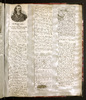
Page 37
"BUFFALO BILL."
Incidents and Facts in the Famous Scout's Life.
The Grand Duke Alexis - Encounter With Yellow Hand - A Little Grave.
The coming of Hon. W. F. Cody (Buffalo Bill) at the Opera House tonight, in the beautiful drama of May Cody, representing scenes from actual life, lends additional interest to the following sketch of the hero, whose portrait is given above. It is from the Rochester (N. Y.) Sunday Morning Herald:
Wm. Cody, or "Buffalo Bill," as he is familiarly known from New York to San Francisco, has been playing with his company, to crowded audiences, at the Opera House in this city during a portion of the past week. It is not our purpose, however, to speak of the play, but of the man, in this article.
Several years ago, when he first visited our city, he, Texas Jack, and two newspaper men took a sleigh ride up East avenue, one fine winter afternoon, bringing up finally at Prof. Ward's whose acquaintance Buffalo Bill had made on the plains. One of that party had not met the famous scout to talk with him since, until yesterday morning, when, on a pressing invitation, Mr. Cody walked into the Herald sanctum; but he has an observing eve and a retentive memory, and instantly recalled both the individual and the occasion.
Mr. Cody's [illegible] did physique, frank and daring looking and long, flowing hair, are familiar to thousands who have seen him on the streets but have never met him personally. In appearance and manner he is the beau ideal of the western hunter and Indian fighter, the chevalier of the plains. Every feature indicates power and courage, but all are softened by the light of a naturally kind and courteous nature.
The story of his life has been often told. Orphaned at an early age by an Indian massacre in the West, he grew up the foe of the red man, and in many a fair fight has paid off the Indians in leaden coin, for that butchery that robbed him of his parents. He was chosen by General Sheridan to accompany the Grand Duke Alexis and his party on a hunting expedition over the plains when that Russian Prince visited this country. Since then on several occasions he has acted as Chief of Scouts for our troops in their expeditions against the Indians, and was with General Crook, in that capacity, engaged in the same general movement with Custer when the latter's command was massacred.
For several years Buffalo Bill has been giving dramatic exhibitions, and he has become really an actor of considerable merit. His exhibitions are immensely popular. He has acquired quite a fortune, and now owns a large ranche, about three hundred miles west of Omaha.
While talking about the Crook exhibition, Buffalo Bill told us the story of his encounter with Yellow Hand. Our troops were engaged in a skirmish with the Indians, when Yellow Hand shouted out a challenge to the "long hated man" to come out and fight single handed. The challenge was accepted. To have declined it would have lost him his prestige among the Indians, and might have been followed by serious results. The Indian and the "pale race" warriors rode toward each other, firing their rifles; both horses were killed, Yellow Hand was shot through the thigh, and "Bill" was slightly wounded. The two men were then close enough to grapple, and before Yellow Hand could prevent it, the scout had finished the fight and slain the Indian with his knife.
The hero of our article was for one term a member of the Nebraska Legislature, and has popularity enough now, or will have, when he settles down on his ranche, for election to congress. Mrs. Cody and the rest of the family are now in Nebraska. Friday afternoon Mr. Cody paid a visit to a small, snow-covered mound in Mount Hope, where a little son -Kit Carson Cody- was tenderly buried when the family lived in Rochester. The far away mother could not consent to have the father visit Rochester and carry back no word from the little one's grave.
HON. W. F. CODY (BUFFALO BILL.)
The Buffalo Bill Dramatic Combination, led by the noted Government Scout, Guide and Hunter will appear at the Opera House, next Saturday evening, in his reconstructed drama of "May Cody." He comes this season with a strong dramatic combination, his own brass band and orchestra, and a band of genuine Indian Chiefs, including Master Eddie Burgess, the Boy Chief of the Pawnees, the youngest chied of which any record is given in the entire Indian nation.
Few men have gathered in their real existence, enough of romance and adventure to make the theme entertaining or thrilling to others. This is one of the great charms of Buffalo Bill, for he presents incidents, in his own personality, stage representations of his own escape, triumphs and exploits beyond the bounds of civilization.
The press this season compliments Mr. Cody very highly on his improvement as an actor, and the audience on this occasion, besides seeing the noted scout and guide - the very impersonation of physical manhood - will be entertained with an interesting drama of border life.
BUFFALO BILL AT BAY.
Not only was the gallery at the Corinthisa academy of music crowded densely last night, but nearly all the seats below were occupied by an audience as enthusiastic as even the wild Indians could desire. "Buffalo Bill" was given a cordial reception, and the applause his every appearance elicited was bestowed with unistinted generosity, if not always with discrimination. Mr. Cody's new play "Buffalo Bill at Bay," is much better than anything he has given the public heretofore, and while the author will hardly claim for it high dramatic excellence, it seems to introduce a variety of western characteristics as a background for theg reat scuot, and preserves a connected story, which gives the hero an opportunity to perform his many feats with a fair degree of consistency. Mr. Cody shows a marked improvement in his acting, and when disguised as Denver Dicks, is surprisingly good. In the third act he gives an exhibition of fancy chooting with the rifle which is rather startling in its nature, and whatever else may be sai, the interest of the audience is never allowed to flag. Mr. Cody is given an excellent support by Miss Denier, Miss Nellie Jones, Mr. London, Mr. Willard and the others, and the performance is one that merits all the popularity it has won. The orchestra is exceptionally good, by no means andunimportant matter, and the entertainment is one that will undoubtedly draw full house for the remainder of the engangement.
A Woman's Opinions.
BUFFALO BILL was greeted by a large and very select audience,-- that is to say it was selected from every class of people to be found in the city and there were more of some classes than of others. There is nothing immoral in the tendency of the play, which cannot be said of the many opera bouffe troupes that our most refined ladies do not hestitate to patronize. If any lady wishes to behold one of the most perfect and handsome specimens of manhood in existence she will have to go and see Wm.F. Cody. Tall, straight, well-knot, supple and commanding, he adds to a complexio, fair as a woman's, the dark eyes, hair and mustache of a man. With each annual appearance one notices an improvement in grace and refinement of manner. As he enters upon the stage in dress suit and kid gloves, he is the last person you would select as the brave, daring, dauntless Indian scout but, as the play progresses and hisskill, markmanship and strenth ecome apparent, we no longer wonder at his famous reputation. The play is poor in plot and weak in dramatic effect. The performance of the Indians is disgusting and yet not without a weird attraction as a representation of a custom that will soon pass away forever. Judging from these specimens of tame Indians one does not wonder that on the frontier they are universally names "the red devils."
We can hardly eudorse the dramatic critic of the Express in his enthusiastic admiration of the trick mule "Jerry" but, as he is probably the more experienced judge, we defer to his opinion.
There could hardly be a wider distinction between two plays than that of Buffalo Bill and
Page 38
28 Buffalo Bill. -- HIS ARRIVAL IN THE CITY THIS MORNING. -- What He Thinks of the Present Indian War and the Peace Policy.
The Buffalo Bill party arrived this morning at 10:12 from Cleveland and are quartered at the Empire House. The men with their wide brimmed hats and long, flowing hair, presented a queer appearance on Market street as they came down from the depot, to say nothig of the half-dozen or more genuine, thoroughbred Indians, who are with the part, dressed in their native costumes and armed with the formible tomahawk. A large crowd soon gathered in front of the hotel as the party apprached, old and young being over anxious to obtain a glimpse of the great hunter and scout. A TRIBUNE reporter called on Buffalo Bill, otherwise Hon. Wm. F. Cody soon after he arrived in the city and interviewed him on the present Indian war, as follows: "What are your ideas on the Indian problem, Mr. Cody? In other words, what would you do to secure a better and more economical management of the Indian tribes by the Government?" "I think I can sum up my policy in a single sentence. It is this: Never make a sinle promise to the Indians that is not fulfilled. Agents promise too much. Men of calm. prudent deterination must be sent among the Indians as agents. those who are sent. often know nothing of the Indian character, and either through fear, ignorance, or dishonesty are led into making promises which the Government can not or will not fulfull. Every Indian outbreak that I have ever known has resulted from broken promises and broken treaties by the Government. "What do you think of the peace policy or the policy of encouraging agricultural pursuits by the Indians, Mr. Cody?" "It has already resulted in good, and will result in still greater good if honestly and intelligently pursued. You cannot make an Indian work by standing over him with a shot-gun He must be taught that it is to his interest to do so, and brought to it by degrees Too much can not be accomplised all at once. But if a wise, firm policy is pursued the Indians will gradually drift into agriculural pursuits."
BUFFALO BILL. There was another large audience at the Corinthian academy of music last evening, and "Buffalo Bill at Bay," was received with the same unistakable evidences of approbation. Mr. Cody has a good company, but after all it is more the man that the people go to see, and the best chance in the world is given them. the Indians are made to appear to good advantage, and the entire performance in one that is sure to meet the popular taste.
Bill in Good Humor and the Audiene in its Shirt-Sleeves. Last weks we had Shakspeare, Barrett, silk dresses, point lace and style at the Opera House. This week we have Buffalo Bill, Sioux aboriginees, red fire, blue thunder and shirt-sleeves. The buildig was never more thoroughly packed than it was last night, on the opening of Mr. Cody's engagement. The play, May Cody, is supposed to delineate startling scenes in the frontier life of Mr. Cody--"Bufalo Bill"--and he now mimics what has been to him a vivid reality. He is assisted by several full-blooded Sioux, who add interest to the excitement. there is a latent love in the breast of the average American for scenes and incidents of frontier life, and war with the savages. From the moment that the Pilrims set foot on Plymouth Rock, to the present, 269 years, and covering nine generations, there has been a perpetual warfare between the white men and the red. therefore the children have inherited their love for frontier incidents, and even in Denver, where there are hundreds of people who have raised hair, or narrowly escaped it, there is as much interest to see Cody and his Sioux as there is in the East to whome the Indian is only known through books and tradition. There is no use in attempting to describe this novel exhibition further than to say that it gave abundant satisfaction. It was just what it propsed to be, and it was well presented. The crowd was immense, not even standing room being left for late comers. The heat was oppressive, the fould air almost sufficating. Presently a quakerish looking man in he balcony took off his oat and carefully folding it over the back of his chair, sat down in his shirt sleeves. Figuratively speaking the ice was broken, though any one would be willing o sweat that there was not a piece of ice within four thousand miles of Denver; and off came hundreds of coats, some even taking off their vests; even down stairs among the dressy people, there was a sprinkling of shirt sleeves. It was a notable fact, however, that the ladies, who went to show their good clohes, continued to show them to the end of the play in spite of the heat. The view of so many half-dressed auditors in a fashionable assembly was somewhat picturesque. while it is uncommon, it is not without precedent, even in large cities. The writer rememebrs of being in the Howard Atheneum in Boston on one hot summer night when there happened to be ten or a dozen mechanics present in a bunch from the Boston and Providence railroad shops. One of the men becoming overheated, laid aside his coat. An usher bounced up to him, and, with considerable sow of authority, forbade the man o remain in the house in his shirt-sleeves. The latter quietly replied that there was no law compelling him o take his shirt off, therefore he would keept it on. the usher, in a rage declared he would put the man ou of the theatre, when the other members of the party, who had not appeared to notive the difficulty, got out of their coars, and quietly resumed their seats. They evidently rose to the height of fifteen feet, in the imagination of the usher, who retired in bad order. But to return to Denver. cody has made a strike. the audience went ot be amused, and they were amused. They got thei money's worth, and were satisfied. Good houses are promised to-night and to-morrow.
...The performacne of Buffalo Bill and his fine company at Music Hall Wednesday evening drew an immense audience, many standing during the progress of the play, thouh there were several other performances in town the same evening. The opening farce, "Turn Him Out," put the audience all in good humor, and the play, "Buffalo Bill at Bay," was excellently rendered and gave immense satisfaction. Cody's rifle shooting was very fine.
Page 39
BUFFALO BILL. An Interview With Hon. Wm. F. Cody by a Commercial Representative. Opinions of the Celebrated Indian Fighter on the Indian Problem. Never Make a Promise to the Indians Which is not Fulfilled to the Letter. A representative of THE COMMERCIAL yesterday had the pleasure of dining at the Oliver House with Hon. Wm. Cody, the celebrated Indian fighter, and Col. Ingraham, the noted author and cultivated, genial gentleman. The writer had known and heard much of "Buffalo Bill" in the earlier days, before his fame had become world-wide, but when the stories of his wild, romantic and wonderful adventures were told by every camp-fire and in every wigwam, from the Mississippi to the Pacific, and from the Rio Grande to the Columbia river. In all the romance of the wild and trackless west, in all the thrilling adventures and the wonderful stories of the boundless prairies and the deep forests toward the setting sun, no other name stands forth so conspicuously and so brilliantly as that of the brace and peerless "Buffalo Bill," the gallant and invincible knight of the western plains. Brave as a lion, true as steel, honest, fearless and frank, and combining with a lofty, commanding statue, all the easy grace of the wild far west, his history has been one long, true story of thrilling adventures, more romantic than has been printed in the fairest dreams of Romance herself. As his eagle eye and lofty bearing denoted undaunted courage and superior intellect, so also upon his brow in unmistakeable letters is written the word "gentlemen." Born upon the western prairies, and reared amid wild scenes of tumult, his father murdered in their early days when Kansas with the struggle of a young giant was shaking off the yoke of African slavery, a trained Indian fighter taking his first scalp at the age of twelve, and having served his young state in earlier manhood as a trusted and honored member in the legislature, it is probable that Wm. F. Cody, is well acquainted with all that pertains to the west as any other living man.
A question of growing importance and of serious import just now to the people of the United States, is the management of Indians by the government. The conversation turning upon that subject, THE COMMERCIAL representative said:
"What are your idea on the Indian problem, Mr. Cody? In other words, what would you do to secure a better and more economical management of the Indian tribes by the government?"
"I think I can sum up my policy in a single sentence. It is this: Never make a single promise to those Indians that is not fulfilled. Agents promise too much. Men of Agents promise too much. Men of calm, prudent determination must be sent among the Indians as agents. Those who are sent, often know nothing of the Indian character, and either through fear, ignorance or dishonesty are led into making promises which the government cannot or will not fulfill. Every Indian outbreak that I have ever known has resulted from broken promises and broken treaties by the government."
"What do you think of the peace policy or the policy of encouraging agricultural pursuits by the Indians, Mr. Cody?"
"It has already resulted ingot and will result in still greater good if honestly will result in still greater good if honestly and intelligently pursued. You cannot make an Indian work by standing over him with a shot gun. He must be taught that it is to his interest to do so, and brought into it by degrees. Too much cannot be accomplished all at once. But if a wise, firm policy is pursued the Indians will gradually drift into agricultural pursuits."
Speaking of the recent outbreak of the Utes, Mr. Cody said he thought the Indians were badly treated. He knew that for years miners, contrary to treaty, had been settling upon their lands. The Utes had protested and the government paid no attention to the, and they had finally taken the matter into their own hands. Mr. Cody had been with the 5th cavalry for six years, and he was consequently acquainted with the Utes. He had taken the first scalp to avenge the Custer massacre. On the same day he also killed Red Knife.
"What do you think of Grant as a third term candidate, Mr. Cody?"
"Next to myself, I think Grant is the luckiest man in America. Nothing would surprise me."
"How did you get the title of 'Buffalo Bill,' Mr. Cody?"
In 1867 when the Kansas Pacific road was being built, I was in the service of the government. One of the managers of the road came to me and said the men were out of meat, and asked me what I would contract to furnish twenty-five buffalos a day for, I told him I was in the service of the government and could not work for him at any price. The company however made an arrangement with the government so that I got off, and he hired me at $500 a month to shoot buffalos. I thought $500 per month was the biggest salary any man ever received. I went to work and in eighteen months I killed 4,280 buffalos. The "Paddys" employed on the road, as a consequence, became very tired of buffalo meat. When they saw me coming they knew my appearance heralded a fresh supply of tough buffalo meat, and they sid one to another, "Bedad here comes buffalo bill agin; sharpen up your grinders, we'll have more buffalo meat now. " I soon became known along the entire line of the Kansas Pacific as "Buffalo Bill."
Mr. Cody was at Cincinnat when he heard of the Ute outbreak. He at once went to work to secure some person to take his part of "Buffalo Bill" in his play, and telegraphed to Sheridan that he was at his service and he will no doubt be ordered to the west should the trouble continue. Mr. Cody says he has no fancy for Indian fighting, but as that has been his life long profession he supposed he can do it as well as any man and if he needed he is desirous of giving to the government the best service that he {Illegible}.
-- The arrival of Buffalo Bill and troupe caused such a commotion among the small boys yesterday that many thought a fire was raging in the neighborhood of Music Hall, and when the band played, and the hair of the redoutable scout was disturbed by the zephyrs, and the painted Indians bestrode their ambling cobs for an exhibition tour of the town, the juvenile vociferation knew no bounds. Yesterday was an epoch in the life of the average small boy of Wilkes-Barre.
-- A countryman, on seeing the show posters "Buffalo Bill at Bay," yesterday, wanted to know what bay was Bill at, and whether it was an oyster bay.
Buffalo Bill's Parade. Lackawanna avenue was a sight to see when "Bill of the Buffaloes," his three or four Indians and the trained donkey passed up the street yesterday following the band. There was as great a crowd as the Parnell reception, the only difference being that on the former occasion the crowed was of men, while on this it was made up chiefly of boys. There was to be seen every variety of the genus boy the city produces and these varieties are numerous. They ranged from six to thirteen years, with occasional instances of younger and older; and there were the rich boys and the dirty boys; the good boys and the bad boys; the school boys and the street boys. The donkey was the principal object of attraction and all that could be seen him through the army of boys that hemmed him in was an occasional flirt of his long ears above the crowed. The Indians were not labelled with the name of their tribe, and we'll stake our bottom dollar that one at least was neither an Apache nor a Navajoe, for he rode like a Chatham street tailor, with his feet turned out at right angle. The parade was not an extensive one, only the distinguished William at the head and four others following in Indian file and about thirty yards apart, to make themselves look like a procession; but the boys! Good gracious! the boys were packed from curb to curb.
Buffalo Bill. Tonight Buffalo Bill and his company will wake the echos of painted mountains, scalp imitation Indians, and take the starch out the conventional road agents and other varieties of scoundrels, while he presents himself as the ideal hero at the Academy of Music. William of the boom none de plume is well known in Seranton, and the lovers of wild scenery, wild life, noisy drama, and blue fire will have an opportunity to enjoy themselves. Therefore we have no doubt but that Buffalo Bill and his party will have their usual welcome of good house, especially in the upper circles. Upon their arrival they will,as we are informed, parade the streets to the music of their own band, which is said he a good one, and the boys, big and little, cannot afford to miss seeing that, so look out for them.
-- A real live jackass seems to have as much attraction for the average juvenile as a whole menagerie of other animals, as was evinced by the enormous crowd of excited boys who followed the asinine member of Buffalo Bill's troupe through the streets yesterday morning.
AT THE ACAD{ILLEGIBLE} The Academy of Music was filled in the evening with an eight hundred dollar house, so we suppose the pile was more satisfactory to the company than anything we can say. Those who were there express themselves well pleased with the performance.