

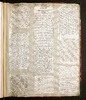
Page 11
Hon W. F. Cody, reowned as "Buffalo Bill," arrived at the Burtis last evening, and will organize his dramatic company here. The members, most of whom were with him last year, are expected from New York to-morrow, and eight Ponca and Pawnee Indians, from Montana territory, will arrive on Saturday. Monday evening the company will present the thrilling drama, "The Knight of the Plains, or Buffalo Bill's Best Trail," and repeat it Tuesday evening. Tomorrow Mr. Cody takes a drive out to his old home at Walnut Grove, and will visit the tomb of his brother Samuel in the cementary at Long Grove. He will return to the city by way of LeClaire, where he lived three or four years, and visit the place where he was born, several miles south of that city.
A grand audience in every respect greeted the native Scott county boy, William F. Cody, whom all the world knows as Buffalo Bill, at the Opera House, last evening, with his well known dramatic company. Mr. Cody had a protean character in the drama, "Knights of the Plains," and when he appeared in the first scene, on horseback, in the character of a scout, he was welcomed with tremendous applause, which must have been highly gratifying to him. The play presents life on the frontier and on the plains, as Mr. Cody saw it in his young days, when he was a pony express rider, scout and guide, several of the scenes representing actual experiences in the life of the hero. It is an interesting and exciting play, with not hardly so much shooting and murder play as generally accompanies dramas and stories of border life. There is a great deal of humor in it, and frequently the house roars with laughter. "Buttermilk" (Harry Irving) and his mule invariably brings down the house. As for the characters, Buffalo Bill himself is excellent as Buffalo Bill; a splendid looking man to begin with, a piercing eye and a fine voice, he proves a good actor; Miss Nellie Jones as Rose Melton, became a favorite with the audience, and Lydia Denier as Wild Nellie, also did well. Louden as Ralph Royton, Willard as Moses Molock, Beverly as the shyster, were excellent, while the minor roles were well sustained.
Buffalo Bill.
Harper's Theatre was again crowded on the occasion of the presentation of Buffalo Bill's new play, "A Knight of the Plains," and the Hon. W. F. Cody and the members of his combination drew frequent and hearty applause. The play is after Buffalo Bill's own heart: crowded with telling situations in which the quick eye, the strong arm and the ready revolver play their part. Buffalo Bill does some fine shooting with a Winchester rifle in the first act, which closes with a good illusion of a prairie on fire in the distance and a stampede of buffaloes. The gambling den of Cheyenne and the attack on the stage coach by road agents, are two exciting pictures from real life in the West.
BUFFALO BILL
A Short History of this Distinguished Native of Scott County
Hon. W. F. Cody, perhaps better known to the world as "Buffalo Bill," arrived from New York by the train from the east last evening, and took up his quarters at the Burtis. A GAZETTE reporter had the pleasure of making his acquantance an hour later, and from him learned a very little concerning his eventful life. Mr. Cody was born in Scott county, near LeClaire, in 1845. His father, who is well remembered by early settlers, was Isaac Cody, who on arriving in the then territory of Iowa first made him home in Davenport, afterwards residing at Walnut Grove, 15 miles north, and still later near LeClaire. When his now famous son was eight years of age, Mr. Cody removed to Kansas, where a few years later he lost his life in the endeavor to make Kansas a free white State. After his father's death, when young Cody was but 12 years old, the support of his widowed mother and sister devolved upon him, and he took to the plains for a livelihood. Growing up under such cirumstances, his natural fondness for excitement and adventure led him to become a scout and guide, and the most of his life since has been passed as such. For the past 12 years he has been guide and chief scout for nearly every military expedition carried on in Nebraska, Dakota and Wyoming. He was with General Crook, within thirty-five miles of the scene of the Custer massacre at the time of that terrible slaughter in 1876. The sobriquet of Buffalo Bill was earned while the Kansas Pacific railroad was being constructed, when he was employed by the company for eighteen months as hunter, to provide meat for the 1,500 men who were working on the construction of the road. During that time he killed 4,280 buffalo. In a single run through a herd one day, on a horse without a saddle or bridle, he slaughtered 69 buffalo.
For four years past Mr. Cody has been engaged in the stock business, running a ranche at North Platte, Neb. He now owns a herd of 4,000 cattle at that place.
On Monday and Tuesday evening of next week at the Burtis Opera House he will open out for his eighth annual theatrical season, with the largest combination he ever had. The dramatic portion of the troupe comes from New York, arriving Friday night, while the Indians, from Indian Territory, accompanied by the Boy Chief of the Pawnees, a white child adopted by the tribe and made chief at the age of 13 years, will come in Saturday morning.
Buffalo Bill. Our citizens will bear in mind that the great Buffalo Bill combination will appear at the Opera House this evening in the thrilling and interesting drama, "The Knight of the Plains, or Buffalo Bill's Best Trail." The play was presented throughout the East last season by the same company, and drew crowded houses, and the highest encomiums from the press wherever they appeared. They are worthy of the most liberal patron age, and we trust the will receive all they are entitled to at the hands of our citizens this evening.
The Buffalo Bill Entertainment. The opening performance of the Buffalo Bill Combination at the Opera House last evening brought out, as was to be expected, a large audience. It was the first occasion on which the company had appeared before the public in the drama entitled, "The Knight of the Plains." The plot of the play is well designed for the character of performance designed to be given, is always interesting, and at times intensely exciting. Buffalo Bill is the leading character, and in it Mr. Cody shows himself to be an actor of much merit. The support on the whole was very good--part of it most excellent. Among the especially attractive features of the performance were Buffalo Bill's exhibition of shooting with a Winchester rifle, the war dance by a band of genuine Indians, and Buttermillk and his donkey. Limited space forbids the notice the excellence of the entertainment deserves. The performance will be repeated to-night and all who were not present last night will find it to their interest to go this evening.
The Knight of the Plains. The attendance at the Opera House last evening to see and hear "Buffalo Bill" and his band of frontiersmen ad Indians, was not such as it might have been, yet the gallery was well occupied by the young who were fond of the startline incidents of life on the plains and the frontier. The entire play is of a character to draw the youth and fill the gallery, yet there are features of interest to any one who has a taste for the rough and ready life in the American wilds. Buffalo Bill is a manly character, and throughout challenges admiration for his daring and dangerous exploits. "Moses Moloch" was very well by Willard, and ranks alongside of Cody himself. The "Knight of the Plains" would draw better at the old Bowery in New York.
Buffalo Bill. The "Knights of the Plains," was presented by Buffalo Bill and his dramatic company last evening, in the Opera House, to a very good audience. The drama depicts life on the border in a vivid manner, and the play throughout was received with great applause, especially the tableaux at the end of each act. Buffalo Bill is not a noble specimen of manhood. His adventures on the border and his services to the government entitle him to the patronage of the public.
Buffalo Bill. Buffalo Bill appears at the Opera House this evening, in his new drama, "Knights of the Plains, or Buffalo Bill's Best Trail," written expressly for him by Col. Ingraham. He will be supported by twenty-four performers, including a band of Indian chiefs. William F. Cody is a conscientious actor, and we bespeak for him a full house.
Buffalo Bill.
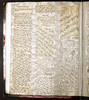
Page 12
KNIGHT OF THE PLAINS. Buffalo Bill and Company at the Opera House Last Night--A Pleasing Entertainment.
The entertainment last night at the Opera House by Buffalo Bill and his large troupe, was well attended, and had the night been less unfavorable the audience would have been much larger. The play is one of considerable merit. It is, however, greatly overwrought in some parts, and rather bald in others. Still, the audience remembered they were not witnessing a domestic drama, but a representation of life on the frontier, where everything is rude, crude, wild and sensational. The veins of pathos and the lines of emotion and sentiment which occasionally appeared, stood out upon the groundword of wildness and savagery, in bold relief, and impressed the spectator very peculiarly. To be suddenly transferred from an Indian settlement, with the hideous war dance still ringing in your ears, to the parlor of an eastern aristocrat, is a transformation that conflicts somewhat with the slow operations of an ordinary and healthy imagination, and has a tendency to bewilder the spetator. There seems to e something unnatural about it. When some of the very characters who sur rounded the wild Indians as they danced and played the tong-tongs on the frontier two thousand miles awayi are seen in the parlor of the eastern aristocrat fifteen minutes later, the play seems to have a good deal of the dime novel sensation about it.
Then, again, the closing scene was no more than a great burlesque, while it was, doubtless, intended to be impressive and emotional. Royston dies at the hands of Buffalo Bill, struck to the heat by a knife. Wild Nellie, forgetting her hatred of this evil man, as she sees him dying, flings herself upon his breast and utters the most despairing cries, Royston raises upon his elbow, and with a final effort curses her, and plunges his knife into her heart. She drops by his side, and the two--the loving girl and her betrayer, --after long years of wandering and revenge-seeking, lie side by side in death. The beside their prostrate forms Buffalo Bill and Rose Melton pledge their love. What a trysting place! But the climax is capped when the old Jew, just at the time when the scene is in its tederest phase, ejaculates: "Mowly Hoses"! and the old teamster bawls out: "Change pardners" while the red light is brought into use. This scene was extremely extravagant, and really ridiculous.
But the company was a good one. They were not responsible for the defects in the play. Their ability will rank as average.
Buffalo Bill is a fine appearing person on the stage, and did his work well. His target practice was superior, and elicited loud applause. Dr. Carver can do no better. Nellie Jones is a very good actress---having a good deal of originality about her. L. R. Willard, the Jew, was almost perfet. Alf. Beverly, the shyster, kept the house in roars of lauhter. Altogether, the entertainment was a very pleasing one, and everybody got their money's worth.
Buffalo Bill.
To-morrow evening the Buffalo Bill Combination will appear at the Opera House in "Knights of the Plains," a four-act play written expressly for the chief of the combination. The highest encomiums of the press have been given this new drama, and crowded houses have greeted it in all the principal cities where it has been produced. The Washington Sunday Herald thus comments upon it:
If Giacomo, the Italian bandit, the original of Auber's "Fra Diavolo," were to present himself in person on the stage, there could not be anything more thoroughly realistic than there is to be found in the appearance of the Hon. William Cody---"Buffalo Bill"---in his different roles as scout, guide and hunter, which were presented at the National last week. An incident connected with this was the meeting of this rather remarkable character with his old commander, now General William H. Emory, U. S. A. (retired). The general, with a party of friends, mostly army officers, occupied one of the private boxes, and appeared very much interested during the entire performance, giving vent to their appreciation by frequent, hearty applause. The drama presented, "Knights of te Plains," abounds with startling and realistic scenes, and to those at all familiar with the history of the interminable wars on our frontier, and the daring characters to be found there, know that the entire plot was not in the least exaggerated. Buffalo Bill is as much the hero on the stage or in a private parlor as he is a veritable one on the plains. Courtly in his manners, frank and open in his address, he is, it may be said, truly one of "nautre's noblemen."-
--Bufalo Bill's fancy shooting is unsurpassed. No wonder the Sioux fear him, and that the noted chiefs Yellow Hand and Red Knife fell before him in the duel he fought with them before General Crook's army and Crazy Horse's band of warriors.
--The parade of Buffalo Bill and his "red skins" this afternoon was a strange sight for the streets of a city, but withal intensely attractive.
---Buffalo Bill, with his new and singular attractions, that form so strong a combination, cannot be denied as being one of the best drawing cards that visit our city. The rough, wild border life he illustrates, adided by genuine, untutored savages, is not without specific attracting power. The dramatic compay, composed of some twenty odd people, are above the average that generally comprise a traveling organization, and sustained the different roles assigned them creditably. No doubt this, the last appearance of the combination, will be greeted with a packed house, as it [word] been awarded with crowded houses all during the week.-----Baltimore Advertiser.
Knights of the Plains.
Wednesday evening, September 10, Buffalo Bill and his combination of 24 actors will appear in new four act drama, written expressly for him, entitled "Kights of the Plains, or Buffalo Bill's Best Trail." Of this play the Baltimore Bulletin says:
FORD'S GRAND OPERA HOUSE.---A large audiece was present last night to witness the first appearance of the new Buffalo Bill combination. The upper floors were crowded and he parquet and boxes were filled. The drama, "the Knight of the Plains," is one of unusual interest which was thoroughly demonstrated from the fact that the entire large audience remained seated up to the close of the performance. There are in it elements that appeal to the quickest and liveliest sympathies, which grows and increases with the audience until it culminates in a burst of enthusiasm. The wild Indians and their interpreters are a novel feature, and were liberally applauded in their several dances, and wonderful archery, hitting objects with as much accuracy with the bow and arrow, as the best marksman with the rifle. Buffalo Bill also gave a specimen of his ezpertness with the rifle holding he gun in every conceivable position, and indelibly convinced all, with the fact, that he certainly is unrivalle, if equalled.
A Lurid Melodrama.
The reception of the gallant Cody (Buffalo Bill) at the Opera House last evening amounted to an ovation. The house was full, crammed, packed even to the aisles and window ledges. Fully 1,500 people were present--hundreds more than such dramatic stars as Claxton or Denman Thompson, such singers as Carey, and such orators as Philips or Beecher have been able to attract.
That a play nothing short of a well dramatized dime novel should draw such a house naturally causes the query, " Why is this thus?" Undoubtedly the sight of a genuine hero like Cody, who "born and nursed in danger's path, has dared her worst" is an attraction to many people. The Indians were also objects of interest. But it is probable that Zola, the recent French apostle of realism, is right, and that the masses care more for sensation than for art of any kind.
While the play as a drama was beneath criticism, some of the characters were notably well sustained. Of course, Buffalo Bill was fine simply as his natural self, and drew frantic applause from the "gallery gods" by his marvelous shooting and opportune appearance as a guardian angel. The stage Jew was well acted by Willard, and the frontier Judge Shyster, a feeble parody on Bret Harte's "Col. Starbottle," played well by Beverly, drew down the house by his uctuous "I should smile." the tableaux were tolerable, the burning prairie scene was excellent, and the interior of the Cheyenne gambling saloon was probably accurate enough--though the more the Drama is degraded by their presentation. Miss Jones, who played Rose Melton, had a very fine voice and with training would make a sucessful actress. On the whole, "Buffalo Bill" made a dramatic "ten strike" in Clinton.

Page 13
BUFFALO BILL bucked against the circus in Des Moines, but his reputation had pre ceded him, and the Opera House was well filled last night on the presentation of his play, "The Knight of the Plains." Bill has a good company to support him, better by far than the ordinary run, and the absence of the "blood and thunder" scenes made the play more enjoyable. The piece was put on the stage in the best style, with all of the best effects, and the thunders of applause which greeted the great plainsman on his appearance showed what a hold he has on the people. However, Bill did not monopo lize all of the applause, the fine bits of acting done by the members of his troupe coming in for their full share.
Buffalo Bill's troupe had a good audience at the Opera house last night, and the entertainment gave unbounded satisfaction. We regret exceedingly that want of space for bids the extended notice the enter tainment deserves.
...PRENTISS INGRAHAM'S new Play ..itten for Buffalo Bill, was submitted at the Opera House last evening to public criticism for the second time. It is es sentially a drama of the plains, in its sal ient features, resembling those with which theatre-goers are familiar, yet far above the average in plot, in situations and in dialogue. These merits were brouht out by a company of more than the excellence ordinarily found in per formances of this particular character. Last evening "The Knight of the Plains" was presented with special scenery, good costuming, and a spice of reality was added by the introduction in the opening act of a troupe of Nez Perce and Pawnee Indians and their interpreters. The galleries were crowded as might have been anticipated; but for that matter so were the dress and parquet circle, and indica tive that Buffalo Bill and his combined novelties in his new drama has a facina tion for adults as well as the youthful portion of the community. ---Hartford Courant.
The Buckskin Hero. "The Knight of the Plains" will be pre sented at Rouse's opera house to-night, Buffalo Bill appearing in four different roles. It is a melo-drama in four acts,founded upon incidents in the life of the famous scout, and the press generally, speak of it as being wholly free from the "flash and gun podwer" of other border plays. The Indians with the company give one of their remarkable war-dances dur ing the performance. The boy chief of the Pawnees accompanies Buffalo Bill this season.
[word] [word] [word] [word] up-- the Jew, [word], [word] Shyster, the [word] and [word]
Buffalo Bill To-Night. It is needless to add kindly words to those printed by the city papers for "Buffalo Bill." He will play to-night, and with him will play his genuine Indian braves and his fine company. Mr. Cody always give a good entertainment, and on this, his eighth, tour, he has been meeting with the usual secess attending him in former years. The company will give a street parade this morning. [word]
Buffalo Bill's Drama. The melo-drama in which Mr. Cody appeared on Thursday night is properly named, for no one holds a better right to the title "Knight of the Plains" than he does, for he has long been distinguished in the army, and on the frontier as the "Prince of Prairiemen."
Though essentially a border play, Colonel Prentiss Ingraham, the author, has so interwoven social life with wild scenes upon the prairie, and introduced into it the refining element of lovely woman that it is toned down from the "blood and thunder" of the stereotyped frontier drama.
Buffalo Bill as "himself," exhibit a fine bit of acting, and the character he impersonates of English noblemen and detective, rre exceedingly natural and good.
"Wild Nellie," the border heroine, and a wild, passionate outcast of the plains, is strongly taken by Miss Lydia Denier, who also has the advantage of being a handsome woman as well as a good actress.
Miss Nellie Jones, as "Rose Melton," is simply perfect-- the refined, lovely, high-spirited girl she represents, while Mr. J. J. Louden as the designing villian, sport and outlaw, "Ralph Royston," proves himself a dramatic student who fully grasps the character he has to play.
The millionare, "Mushroom Melton," is well acted by Mr. Harry Melmer, "Noel Marmaduke, the fop and puppet of the Jew most cleverly taken by Mr. Charlec Wilson, and "Red Eagle," Pawnee chief, a natural impersonation by Mr. Delancy Barclay. In fact, Mr. Cody has a star combination this season, and with his marvellous fancy rifle shooting, the war dance of the red skins, and the attractions of the frontier heroes Eddie and Charley Burgess, the play will without doubt draw crowded houses at every performance.
Last night Buffalo Bill and his superb company presented his new play "Knight of the Plains," or Buffalo Bill's Best Trail, written for him by the well known author Colonel Prentiss Ingraham. The performance began with the exquisite farce "Joppin's Latch Key," in which Miss Nellie Jones did some very clever acting. The main play of the evening is woven from the life among the Indians and the border towns, with some fine situations and effected introduced by the author. The charm of the play is the strong originality pervading it, and it has this advantage over the first play in which Buffalo Bill entered the theatrical world it does not center upon his person, but the parts are so nicely divided and the scenes so well set that each member of this excellent company has an opportunity to bring himself forward, Moses Moloch (L. R. Williard) and Judge Chincapen Shyster (Alf. Beverly) furnished the comic element of the play and it was excellent. Wild Nellie, (Miss Lydia Denier) and Rose Melton, (Miss Nellie Jones) helped to make the play an enthusiastic success. Buffalo Bill did some fancy shooting with his rifle and the Pawnee braves went through a series of amusing antics called war and scalp dances. Taken all together the play and players should have large and intelligent audiences, for its something better than a mere dramatization of a yellow backed novel.
Buffalo Bill. Buffalo Bill and his company were grected with a rousing audience at Rouse's Hall last night. The play is like most representations of western wild life and wild scenes, but he has a troupe who are capable of making the very most out of their materials. The performance opened with a fine farce excellently rendered, entitled "Joppin's Latch Key." Then came the "Knight of the Plains," and in due course the Indians, the negroes and the little donkey, which performs its part knowingly and completely. The characters are all well made up-- the Jew, Moloch, Judge Chincapin Shyster, the negroes and all; the ladies are all stars, and handsome women; "Red Eagle" makes a firm chief, while the gamblers, stage drivers, cattle kings, mushroom Melton, Marmaduke, all make a good appearance. But in the last scene it looked too bad that "Wild Nellie" should be fatally stabbed by the dying villian, Royston. But, something had to be done with her, and as she had no where to go and was a lost one, we suppose it was best to kill her off. But, as she swooned back, dead, in the arms of Buffalo Bill, a little child in the audience wrought up to the highest pitch of interest called out so the whole audience could hear, "Mama, what did the man do to her?" Taken all together, Mr. Cody has got a good play, and a company that do their parts justice. Mr. Ingraham who dramatized the play, goes with the company, and aids with his advice and suggestions. The Indians execute their dances with most frightful effectiveness.
For the second time our city has been visited by the renowned scout, actor, and hunter, Hon. W. F. Cody, who has won a world wide reputation under the nom de querre of Buffalo Bill.
The Knight of the Plains, Mr. Cody's new drama, was presented before the Galesburg public at the Opera House last night, and made a decided "hit," as it deserved to do, for a more enjoyable performance is not often presented before the theater going people.
Founded upon incidents in the life of Buffalo Bill, the Knights of the Plains is from the pen of Colonel Prentiss Ingraham, and the many favorable notices he has received on the play proves conclusivley its merit.
It is perhaps hardly just to particularize as the Company comprises stars of the dramatic profession, but the scout proved himsle a fine personator of character, and "Wild Nelllie" in the person of Miss Denier won the admiration and sympathy of the audience, as did also Miss Nellie Jervies as "Rose Melton." In fact, the Knight of the Plaies is a dramatic success.
The Burlington Hawk Eye gives Buffalo Bill and his combination a splendid notice, saying that it is a company of dramatic "stars." Our citizens will have a chance to witness the entertainment at the Opera House this evening.
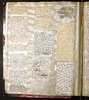
Page 14
4
Buffalo Bill will be welcomed gladly tonight as the finest specimen of the frontiersman extant. It is real life, and no man on the stage can ever enter into the wild life of a hunter and scout as the great scout himself. The house will be crowded, just as it should be, if the people want to see the great Cody re-enact his border life on the stage. ________________
THE KNIGHT OF THE PLAINS. Durley Hall was jammed full of eager spectators Monday night to witness the Buffalo Bill combination in their rendition of the thrilling drama "The Knight of the Plains." The play is an excellent dramatization of its peculiar character. It is replete with happy incidents and pleasing surprises, as step by step the whole plan is developed. Buffalo Bill sustained the leading role in his inimitable manner, and won deafening applause for his extraordinary skill as a marksman. The support was excellent, in fact far above the average show of even a higher type. Col. Prentiss Ingraham, the author of the play and manager of the troupe, has displayed rare ability in this gem of border life, in which Buffalo Bill is the ideal of a frontiersman. Much of the Dick Turpin, knock down and drag out feature has been obliterated, and for a play of its kinds there is none better.
BUFFALO BILL Buffalo Bill attracted to the Opera House last night one of the largest audi ences ever within the walls of the build ing. Over 1200 tickets were taken at the doors. The play was enthusiastically re ceived.
GRAND OPERA HOUSE.--Buffalo B...ll and his Pawnee Chiefs had a $1,000 house...last night. The gallery and family circle we...e literally packed with boys, and never were...ctors more enthusiastically applauded than...ill, Nellie, Red Eagle and the donkey, The...wild-horse dance was true to the life, and was...performed by real Indians with regular built...tomahawks and spears Cody's rifle-shoo...ing is some thing marvelous, and excels the marksmanship of Frank Frayne, Carver and Bo...gardus. The play, the Knight of the Plains was written by an old plainsman, Col. Ingraham, a son of the celebrated preacher-novelist of Mississippi. It contains blood and thunder enough to satis fy the most sanguinary taste, and is not with out literary merit.
Although the fall of rain last night might have astonished Noah, a very large audience greeted Buffalo Bill at the National Theatre; the lower portions of the auditorium being comfortably filled and the family circle ad gallery packed to overflowing. The perfor mance is all that it purports to be, and is a very vivid portraiture of life on the plains. Of course, Buffalo Bill is the omnipresent hero who always appears at the opportune moment to rescue the heroine, but as he is dashing, natural ; and a very fair actor, the situations are pleasing enough, and the au dience applauded them even unto hoarseness. ---Washington National Republican.
The "Buffalo Bill" combination en... tained a large and enthusiastic audienc... at Rouse's Hall, Saturday night. The play has less of the blood and thunder in it than we were led to expect, and the evening was one of real enjoyment.
Buffalo Bill (Wm. F. Cody), and his company of actors and Pawnees played a very success ful season of a week at the Grand opera house. The Buffalo Bill plays were "Knight of the Plains" and "May Cody ; or, Lost and Won ;" both new here. They were prefaced each evening with pleasant farces, and the en tertainments were all highly satisfactory to the patronage. This class of performance has a sure and steady audience, and it is always a profitable one. "The Knight of the Plains" has merits as a drama. It is the best play of this character that has been seen here without doubt. It is by Col. Ingrahm, a cultivated gentleman, who shows by his methods of con struction that he understands stage effects. The language of the play is characteristic and pointed to the purpose, and the climaxes of incidet and scene are well arranged. "May
Cody" is not so good as a drama, and is in tended chiefly to give scope for the border drama and plains specialties. This it does, and passes off well. Mr. Cody is a great im provemet on the Buffalo Bill of three or four years ago as an actor. He is easy, grace ful and often effetive. His specialties of rifle shooting are attractive, and score a point in the performane. The Pawnee Indian war dance in full war-path costume makes another point. There is some good comedy in these entertaiments of the Buffalo Bill, and they pass off briskly and breezily, and without so much gunpowder power as was used for merly
Buffalo Bill. ----- Seldom does a larger crowd assemble at the Opera House than that which greeted the Buffalo Bill Combination on Thursday evening. The programme was begun by a farce entitled, presumably, "The Free mason," which was a splendid take off on that order, and kept the house in a contin ual good humor and almost constant roar. In the "Knight of the Plains" the Indian dance was quite a good representation and the customary exhibition of skill with the rifle by Mr. Cody was a success. The com pany embraces several actors of more than mediocre talents. "Moses," "Wild Nellie" and "Rose" will not soon be forgotten, and those who were present will frequently "smile" at the memory of Judge Chinca pin. All told this combination is the best of the dramatic companies that has ever visited this city.
Grand Opera House. Buffalo Bill and his combination, which em braces a company of genuine Pawnee Indians' opened a week's engagement at the Grand Opera House last night to a characteristic au dience. The family circle and balcony were literally packed, in fact the sale of seats to those parts of the house was discontinued be fore 8 o'clock. The only vacant seats to be found were in the parquette and dress circle. The play, "Knights of the Plains, or Buffalo Bill's Best Trail," is of course decidedly sensational in its character, is full of blood and love and murder and gunpowder, and those extravagant situations which appeal so strongly to the habitues of the upper tiers. That it met with the hearty approval of the latter last night was evident from the vociferous applause that occurred at brief intervals. It has rather more literary merit than the dramatic productions hereto fore presented by Buffalo Bill, and the sup port is also rather above the average. To those who enjoy the border drama the "Knights of the Plains" presents a most en loyable treat. It will probably have a suc ...essful fun here.
GRAND OPERA HOUSE. The new border drama, May Cody, or Lost and Won, drew a good house last night. It bears some resemblance to the Danites, but has decided merit of its own. The war-dance of the Pawnees is a correct representation of the real dance of that tribe, and is one of the best things in the play. The trilling scene of the Mountain Meadow massacre is enacted with striking effect. Buffalo Bill appears in his own proper character and under his own name, and performs some wonderful feats of marks manship with his rifle. The Irishman and his donkey form an amusing feature of the menag eric, and the star who takes the part of the grizzly bear makes an excellent bruin. The piece is "red-hot" with bloody incidents and is unequaled, as a Rocky Mountain realistic drama. It will be repeated to-night and Sat urday afternoon.
Grand Opera-House---Buffalo Bill. The Buffalo Bill style of effort and entertain ment is the last extremity of realism on the stage, which can go no farther than the real hero re-enacting his own adventures on the minic scene. In the Buffalo Bill Border drama we have William F. Cody (Buffalo Bill himself), the famous plains guide, scout, buffalo-slayer and Indian-fighter; several freeborn, native American Indians, some representatives of renegade whites turned savages, and a few types of hardy pio neers, the advance guard of civilization in the wilderness. All the elements of American wild life in antagonism to civilization are in the stage pictures, with some of the real char acters in the foreground. These personal feat ures constitute the attraction of the Buffalo Bill entertainments. Buffalo Bill and his Pawnee braves, supported by a very top-heavy attendance. The upper re gions of the house were densely crowded, and there was a very fine dress-circle and parquette patronage. The play offered was new---"Knight of the Plains ; or, Buffalo Bill's Best Trail, " a new name at least. It is in fact the old border gunpowder and tomahawk scenes worked over into new shapes and situations, and, indeed, this is all that can be done with the material of the frontier. The action is a struggle of civilized life for existence against the forces of nature, human nature included, and the sympathy is enlisted for and the victory lies with a certain rugged heroism of which Buffalo Bill is the type. That is all there is of it but it is enough to win the plaudits of the audience it at tracts. What the play lacks in plot, it makes up in thrilling incident, and the lack of dramatic force is compensated by the pres ence on the scene of the real persons of the drama in the stage picutres. Wm. F. Cody has gained greatly in dramatic ease and force since he began acting "Buffalo Bill," and makes a commanding figure in his scenes. The company does not need special mention at this time. It is competent for its work. The scene setting of the play is in realistic harmony with the actors, and the action and the motive of the performannce. The "Knight of the Plains" will be repeated until further notice.
---Buffalo Bill, the famous Indian scout, with a first class company, appears at the opera house to-night. It has been some time since Wil liam has entertained the people of Quincy, and a large house will greet his return. As an additional attraction he has several real 'live,' big Injins, who take prominent parts in the entertainment. The title of his new play is "Knight of the Plains," and it is said to be a very thrilling and interesting drama. We bespeak for Buffalo Bill and his troupe a crowded house. There is a peculiar interest attached to this man, in that he was an actual scout and has lived for many years among the savages of the plains, and has rendered important service to our governement in that capacity, and his play embraces actual incidents of that life.