
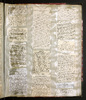
Page 25
AT THE ST. CHARLES. Buffalo Bill and his Indians will celebrate Christmas day, and the children will be carried into the seventh heaven of delight. Toys in great quantities will be distributed, and everybody will be made happy before the curtain falls. The Knight of the Plains is a tremendously entertaining fellow and his show is up to the mark. The Old Drury will doubtless be crowded from pit to dome.
ST. CHARLES THEATRE. --The business done by the Buffalo Bill Combination at the St. Charles is unexpectedly good. For a large class of our people Buffalo Bill is a strong magnet of attraction in his border dramas. His picturesque costumes, handsome appearance and now easy manners on the stage are taking with the masses. The "Knight of the Pains" will be played again this noon and to-night. A Christmas matinee will also be given at this house. On Thursday night the drama called "May Cody; or, Lost and Won," will be presented.
Ford's Grand Opera House. Buffalo Bill, the big Indians, the donkey, Bill's rifle, and all the other interesting performers in the "Knight of the Plains," can be seen again to-night at Ford's Opera House in the most civilizedly savage style. The boy chief of the bloodthirsty Pawnees will wear his best suit of paint, and there will be a prarie fire of lurid style. The entire entertainment is a successon of surprises, and will well repay a visit by all who enjoy the wonders of which the scenic artist is capable. The last Buffalo Bill marinee tomorrow.
Buffalo Bill. Last evening an overwhelming housre greeted Buffalo Bill at Ralston Hall. The down stairs portion was filled in every part, many standing, unable to get seats. In the falleries the audience was simply packed in. No such house has been seen since the appearance of Mr. Booth. The show was strictly on the blood and thunder order, with little or no plot, plenty of exaggerations of character life even for border representatives, and some miserably poor acting in an artictic point of view. A good deal of powder was burned and the audience generally seemed pleased. Mr. Cody made during the evening some remarkable shots with his rifle in various positions, such as upside down, aimed from a mirror, etc., and shooting appleas from the hands and heads of members of his troupe.
Davis Theater--Buffalo Bill. Buffalo Bill (W. F. Cody) made his first appearance before a Louisville audience at Davis Theater last evening. The house was a good one, the seats below being bery largely occupied, and the falleries being about full. Mr. Cody is a lithe, hadsome fellow, and is easy and graceful on the stage.The welcome which the noted schout received was of a very demonstative character, and he soon became a favorite with the audience. Of the piece in which he appeared, "The Knight of the Plains," nothing particularly can be said in its favor as a dramatic work. It makes no ambitions claims in this respect. It has, however, less of the fire-and-fury and gore-and-gizzard about it than most constructions of the kind, presents some striking situations and tableaux, and contains some characters which, for eccentric make-up and broad and extravagant burlesque, are extremely ludicrous, being, indeed, what the gallery divines would term "immense." The acting, although some of it is very effective with the spectators, is not noteworthy. The intelligent-looking and handsome donkey acted his part capitally, making a deserved bit. The audience was at times stormy in its demonstration, particularly in the upper tiers. The "Knight of the Plains" will be repeated this evening.
BUFFALO BILL. A crowded House to see the Knight of the Plains. [Jacksonwille Journal.] The thrilling melo-drama which was written for Hon. W. F. Cody by the popular artist, Col. Prentiss Ingraham, seems peculiarly adapted for the actor and his troupe. The many thrilling scenes, hair-breadth escapes, resues and contests keep the excitement up to fever heat from first to last.The play is well written and is given by Mr. Cody and his company in an unexceptionable manner. We have little room to particularize, but the acting of Mr. Cody and of Miss Lydia Denier, as Wild Nellie, were highly spoken of and warmly applauded. The support was also good, Willard making a capital Jew and every one "should smile" at Judge Chcapin Shyster. Buttermilk and his donkey brought down the house, and the cheers were loud and long at the close of each act. The fancy rifle shooting by the Knight of the plains was applaused, as it well deserved. Mr. Cody may rest assured of one fact, that as long as he gives a play as respectable and free from anything low he will be greeted by a rousing audience when he visits Jacksonville.
Buffalo Bill. As will be seen by reference to our advertising columns, the dramatic troupe of which Hon. W. F. Cody, or Buffalo Bill, as he is most generally known, is the chief central figure, will put in an appearance at the Opera House in this city on teh evening of Thursday, the 22nd inst., in a play representing border life, entitled the "Knight of the Plains." The drama was written expressly for Mr. Cody by Col. Prentiss Ingraham, and is full of startling situations and thrilling tableaux. Those who remember the fine physique and splendid personal appearance, as will as the good acting, of Buffalo Bill will be glad to greet him with a cordial welcome on his approaching visit to our city.
AMUSEMENTS. Ford's Grand Opera House. Greatly to the delight of theboys and of the boys of a larger growth, Buffalo Bill will to-nigh begin an engagement at Ford's Opera House. Always excellent in his wonderful frontier dramas, he expects to prove himself more so in the "Knight of the Plains," a new melo-drama recently written for him by Prentiss Ingraham. It is said to be of a mush higher order of dramatic merit than is usually incident to that style of play, being devoid of the convetional fire, flare and terificness o teh average scenic representations of frontier life, as well as being deficient in much of their coarseness. Besies his excellent "pale face" support, he is assisted by a band of real live Indians, tamed down to the degree that they know the uselessness of attempting to secure a genuine scalp from any theatrical audience, where so much bald head and store hair prevails. The drama will be given e3very night this week and at matine on Wednesday and Saturday.
WINDSOR THEATRE--BUFFALO BILL. This theatre was reopened last evening for the appearcne of Buffalo Bill in his drama of "The Knight of the Plains." A large audience assembled and the play produced a sensation. The play abounds in interesting incident, amusing combination of character and exciting tableaus, and "Buffalo Bill" was most enthusiastically applauded. Mr. J. J. Louden as Ralph Royston, played the cillain very cleverly, but his hoarness made his atterances almost inaudible. Messrs. L. R. Willard and Alfred Beverly, and Miss Nellie Jones acquitted themselves the their various roles quite well, as did some others who held minor parts in the play. The shooting match by Buffalo Bill, as a matter of couse, gave him ample opportunity of displaying his marvellous control of the rifle.
ST. CHARLES THEATRE. There was a very large attendance at the matinee given yesterday at this theatre, and each visitor carried n with him a Christmas present. The Knight of the Plains was the piece on the boards, and it was rendered with great spirit. At night there was also a very large audience witnessign the performance of May Cody, or Lost and Won, which is a piece replete with intyeresting situations, and was admirably rendered. The rifle shooting by Mr. Cody elicited long and unanimous applause. His first shot knowcked the ashes from the cigar of the smoker,a nd being invited to proceed he shot the fire from the stump. His next exploit was shooting the apple off the head of the holder, which was a marvel of accuracy in marksmanship. The same programme will be given tonight and on every other night during the week, together with the matinee on Saturday.
AMUSEMENTS. FORD'S--BUFFALO BILL. "The Knight of the Plains," a new border drama, written expressely for Hon. Wm. F. Cody (Buffalo Bill), will be produced to-night at the Grand Opera House by Buffalo Bill and his own company, including among their number a band of genuine Indians. The drama is replete with incidents illustractive of the life of a frontiersman, and the situations are of a thrilling nature.
AMUSEMENTS. FORD'S GRAND OPERA HOUSE.--THE KNIGHT OF THE PLAINS; OR, BUFFALO BILL'S NEW TRAIL, is the title of the new play written expressly for Hon. Wm. F. Cody (Buffalo Bill), which was produced for the first time at Ford's Grand Opera House last evening. THE NEW TRAIL is a superb border drama, replete with "thrilling situations," and affords the widest scorpe for Mr. Cody's peculiar talents. He possesses a fine stage presence and does some really effective acting, and his receptionw as of the msot cordial character. There are several fine tableux incident to the piece, which were very handsomely set by the management. A number of real Indians are introduced, with their war paint and feathers, and some skillful rifle -shooting is done by Buffalo Bill, who appears in one scene mounted and indulges in a dialogue with the rider opf a diminutive donkey, trained to perform numerous amusing acts. The charm of the drama is the strong originality which pervades it and it is a dicided improvement over the play in which Mr. Cody last appeared in Baltimore. The parts are well divided and the scenes so well set that each memeber of his excellent company is afforded a full opportunity to be seen and heard to advantage. Messrs. Willard, Wilson and Irving (with his donkey) supplied the comic element of the play and it elicited the most uproarious merriment. Taken altogether the play should raw good houses. Nothing better in this line has been presented during the season at the Grand Operan House for a very long time. Every evening during the week [?] matinnes on Wednesday and Saturday at [?] THE PLAINS will be presented.
Buffalo Bill. The coming of Biffalo Bill, and Davis' Theater Thursday, Friday and Saturday, is exciting great interest.
THE BUFFALO BILL COMBINATION drew another very large audience last evening, and reeived in every act unbounded applause. The company will leave here this morning for Columbia, where they will play to-night.
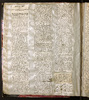
Page 26
BUFFALO BILL.
HOW THE CHIEF OF SCOUTS BECAME AN ACTOR.
The Story as Furnished by Col. Prentiss Ingraham the Author, an Ex-Confederate Soldier - Some Reminiscences of the late War of Local Interest.
The return of Buffalo Bill (Hon. W. F. Cody) with his attractive play and combination as elsewhere announced revives of more than oridnary interest the story of how the widely known scout became an actor. It is laid before us by Col. Prentiss Ingraham, a well known writer of fiction and play wright, who has been in the city a few days guest of the Oliver House. Col. Ingraham is an ex-confederate soldier with whom a meeting revives some interesting recollections of the war in which some Toledo soldiers will be interested, The story is thus told in Buffalo Bill's own language:
"It was in the fall of '71," sadi Bill, "that Gen. Sheridan came to the plains with a party of gentleman for the purpose of engaging in a Buffalo hunt to extend from Fort McPherson, Nebraska, to Fort Hayes, Kansas, on the Kansas Pacific railroad, a distance of 228 miles through the finest hunting counrty in the world. In the party were James Gorden Bennett, of the New York Herald, Lawrence and Leonard Jerome, Carl Livingston, S. G. Heckshire, Gen. Fitzhugh, of Pittshurgh, Gen. Anson Stager of the Western Union Telegraph Company, and other noted gentlemen. I guided the party, and when the hunt was finished I received an invitation from them to New York and make them a visit, as they wanted to show me the East, as I had shown them the West. I was then Chief of Scouts in the department of the Platte. And in January, 1872, just after the Grand Duke Alexis' hunt, which, by the way, I organized, I got a leave of absence, and for the first time in my life found myself East of the Mississippi river. Stopping at Chicago two days, where I was the guest of Gen. Sheridan, I proceeded to New York, where I was shown the 'elephant.' During my visit I attended the performance at the Bowery Theatre, in company with Col. E. Z. C. Judson (Ned Buntline), and witnessed a dramatization of Judson's story, entitled 'Buffalo Bill, King of Border men.' The part of Buffalo Bill was impersonated by Mr. J. B. Studley, an excellent actor, and I must say I thought the fellow looked like me, as his make up was a perfect picture of myself. I had not watched myself very long before the audience discovered the the original Buffalo Bill was in the private box, and they commenced cheering which stopped the performance, and they would not cease until I had shown myself and spoken a few words.
"At that time I had no idea of going on the stage, such a thought having never entered my head. But some enterprising managers, believing there was money in me, offered me as high on one thousand dollars per week to go on the stage. I told them I would rather face a thousand Indians than attempt to open my mouth before all those people. I returned to my duties as a scout, and during the summer of 1872 Ned Buntline was constantly writing me to come east and go on the stage, offering large inducements. As scouting business was rather dull, I concluded to try it for a while, and started east in company with Texas Jack. Met Buntline in Chicago with a company ready to support me.
"We were to open in Chicago in Nixon's Amphitheatre on December 16th, 1872. I arrived in Chicago December 12th, 1872. We were driven to the theatre where I was introduced to Jim Nixon, who said, 'Mr. Buntline, give me your drama as I am ready to cast your piece, and we have no time to lose, if you are to open Monday, and these men who have never been on the stage will require several rehearsals.' Buntline surprised us all by saying that he had not written the drama, yet, but wuold do so at once Mr. Nixon said, 'No drama! and this is Thursday. Well, I will cancel
your date.' But Buntline was not to be balked in this way, and asked Nixon what he would rent the theatre one week for. 'One thousand dollars,' said Nixon. 'It's my theatre,' said Buntline, making out a check for the amount. He rushed to the hotel, secured the services of several clerks to copy the parts, and in four hours had written the 'The Scouts of the Prairie.' He handed Texas Jack and I our parts, told us to commit them to memory and report next morning for rehearsal. I looked at Jack's and then at my part. Jack looked at me and said. 'Bill, how long wil it take you to commit your part? 'About seven years, if I have good luck. 'Buntline said 'Go to work.' I studied hard, and next morning recited the lines, cues and all, to Buntline. Buntline said, 'You must not recite cues; they are for you to speak from - the last words of the persons who speak before you.' I said, 'cues be d-d; I never heard of anything but a billiard cue' Well, night came. The house was packed. Up went the curtain, Buntline appeared as Cale Durg, an old trapper, and at a certain time Jack and I were to come on. But we were a little late, and when I made my appearance, facing three thousand people, among them Gen. Sheridan and a number of army officers, it broke me all up and I could not remember a word. All that saved me was my answer to a question put by Buntline, He asked, 'What detained you?' I told him I had been on a hunt with Milligan. You see Milligan was a prominent Chicago gentleman, who had been hunting with me a short time before on the plains, and had been chased by the Indians, and the papers had been full of his hunt for some time, Buntline saw that I was 'up a stump,' for I had forgotten my lines, and he told me to tell him about hunt. I told the story in a very funny was, and it took like wild-fire with the audience.
"While I was telling the story, Buntline had whispered to the stage manager that when I got through with my story to send on the Indians. Presently Buntline sang out, 'The Indians are upon us.' Now this was 'pie' for Jack and I, and we went at those bogus Indians red hot, until we had killed the last one and the curtain went down amid a most tremendous applause, while the audience went wild. The other actors never got a chance to appear in the
first act. Buntline said, 'go ahead with the second act, its going splendid.' I think that during the entire performance neither Jack or myself spoke a line of our original parts. But the next morning the press said it was the best show ever given in Chicago, as it was so bad it was good, and they could not see what Buntline was doing all the time if it took him four hours to write that drama.
"Our business was immense all that season, and if we had been managed properly we would have each made a small fortune. As it was I came out ten thousand dollars ahead. In June, 1873, I returned to the plains, came east again in the fall, this time my own manager. I got a company, the noted 'Wild Bill' with me, but could not do much with him, as he was not an easy man to handle, and would insist on shooting the supers in the legs with powder, just to see them jump. He left a few months later and returned to the plains. He was killed in August, 1876 in Deadwood.
"In the summer of 1876 I was Chief of Scouts under General Carr, afterwards with Gen. Crook and Gen. Terry.
"On the 17th of July I killed Yellow Hand, a noted Cheyenne chief and took the first scalp for Custer. I returned to the stage in October, 1876, and during the season of '76 and '77 I cleared thirty-eight thousand dollars. I have generally been successful, financially, on the stage. I am now in the cattle business in Nebraska, which place I will return to in a few weeks, as the Indians are giving us some trouble in our country by stealing cattle."
Col. Prentiss Ingraham, the gentleman named above, to whom we are indebted for this sketch, is a fine type of the southern soldier, with straight, proud form, handsome black eyes, long black hair and mustache, and features regular and pleasing. He was the only son of Rev. Mr. Ingraham, of Natchez, Miss., a writer of reputation, from whom he inherited literary tastes. He left a southern college, when the war broke out, to go into the Confederacy with his State, and entered the army
under the command of General Earl Van Dorn. His regiment served nearly all the time in the forces opposed to the Army of the Cumberland, and his was one of the crack cavalry regiments known as "Texas Rangers." Comparing notes with Col. Ingraham we found a peculiar personal interest in the part his command took at the battles of Stone River and Chickamauga, and those about Chattanooga. Stone River memories were particularly recalled. We found it was Col. Ingraham's command, attached to Ross' brigade, Wheeler's division and Forrest's corps, which paid the division to which the 21st Ohio belonged (Gen Negley's) a visit in the rear, on the afternoon of Thursday, Dec. 31, 1862, and destroyed our wagon train numbering 500 wagons, killing the animals, over 3,000 in number, and burning up both wagons and animals. We took occasion to ask the Col. what he did with our sweetheart's love letters, but as he denied any knowledge of them, we conclude they perished, with our knapsack, in the flames.
Of the campaign just preceding Chickamauga we compared notes, and found the 21st several times tought his command, which was continually harrassing our flanks and rear, down the valley of McLemore's Cove. It was Ross' brigade which lay in front of, or within, Pigeon Gap when we got over the Lookout Range, and from his command that we (the 3rd Brigade of Negley's Division) so narrowly escaped capture on the afternoon and evening of Thursday, Sept 17, '63. It was his command which lay for the most of Tuesday and Wednesday preceding, under and around Bald Mountain, on whose "bald" surface the rebel signal corps was stationed in plain view of all our forces. At Mission Ridge Col. Ingraham was attached to Bragg's staff, and was at the General's headquarters on the crest when it was struck by a shot from our cannon and one of the staff killed. The writer of this was watching the headquarters at the moment our works with a glass, and saw the shot strike. The house was of logs, with a square, stick chimney built on the outside, after the fashion in the new parts of the Southern country. The guns playing upon that portion of the line were those in Fort Wood. To our view, at the time, the shot, - it was a shell, - seemed only to demolish the chimney. Col. I.'s statement is the first we knew it entered the building, as he says it did, before exploding.
The Col. was twice wounded, during the war, once at the battle of Fanklin, and another time through the ankle, at Port Hudson.
Since the war the Colonel has been engaged in literary pursuits as journalist, author and playwright. He wrote the play, "Knight of the Plains," for Mr. Cody, and is now engaged on another drama of still greater promise.
In politics the Colonel is a conservative Democrat. He greatly deplores the depressed business condition of the South, and spoke bitterly of the few agitators there, who, by their indiscretions, furnish the Radical Republicans with pretexts for waving the blood shirt. Secession, he says, was setteled forever, and no considerable portion of Southern people, he says, have the remotest notion the question will ever be reopened.
ST. CHARLES THEATRE.
It is a pleasant sight to see the doors of the St. Charles Theatre open once more, as they are daily, for the sale of reserved seats for "The Knight of the Plains," commencing Sunday night. Buffalo Bill certainly deserves a liberal patronage from the public for having rented this favorite resort of theatre goers for Christmas week, and we predict he will have the crowded houses he deserves.
Buffalo Bill Again.
A tolerably full gallery and very thin chair audience was in the opera house last night. "May Cody, or Lost and Won," on the loud, sensational, cheap novel school was presented. The gallery gods were pleased. Buffalo Bill handles a rifle well, and the donkey plays his part as though he appreciated it. He is the best actor of the company.
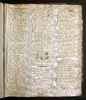
Page 27
A NOTABLE MAN.
Some Interesting Passages in the Life of W. F. Cody--Col. Prentiss Ingraham, Dramatist and Novelist--Buffalo Bill's forthcoming New Border Drama.
The eighth annual visit of Buffalo Bill (Hon. W. F. Cody) and his dramatic combination to Baltimore, thus far, has been the most successful and satisfactory that he has ever made here. The entertainment given by this remarkable man illustrates the often asserted fact that truth is stranger than fiction. The dramas in which he has appeared are simply the stringing together with skillful effect of the actual scenes in which Mr. Cody himself has been the principal actor and hero. He is really the only man on the stage who gives representations of himself.
The leading features of the well known drama "May Cody" and the still better drama "Knight of the Plains," now being performed at Ford's Opera House, are made up of actual occurences in the dangerous life led by Mr. Cody, or "Buffalo Bill," as scout, guide and hunter on the great Northwestern frontier. Mr. Cody's splendid figure, manly and gentlemanly bearing, and fine, frank open countenance, is familiar to most everybody here. He is the only true type of the frontiersman, as we have been taught to regard him by writers of travel and adventure. Born in Iowa, when it was almost the western boundry of civilization, he grew up with the rifle in his hand and thoroughly accustomed to the dangers of the border. He is said to have killed his first Indian when only ten year s of age, and since that time has been a prominent figure in most of the thrilling and terrible conflicts with the Indians and blood-thirsty road agents of the Northwest.
Mr. Cody is now about thirty-six years of age. His home is at North Platte, Nebraska, where he owns a fine farm improved by an elegant mansion, and sixty miles distant on the Dismal river, he owns a ranche of several thousand acres upon which he maintains 10,000 head of cattle. His home is the centre of refinement and comfort and is presided over in his absence by his wife and two interesting daughters. Mr. Cody devotes about nine months in the year to the road with his company and the remainder to his home and farm.
For his recent unexampled success in the dramatic line, Mr. Cody is largely indebted to Col. Prentiss Ingraham his dramatist and business manager. Col. Ingraham belongs to a family famous as writers of realistic fiction. His father, the late Rev. J. H. Ingraham, of Mississippi, the friend and contemporary of Cooper, Irving and Willis, was the author of some of the best known and most widely read works of the time. As the author of the biblical story, "The Prince of the House of David," Mr. Ingraham is probably best known. He also wrote "The Pillar of Fire," "Lafitte," "Captain Kidd" and many stories of sea and land. Col. Prentiss Ingraham, the son, is scarcely less widely known as a writer, his name having so often appeared in the New York Ledger, and other popular weeklies, that it is familiar to nearly every child. His more popular works are "Merle," "Without Heart," "The Flying Yankee," "Fettered with Fate," and recent novelettes in the "Star Journal."
His life is filled with adventure, for although less than forty, he has been a participant in the late civil war between the States, the Cretan war with the Turks, and, in 1870, he commanded the steamer Hornet in an expedition to aid the pratriot cause of Cuba. Two years ago Col. Ingraham, by invitation of the Grand Army of the Republic, read an original ode at the memorial decoration at Gettysburg. This is a distinction not often conferred upon one who served in the Confederacy, and was a flattering tribute to his talents.
Having spent much of his time on the plains and in the mountains Colonel Ingraham is well qualified as a dramatist of the order adapted to the talents of the great scout and hunter. He is the author of Buffalo Bill's present successful drama "Knight of the Plains," and has just completed another new play for Mr. Cody entitled "Buffalo Bill at Bay, or The Pearl of the Prairie." The new drama in some of its scenes resembles the one the company is now playing, but is much stronger and presents the hero in new characters. The scenes are all from actual occurrences.
In the new drama, Cody is represented as attempting to drive out the road agents and renegades which infest the borders imperiling the lives and property of settlers and travelers. His attitude toward these lawless men engenders the bitterest hatred against him, and plots are laid to convict him of colusion with the hostile tribes and to implicate him in crimes committed by them. His enemies are greatly aided by one Captain Hart Moline, who is in love wiht Cody's sister, Nellie Cody, "the pearl of the prairie." Buffalo Bill suspects Moline's villiany and opposes his union with the "Pearl." In the development of the plot and to give zest and variety to the piece, a negro servant of Buffalo Bill's, and an old quack doctor and pretended naturalist, are intoduced. The Indians are also introdueed with their war dances, besides other specialties of the company. Among the characters, are officers of the fort, scouts and guides, the daughter of the Post Trader, the real live Indians and the intelligent donkey Jerry.
Buffalo Bill is outlawed through the connivance of Captain Hart Moline, and in circumventing the designs of his enemies and vindicating himself he assumes various disguises, among them that of an old trapper, a captain of cavalry, an agent of the secret service, &c. He finally unravels the difficulties surrounding the situation and the drama ends in his triumphant vindication and the confusion of his accusers. The post trader's daughter is a strong character; exhibiting the result of a woman's ambition, hatred and love. The new drama will be put on the stage first in New York in about two weeks, and will be given for the rest of the season in what is known as the Eastern circuit. The characters are all written with special reference to the talents of the several members of Buffalo Bill's combination, which is one of the best on the road.
Ford's Grand Opera House. Buffalo Bill, the big Indians, the donkey, Bill's rifle, and all the other interesting performers in the "Knight of the Plains," can be seen again to-night at Ford's Opera House in the most civilizedly savage style. The boy chief of the bloodthirsty Pawnees will wear his best suit of paint, and there will be a prarie fire of lurid style. The entire entertainment is a successon of surprises, and will well repay a visit by all who enjoy the wonders of which the scenic artist is capable. The last Buffalo Bill matinee tomorrow.
OPERA HOUSE. Buffalo Bill. The sensational drama generally attracts a numerous crowd in Wilmington, and last night, supplemented by a brass band and several real Indians, the size of the audience in attendance was proportionate with the additional inducements then offered. The piece is entitled "The Knight of the Plains, or, Buffalo Bill's Best Trail," and it served its purpose very successfully by affording abundant opportunity for the introduction of an unlimited amount of sensationalism of every description. The audience (an exceedingly large one) was apparently well pleased with the performace, and the performers were by no means backward in manifesting their appreciation.
The scenery and stage effects were of a novel and realistic character, and added much to the interest of the occasion. Altogether we were agreeably disappointed, and of its class the entertainment was far above the average and well worth seeing.
KNIGHT OF THE PLAINS. Buffalo Bill fairly galloped into popular favor last night. From the moment of his appearance on the stage, mounted on a magnificent bay, until the very last scene, in the last act, he was treated to a reception of which he may well feel proud. The house was packed; literally packed, and it takes a large number of people to fill the old St. Charles. But when it is crowded, as it was last night, we doubt if any theatre in the South looked as grand and comfortable.
The play, the "Knight of the Plains," written expressly for Mr. Cody by Col. Prentiss Ingraham, is not without merit. The scenes are founded on actual occurrences in the life of the great scout, and are at times very exciting. Blood and thunder is carefully excluded, and during the entire play only one man, the villain, is killed. This is a pity, for the audience by a large majority agreed that it would have been a great satisfaction if Bill had shot Moses Moloch, the Jew, who is, by the way, a very bad Isrealite, when he first appears in the second act.
In the first act the Indian war dance, by genuine Indians, is intoduced, and is quite a pleasing feature, proving highly interesting. The fancy shooting by Mr. Cody was received with well-merited expresions of appreciation. This exhibition of skill in rifle-shooting is neatly worked into the play, and shows good judgment on Col. Ingraham's part. The closing scene in the first act, representing a prairie fire, is strikingly realistic.
The scenes in the second and third acts are laid in Chicago and Cheyenne, and introduce the other members of the company, who, with one exception, ably sustain their parts.
The third act opens on the plains, where Mr. Cody again appears to advantage in his character of the scout.
Miss Lydia Denier, as Wild Nellie, and Mrs. Nellie Jones, as Rose Melton, play their respective parts remarkably well, while Harry Irving, as Buttermilk, assisted by his trained donkey, contributed much to the enjoyment of the audience. Mr. Louden, as Ralph Royston, and Mr. Barclay, as Red Eagle, are careful actors, and will no doubt become favorites with our theatre going people.
Taking the performance as a whole it is very acceptable, and will have a good run. The "Knight of the Plains" will be repeated to night.
ST. CHARLES THEATRE. The opening of Buffalo Bill and his dramatic combination last night drew to the St. Charles Theatre an audience which reminded one of the days when the "Old Drury" was the favorite resort for the amusement seeker and the lovers of the drama. The house was packed from parquette to gallery, and throughout the performance the audience was enthusiastic in its evidences of appreciation.
After a farce, which was well played, and served to put the house in a good humor, the curtain rose on the play of the evening, a four-act one, entitled "Knight of the Plains."
The drama is a smooth-running one of no very great depth, but of fair literary merit, and is throughout stirring and pleasantly exciting. Although it is a tale of the frontier, and unmistakably real Ind ans are introduced. there is no blood and thunder, and the only discharge of firearms is by Buffalo Bill in the fir t act in displaying his markmanship, and in the third act, in a very legitimate duel scene, which is artistically introduced.
The company, as a whole, is a good one. Buffalo Bill is simply himself, and therefore fills the part to the letter. He is perhaps too natural for a certain class of theatre-goers, but in maintaining his identity, despite the temptation to make a display, there is true art, which can be appreciated best by those who understand it best.
Miss Nellie Janes, as Rose Shelton, had a pleasing and attractive part, which she sustained with no little ability: and Miss Lydia Deiner, as Wild Nellie, was all that could be desired.
The Moses Moloch of L. R. Willard was also a fine piece of acting.
The Knight of the Plains will be repeated this evening and should draw a good house.
Buffalo Bill's Shooting. The Fancy Rifle Shooting of Buffalo Bill is not offensive to ladies or sensitive people as might be supposed. The rifle he uses does not make a loud report. He shoots with marvelous accuracy, standing, sitting, lying and stooping, backward and forward, taking aim backward from a looking glass, etc.
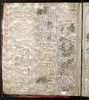
Page 28
18 THE OTHER THEATRES. "Buffalo Bill" effected his entrance on the Walnut Street stage (to use the phrase of the New York critics) in a blaze of enthusiasm. His drama, "A Knight of the Plain," is not such a gory affair as might be supposed from Mr. Cody's reputation as a slayer of Indians and other wild animals. It is a very exciting affair, however, and to the people in the parquet as well as the boys in the gallery seemed as absorbing as a dime novel. The hero did some remarkable rifle shooting and bore himself in a right manly fashion throughout the performance, while his support was much better than we had reason to expect.
AMUSEMENTS. Ford's Grand Opera House. Buffalo Bill continues to be a big card at Ford's Opera House. His remarkabley realalistic delineations of the ways and manners of our sturdy frontiersmen have a charm that irresistably appeals to all lovers of nature untrammeled by the straightlacedness of modern civilization. His support by the little band of untutored red men is, next to Buffalo Bill himslef, the most attractive feature of the "Knight of the Plains," and is better than any circus the "gods of the galleries" have ever patronized, as is abundantly testified by their nightly whoops of appreciation whenever Mr. Indian shows himself on the stage in all his war paint and savage bedizenments. The drama will be represented each night this week and at matinee on Saturday.
--A Sunday school teacher asked a little boy "what comes on the 6th of January?" He replied: "Buffalo Bill."
Buffalo Bill. Buffalo Bill and his excellent company gave one of their splendid entertainments in King's Opera House last night. Mr. Cody in his specialty the "Knight of the Plains," written for him by the well known standard writer, Col. Prentiss Ingraham, is a faithful picture of border life, and to make it more interesting, is presented by the actual, living hero of the scenes portrayed, in real life. From the frontier to the parlor, from the desperate scout of the plains to the "carpet knight" Mr. Cody is at home, and always plays his part to perfection. His marksmanship is unrivaled. In almost every conceivable position he hit his mark with the rifle, and won from a large house a unanimous applause. The prairie fire scene was magnificent, and together with the painted savages, presented a weird picture beyond description.
The entire troupe did well, and we regret that time and space prevents our giving proper mention as each deserves, but we will, however, mention a few among this array of talent. Miss Nellie Hones, as Rose Melton, was charming, Miss Lydia Denier, as "Wild Nellie," was played well, and L. R. Willard, as Ralph Royston, was well handled. Indeed, Buffalo Bill and his combination are well worth seeing, and all who have an opportuity should not fail to see the "Knight of the Plains." They commence an engagement in Memphis to-night.
AMUSEMENTS. LEUBRIE'S THEATER. Another good audience greeted Buffalo Bill and his Combination last night in "Knight of the Plains," and the uproarious applause of the audience at every telling hit of the play showed that it was fully appreciated. The most significant proof of the presitge gained by the great scout and frontier hero was that the majority of that audience were people who had attended the first performance. The central figure of the play, the Knight himself, was applauded to the echo whenever he came on. He is not a professional actor, and for that reason is always natural, even if he did not conform, in every instance, to stage rules. Miss Lydia Denier, as "Wild Nellie," confirmed the favorable impression she had made in her previous performance. She is graceful, and entirely devoid of hackneyed modes of expression, and false sentiment. Miss Nellie Jones as "Rose Melton" is a success. She is especially strong in society business, and in the scene with Noel Marmaduke who wants to court her, but hasn't sense enough to do it. She is the ideal of a keen witted girl imbued with an intense appreciation of the rididulous, who is bothered by a suitor whom she deservedly hold in contempt. Alf Beverly as "Judge Chincapin Shyster," gave as good an exhibition of character acting as has been seen in Memphis for many a day. He showed up the tricky, half drunk and wholly villainous jackleg lawyer to perfection. Harry Irving made a decided hit as "Buttermilk," and his scene with the trained "gentleman mule" on the stage kept the audience in a roar as long as it was on. The rest of the support did well, but their parts were not of sufficient importance to warrant special mention. Matinee to-day at 2 p.m., when "Knight of the Plains" will be presented. To-night the new frontier drama, May Cody; or Lost and Won.
ST. CHARLES THEATRE. Buffalo Bill and his company in "The Knight of the Plains" have carried the town by storm; another crowded house greeted the renowned scout at this theatre last night. During the intermission between the third and fourth acts, Mr. Josh E. Ogden, the energetic business manager of the combination, was called on the stage, and upon his appearing, was, by Mr. C. McRae Selph, on behlf of the Hon. W. F. Cody, presented with an elegant gold watch and chain. Josh was taken by surprise and failed to find words adequare to return thanks for this magificent gift. The audience appreciated his embarrassment and loudly applauded this mark of appreciation on the part of the actor frontiersman.
AT THE WALNUT STREET THEATRE, a week of ultra sensation has just drawn to a close, and Buffalo Bill has gone to astonish another public with the wonders of the "Knight of the Plains," and the wonderful situations that gush throughout the length and breadth of the production. "Knights of the Plains" proved to be the well-known play, and although seen for the first time on the stage of the Walnut Street Theatre, the drama and the star are familiar to all patrons of sensational pieces.
At the matinee of the Buffalo Bill Combination at the theare this afternoon, the thrilling performance which was witnessed last night, will be repeated.
--The parade of Buffalo Bill and his Indians, headed by a fine brass band [word] longing to the troup, in a wagonette, attracted a great deal of attention on the streets yesterday morning.
Buffalo Bill and his Indians will reach the city this afternoon at 4 o'clock, and, after having a street parade, will go to the Marshall House.
Buffalo Bill, after all, is a wonderful fellow. Handsome, dashing and with a national reputation, he is bound to have a crowd, while the novelties of the exhibition, including his remarkable shooting and his live Indians, are the real attractions, and make the poorest dime novel show ever presented passable and even pleasing to the public taste.
Colonel W. F. Cody was the guest of THE COMMERCIAL last night after the performance, where he was met by Senator Beck, Colonel Watterson, of the Courier-Journal, Colonel B. O. Carr (an old plains friend), Mr. C. M. Horton, of Boston, and several prominent Louisville gentlemen, all of whom had attended the performance of Ingraham's drama, "Knight o the Plains," and complimented the renowned scout upon his success as an actor and his wonderful marksmanship with the rifle.
The theatre was crowded last night, with a large, appreciative audience, to witness the performance of the thrilling drama entitled "Knight of the Plains," as presented by the Buffalo Bill Combination. In this drama much of the character of life on the plains and among the Indians is given, and the exciting nature of that life is full of interest. There are many of our readers who have never seen alive Indian, and being reared in peaceful, quiet and happy homes, have but little conception of the dangers of border life. The drama performed last night gives a very good insight into the dangers and peculiarities which surround those who live among the wild Indians. For this reason, and because of the freshness and reality of the play, it cannot fail to attract the public. In the distribution of characters, "Buffalo Bill" (Hon. W. F. Cody) takes a leading and very interesting part, and is ably and intelligently supported by Mr. J. J. Louden, as "Ralph Royston," Mr. Dalancy Barclay as "Red Eagle," a genuine Indian, and by Miss Lydia Denier as "Wild Nellie," and Miss Nellie Jones as "Rose Melton," besides a number of other fine artists and several Indians. The war dance of the Indians is an exciting feature of the play, and the prairie on fire, with a herd of Buffaloes escaping, was about as realistic a scene as was ever presented on the stage. Mr. Cody has often participated in encounters on the plains in such thrilling scenes as were presented last night and while a Government scout, became familiar with the habits, customs, &c., of the wild and warlike Indians. The dressing of the Indians last night was natural and as they appeared in feathers, paint and buckskins so they appear in their Western retreats when they are on the war path. There will be a matinee this afternoon at 2 o'clock, when the rates of admission will be 50 cents for adults and 25 cents for children, and to-night another interesting drama will be given, entitled "May Cody or Lost and Won."
Page 29
Buffalo Bill. As will be seen by advertisement elsewhere Buffalo Bill will tread the boards at the Opera House next Tuesday evening, November 4th. Of him and his performance a late number of the Rurlington Hawkeye says: The melo-drama in which Mr. Cody appeared on Thursday night is properly named, for no one holds a better right to the title "Kight of the Plains" than he does, for he has long been distinguished in the army and on the frontier as the "Prince of Prairiemen." Though essentially a border play, Col. Prentiss Ingraham, the author, has so interwoven social life with the wild scenes upon the prairie, and intoduced into it the refining element of lovely woman that it is toned down from the "blood and thunder" of the stereotyped frontier drama. Buffalo Bill as "himself" exhibits a fine bit of acting, and the character he impersonates of English nobleman and detectives are exceedingly natural and good. "Wild Nellie," the border heroine, and a wild, passionate outcast of the plains, is strongly taken by Miss Lydia Denier, who also has the advantage of being a handsome woman as well as a good actress. Miss Nellie Jones, as "Rose Melton," is simply perfect--the refined, lovely, high-spirited girl she represents, while Mr. J. J. Louden as the designing villain, sport and outlaw, "Raplph Royston," proves himself a dramatic student who fully grasps the character he has to play. The other characters are equally well sustained.
BUFFALO BILL AT THE THEATRE.- Buffalo Bill and his troupe were greeted last night, not only by one of the largest audiences of the season, but, judging from the applause, by a most enthusiastic and heartily sympathetic one. The galleries were crowded, and there was a full attendance in the dress circle and parquet, with a very fair sprinkling of ladies. The performance opened with a roaring farce, after which the exciting and amusing play of the "Knights of the Plains" was presented. The characters were well sustained and the scenes of wild Western life well depicted. The play will be presented again to-night, and, doubtless, to as large an audience as that of last night.
BUFFALO BILL TO-NIGHT. This evening the famous scout hunter and actor, Hon. W. F. Cody, with a stong support, will entertain our people at the Opera House with the "Knights of the Plains, or, Buffalo Bill's Best Trail," written by Col. Prentiss Ingraham. Speaking of the play and its rendition by Buffalo Bill and his Company, a Nashville paper has this to say: "For the purpose for which it was written, namely, to introduce the famous scout and his specialties, the play is a success. The marksmanship of the latter, in the first act, and a unique barbaric dance in native costume by the copperhead children of the prairies, constitute the best features of the entertainment. An appropriate climax to this scene was the rescue of her lover--the scout--by wild Nellie--(Miss Denier) in a striking tableau which brought down the house, especially the upper portion of it. Buffalo Bill makes his first entrance mounted on a superb charger, which mute actor acquitted himself with as much credit as any of the rest of the company. Buffalo Bill has a fine stage presence, and, with the exception of a little of the stiffness and elocutionary deficiencies which mark the amateur, is not a bad actor. The support was fair, and the performance was repeatedly and heartily applauded at the close."
"BUFALO BILL" AT THE ACADEMY, An audience numbering fully 1,100 people. and as enthusiastic as it was large, greeted the "Buffalo Bill Combination" at the Academy of Music last night. The performance opened with the farce of "Put Him Out," not very well done, and giving little promise of the treat to come. The drama, "The Knight of the Plains," an artistic work by Col. Prentiss Ingraham, abounds in sensational situations and exciting climaxes and was much admired and enthusiastically applauded throughout. To say that "Buffalo Bill" and his troupe have greatly improved since their appearance here is to state the matter very tamely. The playing throughout, and by all hands round, was done in good style and without a jar or balk, Mr. Cody was of course the centre of attraction and from his splendid rifle shooting, at a small target, holding his gun in every conceivable position, to his slightest remark, was a subject of admiration and applause. Harry Irving as Buttermilk, who, with his donkey, was a show of himself; L. R. Willard as Moses Moloch, and A. Beverly as Judge Chincapin Shyster, kept the audience in a roar three-fourths of the time and divided the honors as funny men. Miss Nellie Jones, as Rose Melton; Miss Lydia Denier, as Wild Nellie, and J. J. Louden, as Royston, the villain of the play, admirably sustained their parts. The playing of the orchestra was very good and elicited applause.
BUFFALO BILL LAST NIGHT.-- The large audience which attended the Theatre last night showed by their loud and frequent plaudits their appreciation of Buffalo Bill and his good company. His fancy shots with his trusty rifle were really remarkable. Miss Lydia Denier as Wild Nellie did credit to herself in each and every act, following and harassing to the bitter end Ralph Royster, her betrayer. Miss Nellie Jones was greeted with merited applause in sustaining the character of a noble woman. She acted well, especially when showing her contempt for her father, who meditates her sacrifice. It is needless to say that the Knight of the Plains was always on hand to snatch from the hands of his bitterest foe his first and only love. The play is a presentation of western border life, and several Indians assisted in rendering it. The occupants of the peanut gallery were wild and enthusiastic during the entire performance, and at times the whole audiene showed their sympathy in the play by loud and frequent applause. To-night Buffalo Bill will be repeated and it is his last appearance here.
May Cody. Last night the "Buffalo Bill" Combination presented "May Cody" at Craddock's Opera House, after having given the Knight of the Plains at the afternoon matinee to the fullest house ever seen in Dallas at a matinee. May Cody is a drama of frontier life, the scenes, save the first one, being laid in Mormondom and the drama itself hanging on the Mountain Meadow massacre, for which John D. Lee, the leader of the Mormon Danites, was executed a year or so ago. It is a vivid illustration of Mormon iniquity, villainy and crime, and is worth more by its thrilling portrayal of what Mormonism really is, towards awakening the sentiment of the people against the monstrous practices of these people than editorials or speeches could ever amount to. We do not propose to go into an extended criticism, but will say in all earnestness that every scene of every act is thrilling and awakens every emotion fo the heart. Buffalo Bill in the different characters he represents sustained himself well and was greeted with immense applause--even his name elicited encores. Miss Lydia Denier in the role of May Cody was the cynosure of all eyes, and won the hearts of the audience by her genuine feeling in acting her part. Barny McCune, Mr. Charles Wilson, elicited much applause, for he is a true commedian. It has often been asked why Mr. Cody is called Buffalo Bill. It is a ghost story and well worth telling. When the Kansas Pacific railroad was being built it was difficult for the contractors to get fresh meat for their hands and when they reached the buffalo country they employed him at $500 per month to furnish them with buffalo meat. They gave him five horses, a wagon and team and two butchers, and he killed for them every day twenty, thirty or forty buffalo, just as they needed them. The consequence was that the bands, whenever they saw him, said, "there comes that 'Buffalo Bill,' sharpen up your teeth, etc." from that he was given the name. A great amny people want to know if the Indian way dances were genuine. They most assuredly were, for the Indians are of the Pawnee tribe, who cannot speak English, and they dance the genuine, bona fide Indian dances of their tribe. Monday night the company plays at Corsicana, and there, as everywhere, it will draw full houses. Barney McCune and his donkey, in May Cody, was immense, though the Jack did har-ass Barney somewhat.
May Cody. Buffalo Bill, and his fine combination appeared last night in Mr. Cody's favorite play, May Cody. From what was seen the night before everyone expected to see something good and they were not disappointed. The play took better than the one previously put on the boards, but we do not know that it was better performed by the actors. The very sight of Buffalo Bill on the stage enthused the audience and they would give vent to their enthusiasm with hearty cheers.
Mr. Cody's shooting was very fine indeed. He shot an apple from the head of Miss Denier, and then taking a mirror he turned his back to the young lady and shot it from her head again. He also knocked the fire from a cigar which was held int he mouth of Mr. James. His shooting and use of the "cor driver" is simply marvellous.
This is a fine combination, and we commend them to the public patronage whereever they may go. It is a troupe of gentlemen and ladies who deserve merit and we cheerfully accord it to them.