
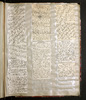
Page 15
Buffalo Bill Buffalo Bill, the well-known scout of the plains, will appear at Rouse's Hall this evening in his new play, "The Knight of the Plains." He has appeared here before, and is well known to the public, who have patronized him liberally here tofore. The New York Herald says of him: The Hon. W F Cody, better known to fame under his earlier title of Buffalo Bill, has introduced four genuine Indians into the combination of which he is the head, and it is not improbable that they and their race may yet take a leading part in the great work of the elevation of the drama. There are various ways in which the standard of the stage may be raised, and it is not yet certain that the scalping knife and tomahawk are to be despised as reforming influences. Aside from these, however, the aboriginal has some dramatic qualifications that the profession in general lack. He is far fonder of acting than of talking, for one thing, and though he does not understand the influences of dress, and that converse which is with poetic license denominated full dress, he seldom regards these as the full duty of a man. He has, in a marked degree, the faculty of repose, in which some artists, otherwise excellent, are lamentably deficient. He is not averse to cosmetics, though when he paints he never attempts to make art take the place of nature. Should he volunteer for a "benefit" performance of any sort,
he is not at all likely to play Romeo or Claude Melnott, so the theatre going public is likely to be saved from many an oft told tale. And lastly, his philosophical mind has not absorbed the mysteries of injunction; so when he is billed to appear in anything, there is a reasonable chance that purchasers of tickets to new plays will not be disappointed by beholding old dramatic stand bys instead of novelties. Room for the Indian, even if he should draw the scalping knife upon the histrionic battle field, it is not certain that he will hurt the public as much as his may benefit it.
"The Knight of the Plains." Never was a name more appropriate than is the above, given to Hon. W. F. Cody, Buffalo Bill, who is indeed a most chivalrous plainsman, and one who has done the government and country good services, as vouched for by General Sheridan, General E. A. Carr and others. Drawn by accident, as it were, into the dramatic arena, Buffalo Bill has steadily won a reputation as an actor, until his talent is recognized by the elite in the orchestra and dress circle as well as the "gods" in the gallery, with the latter he being especially the hero of heroes. His new melo-drama, "Knight of the Plains," we are glad to see possesses great merit, being wholly free from the red fire, terrific, and flash of all other border plays, and well worthy the boards of a fashionable metropolitan theatre, for his support is really par excellence throughout, and the impersonations of the Jew money lender, Shyster Judge, Wild Nell, the border heroine, and other character parts undeniably dramatic "hits." The play is the work of the author and dramatist, Colonel Prentiss Ingraham, of Mississippi, and he deserves credit for having produced a piece of great merit, and wholly free from vulgarity.
The Knight of the Plains Buffalo Bill, his Indians and his scouts succeeded in attracting to the Opera House last night an audience large in numbers and demonstrative in applause to witness the presentation of the drama of "The Knight of the Plains," which is one of the most sensational kind and abounding in thrilling situations, hair-breadth escapes and dramatic enough to arouse the enthusiasm of readers of ten cent literature and weekly sensation papers to the highest pitch. The play is similar to those already presented here by this famous scout, but is minus the glare of red fire and the continual crack of the rifle which have heretofore been characteristic of his dramas. Buffalo Bill assumed four characters and shows no improvement in his acting over his former visits. The parts of Ralph Royston, Shyster, "Wild Nellie" and Rose Melton were well taken by Messrs. Louden, Bravely, Misses Denier and Jones, while the others were hardly up to the average. A little more attention to stage setting would have produced a more realistic effect. A prarie on fire with the stage floor covered with a red carpet is hardly the proper thing.
Buffalo Bill's Drama. The melo-drama in which Mr. Cody appeared on Thursday night is properly named, for no one holds a better right to the title "Knight of the Plains" than he does, for he has long been distinguished in the army, and on the frontier as the "Prince of Prairiemen." Though essentially a border play, Colonel Prentiss Ingraham, the author, has so interwoven social life with wild scenes upon the praire, and introduced into it the refining element of lovely woman that it is toned down form the "blood and thunder" of the stereotyped frontier drama. Buffalo Bill as "himself," exhibit a fine bit of acting, and the character he impersonates of English noblemen and detective, rre exceedingly natural and good. "Wild Nellie," the border heroine, and a wild, passionate outcast of the plains, is strongly taken by Miss Lydia Denier, who also has the advantage of being a handsome woman as well as a good actress. Miss Nellie Jones, as "Rose Melton," is simply perfect--the refined, lovely, high-spirited girl she represents, while Mr. J. J. Louden as the designing villian, sport and outlaw, "Ralph Royston," proves himself a dramatic student who fully grasps the character he has to play. The millionaire, "Mushroom Melton," is well acted by Mr. Harry Melmer, "Noel Marmaduke, the fop and puppet of the Jew most cleverly taken by Mr. Charlec Wilson, and "Red Eagle," Pawnee chief, a natural impersonation by Mr. Delancy Barclay. In fact, Mr. Cody has a star combination this season, and with his marvellous fancy rifle shooting, the war dances of the red skins, and the attractions of the frontier heroes Eddie and Charley Burgess, the play will without doubt draw crowded houses at every performance.
Buffalo Bill The famous "Buffalo Bill," Hon. W. F. Cody, and company presented his new play at the Opera House last evening, entitled, "Knights of the Plains, or Buffalo Bill's Best Trail," written for him by the well-known author, Col. Prentiss Ingraham. The play was preceded by a very entertaining and amusing farce, entitled "Joppin's Latch Key." The play of the envening and that which drew is made up of exciting scenes from real life on the plains and the border towns, as experienced by Mr. Cody among the Indians, in which is presented some fine situations and effects. The play was altogether well presented. Moses Moloch (L. R. Willard), and Judge Chincapin Shyster (Alf. Beverly), furnished the comic element and did it well. J. J. Louden as Ralph Royston did some clever acting, while Wild Nellie (Miss Lydia Denier) and Rose Melton (Miss Nellie Jones) aided very materially in adding interest to the play. Buffalo Bill we suppose does not pretend to be an actor, but his presence usually attracts enthusiasm. He did some fine rifle shooting, and the Pawnee braves went through a series of amusing antics called war and scalp dances. Taken altogether the play is much better than a mere dramatization of a yellow back novel, and is destined to have success.
Buffalo Bill Last Night --Durley Hall was crowded last night to welcome the knight of the plains. The plot of his play is not as well connected as in some other plays, but it bristles with stirring scenes throughout, and, as the curtain is rung down at the end of each scene, the boys in the gallery and the young men in the parquet and dress cicle fairly yelled and howled in the excitiment of their pleasure. Buffalo Bill's life is the is the ideal career of all the dime-novel boys in America, and they applaud him to the echo. The boot blacks squander their hard earnings on him, and all the enterprising news-boys in the United States patronize him with a joy unknown to them when they put their "nickles in the missionary box." The various characters in the play are well represented, except the Jew, who overdoes his business in some particulars. The buttermilk negro was immense, and Judge Shyster was equal to the efforts of a broken-down Chicago lawyer. The play takes well.
Buffalo Bill To-night --To-night Buffalo Bill, who is a great favorite with the amusement public of this city, will appear at Durley Hall, supported by a well selected company, having been chosen with reference to their particular abilities in the different characters of the play to be given this evening, entitled "Knights of the Plains; or, Buffalo Bill's Best Train." During the play Buffalo Bill will give an exhibition of some of his remarkable long-rifle shooting, which has given him a reputation as being one of he most expert marksman in the country.
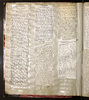
Page 16
OPERA HOUSE
Knight of the Plains, Last Night-Immense Success
The audience that assembled last night to greet the Buffalo Bill combination was the largest that has yet gathered in the Opera House. Parquette, dress circle, balcony and gallery were all filled to their utmost capacity, and a great many must have gone away who were unable to gain admission. At about half- past 7 o'clock there was an absolute crush at the entrance. The crowd was so dense that it was found necessary to close the doors and cease, temporarily, the sale of tickets. They were soon reopened, however, and the more persistent of the crowd pressed in until over 1,400 people, who paid eight hundred and twenty-six cold dollars into the treasury, had assembled. And right here we may remark that this is the fifth time that Bill has played to a house yielding over $800 during the present season, and he has not yet been three weeks on the road.
Promptly at eight o'clock the curtain raised on the "Masonic Secret," an abominable little farce that is wholly lacking in point, and that bored the audience terribly. Fortunately, however, this was soon over, and then commenced the attraction of the evening--"The Knight of the Plains, or Buffalo Bill's Best Trail." This is a new piece, written expressly for Mr. Cody by Col. Prentiss Ingraham, and there can be no doubt that it is indeed Buffalo Bill's "Best Trail," and that it will "trail" more ducats into his treasury than anything that he has heretofore "struck." It is a magnificent border play, and Col. Ingraham may justly congratulate himself on the production of one of the greatest sensastions of the day. It is replete with "thrilling situations," and affords a fine field for the exercise of Mr. Cody's peculiar talent. It introduces him on the prairie; he then "turns up" in a New York parlor, then again in a Cheyenne gambling hell, and finally in the far west again, as a pony express rider. He always appears, of course, as the dashing, chivalrous defender of innocence, and at last marries the woman whom he rescues from death in a railroad accident. Cody has a fine stage presence, and does some really effective acting. He is the great attraction of the play, but it has other features that are decidedly taking. There are a number of fine tableaux incident to the piece; one in particular is very effective, that of a prairie on fire, with a herd of "buffaloes fleeing before the flames. A number of Indians (?) are introduced, some fancy rifle shooting is done by Bill, and a diminutive live donkey is introduced on the stage, which creates a world of merriment. Some clever acting is also done by Alf. Beverly, "Shyster"; L. R. Willard, "Moloch"; J. J. Louden, "RalphRoyston" ; Miss Lydia Denier "Wild Nellie"; Miss Nellie Jones, "Rose Melton." Indeed, the company as a whole is a strong one, and it gave the play so effectively last night, that the audience was at times worked up to a pitch of excitement that bordered on wildness. The piece seems destined to have a long and successful run.
AMUSEMENTS.
KNIGHT OF THE PLAINS.
To night the Buffalo Bill Comination will appear at the Opera House in the thrilling drama of border life, "The Knight of the Plains," the famous scout and fine actor, Hon. W. F. Cody, the "Buffalo Bill," appearing as the Knight, supported by a company who will present the minor characters in good style. There is a prospect that the Opera House will be packed from "pit to dome," and those who desire a good seat should go early. The Philadelphia Times thus speaks of the play and its reception in that city: "Long before the rise of the curtain every seat, yes, and every available space of standing room, was occupied; all anxious and watching eagerly for the play to commence, and when the popular scout Buffalo Bill did appear, such an outburst of enthusiasm arose as is seldom hear in any theatre. The drama produced, the "Knight of the Plains," in far ahead of anything Mr. Cody has heretofore presented, and he is ably supported by a first class company, each one seeming peculiarly adapted to the part assigned them."
GRAND OPERA HOUSE-- "THE KNIGHTS OF THE PLAINS."
If any sceptic doubted the power of "Buffalo Bill" (or Hon. Wm. F. Cody, in proper person) to amuse the masses, he should have visited the Grand Opera House any night during the past week and witnessed galleries packed with delighted humanity, who did not confine their enthusiasm to mere clapping of hands and stamping of feet, but gave further vent to their caloric in shouts and exclamations. That the actors are used to receptions of this kind, was evident from the fact that their tranquility was not disturbed in the least, and they stood the storm with admirable nerve and steadiness. "Buffalo Bill" is a veritable hero in the eyes of the masses, and there is an odor of reality about everything he does, which creates demonstrativeness in those who base their ideal of manhood upon such basis. There is a fascination in knowing that the man has passed through the scenes of daring and peril as he represents them.
Mr. Cody deserves great credit on several accounts. Gifted with a fine stage presence and being a fairly good actor, he never attempts to over act or go beyond his capabilities. He has made decided improvement in his knowledge of the stage since his last appearance here, and does some excellent work outside of those mimic productions of prairie and forest adventure with which his personality is so closely associated. During the action of "The Knights of the Plains," Buffalo Bill introduced some splendid feats of marksmanship of forward, backward and fancy shooting, which were none the less interesting and admirable, from the fact that there were no danger associated from the exhibition. Another interesting feature was the aborigine supernumeraries who as
CHATTERTON'S OPERA HOUSE
Buffalo Bill-Tremendous House
Last night the new house was fully tested as to its seating qualities, and Buffalo Bill can boast of putting over 1,400 people within its walls. The receipts were $826, a fact pleasing to both proprietors and players.
The play is one well calculated to display the peculiar qualities of the border character, of which Hon. W. F. Cody is one of the finest living specimens. The "Knight of the Plains" is admirably adapted to the intrigues of the unprincipled and the romance of hunter life. The introduction of the Comanche chiefs and their war dances; the splendid rifle practice of "Bill," when seasoned with the "characters" found in the "Shysters" and "Moses Molohc's," the "Ralph Roystons," "Marmadukes" and "Rose Meltons" of society, make the play a very pleasing one for an evening's entertainment. "Buffalo Bill" has lost nothing in popularity since his first appearance on the stage and has improved in his stage manners, and gave to the people of this city, who crowded the Opera House to hear and see him last night, a full retnrn for the outlay of time and money.
BUEFALO BILL
A Crowded House to see the Knight of the Plains
The thrilling melo-drama which was written for Hon. W. F. Cody by the popular author, Col. Prentiss Ingraham, seems peculiarly adapted for the actor and his troupe. The many thrilling scenes, hair-breadth escapes, rescues and contests keep the excitement up to fever heat from first to last. The play is well written and is given by Mr. Cody and his company in an unexceptionable manner. We have little room to particularize, but the acting of Mr. Cody and of Miss Lydia Denier, as Wild Nellie, were highly spoken of and warmly applauded. The support was also good, Willard making a capital Jew and every one "should smile" at Judge Chincapin Shyster. Buttermilk and his donkey brought down the house, and the cheers were loud and long at the close of each act. The fancy rifle shooting by the Knight of the Plains was applauded, as it well deserved. Mr. Cody may rest assured of one fact, that so long as he gives a play as respectable and free from anything low he will be greeted by a rousing audience when he visits Jacksonville.

Page 17
GRAND OPERA HOUSE-- "THE KNIGHTS OF THE PLAINS."
If any sceptic doubted the power of "Buffalo Bill" (or Hon. Wm. F. Cody, in proper person) to amuse the masses. he should have visited the Grand Opera House any night during the past week and witnessed galleries packed with delighted humanity, who did not confine their enthusiasm to mere clapping of hands and stamping of feet, but gave further vent to their caloric in shouts and exclamations. That the actors are used to receptions of this kind, was evident from the fact that their tranquility was not disturbed in the least, and they stood the storm with admirable nerve and steadiness. "Buffalo Bill" is a veritable hero in the eyes of the masses, and there is an odor of reality about everything he does, which creates demonstrativeness in those who base their ideal of manhood upon such basis. There is a fascination in knowing that the man has passed through the scenes of daring and peril as he represents them.
Mr. Cody deserves great credit on several accounts. Gifted with a fine stage presence and being a fairly good actor, he never attempts to over act or go beyond his capabilities. He has made decided improvements in his knowledge of the stage since his last appearance here, and does some excellent work outside of those mimic productions of prairie and forest adventure with which his personality is so closely associated. During the action of "The Knights of the Plains," Buffalo Bill introduced some splendid feats of marksmanship of forward, backward and fancy shooting, which were none the less interesting and admirable, from the fact that there were no danger associated from the exhibition. Another interesting feature was the aborigne supernumeraries who assisted him in his scenes, and appeared in their own peculiar camp scenes.
The play proper is well written and of good construction, and serves for the introduction of several comedy characters of the broad types, which were intensely relished by the boys and created no end of laughter. Among these were "Moses Moloch" by L. R. Willard, "Judge Shyster" by Alf Beverly, "Snowball" by Ed. Buckley, and a number of others. The serious characters incidental to the piece were sustained by J. J. London, B. R. Taylor, H. Melmer and two excellent lady actresses, Miss Lydia Denver and Miss Nellie Jones.
Whatever may be said against this class of literature and performance, it certainly is highly relished by the self-reliant members of the masculine sex; and the fact stands that it does much towards inculcating freedom and independence in boys who seem to have a natural "hankering" after this style of thing. There is no vulgrity, no bad or immoral sentiment advocated in the piece, and we are unable to see wherein the evil lies in such productions. We are free to admit that we strongly reprobate the training which teaches a boy not to fight under any provocation. There are times when it is good for them, and they ought to indulge in it. The English have some admirable ideas on this point, and they would be excellent for general adoption in this country. Instill passive submission into a boy, and he will grow up dependent, lacking in confidence and devoid of many qualities that a man shold have. The lad who is taught to run whining to is parent when some companion inflicts an affront or injury upon him, is not a good road, and he should be switched off it. There are too many angelic qualities ingrafted into the minds of our boys, and they do not develop good qualities as they grow older. Good stories of adventure are much more natural and bealthful than the average Sabbath school narrative, and when their morality is good, there can be no harm emanating from them. If Buffalo Bill and his confreres have done any good from this standpoint, they deserve the approbal of all level-headed citizens.
Buffalo Bill
Last evening Durley Hall was jammed from parquette to gallery, with an enthusiastic audience, gathered to see the romantic hero of the plains, Buffalo Bill. He appeared for the first time in Bloomington in his new play, entitled "Knights of the Plains," written expressly for him by Col. Prentiss Ingraham, the popular author and dramatist. The thread of the play is an interesting romance, and it is dressed out with the introduction of genuine Indians in their native dances and gorgeous costumes, Buffalo Bill's wonderful rifle shooting and the manners and customs of the Westerners. There is a peculiar "something" about Bill that fires the boys with untamed enthusiasm. Such deafening applause was scarcely ever heard in the hall. The support was generally good, more especially Miss Lydia Denier, the judge and the heavy villain. The play consists of four acts, each closing with exciting tableaux, keeping the audience on the tip toe of expectancy. The author and actors are to be congratulated on the success of the play.
A NOTABLE MAN,
Some Interesting Passages in the Life of W. F. Cody--Col. Prentiss Ingraham, Dramatist and Novelist-- Buffalo Bill's forth-coming New Border Drama.
The eight annual visit of Buffalo Bill (Hon. W. F. Cody) and his dramatic combination to Baltimore, thus far, has been the most successful and satisfactory that he has ever made here. The entertainment given by this remarkable man illustrates the often asserted fact that truth is stranger than fiction. The dramas in which he has appeared are simply the stringing together with skillful effect of the actual scenes in which Mr. Cody himself has been the principal actor and hero. He is really the only man on the stage who gives representations of himself.
The leading features of the well known drama "May Cody" and the still better drama "Knight of Plains," now being performed at Ford's Opera House, are made up of actual occurences in the dangerous life led by Mr. Cody, or "Buffalo Bill," as scout guide and hunter on the great Northwestern frontier. Mr. Cody's splendid figure, manly and gentlemanly bearing, and fine, frank open countenance, is familiar to the most everybody here. He is the only true type of the frontiersman, as we have been taught to regard him by writers of travel and adventure. Born in Iowa, when it was almost the western boundry of civilization, he grew with the rifle in his hand and thoroughly accustomed to the dangers of the border. He is said to have killed the his first Indian when only ten years of age, and since that time has been a prominent figure in most of the thrilling and terrible conflicts with the Indians and blood-thirsty road agents of the Northwest.
Mr. Cody is now about thirty-six years of age. His home is at North Platte, Nebraska, where he owns a fine farm improved by an elegant mansion, and sixty miles distant on the Dismal river, he owns a ranche of several thousand acres upon which he maintains 10,000 head of cattle. His home is the cen-[word]
tre of refinement and comfort and is presided over in his absence by his wife and two interesting daughters. Mr. Cody devotes about nine months in the year to the road with his company and the remainder to his home and farm.
For his recent unexampled success in the dramatic line, Mr. Cody is largely indebted to Col. Prentiss Ingraham his dramatist and business manager. Col. Ingraham belongs to a family famous as writers of realistic fiction. His father, the late Rev. J. H. Ingraham, of Mississippi, the friend and contemporary of Cooper, Irving and Willis, was the author of some of the best known and most-widley read works of the time. As the author of the biblical story, "The Prince of the House of David," Mr. Ingraham is probably best known. He also wrote "The Pillar of Fire," "Lafitte," "Captain Kidd," and many stories of sea and land. Col. Prentiss Ingraham, the son, is scarcely less widely known as a writer, his name having so often appeared in the New York Ledger, and other popular weeklies, that it is familiar to nearly every child. His more popular works are "Merle," "Without Heart," "The Flying Yankee," "Fettered with Fate," and recent novelettes in the "Star Journal."
His life is filled with adventure, for although less than forty, he has been a participant in the late civil war between the States, the Cretan war with the Turks, and, in 1870, he commanded the steamer Hornet in an expedition to aid the pratriot cause of Cuba. Two years ago Col. Ingraham, by invitation of the Grand Army of the Republic, read an original ode at the memorial decoration at Gettysburg. This is a distinction not often conferred upon one who served in the Confederacy, and was a flattering tribute to his talents.
Having spent much of his time on the plains and in the mountains Colonel Ingraham is well qualified as a dramatist of the order adapted to the talents of the great scout and hunter. He is the author of Buffalo Bill's present successful drama "Knight of the Plains," and has just completed "Buffalo Bill at Bay, or The Pearl of the Prairie." The new drama in some of its scenes resembles the one the company is now playing, but is much stronger and presents the hero in new characters. The scene are all from actual occurrences.
In the new drama, Cody is represented as attempting to drive out the road agents and renegades which infest the borders imperiling the lives and property of settlers and travelers. His attitude toward these lawless men engenders the bitterest hatred against him, and plots are laid to convict him of collusion with the hostile tribes and to implicate him in crimes committed by them. His enemies are greatly aided by one Captain Hart Moline, who is in love with Cody's sister, Nellie Cody, "the pearl of the prairie." Buffalo Bill suspects Moline's villiany and opposes his union with the "Pearl." In the development of the plot and to give zest and variety to the piece, a negro servant of Buffalo Bill's, and an old quack doctor and pretended naturalist, are introduced. The Indians are also introduced with their war dances, besides other specialties of the company. Among the characters, are officers of the fort, scouts and guides, the daughter of the Post Trader, the real live Indians and the intelligent donkey Jerry.
Buffalo Bill is outlawed through the connivance of Captain Hart Moline, and in circumventing the designs of his enemies and vindicating himself he assumes various disguises, among them that of an old trapper, a captain of cavalry, an agent of the secret service, &c. He finally unravels the difficulties surrounding the situation and the drama ends in his triumphant vindication and the confusion of his accusers. The post trader's daughter is a strong character, exhibiting the result of a woman's ambition, hatred and love. The new drama will be put on the stage first in New York in about two weeks, and will be given for the rest of the season in what is known as the Eastern circuit. The characters are all written with special reference to the talents of the serveral members of Buffalo Bill's combination, which is one of the best of the road.
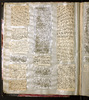
Page 18
8 one.
Buffalo Bill at the Howard.
The Howard was filled to its utmost capacity last evening to witness Buffalo Bill's mammoth combination. The melo-drama was preceded by the farce entitled "Turn Him Out," in which Mr. Beverly proved himself a capital Nicodemus Nobbs, and Miss Nellie Jones an acceptable Susan. The melo-drama entitled "Knight of the Plains; or, Buffalo Bill's Best Trail," succeeded. The first act of the drama opened with a well-set and picturesque scene, a sunset on the prarie, with Red Eagle, a live Indian, on the watch. This scene abounded in thrilling situations, while the rifle shooting of Buffalo Bill is really marvellous, and received the applause which is due to a good marksman. The horses which appear upon the stage and the trick mule break the monotony of usual dramas. Every tableau received an encore, and the curtain was rung up several times. Buffalo Bill, of course, carried off the honors of the evening. Miss Denier and Jones, as Wild Nellie and Rose Melton, sustained their parts in an acceptable manner, and Beverly and Willard kept the house in a roar as the Judge and Moses. The Indian war-dance was a feature, and received a double encore. In conclusion, the drama is a strong one of the kind, and cannot fail to be attractive to all who wish to see life in the far west well depicted.
"May Cody, or Lost and Won." This thrilling border drama was presented last night by the Buffalo Bill Combination to a fair Saturday night house. The play was given here by the Company on their previous visit, and hence is familiar to the admirers of the Western drama. The various characters were well sustained and the entertainment afforded much satisfaction, as attested by the applause. The rifle shooting of Buffalo Bill was extraordinary and excited the wildest enthusiasm. The company go hence to Charleston.
"Buffalo Bill" and Young Gardner. Hon. Wm. F. Cody (Buffalo Bill), who is now filling an engagement at Ford's, was approached yesterday by a GAZETTE reporter in reference to the whereabouts and condition of Michael Gardner, the boy whom he accidentally shot in this city, during a performance of May Cody at Ford's Opera House, on the night of Monday, September 9, 1878, and afterwards took West with him. Mr. Cody stated that the boy had lived happily on his farm in Nebraska until last fall, when he expressed a desire to return to Baltimore to see his friends. Mr. Cody paid his passage East and intends to visit him to day, at the residence of his parents, 136 West street.
The crack shots of the world are Buffalo Bill, Dr. Garver, Capt. Rainbolt, Bogardus, Frank Thayne and Capt. Ira Paine. What a great thing it would be to get up a match between these "dead shot heroes."
FORD'S---BUFFALO BILL. An immense audience witnessed the new border drama, entitled, "The Knight of the Plains," at the Grand Opera House last night. This drama was written by Col Prentiss Ingrham expressly for Mr. Wm. F. Cody, and was presented by him and his large company last night in brilliant style. This drama depicts vividly scenes in the life of a frontiersman, and the plot and dialogue are far in advance of any other similar play now on the stage. As the hero of the plains Mr. Cody (Buffalo Bill) appeared to great advantage, and his disguises were well assumed. His rifle practice was good and was well received. His support by Miss Nellie Jones, Mr. J. J. Loudon, Mr. Alf Beverly, Mr. L. R. Williard and others, was excellent. The band of genuine Indian braves in their dances and camp scenes formed a fine feature of the play.
FORD'S GRAND OPERA HOUSE. Buffalo Bill and his troupe of Indians turned out in force yesterday afternoon, and delighted many thousands as they paraded through the streets. In the evening the performance of "Knight of the Plains" was attended by a vast concourse of people, who crowded the theatre from pit to dome and attested their appreciation by frequent and hearty applause. Of course the novelty of real Indians on the stage would ordinarily be sufficiant to draw large houses, but in this case the play--hence real merit and the attraction therefore is doubled. Buffalo Bill and his company will be here all week.
AMUSEMENTS. One of the most enjoyable treats in store for amusement lovers will be the appearance of Buffalo Bill and his company of 25 artists, at Wheeler's Opera House, to-morrow evening, on which occasion the thrilling play of "May Cody, or Lost and Won," will be produced, and we have no hesitation in saying that the house will be packed, as it should be. The following very complimentary notice we clip from the Terre Haute Express of last week: "As it always is when Buffalo Bill pays us a visit, the opera house was as full as a box of sardines, last evening. The play was May Cody, which was produced here one year ago. It deals with the Mormon Danites and the Mountain Meadow massacre, and the frontier generally. Mr. Cody has gained much in ease of manner and grace of action, and he is now able to present the ideal frontier hero in a manner which makes him a formidable rival of any actor. In his exhibition of marksmanship Mr. Cody displayed a degree of skill rarely equaled. At a distance of ten paces, with a potato for a target, he did not miss a single shot out of a dozen or more. He holds his gun in all sorts of positions, with the same unvarying accuracy of aim. He also gave an exhibition of the use of a "bull-whacker's" whip, an implement of torture, made up of three feet of handle and twenty feet of lash. Mr. Charles Wilson, as "Darby McCune," created hurricanes of mirth, Mr. Wilson gives a very faithful picture of Irish character. The four Indian Chiefs accompanying the troupe gave an exhibition of Indian dancing which was as ludicrous as it was, no doubt, trueto nature. A very clever performer is the donkey, ridden by Darby McCune, and he should have more consideration than is bestowed upon him by the management. He had no place in the programme, and we are consequently unable to give his name. Altogether the entertainment given by this company is one which affords rare enjoyment. To the boys the privilege of seeing Buffalo Bill in person is a great boon. To children of larger growth there is much that will interest and please in the text and action of the drama."
HON. W. F. CODY, better known as Buffalo Bill, accompanied by Mr. Ben Thompson and several members of his company, went out yesterday, when he again displayed his skill in handling a rifle. He is undoubtedly one of the best marksmen now on the American continent. His shooting was perfectly marvelous.
Buffalo Bill and his combination gave their farewell performance last night in "May Cody, or Lost and Won." A fair audience was in attendance, and seemed to enjoy the play presented. "May Cody" is a feeble imitation of "Knight of the Plains," and it is fortunate for the company that it was produced on the last night instead of the first. Buffalo Bill and his troupe did well and made the most out of a very small capital.
On Thursday, the 27th, the Buffalo Bill Combination began an engagement of three nights, which must be considered a very successful one. This may be ascribed to two causes, of which the first is that Buffalo Bill is a man whose exploits on the frontier have made him universally known, and the second that his company was excellent. There are several members of his troupe who are well qualified to take part in much more difficult dramas, and it is scanty praise to say that they did well throughout.
BUFFLO BILL.--Buffalo Bill has so long been the synonim for a mighty, far-famed Western chvalier, a a man whom honor loved and cowardice abhorred, that every man, woman and child in the large audience at Millett's Opera House last night went to see embodied the hero of a thousand tales who, by their pleasant firesides, have pictured in all the amplified and varied forms that imagination will ever bring before the gigantic multiplicity of human minds. And in the thousand written stories not one could be brought to mind which exceeded in interest the beautiful drama played last night. Major Burt, the author of "May Cody," knew Buffalo Bill, and knew his wonderful, enchanting powers, and brought them to the test in the play. Mr. Cody's histrionic talent is of a high order, and his displays of wonderful dexterity with the rifle, the whip and on the trail are aweinspiring, causing open mouthed amazement in old and young. Mr. Cody was well supported by his talented company, and Miss Lydia Denier as May Cody, Miss Nellie Jones as Mrs. Stoughton, Mr. Chas. Wilson as Darby, Mr. Louden as John D. Lee, and Mr. Willard as George Stoughton, deserve special mention. It were tedeous for a scribbler to attempt to tell the story of May Cody's misfortunes, capture and rescue-be it sufficient to say that I did not fail for an instant to draw rapt [WORD] of all the intelligent audience from first to last, but we canot pass over Mr. Cody's marksmanship without a passing tribute. He shot objects from Miss Denier's hand and from her head, snuffed out a candle and put out a bullwhacker's cigar, shooting in various natural and unnatural positions, including a shot at a potato on the lady's h ad, she standing behind him, while he aimed with the aid of a small mirror. A goodly audienc greeted he company and showed their delight in manner from the sedate smile to the gamin's exuberant applause. The people of Austin will never tire of dramas such as these. They go from here today, but will come again when the leaves begin to fall, and a hearty welcome awaits them.
The Street Parade Buffalo Bill and his Indian Scouts were on a parade to-day through the principalstreets of the city, preceded by the fine brass band of the Combination. There are three Indians in the troupe whose genuineness cannot be questioned. Of course the parade attracted much attention, and after their return to the Purcell House the doors were thronged by a curious crowd.
A great many seats have been secured for to-night and the performance promises to be one of much interest. The piece was writen by Col. Ingraham especially for this troupe and it should be distinctly understood that it is not a mere "blood and thunder" affair but a romance of life on the plains, which has been sketched from actual scenes and incidents of frontier life.
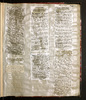
Page 19
The theatre was crowded last night, with a large, appreciative audience, to witness the performance of the thrilling drama entitled "Knight of the Plains," aa presented by the Buffalo Bill Combination. In this drama much of the character of life on the plains and among the Indians is given, and the exciting nature of that life is full of interest. There are many of our readers who have never seen a live Indian, and being reared in peaceful, quiet and happy homes, have but little conception of the dangers of border life. The drama performed last night gives a very good insight into the dangers and peculiarities which surround those who live amond the wild Indians. For this reason, and because of the freshness and reality of the play, it cannot fail to attract the public.
In the distribution of characters, "Buffalo Bill" (Hon. W. F. Cody) takes a leading and very interesting part, and is ably and intelligently supported by Mr. J. J. Louden, as "Ralph Royston," Mr. Dalancy Barclay as "Red Eagle," a genuine Indian, and by Miss Lydia Denier as "Wild Nellie," and Miss Nellie Jones as "Rose Melton," besides a number of other fine artists and several Indians. The war dance of the Indians is an exciting feature of the play, and the prarie on fire, with a herd of Buffaloes escaping, was about as realistic a scene as was ever presented on the stage. Mr. Cody has often participated in encounters on the plains in such thrilling scenes as were presented last night and while a Government scout, became familiar with the habits, customs, &e., of the wild and warlike Indians. The dressing of the Indians last night was natural and as they appeared in feathers, paint and bucksins so they appear in their Western retreats when they are on the war path.
The Hon. W. F. Cody (Buffalo Bill) and his Indian aids were objects of curious attention around the Peabody Hotel last night.
ST. CHARLES THEATRE. "Buffalo Bill at the 'Old Drury,'" as the boys would say, played to "smashing business" yesterday; crowded houses at noon and night. "May Cody; or, Lost and Won," was the play last night, and will continue to be the attraction to the close of Buffalo Bill's engagement.
BUFFALO BILL. A Large and Fashionable Audience at the Opera House Last Night.
The Opera-house was crowded last night, on the occasion of Buffalo Bill's first appearance. Every nation has an actor--a play which represents itself. England has her dramatic dukes and kings, and Austria her Philips. All nations have plays and characters peculiar to themselves. The true--to original representation of America is wild plains and uninhabited forests. A hero of these scenes is purely American, and his name is Buffalo Bill--W. F. Cody. Mr. Cody is not only the hero of a drama written for himself, but is the hero of a broad drama written by nature and by fate. He, as Eliza Cook would say, is one of nature's noblemen, and richly deserves the name.
The play last night was good, and the audience was peculiarly demonstrative. There is not so much of the blood and thunder as one would imagine, but it is replete with fine dramatic and "comedienic" points.
J. J. Louden as Ralph Royston, Miss Lydia Denier as Wild Nellie, and Miss Nellie Jones as Rose Melton, are characters that are worthy of note, and ones which are entitled to the highest dramatic praise. In fact, there is not a poorly selected character in the troupe, and we advise our people to patronize a purely American drama and more purely American actors.
Buffalo Bill will appear again tonight, when a crowded house should appear as appreciative of his merits.
Buffalo Bill. This hero, for such is his profession off and on the stage, drew a large audience to Davis' Theater last night, the galleries being crowded and the lower auditorium pretty well filled. He is a handsome, graceful actor, and is effective, bringing down thunders of applause in every situation in which he levels his weapon or stikes an attitude or an enemy. The play is full of such situations, though unexpectedly free from gunpowder, and hence the performance is attended with a great deal of din.
The company render very good support, all the members bringing to their bold melodramatic parts the necessary force and loudness of lungs. The "Wild Nellie" of Miss Lydia Denier is a good piece of acting. The play is assisted by the band of Indians and the rifle shooting. The donkey is wonderfully well trained, and his tricks and antics are extremely amusing.
Altogether Buffalo Bill and company stand at the head of their class of attractions, and that they are doing such a great business everywhere is no wonder.
Buffalo Bill A Large and Fashionable Audience at the Opera House Last Night.
The Opera-house was crowded last night, on the occasion of Buffalo Bill's first appearance. Every nation has an actor-a play which represents itself. England has her dramatic dukes and kings, and Austria her Philips. All nations have plays and characters peculiar to themselves. The true--the original representation of America is wild plains and uninhabited forests. A hero of these scenes is purely American, and his name is Buffalo Bill-- W. F. Cody. Mr. Cody is not only the hero of a drama written for himself, but is the hero of a of a broad drama written by nature and by fate. He, as Eliza Cook would say, is one of nature's nobleman, and richly deserves the name. The play last night was good, and the audience was peculiarly demonstrative. There is not so much of the blood and thunder as one would imagine, but it is replete with fine dramatic and "comedienic" points. J. J. Louden as Ralph Royston, Miss Lydia Denier as Wild Nellie, and Miss Nellie Jones as Rose Melton, are characters that are worthy of note, and ones which are entitled to the highest dramatic praise. In fact, there is not a poorly selected character in the troupe, and we advise our people to patronize a purely American drama and more purely American actors. Buffalo Bill will appear again tonight, when a crowded house should appear as appreciative of his merits.
Novelty Theatre. The Novelty Theatre was crowded last evening from pit to ceiling, Buffalo Bill, (Hon. W. F. Cody) with his new dramatic combination being the special attraction. The drama, "Knight of the Plains, or Buffalo Bill's Best Trail," is a four act melodrama, written expressly for the famous scout, by Col. Prentiss Ingraham. It is vastly superior to the play in which Mr. Cody was first introduced to the theatre-going public; it is more refined and attractive to intelligent people by far than the old conglomeration of violent scenes, tomahawking, shooting and other blood curdling incidents which at first composed the only important features of the drama, and which only pleased the gallery. "The Knight of the Plains" last evening not only kindled the enthusiasm of the gallery, but delighted the lower portion of the house as well. Buffalo Bill had the good fortune to be supported by Mr. L. R. WIllard, as Moses Molock, the Jew, Mr. Alf. Beverly, as Judge Shyster, Mr. J. J. Louden, as Ralph Royston, the heavy villian, Miss Mellie Jones as Rose Melton and Harry Irving as Buttermilk. The plot is a well laid one of frontier life, and the adventures incident to it prove to be good dramatic material. During the first act Buffalo Bill exhibited remarkable specimens of rifle shooting which would have excited the envy of any rifleman. In the same act a group of genuine Indians were introduced, who gave illustrations of their barbarous music, their war dresses, dances, etc., while the hero of the plains was encompassed by his enemy. Mr. Willard's impersonation of the Jew was very strong, and only equaled by Mr. Beverly's character of a frontier lawyer and judge of low grade. Mr. Irving, in his negro delineation of Buttermilk, especially in his scenes with an antical mule, kept the house in a roar of laughter. The scene in the gambling hall in Cheyenne, the duel, robbery of the overland coach, and the rescue, were interesting as was the final denouement, in which the villian is unmasked and killed by Wild Nellie, in revenge for her wrongs and to save Buffalo Bill; the scheming Jew and shyster lawyer exposed; and Rose Melton and her father saved from the clutches of the avaricious and unscrupulous Roylston, who supposes them to be in his power. Mr. Black's new waltz "Brooklyn Life," was played well by the orchestra and was one of the features of the evening, the galleries having caught the air and giving a whistling accompaniment to the great amusement of the audience. "The Knight of the Plains" was preceded by the laughable farce of "The Laughing Hyena."