
51
45
plains and passed every experience; horder, hunter, pony-express rider, stage driver, wagon master in the quartermaster's de partment, and scout of the army, and was first brough to my notice by distinguishing himself in bringing me an important dis patch from Fort Larned to Fort Hays, a distance of sixty-five miles, through a sec tion infested with Indians. The dispatch informed me that the Indians near Larned were preparing to decamp, and this intelli gence required that certain orders should be carried to Fort Dodge, ninety-five miles south of Hays. This too being a particu larly dangerous route -- several couriers having been killed on it--it was impossible to get one of the various 'Petes,' 'Jacks,' or 'Jims' hanging around Hays City to take my communication. Cody, learning of the strait I was in, manfully came to the rescue, and proposed to make the trip to Dodge, though he had just finished his long and perilous ride from Larned. I gratefully accepted his offer, and after a short rest he mounted a fresh horse and hastened on his journey, halting but once to rest on the way, and then only for an hour, the stop being made at Coon Creek, where he got another mount from a troop of cavalry. At Dodge he took some sleep, and then continued on to his own post--Fort Larned--with more dispatches. After rest ing at Larned, he was again in the saddle with tidings for me at Fort Hays, General Hazen sending him, this time, with word that the villages had fled to the south of Arkansas. Thus, in all, Cody rode about 350 miles in less than sixty hours, and such an exhibition of endurance and courage at that time of the year, and in usch weather, was more than enough to convince me that his services would be ex tremely valuable in the campaign, so I retained him at Fort Hays till the battalion of the Fifth Cavalry arrived, and then made him CHIEF OF SCOUTS."
Read through the fascinating book, "Campaigning with Crook (Major-General George Crook, U. S. A.) and Stories of Army Life," due to the graphic and soldiery pen of Captain Charles King, of the U. S. Army; published in 1890.
Incidentally the author refers in various pages to COL. CODY as Scout, etc., and testifies to the general esteem and affection in which "BUFFALO BILL." is held by the army.
The subjoined extracts from the book will give our readers an excellent idea of the military scout's calling and its dangers.
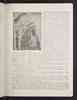
"By Jove, General!" says "BUFFALO BILL.," sliding backward down the hill, "now's our chance. Let our party mount here out of sight, and we'll cut those fellows off. Come down every other man of you."
Glancing behind me, I see CODY, TAIT and "CHIPS," with five cavalrymen, eagerly bending forward in their saddles, grasphing carbine and rifle, every eye bent upon me, watch ing for the signal. Not a man but myself knows how near they are. That's right, close in, you beggars! Ten seconds more, and you are on them! A hundred and twenty-five yards --a hundred--ninety--"Now, lads, in with you."
There's a rush, a wild ringing cheer; then bang, bang, bang! and in a cloud of dust, CODY and his men tumble in among them, "BUFFALO BILL." closing on a superbly accoutred warrior. It is the work of a minute; the Indian has fired and missed. CODY'S bullet tears through the rider's leg into the pony's heart, and they tumble in a confused heap on the prairie. The Cheyenne struggles to his feet for another shot, but CODY'S second bullet hits the mark. It is now close quarters, knife to knife. After a hand-to-hand struggle, CODY
52
46
wins, and the young chief, "YELLOW HAND," drops lifeless in his tracks after a hot fight. Baffled and astounded, for once in a lifetime beatem at their own game, their project of joining "SITTING BULL" nipped in the bud, they take hurried fight. But our chief is satis fied. "BUFFALO BILL" is radiant; his are the honors of the day. From page 35.
THE GREATARTIST, FRED REMINGTON, WRITES FROM LONDON TO "HARPER'S WEEKLY."
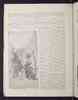
The most noted depicter of Western scenes of the present day is without doubt the eminent artist. Mr. Frederic Remington. His study of the subject renders him a most competent judge. In returning from an expedition in Russia, passing through London, he visited Buffalo Bill's Wild West, and it is with pride that the projectors point to his indorsement, standing side by side in artistic merit as he does with the grand artiste, Rosa Bonheur:
The Tower, the Parliament, and Westminster Abbey are older institutions in London than Buffalo Bill's show, but when the New Zealander sits on the London bridge and looks over his ancient manuscripts of Murray's Guide-Book, he is going to turn first to the Wild West. At present ever one knows where it is from the gentlment on Piccadilly to the dirtiest coster in the remotest slum of Whitechapel. The cabman may have to scratch his head to recall places where the traveler desires to go, but when the "Wild West" is asked for he gathers his reins and uncoils his whip without ceremony. One should no longer ride the deserts of Texas or the rugged uplands of Wyoming to see the Indians and pioneers, but should go to London. It is also, quite unnecessary to brave the fleas and the police of the Czar to see the Cossack, or to tempt the waves which roll between New York and the far off Argentine to study the "gauchos." They are all in London. The Cossacks and "gauchos" are the latest edition, and they nearly complete the array of wild riders. There you can sit on a bench and institute comparisons. The Cossacks will charge you with drawn sabres in a most genuine way will hover over you like buzzardson a battelfield--they soar and whirl about in graceful curves, giving an uncanny impression, whcih has doubtless been felt by many a poor Russian soldier from the wheat field of central Europe as he lay with a bullet in him on some distant field. They march slowly around over imaginary steppes, singing in a most dolorous way -- looking as they did in Joseph Brandt's paintings. They dance over swords in a light-footed and crazy way, and do feats on their running horses which bring the hand-clapping. They stand on their heads, vault on and off, chase each other in a game called "chasing the handker chief," and they reach down at top speed and mark the ground with a stick. Their long coat-tails flap out behind like an animated rag-bag, while their legs and arms are visible by turns. Their grip on the horse is maintained by a clever use of the stirrups, which are twisted and crossed at will. They are armed like "pincushions," and ride on a big leather bag, which makes their seat adbormally high.
The "gauchos" are dressed in a sort of Spanish costume, with tremendous pantaloons of cotton and boots made of colt's skin, which in their con struction are very like Apache moccasins. They carry a knife at their back which would make a hole wchih a doctor couldn't sew up with less than five stitches, if, indeed, he was troubled at all. They ride a saddle which one of the American cowboys designated as a "--------feather bed" and they talk Spanish which would floor a Castilian at once. They ride bucking horses by pairs, and amuse the audience by falling off at intervals.
The great interest which attaches to the whole show is that it enables the audience to take sides on the question of which people ride the best and have the best saddles. The whole thing is put in such
53
47
tangible shape as to be a regular challenge to debate to lookers on. I, for one, formed my opinion, and have sacrificed two or three friends on the altar of my convictions. There is also a man in a pink coat who rides a hunting seat in competition with a yellow savage on a clear horse, and if our Englishman is not wedded to his ideals, he must receive a very bad shock in beholding he is a cow-boy.
Next year the whole outfit is coming over to the World's Fair with the rest of Europe, and they are going to bring specimens of all the continental cavalry. The Sioux will talk German, the cow-boys already have an English accent, and the "gauchos" will be dressed in good English form.
The Wild West show is an evolution of a great idea. It is a great educator, and, with its aggregate of wonders from the out-of-the-way plaves, it will represent a poetical and harmless protest against the Derby hat and the starched linen--those horrible badges of the slavery of our modern social system, when men are physical lay figures, and mental and moral cog wheels and the wastes of uniformity--where the great crime is to be individual, and the unpardonable sin is to be out of the fashion. FREDERIC REMINGTON.
THE WILD WEST REVIEW.
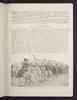
In order to create even the merest outline mind picture of the superb effects, massed fiery action and equestrian skill made gloriously manifest in the Grand Review with which the performances in Buffalo Bill's Wild West are always inaugurated, at precisely 2 and 8 P.M., one must imagine a kaleidoscope, with an object field of four and half acres in extent, occupied by a swiftly moving mass of figures, individually picturesque, brilliant with metallic reflections and gay with colors, momentarily springing and flashing into new combinations and modes of motion which dazzle, confuse and fascinate the eye of the beholder. The Indians, the Mexicans, the Arabs, the Gauchos, the Cossacks, the Cowboys, the cavalry of the different nations, and all the riders come in, one organization at a time, all riding at a dead run. After all are drawn up in line "Buffalo Bill" rides forth and introduces then Congress of the Rough Riders of the World. It is a superb and indescribable picture then --rank after rank of horsemen from all the nations stretching across the plain, shining with steel and aflame with color; tossing manes, running along the lines like wheat moving under a breeze; above them the plumes and the bright crests, and still higher, held in upstretched arms, the white flashing sabres, until at a signal the ranks melt into moving streams of color and light, the horsemen threading their way in and out past one another, circling, halting, advancing, receding, reforming by fours and sixes, trailing out in single file, moving ribbons of men and horses spangled with gleaming metal, until two long lines gallop away evenly and steadily, and disappear whence they came, to be succeeded by other historic, heroic and strangely fascinating scenes.
CAVALRY OF ALL NATIONS WITH "BUFFALO BILL" LEADING THEM.
54
48
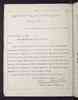
HEADQUARTERS DIVISION OF THE MISSOURI.
CHICAGO, ILLINOIS
In the Field, Pine Ridge, S.D., January 11, 1891
Brig. General W. F. Cody,
Nebraska National Guard, Present.
Sir: I am glad to inform you that the entire body of Indians are now camped near here (within a mile and a half). They show every disposition to comply with the orders of the authorities. Nothing but an accident can prevent peace being re-established, and it will be our ambition to make it of a permanent character. I feel that the state troops can now be withdrawn with safety, and desire through you to express to them my thanks for the confidence they gave given your people in their isolated homes.
Like information has this day been given General Colby.
Very repsectfully yours, signature Major General Commanding
55
49
BUFFALO BILL'S COW-BOY BAND "A MERITORIOUS MUSICAL FEATURE"-- London Times.
Not the least interesting and popular adjunct of the Wild West entertainment is the music furnished by the famous Cow-boy Band. This band has always taken a prominent place with the organization, and has received the highest praise from educated musicians as well as the public in all parts of the world. It consists of thirty-six cow-boy musicians as of whom would be considered a soloist on his own instrument, and when combined and playing together under the capable direction of Mr. William Sweeney, their leader, they make music that compels the admiration of the masses. They give a concery before each perform ance, and incidental music that is a source of pleasure to all who hear it, and are daily greeted with rounds of applause. This band has been the recipient of commendations from nearly all the musical connoisseurs and leaders and members of the finest bands in Europe, Lieut. Dan Godfrey, the leader of the famous Grenadier, Guards Band, having presented Mr. Sweeney, after a six months' engagement in the gardens connected with the Wild West in London, with a solid gold cornet, at the same time saying that the thirty-six members of the Cow-boy Band would produce more good music than any band he had ever heard with even double the number of musicians. For thirty minutes prior to the entertainment this band will give selections of both classical and popular music.
COSSACKS WITH THE WILD WEST.
In pursuance of their intention to assem ble together at the World's Fair a congress of the representative horsemen of the world. MESSRS. CODY and SALS BURY have had their agents in all parts of the earth looking for rough riders who could com pete with or excel the original riders of the Wild West, the native product of America. In the Russian Cossack they found a horseman whose style was new, novel and striking, and one who could compete with the finest in the world. These Cos sacks, in the picturesque garb of the Caucasus, form the latest acquisition of the Wild West. They are a troop of "Cossacks of the Caucasian Line," under the command of Prince Soucca.
The Prince and his comrades, it is interesting to the public to know, belong to the same branch of the great Cossack family, the Zaporogians, immortalized by Byron's "Mazeppa." Mazeppa was the chief of the Zaporogian community of the Cossacks of the Ukraine.
When Byron's famous hero came to grief at the battle of Poltava, the Cossacks fled to the Crimsa, then Turkish territory, to avoid the venegeance of Peter the Great. Subsequently they were deported to the Kuban, and settled along the river as military colonists to defend the Russian frontier against the marauding tribes of the Caucasus.
On this dangerous frontier the qualities of horsemanship that made the name of Mazeppa and his warlike followers household words throughout the whole of Europe, became still further developed in the following generations, so that the Kuban Cossacks quickly became, in many respects, the most remarkable riders in the world.
On their lithe steppe horses, as fierce and active as themselves, they proved themselves more than worthy of their sires. During the heroic struggle of the Circassian mountaineers to maintain their independence against Russia, the sons of Mazeppa's Zaporogians were