
31
25
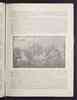
of stages, established at a time when it was worth a man's life to sit on its box and journey form one end of its destination to the other. The accompanying picture afford an idea of the old relic, and it is because of its many associations with his own life that it has been purchased by "BUFFALO BILL" and added to the attractions of his "GREAT REALISTIC EXHIBITION OF WESTERN LIFE."
It will be observed that it is a heavily built Concord stage and is intended for a team of six horses. The body is swung on a pair of heavy leather underbraces, and has the usual thick "perches," "jacks" and brakes belonging to such a vehicle. It has a large leather "boot" behind, and another at the driver's foot-board. The coach was intended to seat twenty-one men-the driver and two men beside him, twelve inside and the other six on top. As it now stands, the leather blinds of the windows are worn, the paint is faded, and it has a battered and travel-stained aspect that tells the story of hardship and adventure. Its trips began in 1875, when the owners were Messrs. Gilmore, Salsbury & Co. Luke Voorhees is the present manager. The route was between Cheyenne and Deadwood, via Fort Laramie, Rawhide Buttes, Hat or War Bonnet Creek, the place where "BUFFALO BILL" killed the Indian Chief, "Yellow Hand," on July 17, 1876, Cheyenne River, Red Canyon and Custer. Owing to the long distance and dangers, the drivers were always chosen for their coolness, courage and skill.
In its first season the dangerous places on the route were Buffalo Gap, Lame Johnny Creek, Red Canyon, and Squaw Gap, all of which were made famous by scenes of slaughter and the deviltry of the banditti. Conspicuous among the latter were "Curley" Grimes, who was killed at Hogan's Ranch ; "Dunk" Blackburn, who is now in the Nebraska State Prison, and others of the same class, representing the most fearless of the road agents of the West.
On the occasion of the first attack the driver, John Slaughter, a son of the present marshal of Cheyenne, was shot to pieces with buckshot. He fell to the ground and the team ran away, espcaping with the passengers and mail, and safely reached Greeley's Station. This occured at White Wood Canyon. Slaughter's body was recovered, brought to Deadwood, and thence carried to Cheyenne, where it is now buried. The old coach here received its "baptism of fire," and during the ensuing summer passed through a variety of similar experiences, being frequently attacked. One of the most terrific of these raids was made by the Sioux Indians, but the assault was successfully repelled, although the two leading horses were killed. Several commercial travelers next suffered from a successful ambush, on which
32
26
occasion a Mr. Liebman, of Chicago, was killed, and his companion shot through the shoulder.
After this stormy period it was fitted up as a treasure coach, and naturally became an object of renewed interest to the robbers; but owing to the strong force of what are known as "shotgun messengers," who accompanied the coach, it was a long time before the bandits succeeded in accomplishing their purpose. Among the most prominent of these messengers were Scott Davis, a spledid scout, and one of the self-appointed undertakers of many of the lawless characters of the neighborhood; Boone May, one of the best pistol shots in the Rocky Mountain regions, who killed Bill Price in the streets o Deadwood, together with "Curley" Grimes, one of the road agents; Jim May, a worthy brother--a twin in courage if not in birth. Few men have had more desperate encounters than he, and the transgressors of the law have had many an occasion to feel the results of his keen eye and strong arm whenever it has become necessary to face men who are prepared to "die with their boots on." Still another of these border heroes (for such they may be justly termed) is Gail Hill, now the deputy sheriff of Deadwood, and his frequent companion was Jesse Brown, an old-time Indian fighter, who has a record of incident and adventure that would make a book. These men constituted a sex tette of as brave fellows as could be found on the frontier, and their names are all well known in that country.
At last, however, some of them came to gried. The bandits themselves were old fighters. The shrewdness of one party was offset by that of the other, and on an unlucky day the cele brated Cold Spring tragedy occurred. The station had been captured,and the road agents secretly occupied the place. The stage arrived in its usual manner, and without suspicion of danger the driver, Gene Barnett, halted at the stable door. An instant afterward a volley was delivered that killed Hughey Stevenson, sent the buckshot through the body of Gail Hill, and dangerously wounded two others of the guards. The bandits then captured the out fit, amoutning to some sixty thousand dollars in gold.
On another occasion the coach was attacked, and, when the driver was killed, saved by a woman--Martha Canary, better known at the present time in the whild history of the frontier as "Calamity Jane." Amid the fire of the attack, she seized the lines, and, whipping up the team, safely brought the coach to her destination.
When "BUFFALO BILL" returned from his scout with Gen. Crook, in 1876, he rode in this self-same stage, bringing with him the scalps of several of the Indians whome he had met. When afterwards he larned that it had been attacked and abandoned, and was lying neglected on the plains, he organized a party, and starting on the trail, rescued and brought the vehicle into camp.
With the sentiment that attaches to a man whos elife has been identified with the excite ment of the Far West, the scout has now secured the coach from Col. Voorhees, the manager of the Black Hills stage line, and hereafter it will play a different role in its history from that of inviting murder and being the tomb of its passengers. And yet the "Deadwood Coach" will play no small part in the entertainment that has been organized by "BUFFALO BILL" and partner for the purpose of representing some of the most startling realities of Western life, in a vivid representation of one of the Indian and road agents' combined attacks.
THE PASSING OF THE COW-BOY.
Until the advent of Buffalo Bill's Wild West introduced the cow-boy to the world at large, the great majority of people had altogether wrong notions about him. This was due chiefly to the misrepresentations of the cheap romances and the erroneous articles which had appeared from time to time in Eastern magazines and periodicals, which made a sort of "half horse, half alligator" character of him, and clothed him in a garb of absurdity and misconception. That civilized life to which his calling necessarily made him largely a stranger has, since Colonel Cody coaxed him from the plains, grown to justly regard him as a singularity interesting fellow, and ordinarily a very brave, quiet and unassuming one; generous to a fault, and a fast friend under all circumstances. It does not take him long to evidence in the great Wild West arena that he possesses the qualities of courage, clear headedness, agility and endurance, which are absolutely necessary in the business from which his title is gained. In the pursuit of that business he is called upon to undergo the most severe hardships which can fall to the lot of any man, and he is schooled to bear them with admirable and uncomplaining fortitude. Rising at three o'clock in the morning, riding

33
27
all day at top speed and taking all sorts of chances, without regard to life or limb, he has little time for tomfoolery or lawless carousing. bad food, little sleep, constant anxiety and exhausting work soon undermine the stronger constitution, and at forty years of age, and often much sooner, rough, hard lines in his face tell the story with a plainness not to be mis taken.
Already the business of raising cattle on a large scale is slowly and surely dying out. With the coming of the small stockman the cowboy is fast disappearing, and ten years from now he will be but a memory. He was a fit and manly type of the earlier civilization of the great West, and the vigorous vanguard of the army of settlers who will soon make the fat West as prosperous and potential as is the East. ANd as with the cowboy so is it with his immediate predacessors, the pioneer, scout, trapper, plainsman and guide, and even the Indian. One and all must soon "cross the great divide," and with them their finest repre sentatives, whom Colonel Cody has gathered together, to amuse, instruct and astonish both the present and the rising generation. They are truly and exceptionally, historic, heroic and romantic characters. They should be seen of all men, for they are a type that time shall know no more.
COLONEL CODY ON THE SEX PROBLEM.
"Do you believe that women should have the same liberty and privileges that men have? was the leading question put by a prominent member of Sorosis to Colonel Cody. Here is his reply:
"Most assuredly I do. I've already said they should be allowed to vote. Why, of course, if a woman is out earning her living she keeps up with what is going on in the world and she knows the best man to vote for. Men have their clubs, and I say let the women have theirs, too. Women are so much better than we are that they don't take to out kind of clubs, but if they want to meet and discuss financial questions, politics, or any other subject, let 'em do it and don't laugh at them for doing it. They discuss things just as sensibly as the men do, I'm sure, and I reckon know just as much about the topics of the day. One thing gets me. You take a single woman earning her living in a city and the average man looks at her suspiciously if he hears that she lives alone. That makes me tired. A woman who is capable of financiering for herself is capable of taking care of her morals, and if she wants to take an apartment and live alone where she can do her work more quietly, or have things her own way when she comes from business, she has just as much right to do so as a bachelor. If a woman is a good woman she will remain good alone; if she is bad, being surrounded and overlooked, and watched and guarded, and chaperoned bu a hundred old women in a boarding house won't make her good. This applies to society women as well as to working women. There are bad women in every walk of life, but mose women are good. What we want to do is to give our women even more liberty than they have. Let them do any kind of work that they see fit, and if they do it as well as men give them the same pay. Grant them the same priveleges in their home life and club life that men have and we will see them grow and expand into far more beautiful and womanly creatures than they are already."
BUFFALO BILL AND THE BULLFIGHTERS.
Colonel Cody had a little war of his own with the Spaniards before Dewey, Sampson, Miles, Roosevelt and the rest took a hand in the grim game. It happened when he was in Barcelona, Spain, with his Wild West. One evening after the performance he got into his carriage, drove to the various newspaper offices and had this liberal offer appended to his advertisements:
"I will wager any amount that the people in my show can lasso and ride any bull in Spain."
He didn't think it necessary to tell his interpreter of this, and went home and to bed. He was stopping at the House of Four Nations, which was built in a square and had a large, beautiful court in the centre. What subsequently occurred we will let the Colonel tell in his own language:
"Very early the next morning my interpreter and agent came rushing into my room, crying:
"Get up! Get up! Dress at once: they are going to kill you." "Who?" I asked.
34
28
"'The bullfighters, they answered breathlessly. 'Peep into the court below at the maddened mob.'
"I did, and, by jiminy, it was a sight! The court was jammed with men as mad as so many mad bulls, and they were flying here, there and everywhere, threatening to tear me limb from limb. I dressed leisurely and put a Colt's revolver in my hip pocket--just to keep me company, you know-- and then I went downstairs. I got the interpreter to ask them what they meant. Their spokesman demanded to know why I had put such an insult to them in the papers, and at that every matador of 'em brandished a morning paper. I told them that I had merely made that wager and was ready to stick to it. Then they asked me how much I would wager. Now the people of Spain are distressingly poor, so I offered to bet 200,000 pesetas, for I knew they couldn't cover it. This crazed them and they tried to get at me. In the meantime my agent had gone for the American Consul and police officers to protect me and quell the riot, and I saw I had to talk for time. I began to drop, offering 175,000 pesatas, and I had got down to 50,000, and was losing wind when the Consul and officials arrived. The Consul saw that there was blood on the face of the moon, and he and the police advised me to withdraw my challenge. The bullfighters told them that I had attempted to ruin the national sport and had grossly insulted them; that they had to make the people believe that these bulls were very fierce and that no one in the world could capture and ride them but themselves, or else the sport would die an ignominious death, so I withdrew my wager. But I had to have police protection during the rest of my stay in Spain."
THREE NOTED WAR HORSES.
The hundreds of horses from different countries and of different strains employed by Buffalo Bill's Wild West in transportation, parade and exhibition, collectively, form a living attraction, full of nobility, beauty, intelligence, fire and fleetness, while in the great gather ing are individual steeds full worthy of more than passing inspection and mention. Among these are included "Knickerbocker" and "Lancer," which Colonel Cody sent with the army to Porto Rico for his own use in the event of his being called to the front by General Miles, and which were the only horses accompanying the invading forces that were returned to American soil, as the following note from General Miles to Colonel Cody shows:
"MY DEAR CODY:
"Your horses are now in Washington, all right. You did not come to Porto Rico, there fore I rode them myself, and they are the only horses brought back to America. "NELSON A. MILES"
Regular army officers who had served with General Miles in the Indian campaigns, had given him the reputation of being the hardest rider in the service. "He can cover more ground than any other man in the army and be fresh as a daisy at the end," they told the troopers in Porto Rico, and an escort of thirty-seven of them, whom he rode to a finish and nearly out of their saddles during a prolonged tour of inspection, sorely conceded that he was truly a Rough Rider par excellence. "Knickerbocker," a powerful, plucky gray, was just the mount required by such a horseman, and carried him triumphantly through the more arduous work of the campaign; "Lancer," a beautiful sorrel of less weight and stam ina, being reserved for lighter service.
Returning with these material steeds came a splendid little Porto Rico-born "Palimena Stallion," purchased for the special use of General Mile's twelve-year-old son, who accom panied the expedition with his father. That he is a chip of the old block may be inferred from the statement of one of the officers of Troop A, who says: "We made the return in less than fice hours, starting at the trot, which General Miles rode to perfection. His twelve year-old son, a bright-looking little chap, accompanied him on one of the little Porto Rico ponies. The boy was game, for He stuck righ at the heels of the iron-gray, handicapped as he was by his mount's short, pounding strides."
ORIENTAL WONDERS.
PHENOMENAL PERFORMANCES BY FAMOUS ARABIAN EQUESTRIANS AND ATHLETES.
There are some things in which the Wild East doesn't have to take off its turban to the Wild West, and the renowned Sheik Hadj Tahar's troupe of Riffian Arabs--right from the scorching sands--with Buffalo Bill's Wild West and Congress of Rough Riders of the
35
29
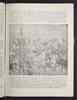
World, will prove it. These follwers of Mr. Mahomet are high-class riders and desert warriors, but more remarkable as athletes of singular and superb skill and agile strength. It should also be taken into consideration that they perform in the open, and on the rough ground, instead of having carpets and carfully leveled ground beneath their feet. They can even substitute mud for rosin and then make the circus look tame. Their holiday manual of arms includes the so rapid manipulate of long guns that they seem transformed into huge Fourth of July pin-wheels. Their head to head balancing is a prodigy of equilibristic art, strength and endurance. The nimbest pair of legs could scarce keep abreast of their handspring evolutions clear across the great arena. They walk on their hands as though
(image)
brought up to thatg kind of locomotion exclusively. They launch themselves in high and hazardous spreads and side-long somersaults over bayonets and sword blades. They tumble as though tossed in the arms of an invisible tornado, and they climb atop of one another with the balance and agility of monkeys, until nine of them form a high pyramid, of which one herculean son of the Prophet is the sole base. Meanwhile, and in fact all the while, the sage Dervish of the tribe is making a human tectotum of his respected self, and rotating more rapidly that the double screws of an Atlantic liner. So rapidly and continuously does he whirl around with extended arms that, unless he is iron-hooped, it is a wonder that he does not burst all to pieces and strew the Oriental scene with sanctified fragments