
36
50
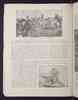
THE VAQUERO OF THE SOUTHWEST.
Between the "cow-boy" and the "vaquero" there is only a slight line of demarcation. The one is usually an American, inured from boyhood to the excitements and hardhsips of his life, and the other represents in his blood the stock of the Mexican, or it may be of the half-breed.
In their work, the methods of the two are similar, and to a certain extent the same is true of their associations. Your genuine vaquero, however, is generally, when off duty, more of a dandy in the style and get-up of his attire than his careless and impetuous compeer. He is fond of gaudy clothes, and whenyou see him riding well mounted into a frontier town, the first thought of an Eastern man is that a circus has broken loose in the neighborhood, and this is one of the performers. The familiar broad-brimmed sombrero covers his head; a rich jacket, embroidered by his sweetheart, perhaps, envelopes his shapely shoulders' a sash of blue or red silk is wrapped around his waist, from which protrude a pair of revolvers; and buckskin trousers, slit from the knee to the foot, and ornamented with rows of brass or silver buttons, complete his attire, save that enormous spurs, with jingling pendants, are fastened to the boots, and announce in no uncertain sound the presence of the beau ideal vaquero in full dress.
His saddle is of the pure Mexican type, with high pommel, whereon hangs the inevitable lariat, which in his hands is almost as certain as a rifle shot.
Ordinarily he is a peaceful young fellow, but when the whiskey is present in undue proportions he is a good individual to avoid. Like the cow-boy, he is brave, nimble, careless of his own life, and reckless, when occasion requires of those of other people. At heart he is not bad. The dependence on himself which his calling demands, the dangers to which he is subjected while on duty, all compel a sturdy self-reliance, and he is not slow in exhibiting the fact that he possesses it, in a sufficient degree at least for his own protection. True types of this peculiar class, seen nowehre else than on the plains, will be among the attractions of the show; and the men will illustrate the methods of their lives in connection with the pursuit and catching of animals, together with the superb horsemanship which is characteristic of their training.
37
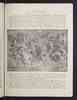
31 THE BUCKING BRONCO.
A PRODUCT OF NATURE, NOT OF EDUCATION.
Did you ever see a bucking circus horse? Emphatically no! Why not? Simply because if he were a bucker he would not only be utterly useless, but positively dangerous in the ring. The horse is naturally an exceedingly timid and suspicious animal, and in breaking him even to harness and saddle use the trainer must keep these traits constantly in mind. Consider the limited repertory of even the best trained circus horse of any school. He can be taught to do some surprising and pleasing tricks, but there is to him a danger line beyond which neither cajolery nor force can induce him to go. He can no more be taught to "buck" than can a kangaroo to play on a key bugle. No animal can be taught to injur or kill itself, at least of all the horse; the instinct of self-preservation forbids, and no trainer can overcome that power. It would be equally preposterous to assume that any amount of compensation could induce any man in the possession of his senses to train an animal expressely to injure him. There is not a day in the season but that from one to half a dozen cowboys are laid up in hospital as a result of their battles royal with the bucking broncos, while every one of them daily receives maulings, shake-ups and bruises that would invalid men of less rugged physique and Spartan endurance.
Like every other unique frontier, national and international feature with Buffalo Bill's Wild West, the bukcing broncos are genuine, from start to finish. They are natural, irreclaimable fighters, and their savage and reckless efforts to throw their riders cannot be corrected. They may be temporarily conquered after a prolonged and often dangerous struggle, requiring extraordinary agility, skill and courage on the part of their riders, but with every effort to mount comes a renewal of the contest between stubbornness and instinct on the one side and brains and nerve on the other, and in it the nobler
38
32
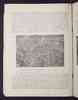
animal does not always win the spurs. In the performances of the bucking broncos and their cowboy riders it will be noticed that, among all the quadrupedal concentrations of chain lightening no two resort to the same tactics of defense. One will permit himself to be saddled and mounted before letting out the pent-up deviltry with which his hide is stuffed. Another will quietly submit to being saddled, but that is his limit of sufferance. To still another the very sight of a saddle is a signal of war. This one will start off hump ing his back like a mad cat, and landing stiffly on all fours with the force of a pile-driver. That one will lie down and stubbornly refuse to budge. Still another will rear and fall back wards with such reckless fury as to sometimes beat out his brains. A fourth will kick, strike or bite, or all this and more too, with a savage viciousness rendering him more dangerous to a tyro than would be a hungry lion. And these are but sample illustrations among innumer able insane efforts to escape the ignominy of bearing burdens. In some instances it will be noted that the bucker seems intent upon injuring his rider only; in tohers, that he aims to disable himself as well, and, again, that he is frantically bent upon committing suicide. He is a great natural actor in an equine and equestrian specialty, so full of fiery and furious vim that it is well worth seeing a score of times, and never loses intense interest.
RESPLENDENT REALISM OF GLORIOUS WAR.
STUPENDOUS SPECTACULAR REPRODUCTION OF THE FAMOUS BATTLE OF SAN JUAN.
The decisive importance and far-reaching resultant effects of battles are not to be determined by the numbers engaged. That of Lexington blew the smoldering brands of rebellion into a flaming beacon of Freedom, whose light has illumined the darkness of the world. That of San Juan Hill, by completing the cordon of steel drawn grimly around doomed Santiago, gave the deathblow to Spanish dominion born of the discoveries of Colum bus. In the latter engagement the regiment whose popular and famous title was borrowed from Colonel Cody's use and application of the term "Rough Riders," which was mainly composed of the physical qualities represented so splendidly in Buffalo Bill's Wild West, and which, moreover, included many volunteers from Colonel Cody's camp, so pre-eminently distinguished itself as to naturally suggest the idea of representing the terrific contest with the Spanish forces in the only arena spacious enough for such a production, and under the management of the only men controlling the requisite material. It was justly assumed that
39
33
the realistic and commensurate re-enactment of such a fearless charge and desperate struggle, and the introduction of military incidents preceeding it, upon the broadest and most accurate lines of army movements, discipline and life, and by the very heroes and horses who were a part of what they portrayed, was calculated to arouse public curiousity and enthusiasm to the white heat of patriotic fervor. Furthermore, that such
A STUPENDOUS LIVING BATTLE LESSON
would form a fitting and triumphant climax to the Wild West's magnificent and unprece dented martial spectacles. Notwithstanding the fact that both Colonel Cody and Mr. Nate Salsbury are war veterans, as such, entirely familiar with war in its sternest practical features, and fully competent to command and manage the hundreds of men and horses required and utilized, the task confronting them was a huge and herculean one, involving not only an enormous expense, but infinite labor in investigation, procuring of genuine material, arrangement of detail, circumstance and scenery, and effective utilization of the space at command and indispensable to the maneuvers of so many troops, horses and guns. The result attained fully and faithfully harmonize with the heroic subject and the facts of history, presenting the events associated with the battle of San Juan in two scenes.
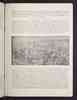
The first scene shows the bivouac of the troops on the road to San Juan the night before the battle. The invading American forces, composed of the artillery representing Grimes' Battery, the mule pack train carrying ammunition, the Colored Regulars, Roose velt's Rough Riders, the Seventy-first Infantry, the Cuban scouts and guides, are seen at sunset, at the conclusion of a desperately hard day's march over rough and jungle-choked trails, under the blistering rays of a tropical sun, moving into an encampment selected for a resting place on the night preceding the morrow's grim work. The various commands take up the positions assigned them, and to the spectator the bivouac presents a most warlike and novel scene of disciplined bustle and preparation. The sentries are posted, the tired animals unloaded, unharnessed and picketed, the weary solider boys gladly obey the order to stack arms, and, relieved of their haversacks and cumbersome accoutrements, loll and lie around in groups, while the camp fires are lighted and preparation for the evening meal quickly made. The hardtack and coffee disposed of and the stern hadn of discipline temporarilty relaxed, they indulge in an al fresco "smoker" and forget their toils and dangers in story, song and jest; the familiar songs and patriotic anthems of home, as chorused in melodies and stentorian tones from hundreds of throats, wafted toward doomed Santiago on the balmy
40
34
wings of the night winds, and sounding singular and solemn on that vast natural stage, heretofore a stranger to the exultant notes of Freedom's sons. Night creeps on more stealthily than a Spanish guerrilla through the dense encircling foliage, until taps gives warning that the hour for sleep and silence has struck. Soon the entire command, with the exception of the watchful outposts, reclining on mother earth's broad bosom and canopied by the starry heavens, is wrapped in merciful oblivion or beguiled by dreams of distant loved ones. And, alas! many a noble fellow slumbering so peacefully there will, ere another sun has set, fall fighting into that sleep that knows no awakening, after recording in his own life-blood his name upon the scroll of his country's heroes.
"Night wanes; the vapors round the mountain curled Melt into morn, and light awakes the world."
the sharp rattle of the reveille arouses the camp to preparation for the onward march, and the scene closes with the advance of the army toward the stronghold of San Juan.
THE ROUGH RIDERS' IMMORTAL CHARGE.
The second scene reveals the regiments already named massed in the forks of the trail at the foot of San Juan Hill, a most exact and effective representation and reproduction of which is introduced, showing the blockhouse, and breastworks, the rifle pits, and the natural and apparently insurmountable difficulties our soldiers were obliged to encounter and over come in their final and victorious assault. From the fancied impregnability of their position the superior Spanish force is seen pouring an incessant torrent of shrapnel and Mauser bullets inot our exposed ranks, which choke up the narrow trail beyond the hope of extrica tion, and apparently beyond the possibility of escape. To add to the horrors of the situation, the infernal Spanish guerrillas, concealed in the treetops and using smokeless powder, which renders it impossible to locate them, make targets of our wounded and the surgeons and wearers of the sacred Red Cross. It is an hour of supreme trial and agony, in a veritable hell-pit and snare. The situation renders division and brigade commanders powerless and maneuvering impossible. Retreat they cannot; to remain is destruction, and to advance, according to all precedent and estimation, but speedier annihilation. But, casting theories, dictums and doubts to the winds, contemptuously fearless of conspicuous exposure, with splendid intepeditiy, assuming and divining that what must be done can be done, a horse man, wearing the uniform of the Rough Riders, presses to the foot of the death-swept hill, and, calling upon the men to follow him, rides straight up and at the fortressed foe. There is a frantic yell of admiration and approval as the soldiers--white, red and black--spring from their cowering position of utter helplessness and follow Roosevelt and the flag. On and ever onward they leap, struggle and crawl, at first in small groups, but finally in a long thin line, which widens as it rushes, pants, wallows and creeps toward the flame-crowned summit. Inch by inch, and foot by foot, it mounts, with a tenacity of purpose, the moral effect of with carries, first, misconception; next, apprehension; and, finally, unreasoning fear into the enemy's works. The Spaniards cannot believe that so small a force would dare an assault so forlorn of all hope. They erroneously infer that an army is charging close behind it, and as it breathlessly comes closely on for a hand-to-hand death grapple, they pale, they flinch, and at last they turn and fly in panic. Their gold and crimson emblem of ruthless oppression is torn from the ramparts, and Old Glory streams on the breeze, triumphant in its place. Their defences are turned against themselves, and Santiago is doomed.
MULE BATTERIES.
Among the advanced warlike novelties for the first time introduced to peaceful public attention by Col. Cody in the great Wild West arena is a mountain battery, similar to those with which Uncle Sam has provided our armies in Cuba, Port Rico and the Philippines. These guns, as their name indicates, are intended for use in rouhg, hilly country, which may be impassable for the heavier field-pieces.
Wherever a mule can go one of these mountain guns can be taken, for gun, carriage and equipment will be carried on the backs of the long-eared, humble animals thus put to