
56
42
As they brooded over their wrongs, the scarcity of rations, and miserable treatment, imagine with what joy they hailed the coming of Him who was to save and rescue them. How they hoped and prayed, only to be deluded and again cast into the depths of depair! Even this last boon and comfort was refused by their conquerors; for no sooner had the news of the coming Saviour reached Washington when orders were issued to suppress the worship of any Indian who should dare to pray to his God after the dictates of his own conscience--or at least to stop the Ghost Dances. ________
THE ORIGIN OF THE NORTH AMERICAN INDIAN.
A Legend--Respectfully dedicated to Lieut. F. H. HARDIE, 3rd Cavalry, U. S. A.
There is a legend 'mong the plumed race, Which strange though it be, their origin does trace To days primeval, when the mighty plan, With touch most wonderful was crowned with man.
With air oracular it has been told, By Chieftains, nature-wise, so very old, Who, solemn sworn, as were their fathers too, This wonderful tradition seal as true.
It was the season when the sighing breeze bittersweet ground with Autumn painted leaves- When Nature robed herself in rich array, Her vesture intermove with sad and gay.
The buffalo, the elk and fallow deer In quiet grazed, with naught to harm or fear, For yet unborn the stealthy hunter foe Unwrought the murd'rous flint and arched bow.
Sublimity and grandeur did pervade the sun-tipped mountain-top and forever shade, As silence, most profound, with thoughtful train, The Universe spell bound with magic chain.
Lo, the Great Spirit gased the scene upon And saw perfection in all things but one; There were the hills and dales, and seas and land. And landscapes everywhere supremely grand. And fish and fowl, and beast on mount and plain. But who t' enjoy and over all to reign?
So from the border of a brooklet's way, Lo, the Great Spirit took a piece of clay, And with a touch and look both sad and sweet, Did mould it into form most exquisite.
Then breathed He on this thing symmetrically formed. When lo, into life and being warmed, And in the presence of its Maker stood, A female beauty- type of womanhood.
Night came; the constellations bright, Shed o'er the earth their distant, twinkling light And through their mellow coruscated sheen Cast pearly tears upon this beauty-queen. Who, tired, reposed in quiet on the ground, With senses wrapped in balmy sleep profound.
How passing lovely, how enchanting she, Pure, spotless as her own virginity, Like "lily of the vale" or budding rose Upon the patient-Earth, in sweet repose.
In semblance of a star was one above, Who, gazing on this beauty, fell in love. For who, or which, or what such charms could see And not be filled with love's own ecstasy?
And, as the story goes, this brilliant star Which did outshine the other ones by far, Assuming manly form, rushed from above, And clasped the maiden in th' embrace of love.
This flaming star, or sprite, or man, or what, With fullest unrestrain and passions hot, Imprinted fiery kiss, again, again, Before she could her liberty regain.
The maid so courted by the man-like flame, Blushed deep, through native modesty, not shame These blushes overspread the virgin, lo, Were brazen by the wooer's ardent glow, And thus became enstampted indelibly, A signet royal of her modesty.
From her--To-ka-pa*--that her cherished name, The red man of the Western Prairies came.
G. C. C.
*To-ka-pa (pronounced as if spelled To-kai-pah) is a word in the Teton dialogue of the Dakotah or Sioux language, signifying first-born.
LATE MILITARY REFERENCES.
During the past year much has been said relative to CODY, the Wild West, Indians, etc., of an uncalled-for nature, and as "an open confession is good for the soul," we freely admit being annoyed. Who like their motives misconstrued? Who can possibly believe it incompatible with honor to go the even tenor of his inclinations, when none but the hypercritical can possibly find a flaw? If it is correct that "he who preaches the Gospel must live by the Gospel," most certainly must he who has never held an interest in a Golconda live by that line and morality. Therefore it is that this compilation is rendered necessarily pointedly personal in eulogistic extracts as a cross-counter, when a more modest presentation of the Wild West's status would be justly considered as meeting the requirements. But many noted instances occur to the writer where the purpose would have been best served by the plain statement of facts. The aim of existence is to achieve happiness, and nine-tenths of mankind would be happy if the other one tenth would attend to their own business, or seek information before exploding. To explain a mooted question! GENERAL CODY holds his commission in the NATIONAL GUARD of the United States (State of Nebraska), an honorable position, and has a continuous period of fifteen years, and desultory connection of thirty years, in the most troublous era of that superb corps' Western history, as Guide, Scout and Chief of Scouts- a position unknown in any other service, and for the confidential nature of which see General
57
43
Dodge's extract on page 10. This privileged position, and the nature of its services in the past, may be more fully appreciated when it is understood that it commanded, besides horses, subsistence and quarters, $10 per day ($3,650 per year), all expenses, and for special service, or "life and death" volunteer missions, special rewards of from $100 to $500 for carrying a single dispatch, and brought its holder the confidence of Commanding Generals, the fraternal friendship of the Commissioned Officers, the idolization of the ranks, and the universal respect and consideration of the hardy pioneers and settlers of the West. "BILL" CODY'S children can point with pride to recorded services under the following officers of world-wide and national fame:
General Sherman " Miles " Crook " Carr " Auger " Bankhead " Fry " Crittenden " Merritt " Switzer " Tony Forsythe " Duncan " Rucker
General Smith " King " Van Vliet " Anson Mills " Reynolds " Harney " Greeley " Sheridan " Terry " Emory " Custer " Ord " Hancock
General Royall " Penrose " Brisbin " Sandy Forsythe " Palmer " Dudley " Gibbon " Canby " Blunt " Hayes " Guy Henry " Hazen And others.
The extracts on the following pages speak for themselves, and will form interesting reading as authenticated references. ________
FROM GEN. "PHIL" SHERIDAN'S AUTOBIOGRAPHY.
GENERAL SHERIDAN refers to his meeting "BUFFALO BILLS." "He undertakes a dangerous task," chapter xii., pp. 281-289, in his autobiography, published in 1888. The world-renowned cavalry commander maintained continuous friendly relations with his old scout, even to social correspondence, friendly assistance, and recognition in his present enterprise up to the year of his death. After relating his conception of the first winter campaign against Indians on the then uninhabited and bleak plains, in the winter fo 1868, he says, "The difficulties and hardships to be encountered had led several experience officers of the army and some frontiersmen like old Jim Bridger, the famous scout and guide of earlier days, to discourage the project. Bridger even went so far as to come out from St. Louis to discourage the attempt. I decided to go in person, bent on showing the Indians that they were not secure from punishment because of inclement weather--an ally on which they had hither to relied with much assurance. We started, and the very first night a blizzard struck us and carried away our tents. The gale was so violent that they could not be put up again; the rain and sow drenched us to the skin. Shivering from wet and cold I took refuge under a wagon, and there spent such a miserable night that, when morning came, the gloomy predictions of old man Bridger and others rose up before me with greatly increased force. The difficulties were now fully realized, the blinding show mixed with sleet, the piercing wind, thermometer below zero--with green bushes only for fuel--occasioning intense suffering. Our numbers and companionship alone prevented us from being lost or perishing, a fate that stared in the face of the frontiersmen, guides and scouts on their solitary missions.
"An important matter had been to secure competent guides for the different columns of troops, for, as I have said, the section of country to be operated in was comparativelly unknown.
"In those days the railroad town of Hays City was filled with so-called 'Indian Scouts' whose common boast was of having slain scores of redskins, but the real scout--that is, a guide and trailer knowing the habits of the Indians--was very scarce, and it was hard to find anybody familiar with the country south of Arkansas, where the campaign was to be made. Still, about the various military posts there was some good material to select from, and we managed to employ several men, who, from their experience on the plains in various capacities, or from natural instinct and aptitude, soon became excellent guides and courageous and valuable scouts, some of them, indeed, gaining much distinction. Mr. William F. Cody ('Buffalo Bill'), whose renown has since become world-wide, was one of the men thus selected. He received his sobriquet from his marked success in killing buffaloes tos supply fresh meat to the construction parties on the Kansas Pacific Railway. He had lived from boyhood on the
58
44
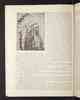
(Picture) CHIEF "NO NECK." Ogallalla Sioux. Fmaous Warrior. A Friendly. A Leading Government Scout in the Last Campaign.
plains and passed every experience; herder, hunter, pony - express rider, stage driver, wagon master in the quartermaster's department, and scout of the army, and was first brought to my notice by distinguishing himself in bringing me an important dispatch from Fort Larned to Fort Hays, a distance of sixty-five miles, through a section infested with Indians. The dispatch informed me that the Indians near Larned were preparing to decamp, and this intelligence required that certain orders should be carried to Fort Dodge, ninety-five miles south of Hays. This too being a particularly dangerous route--several couriers having been killed on it--it was impossible to get one of the various 'Petes,' 'Jacks,' or 'Jims' hanging around Hays City to take my communication. Cody, learning of the strait I was in, manfully came to the rescue, and proposed to make the trip to Dodge, though he had just finished his long and perilous ride from Larned. I gratefully accepted his offer, and after a short rest he mounted a fresh horse and hastened on his journey, halting but once to rest on the way, and then only for an hour, the stop being made at Coon Creek, where he got another mount from a troop of cavalry. At Dodge he took soem sleep, and then continued on to his own post--Fort Larned--with more dispatches. After resting at Larned, he was again in the saddle with ridings for me at Fort Hays, General Hazen sending him, this time, with word that the villages has fled to the south of Arkansas. Thus, in all, Cody rode about 350 miles in less than sixty hours, and such an exhibition of endurance and courage at that time of the year, and in such weather, was more than engouh to convince me that his services would be extremely valuable in the campaign, so I retained him at Fort Hays till the battalion of the Fifth Cavalry arrived, and then made him CHIEF OF SCOUTS."
Read through the fascinating book, "Campaigning with Crook (Major-General George Crook, U. S. A.) and Stories of Army Life," due to the graphic and soldierly pen of Captain Charles King, of the U. S. Army; published in 1890.
Incidentally the author refers in various pages to COL. CODY as Scout, etc., and testifies to the general esteem and affection in which "BUFFALO BILL" is held by the army.
The subjoined extracts from the book will give our readers an excellent idea of the military scout's calling and its dangers.
"By Jove, General!" says "BUFFALO BILL," sliding backward down the hill, "now's our chance. Let our party mount here out of sight, and we'll cut those fellows off. Come down every other man of you."
Glancing behind me, I see CODY, TAIT and "CHIPS," with five cavalrymen, eagerly bending forward in their saddles, grasping carbine and rifle, every eye bent upon me, watching for the signal. No a man but myself knows how near they are. That's right, close in, you beggars! Ten seconds more, and you are on them! A hundred and twenty-five yards--a hundred--ninety--"Now, lads, in with you."
There's a rush, a wild ringing cheer; then bang, bang, bang! and in a cloud of dust, CODY and his men tumble in among them, "BUFFALO BILL" closing on a superbly accoutred warrior. It is the work of a minute; the Indian has fired and missed. CODY's bullet tears through the rider's leg into the pony's heart, and they tumble in a confused heap on the prairie. The Cheyenne struggles to his feet for another shot, but CODY's second bullet hits the mark. It is now close quarters, knife to knife. After a hand-to-hand struggle, CODY
59
45
wins, and the young chief, "YELLOW HAND," drops lifeless in his tracks after a hot fight. Baffled and astounded, for once in a lifetime beaten at their own game, their project of joining "SITTING BULL," nipped in the bud, they take hurried flight. But our chief is satisfied. "BUFFALO BILL" is radiant; his are the honors of the day. From Page 35. ________
"BUFFALO BILL" AND "BUFFALO CHIPS."--From Page 111.
In all these years of campaigning, the Fifth Cavalry has had a varied and interesting experience with a class of men of whom much has been written, and whose names, to readers of the dime novel and the New York Weekly style of literature, were familiar as household words; I mean the "Scouts of the Prairie," as they have been christened. Many thousands of our citizens have been to see "BUFFALO BILL'S" thrilling representations of the scenes of his life of adventure. To such he needs no introduction, and throughout our cavalry he is better known than any general except Miles or Crook.
A motley set they are as a class--these scouts; hard riding, hard swearing, hard drinking ordinarily, and not all were of unimpeachable veracity. But there was never a word of doubt or question in the Fifth when "BUFFALO BILL" came up for discussion. He was Chief of Scouts in Kansas and Nebraska in the campaign of 1868-69, when the hostiles were so completely used up by General Carr. He remained with us as chief scout until the regiment was ordered to Arizona to take its turn at the Apaches in 1871. Five years the regiment was kept among the rocks and deserts of that marvelous land of cactus and centipede; but when we came homeward across the continent and were ordered up to Cheyenne to take a hand in the Sioux war of 1876, the "SITTING BULL" campaign, the first addition to our ranks was "BUFFALO BILL" himself--who sprang from the Union Pacific train at Cheyenne, and was speedily exchanging greetings with an eager group of his old comrades--reinstated as Chief of Scouts.
Of his services during the campaign that followed, a dozen articles might be written. One of the most thrilling incidents of our fight on the 17th of July with the Cheyenne Indians, on the War Bonnet, was when he killed the warrior "YELLOW HAND," in as plucky a single combat on both sides as is ever witnessed. The Fifth had a genuine affection for Bill; he was a tried and true comrade--one who for cool daring and judgment had no superior. He was a beautiful horseman, an unrivaled shot, and as a scout unequaled. We had tried them all--Hualpais and Tontos in Arizona; half-breeds on the great plains. We had followed Custer's old guide, "CALIFORNIA JOE," in Dakota; met handsome BILL HICKOK ("WILD BILL") in the Black Hills; trailed for weeks after Crook's favorite, FRANK GUARD, with "LITTLE BAT" and "BIG BAPTISTE," three good ones, all over the Big Horn and Powder River country; hunted Nez Perces with COSGROVE and his Shoshones among the Yellowstone mountains, and listened to CRAWFORD'S yarns and rhymes in many a bivouac in the Northwest. They were all noted men in their way, but BILL CODY was the paragon.
This time it is not my purpose to write of him, but for him, of another whom I have not yet named.
James White was his name; a man little known east of the Missouri, but on the plains he was BUFFALO BILL'S shadow. I had met him for the first time at the McPherson station in the Platte Valley, 1871, when he came to me with a horse, and the simple introduction that he was a friend of CODY'S. Long afterward we found how true and stanch a friend, for when CODY joined us at Cheyenne as chief scout, he brought White with him as assistant, and Bill's recommendation secured his immediate employment.
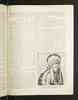
(Picture) "WHITE CLOUD." Ogallalla Sioux, War Chief of the Sioux Nation, Fighting Chief of the Ghost Dancers.
60
46
On many a long day's march after that White rode by my side a long the flanks of the column, and I got to know him well. A simpler-minded, a gentler frontiersman never lived. He was modesty and courtesy itself, conspicuous mainly because of two or three unusual traits for his class--he never drank, I never heard him swear, and no man ever heard him lie.
For years he had been CODY'S faithful follower, half servant, half "pardner." He was Bill's "Fidus Achates"; Bill was his adoration. They had been boys together, and the hero worship of extreme youth was simply intensified in the man. He copied Bill's dress, his gait, his carriage, his speech--everything he could copy; he let his long yellow hair fall low upon his shoulders in wistful imitation of Bill's glossy brown curls. He took more care of Bill;s guns and horses than he did of his own, and so, when he finally claimed, one night at Laramie, the right to be known by some other title than simple Jim White--something descriptive, as it were, of his attachment for CODY, and lifelong devotion to his idol, "BUFFALO BILL."--a grim quartermaster (Morton of the Ninth Infantry) dubbed him "BUFFALO CHIPS," and the name was a fixture. His story was a brief one after that episode. We lauched out from Laramie on the 22nd of June, and through all the vicissitudes of the campaign that followed, he was always near the Fifth. On the Yellowstone CODY was compelled to bid us a reluctant farewell to join General Terry.
A great loss to us was "BUFFALO BILL." He left his "pardner," Jim White, with us to finish the campaign as scout; and we little thought that those two sworn friends were meeting for the last time on earth when "BUFFALO CHIPS" bade good-bye to "BUFFALO BILL." "CHIPS" remained in his capacity as scout, though he seemed sorely to miss his "pardner."
It was just two weeks after that we struck the Sioux at Slim Buttes, something of which I told you in a former chapter. You may remember that the Fifth had ridden in haste to the relief of Major Mills, who had surprised the Indians away in our front early Saturday morning, had whipped them in panicky confusion out of their "tepees" into the neighboring rocks, and then had to fight on the defensive against ugly odds until we rode in to the rescue. As the head of our column jogged in among the lodges, and General Carr directed us to keep on down to face the bluffs to the south, Mills pointed to a ravine opening out into the village, with the warning, "Look out for that gully; there are Indians hidden there, and they've knocked over some of my men."
Everybod ywas too busy just then to pay much attention to two or three wounded Indians in a hole. We were sure of getting them when wanted. So placing a couple of sentries where they would warn stragglers away frmo its front, we formed line along the south and west of the captured village, and got everything ready to resist the attack we knew they would soon make in full force.
General Crook had arrived on the scene, and, while we were waiting for "Lo" to resume the offensive, some few scouts and packers started in to have a little fun "rousting out them Injuns." Half-a-dozen soldiers got permission to go over and join in while the rest of us were hungrily hunting about for something to eat. The next thing, we heard a volley from the ravine, and saw the scouts and packers scattering for cover. One soldier held his ground--shot dead. Another moment, and it became apparent that not one or two, but a dozen Indians were crouching somewhere in that narrow gorge, and the move to get them out assumed proportions. Lieutenant Clark, of General Crook's staff, sprang into the entrance, carbine in hand, and a score of cavalrymen followed, while the scouts and others went cautiously along either bank, peering wearily into the cave-like darkness at the head. A squad came tearing over, jsut as a second volley came from the concealed foe, and three more of our men dropped, bleeding, in their tracks. Now our people were fairly aoursed, and officers and men by dozens hurried to the scene. The misty air rang with shots, and the chances looked bad for those redskins. Just at this moment, as I was running over from the western side, I caught sight of "CHIPS" on the opposite crest. All alone, he was cautiously making his way, on hands and knees, towards the head of the ravine, where he could look down upon the Indian's beneath. As yet he was protected from their fire by the bank itself--his lean form distinctly outlined against the eastern sky. He reached a stunted tree that grew on the very edge of the gorge, and there he halted, brought his rifle close under his shoulder, in readiness to aim, and then raised himself slowly to his feet, lifting his head higher, higher, as he peered over. Suddenly a quick, eager light shone in his face, a shapr movement of his rifle, as though he were about to raise it to hsi shoulder, when, bang!--a puff of white smoke floated up from the head of the ravine, "CHIPS" sprang up convulsively in the air, clasping his hands to his breasts, and with one startled, agonizing cry, "Oh, my God, boys!" plunged heavily forward on his face, down the slope--shot through the heart.