
51
37
trouble. You have thousands of friends in the East. Gen. Miles and Capt. Lee can reach those friends. I have this confidence there will be no war on the part of Gen. Miles, if you give up your arms, because through military discipline he can control his men, as soldiers have no interest to shoot Indians. Tell your young men to be calm and have confidence in Gen. Miles, who will see you through. But you must discipline and control your young men. Let every man who talks mean what he says, and not talk to evade the question. I, to show you what confidence I have in Gen. Miles that he will nto fire upon you and your women and children when you are disarmed, I will promise to live in your camp until you have confidence that the white chief will see no harm come to you. I am glad to hear that some chiefs are going to Washington, and hope instead of ten, twenty or twenty-five will go. I will be there to see you, and may go with you. I will do all i can in my hunble way for you. Let us all work for peace between the white men and the red -- not for a moment, a day, a year, but for ever, for eternity." ________
IMPROVED BY TRAVEL.--CHAMBERLAIN, S. D., DECEMBER 13.
The large number of Indians who have been abroad for the last few years with BUFFALO BILL'S Wild West show are doing some good work among the unruly Indians belonging to Rosebud and Pine Ridge agencies and to their efforts as much as to any one thing can a prevention of an immediate outbreak among the red men be attributed. These Indians emphatically refused to listen to any proposition from the hostiles looking to their joining them, but have continued to act as peacemakers at all times since their return, and they untiring in their efforts to bring about a peaceful settlement of the present difficulty. These Indians act in marked contrast to some of those educated, as many of the latter are, among the hostiles. ________
MAJOR BURKE.--HE TALKS ON THE RECENT TROUBLES AT PINE RIDGE AGENCY.
MAJOR BURKE, the widely and favorably known business manager of "COLONEL CODY'S" Wild West aggregation, spent Sunday in the city, having just returned from Pine Ridge agency. The Major spent from the first day until after the surrender at the seat of the Indian war, and did more than any other civilian at the Agency in the interest of peace and a speedy settlement of the trouble. Indeed, he was the central figure at Pine Ridge among the civilians, and even among the officials was a much deferred-to character of acknowledged power with the troubled children of the hills and plains.
"The Bee's dispatches have so fully and accurately reported the situation," said the Major, "and they keep up so nearly to the last hour each day that I really have nothing new to say. The army and Indians now have a perfect respect for each other, and I think this will continue, for a time at least. The whole matter should, I think, be left to General Miles and the Appropriation Committe of Congress. I would not venture, as matters now stand, to predict how long we are to have this running peace. In fact, I scarcely think that any one feels like speaking for the future in the matter. As to the sending of chiefs to Washington, well, that may and I hope will result advantageously. I have great faith in General Miles' judgment, and I think the President, the Commissioner of Indian Affairs and Congress will listen to them with much interest. We have had a very wild time at Pine Ridge, one of the most critical in all the history of Indian affairs, and with the whole country I fervently hope for a final settlement that will result in permanent peace."
MAJOR BURKE left last night for North Platte. He will return here on Tuesday, and on Wednesday leave for Washington. He has great cause for congratulation on the manner in which those Indians whom he has taken over Europe have conducted themselves during the trying scenes just passed. At all times they were found earnest and patient advocated of peace and obedience to law, as well as energetic scouts, police, peace commissioners and spies.--"Cressy," war correspondent Omaha Bee. ________
MACAULAY'S NEW ZEALANDER.--THE LAST OF THE MOHICANS.--THE LAST OF THE BUFFALO.
From Manchester Courier, April, 1888.
An addition which has just been made to the United States National Museum at Washington affords important subsidiary evidence, if such were needed, of the unique interest attending the extraordinary exhibition at Manchester illustrative of the Wild West. Natu
52
38
ralists have not too soon become alive to the remarkable fact that those shaggy monarchs of the prairie, the ponderous buffalo tribe, are well-nigh extinct. They have dwindled away before the exterminating tread of the hunter and the march of the pioneer of civilization. The prairie no longer shakes beneath the impetuous advance of the mighty herd, and even individual specimens are becoming scarce. The representatives of the Smithsonian Museum in America therefore sent out an expedition into the West in search of what buffaloes there might be remaining, in order that the country might preserve some memento of the millions of those animals which not many years ago roamed over the prairies. Twenty-five animals in all were captured, six of which have been arranged in a group for exhibition. One of the American papers describes this as the transference of a little bit of Montana--a small square patch from the wildest part of the Wild West--to the National Museum. The idea is one which is exactly applicable to COLONEL W. F. CODY'S collection, which is approaching its last days of residence among us. Those scenes in which the primeval forest and the vast expanse of prairie are represented, with elk and bison careering about, chased by the hunter and the scout, is a transference from the Wild West which, as we now learn, should be even more interesting to the naturalist than it is to either the artistic or the historical sutdent. We leave out of view for the moment the ordinary spectator who goes only to be amused or entertained, independely of any instruction that may be afforded. These scenes, moreover, are all the more interesting to the ethnological student because of the association with them of the red men who have been indigenous to the praries and their surroundings. The occupation of uncas, like Othello's, is gone; palatial buildings and busy streets have succeeded to the wigwam and the hunting grounds, and teh successor of Fenimore Cooper may find his representative Indians, not where the hunting knife and tomahawk are needed, but in the arena of mimic battle and adventure. The Indian is going out with the buffalo; mayhap we shall ere long see the last of his descendants, with the contemplative gaze of Macaulay's New Zealander, sitting before the group in the Smithsonian Museum, looking upon the last representative of the extinct beffalo, fixed in its prairie-like surroundings. These considerations of facts which force themselves upon the imagination, distinctly enhance the interest of those "pictures" from the Wild West presented with such force and realism by the ruling genius who, anent the puport of these pictures will permanently vanish from English soil, as they are to be produced in American soon, and it may be expected that those in arrears in information respecting them, and who appreciate, as they deserve to be appreciated, their instructive features, will give to them a concentrated attention ere it is too late. ________
A POSITION DIFFICULT TO ATTAIN.--A "PLAINS CELEBRITY."--A TITLE IMPERISHABLE.
To gain great local and national fame as a "plains celebrity" in the days of old was not an easy task; rather one of the most competitive struggles that a young man could possibly engage in. The vast, comparatively unknown, even called Great American Desert of twenty-five and thirty years ago was peopled only by the descendants of the sturdy pioneers of the then Far West--Illinois, Missouri, Arkansas, Iowa, Minnesota, Kansas, etc. born, raised, and used to hardships and danger--and attracted only the resolute, determined adventurers of the rest of the world, seeking an outlet for pent-up natures, imbued with love of daring adventure. Hundreds of men achieved local, and great numbers national fame for the possession of every manly quality that goes to make up the romantic hero of that once dark and bloody ground. When is brought to mind the work engaged in, the carving out of the advance paths for the more domestically inclined settler, the dangerse and excitements of hunting and trapping, of carrying dispatches, stage driving, freighting cargoes of immense value, guilding successfully the immense wagon trains, gold hunting--it is easy to conceive what a class of sturdy, adventurous young spirits entered the arena to struggle in a daily, deadly, dangerous game to win the "bubble reputation." When such an army of the best human material battled for supremacy, individual distinction gained by the unwritten law of unprejudiced popular promotion possessed a value that made its acquirer a "plans celebrity," stamped indelibly with an honored title rarely possessed unless fairly, openly, and justly won--a prize so pure that its ownership, while envied, crowned the victor with the friendship, following the admiration of the contestants. Thus Boone, Crockett, Carson, Beal, Fremont, Cody, Bridger, Kinman, Hickok, Cosgrove, Comstock, Frank North, and others, will live in
53
39
the romance, the poetry, and history of their each distinctive work forever. The same spirit and circumstances have furnished journalists innumerable, who in the West imbibed the sterling qualities they afterward used to such effect. Notably Henry M. Stanley, who (in 1866) saw the rising sun of the young empire that stretches to the Rockies; Gen. Greely, of Arctic fame (now of Signal Service), and the equally scientific explorer, Lieut. Schwatka, passed their early career in the same school, and often followed "the trail" led by "BUFFALO BILL"; Finerty (of the "Chicago Times"); "Modoc" Fox, and O'Kelly (of the "New York Herald"), 1876; while last year new blood among the scribblers was initiated to their baptism of fire by Harries (of "Washington Star"), McDonough ("New York World"), Bailey (of "Inter-Ocean"), brave young Kelly (of the "Lincoln Journal"), Cressy (of the "Omaha Bee"), Seymour ("Chicago Herald"), and Allen (of the "New York Herald"), present in the battle, who were honored by three cheers from "Old White Top" Forsythe's gallant Seventh Cavalry, the day after the battle of "Wounded Knee," as they went charging over Wolf Creek to what came near being a crimson day, to the fight "down at the Mission." That there are still "successors to every king" is assured by the manly scouts to prominent in last winter's rehearsal of past (hoped no more future) frontier dramas in such men as FRANK GRUARD, now the most celebrated of the present employed army scouts; of "LITTLE BAT," true as steel, and active as the cougar; PHILIP WELLS, LOUIS SHANGRAU, "BIG BAPTISTE," and JOHN SHANGRAU; while the friendly Indians furnish such grand material for any future necessity as "NO NECK," Major "SWORD," "RED SHIRT," and "YANKTON CHARLEY." ________
BILL CODY.--(BY AN OLD COMRADE.)
You bet I knew him, pardner, he ain't no circus fraud. He's Western born and Western bred, if he has been late abroad; I knew him in the days way back, beyond Missouri's flow, When the country round was nothing but a huge Wild Western Show. When the Injuns were as thick as fleas, and the man who ventured through The sand hills of Nebraska had to fight the hostile Sioux; These were hot times, I tell you; and we all remember still, The days when Cody was a scout, and all the men know Bill.
I knew him first in Kansas, in the day of '68, When the Cheyennes and Arapahoes were wiping from the slate Old scores against the settlers, and when men who wore the blue, With shoulder-straps and way-up rank, were glad to be helped through By a bearer of dispatches, who knew each vale and hill, From Dakota down to Texas, and his other name was Bill.
I mind me, too, of '79, the time when Cody took His scouts upon the Rosebud, along with General Crook When Custer's Seventh rode to their death for lack of some such aide To tell them that the sneaking Sioux knew how to ambuscade I saw Bill's fight with "Yellow Hand," you bet it was a "mill," He downed him well at thirty yards, and all the men cheered Bill.
They tell me that the women folk now take his word as laws, In them days laws were mighty skerce, and hardly passed with squaws, But many a hardy settler's wife and daughter used to rest More quietly because they knew of Cody's dauntless breast; Because they felt from Laramie way down to Old Fort Sill, Bill Cody was a trusted scout, and all their men knew Bill.
I haven't seen him much of late, how does he bear his years? They say he's making ducats now from shows and not from "steers," He used to be a judge of "horns," when poured in a tin cup, And left the wine to tenderfeet, and men who felt "well up," Perhaps he cracks a bottle now, perhaps he's had his fill, Who cares, Bill Body was a scout, and all the world knows Bill.
To see him in his trimmin's, he can't hardly look the same, With laundered shirt and diamonds, as if "he run a game;" He didn't wear biled linen then, or flash up diamond rings, The royalties he dreamed of then were only pasteboard kings, But those who sat behind the queens were apt to get their fill, In the days when Cody was a scout, and all the men knew Bill.
Gridiron Club, WM. E. ANNIN, Washington, D. C., Feb. 28, 1891. Lincoln (Neb.) Journal. ________
GHOST-DANCES IN THE WEST.
ORIGIN AND DEVELOPMENT OF THE MESSIAH CRAZE AND THE GHOST-DANCE.
PINE RIDGE RESERVATION.--There have often happened, in the history of the human race, incidents that were regarded at the time as most trivial, but have later developed into such important and serious questions as to engage the minds of many learned men in their solution.
That there is some special reason for the series of frenzied dances and incantations which have been continued from time to time in remote portions of the Sioux reservations, no one will deny. It is scarcely probable that a people who own horses and cattle would suddenly, without the slightest warning, return almost to a man to the execution of a dance which is so weird and peculiar, so superstitious and spirit-like, as to rival the far-famed Sun Dance.
This special reason is found in the simple truths of Christianity as taught by a missionary in Utah, but which were distorted to conform with Indian mythology. It was when the medicine men and politicians in the nation began to enlarge upon the wrongs suffered at
54
40
then hands of the whites, the scarcity of food, the presence of the military, that its general aspect was changed from a sacred rite to a warlike demonstration.
When the Ghost or Messiah Dance was first given on Pine Ridge Reservation by the Sioux who had been in Utah on a visist to the Ute Indians, there were many on-lookers. These became interested as the dance proceeded, for such was its influence upon a beholder that he felt an irresistible desire to join the circle.
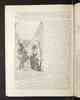
(Picture) OGALLALLA CHIEFS. PINE RIDGE--SIOUX CAMPAIGN, 1891.
While the priests are employed in their prayers, the squaws make a good-sized sweathouse. Ples are stuck in the ground and the tops bent together and securely tied. These saplings are strong enough to bear the weight of several hundred pounds. Over the frame-work are heaped blankets and robes to such a thickness that no smoke or steam can pass from the interior. A fire is started in a hold in the ground several feet from the small entrance to the sweat-lodge, and twenty or thirty good-sized stones are placed therein to be heated. When these rocks have become sufficiently hot, the young men who are to partake of the bath strip with the exception of teh breech-clout, and crawl through the door. They seat themselves in a cicle, with their feet towad the center and their backs against the sides of the lodge. The attendant shoves some of the hot stones inside, and the young men pour water from a hide pocket upon the little stone heap. Steam and vapor arise, completely filling the inclosure. The attendant has meanwhile covered the opening so that no air from the outside may penetrate. As the vapor condenses, the attendant thrusts more stones within, and thus the operation is continued as long as the youths can stand the confinement. The pipe is also smoked during the sweat. When the young men issue from their bath the perspiration is fairly streaming from every pore. If it is not cold weather they plunge into a pool in the creek near by, but if it be chilly they wrap blankets about their bodies.
Several sweat-houses are erected in order to prepare the young men for the dance. When a good number of young men, say fifty or sixty, have thus prepared themselves, the high priest wears eagle feathers in his hair, and a short skirt reaches from his waist nearly to his knees. The assistants are dressed in a similar manner, but wear no ornaments other than the eagle featheres. The dancers wear no ornaments whatever and enter the circle without their blankets, many of them wearing their ordinary clothes.
In their other dances, the Omaha, the Old Woman, the Sun, and War Dances, feathers and bangles, weapons, herbs, or painted and plaited grasses, porcupine quills, horses' tails, and bits of fur skins, neacklaces, bells, silver disks, etc., are worn in great profusion.
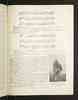
Ghost-dance songs are sung without accompaniment of a drum, as is customary in the other dances. All sing in unison, and the notes, although wild and peculiar, being in a minor key, do not lack melody. The following two songs are sung by them during the dance;
55
41
The words sung in Sioux are: "Ina he kuye misunkala ceya omaniye-e, Ina he kuye. Ate he lo. Ate he lo." As translated by Deputy U. S. Marshal Bartlett, this is: "Come here, my mother; my youngest brother is walking and crying. Come here, my mother; here is the father, here is the father." Here are the notes of another song:
To this strain are used the words: "Ate he ye lo, canupawan ci ci ca hu pi ca yani pi kta lo. Ate he ye lo. Ate he ye lo." Which in English are: "This the father said, he brings the pipe* for you, and you will live. This the father said, this the father said." ________
Philanthropists, while meaning well, from a lack of knowledge of the nature of an Indian treat him in such a sympathetic manner--often selecting the most worthless and lazy Indians to bestow their favors upon--that he becomes puffed up with his own importance. Egotism leads to insolence, and insolence gets him into serious trouble with the agency employees and Westerners in general. The churches are all doing a good work, and it is not my purpose to say much against them, but they should work in unison, not against each other. The Indian cannot understand how so many beliefs could spring from one good book, and, naturally suspicious, when he hears one missionary speak disparagingly of the salvation afforded by a rival church, concludes the whole set are humbugs.
When the commission visited the agency in the summer of 1889, for the purposes of securing signatures to the treaty whereby the Sioux relinquished claim to several million acres of their land, a number of promises were made by the commissioners which were never kept. Not so with the Indians themselves. As they sat about their tepee fires and discussed the affairs of their nation, they often wondered why the increase in rations did not come, why the presents were so long delayed.
An Indian never forgets a promise.
Can it be wondered, then, that the Sioux lost what little remaining faith they had in the whites?
(Picture) "JOHNNY BURKE. NO NECK." Found on the Battlefield of Wounded Knee after the annihilation of Big Foot's Band.
*The use of the pipe is ceremonial and holy.