

11
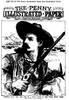
BUFFALO BILL IN CAMP. (BR OUR SPECIAL REPRESENTATIVE.) Of all pleasant cicerones commend us to Mr Frank Richmond, the genial lecturer of Buffalo Bill's Wild West Show, who welcomed us on our visit to the camp in the American Exhibition Grounds last Tuesday afternoon. After we had passed through a portal in the hoarding that separates the enclosure from the main thoroughfare near Addison-road station, even before we had walked up the long path leading to the "camp," we had recognised the Western drawl and noted the tanned complexions and characteristic garb of several of the "cow-boys" who passed us. These cowboys, we may explain, are simply the mounted drivers who manage and control the vast herds of semi-wild cattle which graze upon the prairies of Western America. The typical cow-boy possesses several strongly-marked characteristics. He is a perfect hero with respect to bearing pain and meeting danger. He has a code of honour which, half-savage as it is, he adheres to with far more rigidity than is the case in similar circumstances with the denizens of civilised districts. Absolute indifference to peril, perfect fealty to a friend, extreme amiability and openness, coupled with a readiness to "shoot" as soon as a certain code of civility has been transgressed and a habit of indulging in periodical "sprees," which are dangerous alike to his pocket and his life, are, roughly speaking, the peculiarities of the cow-boy's character. Doubtless the latter custom has been abandoned by the members of Buffalo Bill's company, without any deteriment to their admirable qualities. The camp at Earl's court is composed of two double rows of tents, at the juncture of which are Buffalo Bill's headquarters. This roomy and comfortable domicile is neatly carpeted, and adorned with various fur-rugs, and with a pretty clock, the case of which is made of pieces of Colorado quartz, near which lies a most curious Indian "pipe of peace," cut out of hard red clay. In a chair near the entrance sits Mr W. F. Cody, "Buffalo Bill." Our readers have been already made familiar by lithographs with the long hair, handsome features, and broad hat of the manager of the Wild West Show. Mr. Cody was at one time an actor well-known in the States, and Mr. Nate Salsbury, of "Salsbury's Troubadours," who now acts as his right-hand man, was Mr. Cody's agent when that gentleman was on tour. Being in the town of North Platte, Nebraska, on a Fourth of July, and having to arrange an exhibition of some sort in honour of the glorious celebration, they hit upon the idea of assembling the best riders and shots in the district, and getting them to display their skill and prowess. This was the germ of the intensely interesting show which is to form a powerful factor of attraction in the forth coming American Exhibition. It need scarcely be said that as the Wild Westerns only reached their camp on the Friday before our visit, everything was in a transition state on our arrival. Passing along the line of tents, we found their tenants busy at work with characteristic American handiness contriving to make themselves as comfortable as possible. In spite of the extremely unprepared state in which we found the ladies of the troupe, they received us with remarkable affability and perfect "repose." Miss Oakley, "Little Sure Shot," whose wing-shooting is something extra ordinary, and whose feats with glass balls and clay pigeons are phenomenal, bade us welcome to her canvas dwelling with as perfect an absence of bauteur as if she could not have hit a ten cent. piece held between our thumb and fore-finger at a distance of 30ft., and without betraying the least sense that her collection of medals and prizes won in matches in considered the finest in America. None the less agreeable was our

12
Mr. Gladstone at the American Exhibition.
The visit of Mr. Gladstone to the American exhibition, yesterday, was of a highly interesting nature. The right [hou?], gentleman, accompanied by his wife, drove up o the building shortly after one o'clock, and was received at the entrance by the Marquis of Lorne, Lord Ronals Gower, Mr. Waller (Consul-Generai of the United States), Mr. John R. Whitley (director-general of the Exhbition), Colonel Russell (of America), Mr. Speed, and Mr. Penfield. The Cowboy band, from Colonel Cody's (Buffalo Bill's) Wild West, all dressed in grey shirts, with slouch hats and mocassins, struck up "Yankee Doodle," directly the ex-Premier's approach was signalled. The party walked through the exhibition, and Mr. Gladstone expressed his astonishment at the rapidity with which this building of 1,200 feet long, and covering six acres, was being completed. It was, however, explained that 1,500 men are employed night and day, and that exhibitors arranging their exhibits, there will be but little left to be accomplished after the opening day on May 9. From the exhibition itself Mr. Gladstone was conducted to the grounds, and thence to the encampment of Buffalo Bill's followers, The Indians, in full war paint, flocked out, greeting the ex-Premier with cried of "Ugh, Ugh," and readily shaking hands with him. An inspection was made of several Indian wigwams, and an adjournment was made to Buffalo Bill's commodious tents, where the party rested awhile, examining the trophies which had been gathered in many a hunt and fight, and noting particularly the handsome sword which the officers of the United States army had presented to Colonel Cody (Buffalo Bill) before his departue for this country. Mr. Gladstone was much impressed by Buffalo Bill's manly bearing, his splendid physique, and the shrewd intelligence which he exhibited, not only in dealing with his life in the backwoods, but in the great political questions for ever agitating the United States. Red Shirt, the notorious Sioux chief, was next introduced to Mr. Gladstone, it being explained to the savage that the ex-Premier was the great white chief of the country. Red Shirt, possibly jealous of a chief greater than himself, took in Mr. Gladstone's measurements with a quick glance, drew his blanket closely round him, and exhibited a stolid reserve. When questioned presently, he melted in response to his interpreter, and answered more freely. Mr. Gladstone asked him what he thought of the English climate, and Red Shirt, takin a minute or two to consider, said he had not much to complain of in that respect so far: "Well," said Mr. Gladstone, "do you see those similarities in Englishmen and Americans which might be expected to exist between kinsmen and brothers?" This time Red Shirt answered without loss of a moment that he didn't "know so much about their being kinsmen and brothers," a reply which created a burst of laughter ; but whether the savage appreciated the humor of the situation or not never a muscle in his face relaxed, and he stoof there like a marble statue. The ex-Premier afterwards explained how little he could realise, looking at the Sioux chief's bright, intelligent face, that this man could have given the United States Government so much trouble, and have scalped so many white men as is recorded of him. Leaving the Indian camp the party took up their seats in the grand stand. when the Indians in their full war paint, riding their speedy ponies, dashed from an absuscade into the arena, yelling their war cries. The whole body then forming into line. with Buffalo Bill at their head, galloped in line to the front of the grand stand, the scene being exceedingly picturesque, and delighting Mr. Gladstone in a high degree. Then some instances of skill were shown. An Indian at full gallop was hotly pursued by Buffalo Bill, who threw a lasso over the man's shoulders, bringing him up immediately. Buck Taylor, the Cow Boy King, who stands six feet four high, a splendid specimen of manhood, repeatedly picked small articles of the ground while riding at a hard gallop. But the item which seemed to please Mr. Gladstone most was the conflict between cowboys and bucking horses. The attempts to saddle the animals were productive of some grotesque incidents, the beasts sometimes rolling in the mud, at other times dragging the would-be riders for yards through the mud. Once mounted the horse would jump high into the air, kick, rear, and perform the most astonishing gyrations to get rid of its rider ; but the cowboy invariably won the victory. Mr. Gladstone watched the whole scene with boyish delight, cheering sometimes the horse and sometimes the rider, and at the close repeadtedly declaring that his mind could never have conceived anything so ineresting and amusing. An adjournment was then made to the main building, luncheon was being served in the office of the Director-General, which was specially decorated for the occasion. A portrait of Mr. Gladstone ws hung at one end of the room, and a portrait of George Washington at the other : while a picturesque representation of Buffalo Bill adorned a side wall. Colonel Cody himself sat at the luncheon beside Mrs. Gladstone, who seemed greatly interested in the renowned Indian fighter, and kept up an animated conversation with him. Colonel Henry S. Russell, of Boston, the president of the exhibition, who presided a the luncheon, said that without intending to introduce England the American custom of after-dinner speaking, they would, perhaps, pardon him for saying that, while they welcomed with pride the world-renowned champion of freedom, they were prouder still to claim him as the advocate of the principles of their own ancestors, the friend of America, and a constant believer in her resources. He game them the health of Mr. Gladstone. (Cheers.)
Mr. Gladstone, in response to the toast, said it was impossible for him not to express his very great interest in the spectacle which had that day been presented to him. They had done themselves no more than justice in saying that the institutions of America, and the progress of America, had always been to him a subject of very great interest. Ever since-many years ago-he had studied the life of Washington, he had become aware of two things-firstly, o the magnitude of the destiny reserved for the people of America; secondly, that the period of the birth of the American State was of moe interest than any other that it was possible to study. When any young man desirous of studying political life consulted him as to the course of study he should pursue in the field of history, it had been his invaribale practice to refer the enquirer to the early history of America. Now their destinies were assuming such great dimensions that the prospect of hwat was contained in their future became an almost overwhelming thought. But with great progress came responsibiliies, and the stronger and greater they became as a people the more it would be incumbent upon them to set to the world an example to be followed. He could not in justice to them lay before them his impression of all he had seen that day. They had surpassed Englishmen in feats of horsemanship, although Englishmen believed they had surpassed all other nations. He hoped the exhibition would stir up British emulation, and lead to further development of what he might call a noble art. He understood that the main purpose of the exhibition was to bring American life and industries before the English people. If that were so, he could only say that there was no purpose he valued more. He believed the exhibition was a commercial speculation, and he hoped it would be a good speculation. But it was more than that. There was nothing more desirableon this side of the Atlantic than a true fac-simile representation of the American world. He did not know whether sixty years ago there existed in America a prejudice against England, but at that time there certainly existed a prejudice against America in this country. He believed those prejudices had disappeared. the very workmen engaged on that site rejoiced, he thought, in being employed on a task the execution of which would bring England and America more closely together. God Almighty had made Englishmen and Americans kinsmen, and they ought to have affection for one another. If they had not, humanity would cry out shame upon them. He rejoiced that the clouds which had for a time obscured their common vision had almsot disappeared from the political sky, and that the future was as bright and as promising as the warmest-heated amon them could wish it to be. Half a century ago some admirable works on America were published by French writers. Since then we had learned but little of America, although she had durin that time developed to an extent almost incredible. In truth the America of to-day was as different from the America of sixty years ago as the America of to-day was from prairie life. America had not been idle since the period of which he had been speaking. She had gone through one of the greatest struggles known in the hisory of man, and he believed tha the result of that strugle was what the mass of the people of England had wished it to be. If Americca had to o through another similar trial-althought that was scarcely possible-he thought the result would be the same. In conclusion, the right hon. gentleman said he must once more express his earnest appreciation of the international character of the exhibition, and he had, therefore, great pleasure in asking them to drink to its success.
The toast having been acknowledged, Governor Waller, United States Consul-Geeral, said the exhibition was from the first intended to be a private enterprise, not dependent in the least upon Government patronage or support. He was delighted to be with them, and to have had the privilege of hearing the great English statesman, their honoured guest, speak of the institutions of their coutnry, and express his good wishes for the success of the American Exhibition. the exhibition was opportune. The relations between the United States and the United Kingtom were becoming more intimate and more important. In the year 1886 the united States was the greatest foreing marked England had. On the other hand, the United States sent to England in value four times as much as they had received from her ; and, what was quite as significant, not withstanding all the inducements held out by the British colonies, 65 per cent of the people who left the United Kingdom seeking new homes went to and settled in the United States.

13
"RED SHIRT" ON MR. GLADSTONE.
A BIG INDIAN BATTLE.
THE FUTURE OF THE RED MAN.
The Sioux Chief Red Shirt has, since Mr. Gladstone's visit, been receiving a number of distinguished visitrs daily at the American Exhibition, at West Brompton, upwards of a thousand privileged persons callin at his tent on Sunday last, including Lord Hillington, the Hon, Baillie Cochrane, M.P., Lord Newport, Colonel Hughes Hallet, M.P., Mr. Henniker Heston, M.P., and several other members of both Houses of parliament. Red Shirt, whose intelligence is of a very high order, is a shrewd observer, and his good sense has been demonstrated again and again in his replies to the questions put to him.
In an interview with a correspondent of the Central News, Broncho Bill acting as an interpreter, Red Shirt said of Mr. Gladstone:-"When I saw the Great White Chief, I thought he was a great man. When I heard him speak then I felt sure he was a great man. But the White Chief is not as the big men of our tribes. He wore no plumes and no decorations. He had none of his young men (warriors) around him, and only that I heard him talk he would bave been to me as other white men. But my brother (Mr. Gladstone) came to see me in my wigwam as a friend, and I was glad to see the Great White Chief, for though my tongue was tied in his presence my heart was full of friendship. After he went away they told me that half of this great nation of white men have adopted him as their Chief. Thus I am right, for if he were not both good and wise so many young men of this nation would never have taken him for their leader."
Red Shirt, who only left the Indian Reservation of March 15th of this year, agreed to join Buffalo Bill's Wild West Show after a Grand Council of his nation, the United States Government giving their consent to his leaving.
"But did you never see Buffalo Bill until you joined this show?"
"Yes, I saw him long ago, but we never spoke until a little while since. All the men of the Sioux nation know Buffalo Bill by reputation. The first time I saw him was at the fight at War Barnard Creek, when the white men were too many for the poor Indians. It was twelve or thirteen years ago, but (and here his bloodshot eyes twinkled ominously) that fight I can see now. Buffalo Bill in the struggle killed Yellow hand, a great Indian brave, and took his scalp. I tried to fight my way to the white man to revenge my brother, and although we got very near I could not reach him. Had we met one would have died. But the soldiers were encircling us, five of our men were shot down, and we fled. Then we would have killed each other, but now we have the same heart, and we are brothers, Colonel Cody is awfully good to me and my people."
"Will you tell me another fight in which you were engaged?"
"Yes, I will tell you of a great fight of the Sioux nation with the Pawnees, who were always bad Indians. They had met our people on the hunt and killed them ; they had attacked our villages and carried away our squaws and children, and their young braves came like serpents in the grass and stole away our horses. The Sioux nation offered to make a treaty of peace with the Pawnees, but the bad Indians refused, and the Grand Council of the Sioux sat down to discuss how we should punish these bad people, and every chief there spoke for going on the war path. Then we made ready to fight it. It is 15 years ago, and I was a young chief then, but my father, who was a great chief, was on the war path, and I was eager to prove myself a great warrier in his eyes. I collected my young men and we set out, altoether 1300 strong, under 16 big chiefs. The most experienced warriers were sent on two days' march in advnace to scout, and scouts were thrown out on every side to guard against surprise. For eight days our braves marched against the enemy, and then some spies came back and told us that they had found the Pawnee villae. This made the hearts of our young men glad, for we felt that we should punish the wrong doers. Our souts told us that many of the Pawnee braves were on a big hunt, but that nearly all the ramainder of the tribe were at the villae. We gathered round the camp without being discovered, and the great chiefs told the young men how the battle was to be fought. Not till the signal was given for attack did the Pawnees find out their enemies were near. Some of he Pawnees were cowards, and ran before we got into the village, but the majority stayed to fight for their wiwams and to die for them. They were surprised, and in one great dash we cleared their lodges and wigwams. I was armed with a long spear. Nearly all our braves had spears and bows and arrows, but many had guns too. I ran to a young chief, who stood to guard his lodge. He was brave and a good warier, but he fell before my spear, and his scalp adorned my belt. Near by four Pawnee braves stood in a bunch, and made a great fight against the attacks of some of our young men. I joined them, and with my long spear I killed each one of those four braves, and their scalps I added to the one already on my belt. Then the fight was almost done. The Pawnees left alive tried to get to their fast horses, but our young men were too quick for them. It was a running fight, and they were scalped almost as they ran. I met three women running for tho horses. Two were armed with knives and one with a club, but I killed all three. I did not take their hair. A brave boasts not of killing, and a woman's scalp adorns not a chief's lodge. There was no hesitation about killin their women and children. They had killed ours, and revenge is sweet to the red man. All, however, were not killed, for we took 36 squaws prisoners and carried them back to the Sioux camp, where we were hailed with shouts of victory, for we had brought back with us over 500 scalps to show that these bad Indians had been punished. Besides e had all their horses and stores and trophies to make glad the hearts of our squaws. That fight took place in the southern country of the Big Beaver, but the white man hold that lang now, and the Indian has gone nearer the setting sun. Another Grand Council was held on our return, when we agreed to send the 36 prisoners back to their tribe-for we felt some pity for them-mounted on our best horses, and loaded with presents, and the message we sent with them was that we had tried to make a treaty with them, but they would not listen to our words, and they continued to attack our people and steal our horses. Now we had killed all we could find, except the women, and those we sent back to tell them how we punished bad Indians who would interfere with the Sioux nation."
Red Cloud has a prety clear idea of the fate of the Indian. He is the third chief of the tribe, is a born orator, and great in the councils of the nation. "Red Cloud" is the chief over all the Sioux, while "The Young Man Afraid of his Horses" stands second to him in power and influence, while Red Shirt comes next.
"What do you say of the red man's future, Red Shirt?
"The red man is changing every season. The Indian of the next generation will not be the Indian of the last. Our buffaloes are nearly all gone, the deer have entirely vanished, and the white man takes more and more of our land. But the United States Government is good. True it has taken away our land, and the white men have eaten up our deer and our buffalo, but the Government now give us food that we may not starve. They are educating our children, and teaching them to farm and to use farming implements. Our children will learn the white man's civilisation and to live like him. It is our only outlook in the future. Now we are dependent upon the rations of the Government, but we feel we are fully entitled to that bounty. It is a part of the price they pay for the land they have taken from us, and some compensation to us for having killed of the herd upon which we subsisted."
"But suppose the United States Government should over refuse to continue this payment in kind?" "The red man would certaily starv3e. The tribes are yet far, far from self-supporting. For myself, I know it is no use fighting against the United States Government. I accept my fate. The red man cannot kill all the white men who live in villages as big as the largest forests. But some of our young men do not know this, and they may perhaps elect to die like their fathers, with their tomahawks in their hands, rather than starve to death like a dog upon the prairie. I understood these things a little before, but how much clearer is it to me now. I started from my lodge two moons ago knowing nothing, and had I remained on the Indian reservation, I should have been as a blind man. Now I can see a new dawn. The great wooden houses which cross the mighty waters, the great villages which have no end where the pale faces swarm like insects in the summer sun. The white man lodges for the great Spirit, whose pinnacles reach the sky, and which have stood for more seasons then the red man can reckon, all strike me with a terrible wonder, and the Great Spirit speaks to me sometimes since I have been here. When I was in the Great Spirit lodge were the kings are buried (Westminster Abbey), I laid my face upon my hands. The words of the preacher I did not know, but they sounded like the soft winds through a leafy forest and my eyelids were heavy. Then I heard soft music and sweet voices, and a great cloud came down towards me, and when it nearly reached me it opened, and I saw in a blaze of light the girls with wings, and they beckoned me. And I was so certain that what I saw was true that I called out to my young men who were with me, 'Come and see what this is,' and the young men replied, 'You have been dreaming.' But what I saw was true, for when I looked round the great lodge afterwards I saw on the walls the same girls with wings as I saw in my dreams. Our people will wonder at these things when we return to the Indian Reservation and tell them what we have seen. It will all tend towards that white man's civilisation which is the Indian's only hope. But oh! to think that the red man whose fathers could roam from place to place and hunt the buffalo and deer should be compelled to dig the ground that he may live. Before the red man was free, he killed the meat he wanted, and fought his foes with the weapons of this fathers.
"Sorrow (sickness) was unknown, and the squaws mated with the braves of the tribe. Now we are bound to eat the white man's food, and sorrow falls upon us, we are kept to the lands from which we must not roam, and the squaws of our tribe are mating with the white man, and their offspring are not of our people. The red man can live, but only like the white man, and by mixing with him. Indians may survive, and eat what they make to grow from the ground, but the red man who lived by the hunt, who lived as free as air, who's delight was in the fight with his enemies, is rapidly passing away, and in 50 years hence will be known no more."
14
Red Shirt, the Sioux Chief, is being lionised in a manuer that might turn the heads of untutored savages less grave and serious-minded, but he accepts the honour of visits from the distinguished with imperturbable self-possession. He has had the satisfaction of an interview with Mr. Gladstone, and now the Prince of Wales has chatted with him and drawn him into a lively vein of conversation. This will inevitably lead to Red Shirt being courted extensively by London fashion, and perhaps he may figure at parties and receptions as a sensational personage in society, putting a few scalps in his belt to show how fierce and brave he was in tomahawking days. These violent glimpses of modern civilisation are not generally happy in results on the temperament of aboriginal types. They tend to overpower the reasoning faculties of the untutored. Even where progress is made in the ways of the civilised man, the improvement may not prove permanent. There is the famous case of Jemmy Button, the Terra del Fuegan, who relapsed into his former abyss of abject savagery, and forgot the few words of the English language he had picked up. It is important to note that Red Shirt has a very lear idea of the future of his race. The Indian must conform to the white man's agricultural and industrial habits, or disappear. As time advances his lands are appropriated, his game is killed off, and Uncle Same will expect him to make his own living, as so many tribes, such as the Choctaw nation, already to in Indian Territory.
15
1887.05.07 The Penny Illustrated Paper and Illustrated Times
No. 1353 - Vol. 52 THE PENNY ILLUSTRATED PAPER AND ILLUSTRATED TIMES May 7, 1887 REGISTERED AT THE GENERAL POST-OFFICE AS A NEWSPAPER
T.R.
"BUFFALO BILL" (COL. THE ON. W. F. CODY), CHIEF OF THE "WILD WEST" SHOW. [SEE "PHILIP'S" LONDON LETTER]