
11
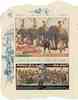
BUFFALO BILL'S WILD WEST
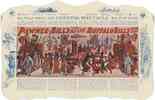
PAWNEE BILL'S GREAT FAR EAST COMBINED WITH BUFFALO BILL'S WILD WEST
HERR SCHMERGEL'S MARVELOUS MUSICAL ELEPHANTS THE MOST NOVEL, UNIQUE AND SENSATIONAL COMBINATION OF ANIMAL SAGACITY FEMININE BEAUTY AND TALENT EVER PRESENTED AN ORIGINAL PICTURESQUE PLEASING AND INTERESTING MELANCE OF ANIMAL TRAINING WITH MUSICAL [?] INTERLUDES
BEAUTY AND THE BEAST--A BAND HARD TO BEAT
PAWNEE BILL'S GREAT FAR EAST
ONE VAST KALEIDOSCOPE OF EVER CHANGING COLORS & ACTION, DESCRIPTIVE OF THE LIVES & CUSTOMS OF THE STRANGE PEOPLE OF THE GREAT FAR EAST
SELECTED REPRESENTATIVES OF THE VARIOUS NATIONS & TRIBES IN REALISTIC COMBATS WEIRD DANCES & STRANGE RELGIOUS CEREMONIES & INCANTATIONS
12
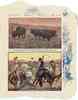
PAWNEE BILL'S FAR EAST
A RANCH HERD OF PURE BRED BUFFALO PAINTED FROM LIFE
COW BOY FUN. THE BRONCHO BUSTER'S BUSY DAY
13
13
BUFFALO BILL'S WILD WEST
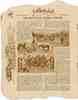
THE BATTLE OF SUMMIT SPRINGS
--------------------------------------------------
One of the most important and deciding conflicts between the white soldiery and the red man took place June 11, 1869, near the western border of the then territory of Nebraska, not far from the Colorado line. History records it as the Battle of Summit Springs.
A detachment of Government troops, under Gen. E. A. Carr, and led by "Buffalo Bill" as their scout and guide, discover the camp of "Tall Bull" after several days of trailing. The ensuing conflict is depicted with historical fidelity in our representation of this important battle. The opening scene shows the foothills of the Rocky Mountains with the mountains themselves in the dim distance. The Indians congregate upon their camping ground, accompanied by men, women and children who have been made captives during the raids the hostile band has made while on the warpath.
The interesting sight of the erection of a typical Indian village is next shown. The squaws work with a will while the braves, Chiefs and young warriors indulge in a powwow and wildly fantastic war dance amid the beating of tom-toms and the weird cadence of battle songs. The white prisoners are placed within the head Chief's tepee, strongly guarded and in anticipation of tortures to come.
While vigilance is disarmed, "Buffalo Bill" appears upon an eminence and in pantomime makes the discovery of the village and retires to convey the news to the General in command of the pursuing cavalry. As the war dance progresses the Indians become more reckless, and with the suddenness of a flash, and with the ferocity of a whirlwind, the Government troops appear among them.
The suddenness of the assault spreads panic among the Indians, and in an indescribably short time the victory is won. The Indians who are still alive flee to the foothills, leaving their dead, but not until attempts are made to torture the white prisoners, the squaws leading in this fiendish work. The conflict wages sharp and fast, though brief, and amid all the excitement "Tall Bull" is seen in active command urging his braves to fight and trying to quell their panic
While he is thus engaged, "Buffalo Bill" is discovered creeping along under cover until within range his unerring rifle speaks and "Tall Bull" drops from his horse a dead Indian. The "Battle of Summit Springs" is thus fought and won.
This in brief, is the synopsis of a battle which marked the end of a long campaign against a big band of renegade Sioux, Cheyenne and Arapahoe Indians, known as "dog soldiers,"
14
14
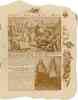
PAWNEE BILL'S FAR EAST
THE BATTLE OF SUMMIT SPRINGS ([?]) BUFFALO BILL TO THE RESCUE, JUST IN TIME TO SAVE THE CAPTIVES.
which had been creating terror and dismay among the settlers living in the frontier counties of Kansas, Nebraska and Colorado. The chase lasted for nearly three onths and the frontier was completely rid of the renegade band of marauders. In this campaign "Buffalo Bill" acted as General Carr's chief of scouts, and it was through Col. Cody's vigilance and skill that the camp of "Tall Bull" was discovered and the subsequent victory at Summit Springs was attained.
The Last Indian War Chiefs and The Last Indian War
At the time of the originating of "Buffalo Bill's Wild West" the history that it depicts was passing, but had not entirely passed, and practically the last chapter of "bloody war" was written in the campaign of 1891 and 1892. This will be remembered as the "Ghost Dance War," a fanatical craze that acted on the red men from the extreme north to the extreme south as would a sweeping prairie fire on the dry grasses of early autumn.
This war will be remembered as having its finale in the battle of Wounded Knee.
In this campaign, further north, the noted Chief "Sitting Bull" was killed. "Kicking Bear" and "Short Bull," the first being a war chief, and the second a Messiah-crazed religious "Medicine Man," were among the hostages demanded by General Miles after the surrender as a guarantee of peace.
"KICKING BEAR" AND "SHORT BULL"
15
15
BUFFALO BILL'S WILD WEST PAWNEE BILL'S FAR EAST The WILD WEST-AN ORIENTAL SPECTACLE-The FAR EAST
The Great Far East section of the exhibition will be employed in the presentation of an Oriental spectacle as a striking contrast to the battle scenes and warlike features of the Wild West. From the rugged
PAWNEE BILL'S GREAT FAR EAST COMBINED WITH BUFFALO BILL'S WILD WEST
THE FAR EAST A GORGEOUS SUPERB AND EXALTED ORIENTAL SPECTACLE DEPICTING ABORIGINAL LIFE, IMPOSING PAGEANTRY, SKILL SPORTS PASTIMES AND SPLENDORS OF THE ORIENT
vistas of our own mountains and plains, the scene shifts to the sands of Sahara, with its pyramids and Sphinx in the distance. In the foreground a caravan is resting; its camels and donkeys are halted, while the Bedouin prepare their camp. The entire scene presents with accuracy a section of the desert, with its desolation and endless stretches of glimmering and glistening sands. The Bedouin bandits complete their encampment and settle down for rest and recreation when a courier arrives with the information, told in pantomime, that a party of tourists are coming to visit the pyramids and Sphinx. Mounted upon his beautiful Arabian charger, the Sheik of the tribe arrives at this juncture and directs that the tourists be captured and held for ransom. The sightseers soon come into view, and in accord with the Sheik's command, are surrounded and made captive. A courier is sent to their friends with the information that they will be held as hostage for ransom which must be at once forthcoming. In honor of the occasion and to while away the time the Sheik directs that an entertainment be presented. There immediately follows an imposing procession, employing representatives of various tribes and races of the Orient, decked in the splendors of their gaudily-colored robes and costumes and mounted upon camels, elephants and various other "ships of the desert" until the entire arena is filled with a mass of moving color. In the center of the scene a tabernacle is erected and a Hindu fakir exemplifies the art of illusion by causing a beautiful young lady to gracefully float in midair and to eventually disappear in a maze of mystery. Eight richly-caparisoned horses will draw this tabernacle into view, and with its gaudy Oriental dressings and draperies will constitute an imposing tableaux typical of the magic-loving Hindu. Japanese jugglers, Arabian acrobats and many tribes and troupes will exemplify their skill and expertness in feats of necromancy and athletics. Incidental to the scene will be introduced Rossi's Musical Elephants, a troupe of mammoths especially engaged to be the feature of this particularly attractive element in the composition of the Wild West and Great Far East. They tread the graceful minuet, march and countermarch, play various instruments and ring bells in musical harmony. Their training has resulted in a truly marvelous display.
While the various features of the Oriental spectacle are progressing, word has been transmitted to the friends of the captives and as a climax to the scene there arrives relief, the ransom money is paid over and the tourists proceed upon their journey.
16 17