101
IT IS CLOSED. -------- In the Sheedy Case Testimony Is All In. --------- Arguments to Begin Next Monday---Given to the Jury Tuesday.
IMPORTANT WITNESS FOUND TOO LATE
Margaret Skinner Looked into the Alley From an Upstairs Win dow--Her Testimony Barred.
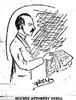
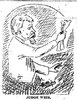
Now For the Finish. On the whole, today's testimony was very dry and uniteresting in the Sheedy case, being all n the nature of rebuttal evidence. The most important witness, perhaps, that the proscution has secured was today barred from testifying because of the fact that the state had rested its case. This witness was Margaret Skinner, who has rooms in the Butler block overlooking the alley in the rear of Sheedy's premises. She did not get to testify as to what she had seen when she opened her windows on hearing the shooting on the night Sheedy was assaulted, but from the statement made in open court by Mr. Hall of the prosecution, it is presumed she saw Monday McFarland coming out of the yard running up the alley to Thirteenth street. This, indeed, is what he conveyed to the jury in an unfair way this morning. However, the case is now rested by both sides and arguments began Monday. ---------------- Yesterday Afternoon. E. H. Andrus, of Cushman park, was the first to testify, and the burden of his evidence was to the effect that he had seen Mr. and Mrs. Sheedy at the park and they appeared loving and social. W. J . Marshal was next called. He was acquainted with Sheedy, saw Mr. and Mrs. Sheedy frequently and never saw anything but agreeable appearances between the parties. Never saw McFarland around the premises. W. W. Carder was recalled and asked if he remembered saying to Officers Miller and Slip that he at first yhought it was his cane found at Sheedy's and afterwards concluded it was not. Witness could not remember such an incident. Dr. N. R. Hook took the stand and gave testimony to the effect that he knew Mrs. Sheedy and she was one of his patients. He of her absence from the city last July. Saw her on January 16, 1891, next day after the burial of Sheedy, She said she didn't think she could live, Witness was her medical advisor so far as he knew. F. B. Baker, a brother-in-law of Mrs. Sheedy, was sworn and testified that he was at the Sheedy residence the day after Sheedy's death and remembered the young man who came with a power of attorney for Mrs. Sheedy to sign. There were present himself. Mrs. Sheedy and others. Mrs. Sheedy was sick that day. The Sheedy brothers were there, but Walstrom was not. The young man had not seen Mrs. Sheedy when witness left the house about 12 o'clock. SENT FOR WALSTROM. Mrs. Dean was next called. Witness is a sister of Mrs. Sheedy. She was at the residence at the time and after Sheedy's death. Dennis Sheedy sent for Walstrom on the Saturday after the funeral. Mrs. Sheedy was there when Walstrom came. The young man with the power of attorney came on Satur- day afternoon. The paino was not open nor had it been during the illness of Sheedy. Cross-examined : Witness said she did not know who told Dennis Sheedy where Walstrom's rooms were nor how Dennis Sheedy knew there was such a man on Walstrom. Mrs. Sheedy did not send for Walstrom, so far as witness knew. She did know that Dennis told Mrs. Sheedy he wanted to see Walstrom and Mrs. Sheedy sent him a note. Mr. Sheedy read the note, but not aloud. Witness was not acquainted with Walstrom at that time. though had seen him twice. Mrs. Sheedy and witness went in just as Walstrom was leaving. Witness did not see anyone there with a power of attorney, but heard talk about a paper to sign. HE WAS WORTH. Hyman Goldwater was recalled by the defense for the purpose of asking impeaching questions. An objection was raised but overruled and Mr. Phil-pot proceeded with the examination. Witness did not tell his boy to sear that he fixed the head of the cane. " And did you not on the same day thereafter, at the same place, tell L. C. Burr that he need not sue for the money for they had fixed up : and did not Mr. Burr say to you, ' Mr. Goldwater, you did not have that cane in your store at all, did you?' and did you not reply, 'It makes no differencem I am entitled to my money just the same." " It is a great lie. I was there only buvonce at all, " roaded Mr. Goldwater, BURR'S TESTIMONY. L. C. Burr was also recalled Witness stated Goldwater was at his office twice on the day referred to. " Did not, when he was there the first time, he tell you he fixed the cane and told his boy to swear that he (the boy) fixed the head of the cane?" " He told me that in substance, as I recollect it. " "On the day after not Goldwater tell you need not sue them, as they had fixed it up, or words to that effect and did you not say to him, " Goldwater, you never had that cane in your store.' and he said : It makes no difference so long as I gets my money. " " This was about it, in. " in substance. " SELF-EXAMIND AGAIN. Col. Philpot was sworn again to testify as to Malone's assertion that McFarland was desperate, asking and answering questions himself. " What is your name ?" " J. E. Philpot." " Do you kno Mr. Malone?" " I do." " Did you see him on the Sunday evening following McFarland's arrest at the city jail and did he not say, referring to McFarland. " that man is in desperate circumstances and will comit suicide before morning?" " He did so state." THE REWARD. S. M. Melick was recalled and questioned as to the reward and stated a reward had been offered in the sum of $ 1,000, being made at the Sheedy residence. It was offered by Dennis Sheedy. Witness told Malone such reward was offered. The reward was offered to witness and is a private reward. " Have you promised any part of that to James Malone in case of conviction?" " I have." " How much?" "One-half." " When was the first reward offered before or after the arrest of these defendants?" " Before the arrest." " Did Malone know of this reward ?" " Dennis Sheedy and Mrs. Sheedy." Hall----" Mr. Melick, when was the last reward offered---after the arrest of Mrs. Sheedy?" " Yes, sir. " MR. STRODE DOES IT. Attorney Strode followed the foot-steps of Col. Philpott in the matter of a self-examination, under oath to bring out or rebut the evidence of Malone, going to show that he had had a conver- sation with Malone at police headquarters, wherein Malone admitted to witness that he secured the confession of McFarland by the " Sweat-box" process, searing it out of him. On the stand Malone could not remember meeting this witness at police station or having a conversation with him. Neither could remember seeing Col. Philpott there and converring with him. MEDICAL WORKS ENTERED. Several extracts from medical works. rebutting evidence of expert witneses, were offered in evidence and admitted both by McFarland's and Mrs. Sheedy's attorneys. ANOTHER CANE. P. J. Stepney, recalled : Witness is a cousin of Monday McFarland. A cane was produced which witness testifed was one he owned and loaned to Monday McFarland, and which was brought down to the court room by Malone on request of the defense. Witness had loaned it to McFarland while he had rheumatism. It was similar to the cane found at the Sheedy house the night of the assault. Witness stated this cane he picked up around his sister's house sometime last spring. Did not know whose cane it was. He let McFarland have it sometimes after the fair and saw him with a time or two. This is the first time witness had seen it since the assault upon Sheedy. INTERESTED PARTIES. Dr. Holoyoke, coroner, was also recalied. Witness testified the inquest was held by him and to a question from Mr. Strode replied that he had a bone from the skull of John Sheedy's head. It was removed by the physicans at the autopsy. It took some force, as it was the maler bone. It was offered in evidence. Witness stated that the stomach was sealed up in a jar. Also one of the kidneys. The condition of the heart was somewhat enlarged. The stomach was kept in possession of witness until taken to Professor Vaughn at Ann Arbor, Mich., to have a contents analyzed. DENNIS SHEEDY/ told witness to have the examination to have the examination of the stomach made and he would pay $ 200 toward the expanse and the county commissioners could only contribute $ 50. " And who paid your expenses up there to Ann Arbor?" asked Mr. Strode. " John Fitzgeraod paid them. " "Who gave you the paper on Fitzgeraid?" " Mr. Hall ( of the state) helped me to make out my bill against Mr. Fitzgerald." With this tetimony the defense announced that it would rest its case. THE STATE. then called George Brandeen. He knew John Sheedy. Also one Wm. Gleason. On the night of the assault upon Sheedy he was at the club rooms on North Tenth. Wm. Gleason was there also (over the Ivvy Leaf ) from 7 to about 10 o'clock. They were " transacting business. " Witness saw A. W. Carder there after 10 o'clock. Cross-examined : Witness said rooms were gambiling rooms : presumed there was gambling there last night. Didn't know who run the place and as to who were gambling there on that night declined to answer on the ground of incrimination. Witness stated there was no ill feeling between himself and Sheedy at that time. C. E. Alexander was also called by the prosecution to rebut the testimony of W. W. Carder. Witness stated that Carder told him during the week after Sheedy's assault that the cane found was not his. Cross-examined : Witness stated he had taken a deep interest in this case only as newspaper reporter. Witness said he did not go to Mr. Sanders.' saloon to consult him about the case, only to take a drink, Admitted that he did take out his notes and read them to Mr. Sanders. H. V. Hoagland was also recalled for the same purpose and stated that Carder told him that the cane found was not his. Anson Fullerton on the stand corrob orated Bradeen's testimony as to Gleason's whereabouts on the night of the assault, testifying he was at the Ivy Leaf gambling rooms. He was also sure Frank Williams was in the room that night. Fred Miller, police sergeant, being called testified that Carder denied the ownershop of the cane found. The defense made an effort to show that Miller at first identified the cane as Carder's but was not permitted so to do. Mr. Lambertson offered an almanac showing when then the moon rose on the 9th day of December, the night of the first assault, and the court allowed it to go in spie of the objections of the defense that it had not been identified as a standard scientific authority. ----------------- This Morning. When court opened McFarland was attended by his wife and many other female relatives and he found a momentary delight in trotting on his knee his little 3-years old daughter. Mrs. Sheedy sat in her accustomed place between her sisters, Mesdames Dean, Baker and Morgan, her countenance bearing that sad yet fixed expression that has cahracterized it throughout the trail. McFarland was seen to occasion- ally utilize his handkerchief to wipe away the tears as he would studiously gaze into the eyes of his little one, his mind doubless dwelling on the fearful possibilities of the future. A THRATENING LETTER. The first witness called was D. G. Courtnay, called by the defense. Witness stated John Sheedy was in his office shortly prior to the last assault and left a letter with witness for Mr. Strode, who was making the examination. The letter was given back to Sheedy and its whereabouts now is unknown, though watehed for while other papers of the deceased were being searched. Witness read the letter carfully. There was no signature to the letter and it was written in a disguised hand. Witness said the letter in substance was to the effect that unless he " let up" on the gamblers he would be killed. TOO LATE. Margaret Skinner was called, but objections were raised on the ground she was present while testitmony was being give, this was overulled and the witness testifed that she had rooms overlooking the alley in the rear of the Sheedy premises. Witness was asked what she saw in the alley. Objetction were raised by the defense on the ground that such evidence was not rebutting anything. Mr. Hall, of the prosceution, while admiting that it really didn not rebut anything should be allowed the privilege of introducing this evidence even though the witness was not examined in cheif, and not endoraed on the information, for the reason it was most important testumony, going to show that she, this witness saw the VERY MAN CHARGED with this crime running eastward through the alley followed shortly after by police officers. A howl of objections went up from the defense and Mr. Stearns, shaking with ire denounced Mr. Hall severely for his unmanly and unfair method of stating to the jury just what he wanted this witness to convey to them, thus prejudicing the jury and at the same time disregarding all ethics of law Judge Field sustained the objecions, holding that the state could not, by means, introduce the witness at this time, meanwhile instructing the jury to disregard all such statments from the conusel on either side and telling the reporter to strike the speech from his record. AS TO THE CANE. EX-Mayor Graham was called and
( Contiuned on Fifth Page )
103
VISIT TO A MAD HOUSE.
THE ASYLUM WHERE EX-SENATOR JONES IS.
HOW HR PASSES THE DREARY HOURS AWAY.
True Story of the Events Leading up to the loss of His Reason - His Love for Miss Palms, A Detroit Heiress.
NOT LONG AGO the writer had occasion to visit Dearborn, a small town some six miles from Detroit. Dearborn has about 1,000 inhabitants and is in hourly railway connection with the state metropolis, it being situated on the line of the Detroit & Bay City railroad. As the train slacks up near the station almost the first thing that attracts the passenger's observation is a great tall building just outside of the town limits and within a stone throw of the track. It is the Catholic retreat for the insane for the diocese of Detroit. From an exterior point of view the building has anything but an inviting appearance. A great big fence closes it within three acres of ground. Even the fence has a gloomy appearance. A dozen or more tall evergreen trees which began their work some fifty years ago have already hidden the side part of the building from view.
It is a bright spring morning as the visitor approaches the great gates leading to the courtyard not a sign of life is visible. The very air seems to carry its burden of the solemnity waited from the historic old structure.
Historic, did I say? Yes, historic; few asylums more so. There, from time to time have lingered between reason and madness men and women of even more than national reputation.
A big brass knob is pulled and a low dismal ringing sound is heard from a gong hidden somewhere in the recesses of the great gates. Presently a sentinel opens the gate and after asking a number of questions permits the stranger to walk in. The sentinel follows. They are now in an old fashioned courtyard. A dozen faces appear at the windows above. they tap and laugh and giggle, and beckon the visitor to enter. Strange people are these: none of them incurable. Some are even happy in their derangement. This was at least so of a young lady who came from one of the rear doors unknown to the Good Sisters who have charge of the institution. "Here he comes; here he comes, my dear husband!" she cried, with joyous laughter in her mellow blue eves.
Her remarks were addressed to a tall stately gentleman who was coming up one of the gravel walks lending from the garden. He allowed her remarks to pass unnoticed, and, as if she had been greatly insulted, she turned quickly and retired to her quarters in the building. The gentleman smiled. "Queer halucination." he said. Then he rushed up and took the visitor by the hand.
"I have just been taking my morn
JONES' MORNING CONSTITUTIONAL.
ing constitutional," he said, looking the visitor straight in the eyes. I have a pleasant home here, almost free from the outer world. They don't call me insane here and I can do as I please."
The speaker drew himself up to his full height as he spoke. He looked a splendid type of physical manhood, in his long Prince Albert, gold-headed cane and silk hat. His eve, though, had a faint sign of nervousness.
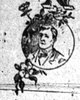
He was Ex-United States Senator Jones, of Florida, who has been confined there for over a year. Though not entirely insane, he is just a little too far gone to have his liberty, at least that was his condition when he was first incarcerated.
There is a peculiarly sad story connected with the Senator's confinement. The "man of Iron," and at one time the only recognized antagonist of James G. Blaine, when the latter was in the United States Senate, did not lose his balance in an ordinary way. His is a case of mad love for a woman, who by reason of her choice, refused him hand in marriage. The Senator had been invited to a reception in Detroit by Mayor Thompson. That was in 1884. While in that city he met Miss Clotilde Palms, only daughter of Frances Palms, a millionaire who since died, leaving his daughter a fortune aggregating $3,000,000.
After returning to Washington the Senator wrote her many interesting letters and finally proposed marriage. She promptly said no. The Senator then went to Detroit to press his suit. After a personal interview he was denied further intercourse. Strange to say he did not leave the city. Day after day he would walk by the Palms residence, never forgetting to leave a memento of his affections - a bouquet - on the gate. Even in winter this was kept up.
Finally Miss Palms fled to Europe to evade his attentions, at least so it was said when she suddenly left Detroit. She was accompanied by Dr. Book, a well known Detroit physician. They were absent two years. Just after their return in November, 1887, the wife of Dr. Book, a leader in Detroit society, applied for a divorce. A decree had been entered before the ink was dry on the application. As all of the parties were willing none of the charges were made public. Not long after Dr. Book and Miss Clotilde Palms were married. This gave great offense to Senator Jones who lived in hopes. He declared that there was a conspiracy, that the Book divorce was illegal and that Miss Palms was not the legal wife. He then became completely broke up, was declared insane and sent to Dearborn, and so lives and in hopes, believing that some day Fate will make it possible for him to see the consummation of hsi fond and mad desire. Many efforts were made to have the Senator return to Florida, but all to no purpose. Even when the time for a re-election came he would not return, so a substitute was sent to Washington in his place. He still retains a lively interest in national politics and seems to view the ascendancy of Blaine with alarm. "That man Blaine," he said, "will plunge us into a disastrous var yet." They were always bitter enemies in the Senate and Jones has not forgotten their fights. Otherwise he is quite rational on national affairs.
It is not generally known that his present expenses are being paid by prominent Catholics of Detroit. His funds became entirely exhausted two years ago, since which time he has lived entirely upon the charity of the charitably disposed. And what is stranger still the Senator seems to think that he is only getting his dues. An amusing story is told as regards his convictions on the subject. About eighteen months ago he was turned out of Detroit hotel at which he had been stopping. For weeks nobody would take him in. The great man of former years, soon changed in personal appearance. He often walked the streets at night and seldom sat down to a plentiful table. He began to rave and
ASYLUM AT DEARBORN.
write letter to the New York World telling of his poverty and asking for aid from the Nation. The Nation answered not. Finally his story attracted the attention of Pat O'Neill, post office inspector in the Chicago district, whose home is in Detroit. O'Neill took him to his home. Matters run along nicely for a few weeks when Senator Jones suddenly became very choice about table delicacies. He acquired an abnormal appetite for mallard duck, quail, imported fruits, wines, pies, cage, etc. He also demanded the finest furnishings for his room. O'Neil couldn't afford to meet the demand, and one morning said so. The Senator asked him know at noon. O' Neill had some business in an interior town near Detroit that day and did not get home until evening. The senator had become impatient for an answer in the meantime and vented his rage by forcing O'Neill's wife and motlier out of the house and then fortified himself against intrusion. It was with difficulty that he was removed. After that he made his sleeping apartment in the garret of a tobacco factory, from which place he was taken to the asylum.
Jones is a devout Irish Catholic and never misses the morning masses said in the retreat. He has become greatly attached to the sisters and says that he would like to live with them for ever were it not for his approaching nuptials.
SHE IS 116 YEARS OLD.
A German Woman Who Has Attained a Remarkable Age.
Frau Magare the Krietschik of Vienna, who has just attained the age of 116, is certainly -if her baptismal record be a genuine document- the oldest woman we have heard of in recent times. She
FRAU KREITSCHIK.
is still active, and personally sweeps and cleans her own house, being able and always ready to talk to visitors, for whom she has ever at her disposal a fun of anecdotes about old times. Aged as Frau Kreitschik is, she gets up every morning before 8 o'clock and sets about the round of household work, which she goes through with conscientiously, even when necessary mounting a chair to dust the pictures on the walls. After this she generally spends her day seated at the window musing over friends dead and gone. She is unable to do any cooking for herself, and her meals are brought her. She has lived in Vienna since 1824, her husband carrying on the trade of a wood splitter.
The Famous Carlson Cottage.
The Carlson cottage at 1872 Ashland avenue, Chicago, in which Dr. Cronin was murdered May 4, 1889, is not longer a remunerative piece of property for the owners. Even on the anniversary of the crime this year only an occasional visitor paid the requisite fee of 10 cents. The Carlson Family reside there. It is neatly furnished. A card on which the following words are printed in bold letters hangs in one of the windows: "Carlson cottage now open to exhibition; admission 10 cents." Ever since the horrible murder the place has been visited by a stream of townspepople and strangers who have examined with deep interest the spot where the doctor fell under the storm of murderous blows. Lately the number of visitors has decreased and only occasionally now is a crowd of gaping folks seen in front of the O'Sullivan house on the next street.