
16
great struggle for possesstion will be ended, and generations will settle down to enjoy their fathers located and fenced in for them. Then will come the picture maker - he who, with pen, pencil and panel, can tell the story as he understands it. Then millions will read and look at what the pioneer did and what the historian related, wishing on the whole that they could have been there to have seen the original. These are some of the thoughts to crowd in upon us as we view the great living picture that the Hon. Wm. F. Cody ("Buffalo Bill") gives at the Wild West Exhibition, which every man, woman and child the world ever should see and study as a realistic fact.
We see audiences of thousands each night - statesmen, artists, military men, teachers, workers, musicians, business men, politicians, artisans, mechanics and others who desire to know as much as possible of the history of America.
We see "Buffalo Bill" the last of the six greatest scouts this country has ever known, viz.,BOONE, CROCKETT, CARSON, BRIDGER, "Wild Bill," and "Buffalo Bill," - to our mind the greateest and most remarkable of all - a man whom this country will never duplicate. A nonesuch to the credit of Nature, the world and the mental and physical material of which he was forned, as one made to do a certain great work. A man in the prime of life, who from the age of ten years, has fought fate and all adverse circumstances, and never to a loss. A man who is a man; as a scout as a pioneer; as a Government officer; as an Indian hunter; as a mighty hunter; as a man of honor, and of more than ordinary skill and courage, commanding admiration - deserving of recognition as a great character in American history. A natural man of the highest order. - Editorial New York Democrat, June 5, 1886.
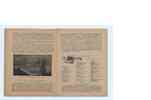
{picture} OLD TIME CAMP IN THE WILD WEST; OR, ON THE PLATTE IN 1857.
BUFFALO BILL AT HOME - HIS GREAT SUCCESS ABROAD. (From the North Platte Telegraph, 1884)
"North Platte should be congratulated on the possession of a citizen whose prominence or position is not bounded by his township, his county or his State, but whose name is a household word, whose pictures are familiar, and whose character is known not only throughout the nation, but has adorned pages and interested the readers of foreign works and publications. We allude to our fellow-citizens, Hon. Wm. F. Cody, whose sobriquet of 'Buffalo Bill' represents a popularity only bounded by the area of American territory, and to which we, who live by his own fireside, may testify his worthy possession and the modesty of its wearing. His late return from a successful presentation to the East of some of the animated daily scenes and incidents that go to form the passing history of the 'Wild West' should be noted, as are events of importance, as it marks a new era in the history of amusements: - For originality, adherence to truth in 'holding the mirror up to Nature,' and a fidelity to fact that is the 'true aim of art.' The reception accorded to his 'show that is not a show, but an Illustration,' in the cultured cities of the East, notably Boston, Chicago, Newport, New York, Philadelphia, Cincinnati, and Cleveland, must be gratifying to all in North Platte; in fact, in Nebraska, where, in the incipiency of the scheme, over a year ago, he demonstrated by courage, pluck, and perserverance, its feasibility, by its introduction in the festivities of our national birthday celebration, and on the following natal day presented it on the shores of the Atlantic, to the plaudits of over 25,000 delighted Bostonians. The magnitude of the undertaking, teh minute necessary to organising, the bringing together from all points the best marksmen in teh world, securing admirable and fitting representatives to the cattle trade, getting wild buffalo, elk, steers, mules, ponies, specimens of the red terrors of the prairie, and other features of interest known only to the pampas of the West - necessitating special trains of cars for transportation, and driving the strange cavalcade through confirmed Washington Street, Boston, in six weeks after leaving the Platte - was an accomplishment that stamps Cody as a wonder in energy, and gained for him the admiration and ecnomiums of the entire press of the East, recognition from the Elite of American society, encouragement from representatives of education, and the indorsement of his methods by the S.P.C.A. and its noted president Professor Henry Bergh.
MAVERICK JOE. BY NATHAN KIRK GRIGGS.
- From Lyrics of the Lariat.
Don't know of Maverick Joe, That hunter of broncos in chief, And who, As every one knew, Waard rich a Maverick thief?
It's strange, Out here on the range, That you haven't known of his name, Nor heard How ranchers were stirred Because of his Maverick fame.
Well, then, I'll whisper again, That tale of the cow and bee kid, Altho Thought Maverick Joe, The rick was a corker they did.
Out West, With [word?] unblest, He rangled for others a year, While Badger, As well as you may judge, Occasionally offered him cheer.
One day, With poker the play They came by no tenderfoot learned I hear He rustled a [word?] That wasn't quite [word] earned.
And then, He built him a den, Way out where the punches were few, And there, Tho not by the square, He soon to a cattle-king grew.
'Twas queer How often that steer Raised calves for his Maverick "X" (cross), This now. I'm bound to allow, His gain who some other one's loss,
One noon. Along about June, A Maverick daisy he saw- The best, And one that he [guessed?] He'd own by the Maverick law.
And so He [word] it low, And gave it a touch of his brand, Then smiled, For former begiled, That happiness chump in the land.
Next morn, As sure as I'm born, It changed that a round-up begun, And then, Some blundering men Caught as to the caper be'd door.
For now, They've circled a cow, One hearinga. "-" (square) on her side, That bawled, And motherly called, As sight of his Maverick pride.
The kid Then bellowed and slid, And buckled right in for a meal's And - well, It's idle to tell The feelings he couldn't canceal.
Tho caughs, He swore it was [boughs?], Where never a seller was night; But all, The praising his grail. Yet reckoned no cattle would lie.
And thus, that ornery [clue?] Got "cinched" on account of that pair; Because, By cattlemen's laws, A "X" shouldn't tackle a "-"
THE PAWANEES ASTONISHED.
W. F. Cody, although having established his right to the title of "BUFFALO BILL" for years before, had not had opportunity to convince the Pawnees of the justice of his claim previous to the time of the following incident. A short while previously a band of marauding red-skin renegades from that nation, while on a stealing excursion near Ellsworth, had occassion to regret their temerity, and cause to remember him to the extent of three killed, which fact for a time resulted in an enmity that needed something out of the usual run to establish him in their favour. While on a military expedition, under Gen. E. A. Carr, upon

17
[Picture] ONE OF THE BARNS OF "BUFFALO BILL'S" AT NORTH PLATE NEB, RANCH 1887.
the Republican, he met Major North and the Pawnee scouts. One day a heard of buffalo were descried, and CODY desired to join in the hunt. The Indians objected telling the Major, "The white talker would only scare them away." Seventy-three Indians attacked the heard and killed twenty-three. Later in the day another herd was discovered, and Major North insisted that the white chief have a chance to prove his skill. After much grumbling they acquiesced grudgingly, and with ill-concealed smiles of derision consented to be spec tators. Judge of their surprise when CODY charged the herd, and single-handed and alone fairly amazed them by killing forty-eight buffaloes in fifty minutes, thus for ever gaining their admiration and a firm friendship that has since often accrued to his benefits.
COLONEL ROYALL"S WAGONS.
Once, upon the South Fork of the Solomon, Col. Royall ordered CODY to kill some buffalo that were in sight to feed his men, but declined to send his wagons until assured of the game. Bill rounded the herd, and getting them in a line for camp, drove them in and killed seven near headquarters; or, as the Colonel afterward laughingly remarked, "furnishing grub and his own transportation."
[Picture] SADDLING A BUCKER.
THE BOW AND ARROW.
The vow is the natural weapon of the wild tribes of the West. Previous to the introduction of firearms it was the weapon supreme of every savage's outfit--in fact, his principal dependence, backed by personal skill in its use, for sustenance for himself and his pappooses. It still retains its favor, as it is not always safe to rely on the white man's mechanism as in case of lack of ammunition or deranged lock or trigger, time and location prevent its being "mended." As a weapon of economy it is also to be commended, as the hunting arrow is made so
18
14
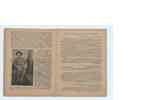
where that expression's full meaning is understood, he is looked upon as a marvellous "all-round shot." That is, a man of deadly aim in any emergency, with any weapon--a small Derringer, a Colt's a shot-gun, a carbine, a blunderbuss, or a rifle--at any foe, red or white; at any game--chicken, jack-rabbit, antelope, deer, buffalo, bear, or elk; at the swiftest bird or soaring eagle; on foot, in any position; on horseback, at any speed. To be such a marksman is only the result of years of necessity for exercising the faculties of instantaneous measurement of distance, acuteness of vision--in fact, an eagle eye and iron nerves--to think quick, to resolve, to fire, to kill. As a hunter these gifts have rendered him famous and gained him plaudits from admiring officers, noblemen, sportsmen and competitors in the chase, and compelled the respect and fear of his implacable Indian foes. That he exists to-day is the result of the training that enables a man in the most startling exigency to command himself, and to meet the circumstances face to face, whatever they may be, and achieve by cool precision deserved victory in the field, and embellish history with deeds of heroism. MR CODY still gives an exhibition of his ability by shooting objects thrown in the air while galloping at full speed, executing difficulties that would receive commendation if accomplished on foot, and which can only be fully appreciated by those who have attempted the feat while experiencing a rapid pace when occupying "a seat in the saddle."
CODY SAVES "WILD BILL."
After a very long march, full of harships and suffering, Gen. Pearose's camp was found on the Palodora in a most distracted condition. Gen. Carr's arrival was none too soon, as the famished men were sustaining life on the last carcasses of their draught animals. In a few weeks Black Kettle's depredations necessitated a pursuit. . . The consolidated command discovered the Indians on the Cimarron, and a terrific battle ensued. . . . In this fight, "BUFFALO BILL" and "WILD BILL" did almost the work of a regiment; braver men never went into an action, both fighting as though they were invulnerable. In the fury and rout which followed the first charge, "WILD BILL" gave chase to Black Kettle, head chief of the Cheyennes, overtook and engaged the fleeing red warrior, stabbing him to death. But the accomplishment of this heroic action would have cost him his own life had not "BUFFALO BILL" ridden with impetuous daring into the very midst of fully fifty Indians, who had surrounded "WILD BILL" intent on either his capture or death. The two daring and intrepid scouts plunged furiously into the midst of the Indians, each with a revolver in either hand, and literally carved their way through the surging mass of red skins, leaving a furrow of dead Indians in their wake. Such fighting, such riding, and such marvellous intrepidity combined, were doubtless never equalled, and if but this act alone were credited to the valor of "WILD BILL" and "BUFFALO BILL" their names would deserve an inscription on Fame's endearing monument.--Buell's History.
15
LETTERS OF COMMENDATION FROM PROMINENT MILIRARY MEN.
FROM AN OLD COMMANDER.
[COPY]
5th Avenue Hotel, New York, June 29, 1887.
HON. WM. F. CODY, London, England.
DEAR CODY:--In common with all your countrymen, I want to let you know that I am not only gratified, but proud of your management and general behavior; so far as I can make out you have been modest, graceful and dignified in all you have done to illustrate the history of civilization on this Continent during the past century.
I am especially pleased with the graceful and pretty compliment paid you by the Princess of Wales, who rode in the Deadwood Coach while it was attacked by the Indians and rescued by the cow-boys. Such things did occur in our days, and may never again. As near as I can estimate there were in 1865 about nine and a-half millions of buffaloes on the plains between the Missouri River and the Rocky Mountains; all are now gone--killed for their meat, their skins and bones.
This seems like desecration, cruelty, and murder, yet they have been replaced by twice as many meat cattle. At that date there were about 165,000 Pawnees, Sioux, Cheyennes, Kiowas, and Arapahoes, who depended on these buffaloes for their yearly food. They, too, are gone, and have been replaced by twice or thrice as many white men and women, who have made the earth to blossom as the rose, and who can be counted, taxed, and governed by the laws of nature and civilization. This change has been salutary, and will go on to the end. You have caught one epoch of the world's history; have illustrated it in the very heart of the modern world--London, and I want you to feel that on his side of the water we appreciate it. This drama must end; days, years and centuries follow fast, even the drama of civilization must have an end.
All I am to accomplish on this sheet of paper is to assure you that I fully recognize your work and that the presence of the Queen, the beautiful Princess of Wales, the Prince and British public, are marks of favor which reflect back on America sparks of light which illuminate many a house and cabin in the land where once you guided me honestly and faithfully in 1865-'6 from Fort Riley to Kearney in Kansas and Nebraska. Sincerely your friend.
W. T. SHERMAN.
WAR DEPARTMENT, ADJUTANT-GENERAL'S OFFICE.
WASHINGTON, AUGUST 10, 1886.
To whom it may concern:
MR. WILLIAM F. CODY was employed as Chief of Scouts under Generals SHERIDAN, CUSTER, CROOK, MILES, CARR and others in their campaigns against hostile Indians on our frontier, and as such rendered very valuable and distinguished service.
S. W. Drum, Adj.-Gen.
LOS ANGELES, CAL. January 7, 1887.
COL. WM. F. CODY: DEAR SIR,--Having visited your great exhibition in St. Louis and New York City, I desire to congratulate you on the success of your enterprise. I was much interested in the various life-like representations of Western scenery, as well as the fine exhibition of skilled marksmanship and magnificent horsemanship. You not only represent the many interesting features of frontier life, but also the difficulties and dangers that have been encountered by the adventurous and fearless pioneers of civilization. The wild Indian life as it was a few years ago will soon be a thing of the past, but you appear to have selected a goof class of Indians to represent the race of people, and I regard your exhibition as not only very interesting but practically instructive. Your services on the frontier were exceedingly valuable. With best wishes for your success, believe me very truly yours,
NELSON A. MILES, Brigadier-General U. S. A.
"HE IS THE KING OF THEM ALL."
HEADQUARTERS IS MOUNTED RECRUITING SERVICE.
ST. LOUIS, MO., May 7, 1885.
MAJOR JOHN M. BURKE: DEAR SIR,--I take pleasure in saying that in an experience of about thirty years on the plains and in the mountains, I have seen a great many guides, scouts, trailers and hunters, and Buffalo Bill (W. F. Cody) is king of them all. He has been with me in seven Indian fights, and his services have been invaluable. Very respectfully yours,
EUGENE A. CARR, Brevet Major-General, U. S. A.
19
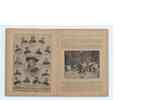
SOME OF THE FAMOUS GENERALS OF THE U.S. ARMY UNDER WHOM BUFFALO BILL HAS SERVED
17
WHEN AND WHERE "BUFFALO BILL" IS JUST PLAIN "BILLY," "BILL," "BILL CODY," OR "THE COLONEL."
Among all the realities that have made the Wild West and Congress of Rough Riders of the World famous, and easily the favorite on two continents of amusement enterprises, none can be more truly real than Col.W.F. Cody's reality as a Western man and the faithfulness of his love for the plains and mountains, where he found fame and fortune a third of a century ago.
His strong, picturesque personality has stood for a quarter of a century typical of the free life on the great plains, in the canyons, and among the cloud-piercing peaks of the West. Whether the season of the Rough Riders end at Berlin, Rome, Venice, Naples, Vienna, Madrid, Edinburgh, Liverpool, London, Paris or New York; be it in Germany, Italy, France, Spain, America or England, however enticing the social, sight-seeing of
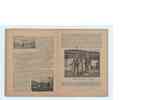
HUNTING GAME NEAR YELLOWSTONE PARK
scenic attractions bidding him stay, nothing but the fastest speed steam can make suits Col. Cody. He wants to, and will cross the Missouri River at the earliest possible moment. From London to the brink of the Grand Canyon of the Colorado in eleven days was one of his rushes from the rising to the setting sun made a few years ago.
In Omaha he is "Col. Cody," except when he meets men whose locks are silvered, men of the plains and mountains who have known him thirty years or more; with them he is just "Billy," or plain "Bill." At North Platte, Neb., where he has lived since the early seventies, he is "Our Billy" or "Bill," with high and low, rich and poor alike, and a man's station in life or the money he has had, or has now, does not in the least affect Col. Cody's manner towards him. His hand and his heart rate are held out to all, and to the poor and needy it is never an empty hand he holds out.
20
18
A MORNING BREATHER ALONE.
The love for the plains and mountains implanted in his heart when as a mounted messenger boy he rode from slow mounted messenger boy he rose from slow moving cattle train to train, carrying messages, rode the lonely stretches of the long overland trail on the swift pony express, hunted, trapped, scouted and guided, is there yet. He was yet in his teens when in '67 or '68 he killed the hundreds of buffalo to feed the thousands of men who were building the Kansas Pacific Railroad. Here he earned the name, now known the world over, "Buffalo Bill." Then later as scout and guide for military expeditions seeking hostile Indians, he learned all the then vast unsettled region lying between the Gulf and the Yellowstone, the Missouri and the mountains. On this great stage the pictuesque part he played from mounted messenger to skillful scouting, and the killing of "Yellow Hand" in a most dramatic hand-to-hand encounter on "War Bonnet Creek," with the armies of friend and foe for an audience, gained him the attention and friendship of such men as Sherman, Sheridan, Crook, Custer and Miles, who gave to him a love and respect he has held until death has, one by one, stayed the hands they ever after held out to him in friend and fellowship. General Miles alone remains of this galaxy of great Indian fighters of the past century, and only a year ago he was Col. Cody's guest on a hunt for big game in the Big Horn Basin.
"Red Cloud," "Spotted Tail" and "Sitting Bull" were the foes against whose skill as scout, plainsman and warrior Col. Cody was pitted in the seventies. In the two decades following, the sons of these stubborn old red men have followed their father's old foe all over the civilised world, and under his object-lesson tutelage have been taught the futility of the few, in savage warfare, waged against the many, in civilized warfare (if warfare is civilized). There is not a doubt but the lessons taught to the Indians Col. Cody carries with him, and by them taught to those at home, has done as much to avert hostilities, and more, than has fear of the handful of soldiers at frontier posts.
The Buffalo are gone, the elk and the antelope are rarely seen. Those yet in freedom are carefully protected by the stringent game laws. But the horses and cattle roam over the hills and through the valleys, once the home of the game, and of these Col. Cody owns large herds. The settler's cabin and the stockman's ranch houses and corrals are features of landscapes where once the cone-shaped tepees stood. But the air that fills men's lungs with health their brains with noble thoughts, and their veins with new life, still remains, and a sunshine that floods with glory hill and dale, forest and field, mound and mountain, still comes shimmering down through an atmosphere so pure, so sweet and so bracing, that it intoxicates when poor, weak, cramped, damp, decayed, smoke-shrivelled lungs from lower altitudes are distended by it. Then there are the grand corn and alfalfa fields of the Platte, the timothy meadows, the potato fields, and the golden grain fields in the Big Horn Basin, the Scouts' Rest Ranch. 26,000 acres under fence, the home of 1,000 horses, Rock Creek Ranch.
IN THE SADDLE.
Rock Creek Ranch, the summer home of the horses, and TE Ranch (TE the beautiful), nestling among cloud-reaching peaks in a sweet, peaceful vale, where elk, deer, and antelope mingle with the Hereford herds, the pretty cattle Col. Cody has made a home for at TE. Here, on every side of this lovely spot, is the grandest mountain scenery in America--from the wide windows and broad verandes of the ranch house nature's grandest architecture is on view. All around is the finest big game country on the American continent. Big horns, elk, and deer are at home within sight of the ranch house. Grizzlies, cinnamon, roachback and black bear are to be found if you look for them. The dash over the hills hunting range horses; the ride through the fat, sleek herds of cattle; the homecoming to find a meal of big horn, bear, elk, deer or antelope steak waiting for an appetite whetted to the keenest edge; the evening around the rousing fire in the wide-mouthed fireplace; the stories that are told, the songs that are sung; then the sleep--deep, soundless, and so sweet into which one sinks away who sleeps eight thousand feet above the sea. "Tis to these things Col. Cody speeds across land and sea, as soon as the show season ends. Asphalt, stone, brick and marble have no charms for him. He goes to the country he oves, and to the friends who love him. Prouder by far to be grasped by their hard hands
COL. CODY AND DR. FRANK POWELL AT THE TE RANCH.
and to be called "Billy" or "Bill" by them than when, as the world's greatest "man on horseback," he prances to the front of the world's greatest exhibition of the horse and horsemanship, where, amid the huzzas and hand-clapping of thousands of admirers he is grandiloquently introduced as "Col. William F. Cody," better known as "Buffalo Bill."