
26
The love for the plains and mountains implainted in his heart when as a mounted messenger boy he rode from slow moving cattle train to train, carrying messages, rode the lonely stretches of the long overland trail on the swift pony express, hunted, trapped, scouted and guided, is there yet. He was yet in his teens when in '67 or '68 he killed the hundreds of buffalo to feed the thousands of men who were building the Kansas Pacific Railroad. Here he earned the name, now known the world over, "Buffalo Bill." THen later as a scout and guide for military expeditions seeking hostile Indians, he learned all the then vast unsettled region lying between the Gulf and the Yellowstone, the Missouri and the mountains. On this great stage the picuresque part he played from mounted messenger to skillful scouting, and the killing of "Yellow Hand" in a most dramatic hand-to-hand encounter on "War Bonnet Creek," with the armies of friend and foe for an audience, gained him the attention and friendship of such men as Sherman, Sheridan, Crook, Custer and Miles, who gave to him a love and respect he has held until death has, one by one, stayed the hands they ever after held out to him in friend and fellowship. General Miles alone remains of this galaxy of great Indian fighters of the past century, and only a year ago he was Col. Cody's guest on a hunt for big game in the Big Horn Basin.
"Red Cloud," "Spotted Tail" and "Sitting Bull" were the foes against whose skill as scout, plainsman and warrior Col. Cody was pitted in the seventies. In the two decades following, the sons of these stubborn old red men have followed their father's old foe all over the civilized world, and under his object-lesson tutelage have been taught the futility of the few, in savage warfare, waged against the many, in civilized warfare (if warfare is civilized). There is not a doubt but the lessons taugth to the Indians Col. Cody carries with him, and by them taught to those at home, has done as much to avert hostilities, and more, than has fear of the handful of soldiers at frontier posts.
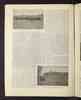
The Buffalo are gone, the elk and antelope are rarely seen. Those yet in freedom are carefully protected by stringent game laws. But the horses and cattle roam over the hills and through the valleys, once the home of the game, and of these Col. Cody owns large herds. The settler's cabin and the stockman's ranch houses and corrals are featues o flandscapes where once the cone-shaped tepees stood. But the air that fills men's lungs with health, their brains with noble thoughts, and their veins with new life, still remains, and a sunshine that floods with glory hill and dale, forest and field, mound and mountain, still comes shimmering down through an atomosphere so pure, so sweet and so bracing, that it intoxicates when poor, weak, cramped, damp, decayed, smoke-shirvelled lungs from lower altitudes are distended by it. Then there are the grand corn and alfalfa fields of the Platte, the timothy meadows, the potato fields, and the golden grain fields in the Big Horn Basin, the Souts' Rest Ranch, 8,000 acres, the Carter Ranch, 26,000 acres under fence, the home of 1,000 horses. Rock Creek Ranch, the summer home of the horses, and T. E. Ranch (TE the
27
19
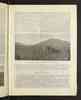
beautiful), nestling among cloud-reaching peaks in a sweet, peaceful vale, where elk, deer and antelope mingle with the Hereford hers, the pretty cattle Col. Cody has made a home for at TE. Here, on every side of this lovely spot, is the grandest mountain scenery in America - from the wide windows and broad verandas of the ranch house nature's grandest architecture is on view. All around is the finest big game country on this continent. Big horns, elk, deer and antelope are at home within sight of the ranch house. Grizzlies, cinnamon, roach back and black bear are to be found if you look for them. The dash over his hills hunting range horses; the ride through the fat, sleek herds of cattle; the homecoming to find a meal of big horn, bear, elk, deer or antelope steak waiting for an appetite whetted to the keenest edge; the evening around the rousing fire in the wide-mouthed fireplace; the stories that are told, the songs that are sung; then the sleep - deep, soundless, and so sweet into which one sinks away who sleeps eight thousand feet above the sea. 'Tis to these things Col. Cody speeds across land and sea, as soon as the show season ends. Asphalt, stone, brick and marble have no charms for him. He goes to the country he loves, and to the friends who love him. Prouder by far to be grasped by their hard hands and to be called "Billy" or "Bill" by them than when, as the world's greatest "man on horseback," he prances to the front of the world's greatest exhibition of the horse and horsemanship, where, amid the huzzas and hand-clapping of thousands of admirers he is grandiloquently introduced as "Col. William F. Cody," better known as "Buffalo Bill."
OIL CAN ON FOOT.
"Did you ever have a wagon or carriage go dry on you a hundred miles from the grease necessary to 'make ze wheels go round, as Helen's babies used to say?" said Col. W. F. Cody the other night as he grew reminiscent of the Far West.
"Some years ago I bought from Abbott, Downing & Co., at Concord, N.H., one of their famous mountain wagons. I had it shipped to Red Lodge, Mont., where it was to await my arrival on my way into the Big Horn Basin, so soon as the Wild West closed its season."
"I had invited three friends to accompany me into the Basin. One of my teams, which had met me at Red Lodge, was hitched to the new Concord wagon, and the one hundred mile mountain drive to Cody, in the Big Horn Basin, was begun. When we had accomplished about one-fourth of the distance I noticed that, although the road was leading
28
20
over almost a level plain, the horses were evidently under a hard pull. An investigation led to the discovery that all four of the wheels were almost at a stand-still. Being new, they had quickly absorbed the oil put upon the spindles when the wagon was set up in Red Lodge, and now spindles, and thimbles enccasing them, were cutting and grinding in a famish for oil. A search of all parts of the wagon failed to disclose the sought-for oil can, which should be always found with a vehicle used on mountain roads over uninhabited stretches."
"Here we were, twenty-five miles from a town, many miles from a house, a wagon with four wheels on a strike, fast getting into a condition that would make it as difficult to pull as if it were a sled on dry ground, besides it would ruin the wagon, a pair of tired horses, night coming on, and no camping facilities. It was a pretty hard spot, and the busy think we were doing was only interrupted when one of my guests, Mike Russell, said as quietly as if he had been telling us the time of day: 'There's your oil can.' There was a discharge from his Winchester before he had finished speaking, and one of a bunch of antelope that had hove in sight on a knoll a mile away, leaped into the air and lay still on the ground, while it's companians, like streaks of gray, skinned over the mesa. I got another out of the bunch before they were out of range, and in fifteen minutes we had cracked the leg bones of those antelopes, dug out the marrow, greased the wagon, and were on our way with meat–well, meat to burn."
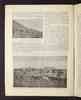
"BUFFALO BILL'S" HOME AND HORSE RANCH ON THE OLD FIGHTING GROUND OF THE PAWNEE AND SIOUX.
29
21
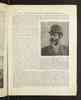
MR. NATE SALSBURY, VICE-PRESIDENT AND MANAGER.
Born 1846, February 28th, in Freeport, Ill., the family being descendants of the early Vermont settlers; went out with the first Illinois troops; served through the entire rebellion; was the youngest enlisted soldier in the Army of the Cumberland; wounded three times; is a member of Post I I, G. A. R., Department of Massachusetts; went on the stage in 1868; has acted before every English-speaking public in the world.
MR. SALSBURY long ago invested heavily in the cattle business in Montana, and is now part owner of one of the largest and most valuable ranches in the Northwest. During his repeated visits to the same he became impressed with the scenes and episodes witnessed, and thought of the feasibility of presenting them as fas as practical to the citizens of the East. An interchange of opinions with Col. CODY disclosed a similar intention, so that to the fertile brains of Messrs. CODY and SALSBURY we are indebted for the first conjuring-up of this novel project. They spoke of it years ago, and SALSBURY went to Europe to see if it would be advisable to take such a show on the Continent. Meanwhile, with Mr. SALSBURY'S know! - edge, "BUFFALO BILL.' started the enterprise to see if it could be made successful in this country. From its start it has proven the most successful exhibition that has ever appeared in the tented arena.
The Amusement Department is under the personal supervision of this eminent actor, whose successful career is now a matter of American Stage History. Years of continued success as a caterer to the amusement-loving public of this country, Australia, India and Europe, both as actor and manager, are a guarantee that the "Wild West" will be presented in a manner and style commensurate with his well-known managerial ability and artistic judgment.
During the past winter the subject of a spectacular production for this season was brought up. Mr. SALSBURY, who has for years supervised and compiled all matters pertaining to such events, finally decided that the public wanted something that was thoroughly up to date, and of a military nature. It was then he undertook to produce the most stupendous drama without words that has ever been exhibited to the public. He secured the most expert scene painters, who, acting upon the suggestion of photographs secured of the Walls of Pekin, succeeded in showing the public one of the most realistic battle scenes arranged for historic exhibition in the new century. He also supervised the procuring of the uniforms and entire paraphernalia worn by the soldiers who represent the Allied Powers, thus making the affair perfect in every detail. Mr. SALBURY'S experience as a soldier in the War of the Rebellion has been most invaluable to the arrangement of this spectacle.
30
22
JOHNNIE BAKER - THE YOUNG MARKSMAN.
Johnnie Baker was born at O'Fallon's Bluffs, on the banks of the South Platte River, in Western Nebraska, in the year 1870. His father is the well-known "Old Lew Baker, the ranchman," and was the owner of Lew Baker's O'Fallon's Bluff Ranch, in its day an important landmark. This place was one of the most noted on the great overland trail - the scenes, incidents, Indian attacks, etc., belonging to exhaustive pages in the early history of that, in old times, exposed and dangerous section. Here Johnnie's babyhood was passed in unconscious proximity to dangers seldom courted by the most sturdy, and his first "bug-a-boo" was not of the maternal imagining, but an existing fact, continually threatening in the shape of the heartless, savage Sioux. Cradled amid such pioneer surroundings, and dandled on the knees of all the most celebrated frontiersmen, the genuine old buckskin trappers - the first frontier invaders - his childhood witnessed the declining glories of the buffalo hunter's paradise (it being the heart of their domain), and the advent of his superior, "the long horn of Texas," and his necessary companion, "the Cow-boy."
The appearance of these brave, generous, self - sacrificing rough riders of the plains, literally living in the saddle, enduring exposure, hunger, risk of health and life as a duty to the employer, gave him his first communion with society beyond the sod cabin threshold, and impressed his mind as well as directed his aspirations, to an emulation of the manly qualities necessary to be ranked a true American Cow-boy.
When the Pony Express, the Stage Coach, and the wagon-trains were supplanted by the steam horse, Baker's station because useless, and "Old Lew" removed bag and baggage to North Platte, a little town of magical railroad growth. Here he built a fine house, which became the headquarters of the "old timers," and many a tenderfoot can remember the thrilling incidents related of "life of the trail" - a life that now belongs alone to history and to romance - while "Old Lew" dispensed hospitality like a prince. But the ways of "city life," a too big heart, of which the "shiftless, genial affinities" and rounders took due advantage, caused his former prosperity to be a remembrance only, and Johnnie set to work manfully for one of his age, to lend a helping hand. Perfectly at home in the saddle, he was never content unless with some cow-boy outfit, or at Mr. Cody's (whose homestead, extensive horse and cattle ranches, are near), where his active spirit found congenial associations, until he became recognized as "Buffalo Bill's boy." In the winter months he occasionally went to school, and being an apt scholar, has a fair education, Mr. Cody, on organizing his distinctly American exhibition, could not leave little Johnnie out. He can be seen every day with the Wild West, mounted on his fiery little mustang, riding, roping, shooting - repeating on the mimic scene his own experiences, and the boyhood life of his elder, more famed associates.
Through perserverance and his aptness for learning he has become a most valuable assistant to Colonel CODY, so much so that he is now Arenic Director, looking after all matters pertaining to the Exhibition, and has shown himself to be thoroughly familiar in the art of conduction the entire entertainment without an interruption. He is an admirable stage manager, and it is to him that the care of the large army of men is assigned.