

66
58
First to respond were the American marines. Capt. McCalla, with a hundred of them, wished to start at once, confident of their ability to cut a swath through Chinamen all the way to Pekin if necessary. But the others did not seem to realize the gravity of the situation and the importance of promptitude.
On June 10th Admiral Seymour started, with fifteen hundred men, but only succeeded in getting a little farther than Tien-Tsin, to which city he was compelled to return on June 24th. The "Boxers" had torn up the railway, "sniped" his men incessantly and harassed them day and night, appearing in such numbers that it was very evident his force was too small to fight its way through. He took refuge in the foreign concession, outside the walled native city of Tien-Tsin and sent for reinforcements, which could reach him from Taku, by the Pei-Ho river.
The native city is said to contain one million inhabitants, and is surrounded by a stupendous wall, on which at that time were thousands of Imperial soldiers who had been trained by foreign officers. The "Boxers" besieged the concession, threatening to cut off communication with the river, and the Imperial soliders during a fortnight almost continually threw shells at the allied forces. Admiral Seymour was reluctant to shell the native city, out of consideration for the great number of non-combatants it contained, but at length found himself compelled to do so, and quickly put a stop to the pernicious activity with which the Chinese had been amusing themselves. Then he directed a sortie against the "Boxers," who were scattered, and life in the concession was a little more endurable.
July 13th the allied forces having been augmented to nine hundred Americans, three thousand Japanese, eight hundred French and eight hundred Russians, an attack on the native city was attempted. The attempt was a failure, owing to lack of knowledge concerning the ground over which the attack would have to be made. A deep and wide canal--the only bridge over which had been destroyed--halted the advancing Japanese and American troops, in the marsh, within easy range of the gunners on the walls, who, safe behind stone ramparts, shot them down like game. To retreat across the marsh, under fire, would have cost many lives. It was less dangerous to drop into such scanty cover as the marsh afforded, trust to the khaki uniforms being hard to see from a little distance and wait for nightfall. So the allies lay still all day, now and then accurately potting a solider on the wall, doing no great harm but getting painfully onto the Chinese nerve be their steady pertinacity.
When darkness fell, a desire for change of scene overcame the warriors of the Yellow Dragon. Considering, with Hudibras, that
"He who fights and runs away, May live to fight another day."
they "flow the coop," from the side of the city opposite to that attacked. At 2 o'clock A. M., the active little Japs, who were tireless scouts, foudn that Tien-Tsin had been evacuted and by dawn the allies were in possession.
Not until August 5th was another start made for Pekin. Some of the allies wished to wait ten days longer for more reinforcements, and the Russians did not want to move until they could get a train of siege guns, even if they had to wait months for them. But General Chaffee (American), General Gaselee (British), and General Fukushima (Japanese), were determined to push on while there was still a prospect of saving the legations, and the others, reluctantly, but fearing to lose some advantage it left behind, fell into line.
The rescuing force included two thousand eight hundred Americans (9th and 14th U. S. Infantry, Reilly's Battery and a battalion of Marines), three thousand British, twelve thousand Japanese, three thousand Russians and one thousand French. Transportation facilities were grossly inadequate, the heat was intense, the water supply insufficient and vile, and seasonable torrential rains threatened, but it was by this time understood that a general massacre of all the foreigners in Pekin might take place any day if relief did not arrive quickly, and the march was a forced one from start to finish.
The first resistance was offered by the Chinese at Peit-Sang, on the first day of the march. They were strongly entrenched, and the Japanese, who bore the brunt of the attack, suffered severely but the tempestuous rush of the little brown men was more than the yellow-hearted Chinese could withstand, and the affair was quickly over. The Japanese loss was heavy, but that of the Chinese twice as great, so the man of Nippon were content.
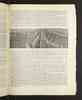
The second day (August 6th) the Chinese made another stand at Yang-Tsun, where they had established themselves in a triple line of intrenchments backed by the formidable wall of the town, a position that if manned by good fighters, would have been well-nigh impregnable That day's
67
59
march had been a hard one. The air was close and stiflingly hot, the dust choking, one man in five had been forced by heat prostration to fall out, and the column had moved fifteen miles, a long march under such conditions. Even the toughest old veterans were almost dropping with fatigue. Suddenly there came a burst of rifle shots from the enemy's trenches. The sound seemed to infuse new life into the weary men. It invigorated them, like fresh air and wine.
"Get the day's work over before dark, boys!" shouted a sergeant, and with a yell they charged straight at the trenches, their fatigue forgotten, the lust of battle shining in their eyes. This was more than the Chinese were prepared for. Men who would not stay to be shot at long range, but made great haste to come nearer, with evident intent to do bodily harm, were clearly the worst kind of "foreign devils." Their European military instructors had taught them how to handle their guns and to make trenches, but to stay in the trenches and fight was a different matter. A goodlly number of them were relieved of the embarrassment of the situation by the fierce men in khaki sending them to join their ancestors, and those not so disposed of scrambled and
(Picture)
scurried out of the trenches and behind the wall. But even there they were no safer. The "foreign devils," without respect for Chinese precedent, did not hesitate to go over the wall and pursue them into the town. Then, in sheer disgust with such proceedings, Imperial soldiers and "Boxers" alike threw away their weapons and ran, like scared coyotes, away to the northward and when last seen were only vanishing points on the horizon line.
The English artillerymen firing upon the trenches were not aware of how quickly the Americans had carried them and their shots were more accountable, than those of the Chinese, for our eight killed and sixty wounded.
Meanwhile the situation of the foreign legations in Pekin had become extremely critical. On June 9th they had been compelled to mass themselves in the British Legation's compound, which was strongest for defence, and ever since that time were in a state of siege. June 11th, the Japanese Secretary of Legation, Mr. Sugiyama, was murdered by Imperial soldiers. June 13th, the Boxers made an attack in force, burned a chapel and some other buildings and killed some of the defenders, but were successfully repelled. June 19th, the Chinese government ordered the legations to leave Pekin within twenty-four hours, hoping to get them out from their defences, where they might be conveniently butchered by the "Boxers." June 20th, the German minister, Baron Von Ketteler, venturing to go out on official business to the Chinese Foreign Office, was shot down in the street and his interpreter was severely wounded.
Thereafter the Imperial soldiers and "Boxers" rained shot and shell upon the defences of the foreigners, where there were six hundred Americans and Europeans, and there thousand Chinese refugees (Chinese converts) and protected employees. Siege barricades were erected in the streets, from which frequent ferocious attacks were made, by day and night, and marksmen on the wall fired incessantly. And these assassins were not simply "Boxers," but Imperial soldiers, armed with repeating rifles and Krupp guns. In one day seven hundred heavy shot and shells were fired at the legations and tens of thousands of rounds of rifle ammunition. The regular force of the defenders amounted to but seventy-five marines and thirty-six fighting civilians, with some seventy or eighty armed volunteers to be called upon for special service in repelling attacks and fighting fires.

68
60
Again and again the Chinese government endeavored to cajole or force the legation to leave their defences, under pretence of giving them better shelter, or escorting them to a place of safety; unquestionably with the purpose of their extermination. And all the while the government was sending our reports that the legations were being protected and provisioned, even when they were eating their horses. The firing upon the legations continued forty days, with a few short intermissions, and when the relief column started from Tien-Tsin, the endeavors to get at the foreigners and massacre them, before the rescuers could arrive, were redoubled in vindictive ferocity. It was at this very time that Li Hung Chang telegraphed to foreign governments that the legations had all arrived in safety at Tien-Tsin, under Jung Luh's escort.
Two violent and well-planned assaults were made upon the defences on the night of the 13th, the last of the siege, by the Shansi contingent of Imperial soldiery, whose general had vaunted that he would "finish the foreigners within five days." Had they succeeded in entering the compound, the throats of not only the official foreigners, but their hundreds of women and children, and thousands of native converts would all have been cut, or perhaps more exquisite tortures have been inflicted upon them.
On the afternoon of the 14th, Generals Gaselee and Chaffee, at the head of the rescuing column, entered the legation grounds, the Chinese soldiery having fled at their coming.
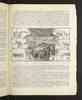
The particular incidents of the campaign that form a part of the Wild West entertainment, are the landing of the Allied Troops, adn the Storming of the Gates of Tien-Tsin, which led to the final Capture of Pekin and the relief of the beleagured legaitons that had been so bravely defended by the overmatched Legation Guards.
The first scene is located near the city of Tien-Tsin, and illustrates the massing of the Allied Troops for the attack on that city. The cavalry drill in full uniform is introduced to add a picturesque interest to the scene, and also to show the difference in the cavalry manual of each country represented.
The second scene narrows the time down to the actual attack on the walls of the native city.
The large double gates shown in the center of the picture are the ones that were defended by a few determined Chinamen, who finally gave way under the rush of the gallant 9th Regiment, U. S. Infantry, assisted by a mixed force of all the allies that participated in the actual attack on the native city.
The management of the Wild West have taken a little dramatic license in massing troops where there was only desultory fighting. Of course the difficulty in charging a thirty-foot wall defended by a moat is obvious, but is it desired to show the fraternal spirit that actuated all the allies in the initiative engagement of the campaign, that ended with so much credit to the fighting abilities of the men who endured the stress of battle and the hardships of a forced march, to the rescue of their compatriots.
The forces represent the United States, Germany, Russia, Great Britain, East India, Japan and France. The uniforms are those of the 9th Regiment, U. S. A., Legation Guards, U. S. Marines, Japanese Regulars, British Marines, Welsh Fusiliers, East India Sikhs, Russian and French Regulars. ________
HEROES OF STORM AND WRECK.
LIFE-SAVERS DETAILED BY THE UNITED STATES TREASURY DEPARTMENT FOR A SEASON WITH THE WILD WEST.
Considered simply as a novel, surprising and thrilling spectacle, far beyond anything of kindred sort ever before attempted, the exhibition of the Life-Saving Service in the Wild West (Buffalo Bill's) arena, is of extraordinary interest. But it has much higher claims upon public attention. It is an invaluable object-lesson in the actual work of one of civilization's noblest endeavors for the benefit of humanity.
The public already knows approximately all there is to be known about the work of the Light House Department. Its light-houses and vessels may be visited and inspected by anybody a good part of the year, and some of them on the eastern coast are popular show-places. The glows and flashes of its lights and the eerie howls of its syrens are seen and heard of all men all along our coasts, from the St. Croix River, Maine, to Perdido Entrance, Florida; from Alaska to Point Loma; along our principal rivers and dotting the shores of our great lakes. Descriptions stories, poems and news articles innumerable have familiarized the world with all belonging to the Light House Department, and enabled a full comprehension of the value of its service.
69
61
But of the Life-Saving Service the public can have, under conditions, little or no real knowledge. In a general way it is understood that all along the dangerous portions of our sea-coast are stationed smalls crews of hardy, courageous men, supplied with the best scientific devices for saving the lives of ship-wrecked persons, but there is nothing pretentious or spectacular in them or their outfit at such times as straggling adventures from the sight-seeking multitude are likely to come upon them. And most people have very nebulous and vague ideas of how it is possibly for these men–operating on beaches, where boats, in time of storm, can not be used–to establish communication with wrecked vessels and rescue men and women from death. This perilous and heroic work is done at night frequently, always when furious gales are raging and generally in winter. The summer-day conditions of a life-saving crew are no more suggestive of what daring, endurance, skills and self sacrifice they will be required to demonstrate at the summons of the storm, than a storage-battery conveys to the uninformed an idea of the potency it is capable of exercising.
(Picture) THE C. S. LIFE-SAVING SERVICE.
To afford to the public an approximately adequate comprehension of the life-saver's work, a model crew, with all its appliances, has been secured for a season's demonstrations in connection with Col. Cody's "Wild West" exhibition, the fact being recognized that in actual service, to so vast a number of American citizens in all parts of the country.
What they do in the arena is but a repitition of what these very men have repeatedly done in the line of their regular duty, when the temperature was below zero, in the teeth of a tremendous gale, on a lonely beach, where the surf ran mountain high. The firing of the shot carrying a line over the mast of the doomed vessel; the planting of the sand-anchor and connecting a hawser from it to the amst by means of the shot-carried line; the rigging of a breeches-buoy on the hawser and working it to and fro, over the surf, with the rescued mariners–all these are, like everything else in teh Wild West, "the real thing."
A more theatrically effective display might be devised, by ingenious scenic contrivances, for simulation of a storm, but it is questionable if such efforts at enhancement would not really detract from the forcefulness of the exhibit as it is now made. Its bold reality impresses intensely the spectators and irresistibly stirs their imagination to surround it with the adjuncts even the dullest mind can conceive as belonging to the scenes in actual service.
70
62
ROUGH RIDERS OF THE TRANSVAAL.
REPRESENTATIVE BOERS FRESH FROM THE SOUTH AFRICAN WAR.
Whatever may have been the merits of the controversy between Great Britain and the Boers, the American mind was little aided, in decision between them, by the volumes of affirmations and arguments, accusations and recriminations poured forth by both at the outset of the South African war, and sympathy with either was more determined by predisposition than conviction. Heated partisanship has been demonstrated by a minority of our people–most largely, perhaps, among our adopted citizens–but the general feelings has been one of willingness to suspend judgement and accept the verdict rendered by the stern arbitrament of war. But the American is prone to sympathize "with the under dog," especially if he is putting up a particularly good fight, notwithstanding the advantages of his position, and it will hardly admit of question that the Boer has made good a claim to out appreciative interest in his personality, quite apart from an consideration as to whether he is right or wrong. He may be rough, uncultured, bigoted, an obstacle in
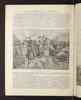
(Picture) A SQUAD OF BOER CAVALRYMEN.
the way of progress--as his enemies declare--or he many be nothing of the sort, which is equally probable, but there is no doubt of his being a good fighter. The men who have met him in the field heartily accord him that credit.
It must not be forgotten that when the two little repubics--the Transvaal and Orange Free State--declared war against Great Britain, they had not trained soldiers, no leaders skilled in the art of war, nothing in the way of military organization beyond a surprisingly loose and elastic militia system. Every citizen capable of bearing arms was held liable to military service, but each burgher, as "commandeered," took the field pretty much when he pleased, as he pleased, and remained or went home again according to his own sweet will. He might report for duty simply with his horse and rifle, or he might bring with him his women folk and servants. If he did not approve of his commandant, he might go to another, or move his comrades to elect a new one of supposably greater energy and ability. In course of time these conditions were greatly reformed, as the burghers learned by experience the necessity for more rigid discipline, and European volun