
61
53
THE CROWNING DAY IN COLONEL CODY'S LIFE.
NEBRASKA'S OVATION TO HER FAMOUS SON AT THE GREAT OMAHA TRANS-MISSISSIPPI EXPOSITION.
In 1883, the year of its organization and upon a much less comprehensive and colossal scale than it has since attained, Colonel Cody presented his now world-famous "Wild West" at Omaha. Fifteen years later, on the 31st day fo last August, and on the same sport previ ously occupied by his arena, he agian appeared, and this time as the invited and honored guest of the State of Nebraska and of the great Trans-Mississippi Exposition. There were gathered to enthusiastically and proudly welcome him some thirty thousand people, includ ing the most prominent officials and political leaders of Nebraska and her representative pioneers and business men. Although within the period of a decade and a half his name had grown to be a household word in every land, he had become the most widely known and lionized man of his generation, had met with continuous ovations from applauding millions in both Europe and America, in which the mightiest of rulers, the most renowned of soldiers, the most distinguished of statesmen and diplomats, the first of savants, and the beauty, wealth, power and culture of the world had participated, yet to him "Cody Day" was infinitely and inexpressibly the most gloriously gratifying triumph of his memorable life, involving the highest compliment ever paid by any sovereign state, community or associa tion to a private citizen.
At eleven o'clock on the morning of that red-letter day, Colonel Cody, leading his "Congress of Rough Riders of the World," and accompanied by the reception committee and guest of honor in carriages , reached the main entrance to the exposition, where he was received by General Manager Clarkson and a delegation of one hundred ad fifty mounted chiefs and warriors from the Indian encampment. As the brilliant cavalcade filed into the open space before the grand stand where the official reception was to be held it was greeted with prolonged and vociferous cheers from the vast assemblage overflowing the plaza and every adjacent vantage point of view. When Colonel Cody dismounted and ascended the platform there was mighty roar of welcome, at the conclusion of which General Manager Clarkson addressed him as follows:
"Mr. Cody, it is a source of great regret to the President of this exposition that official duties prevent his presence here this morning, and in his behalf he has asked me to give you a most cordial welcome to these exposition grounds. It is extremely fitting, sir, that you should have such a testimonial as this, here, at the very starting point of your earliest career, and as a man who has presented to all parts of America and to foreign countries the customs of the West, and given it a place beside the great Congress of all Nations. We bid you a most cordial welcome here, sir, and assure you that your success in life throughout your career is merited and deserved. (Applause.) I will not introduce Governor Holcomb of the State of Nebraska, who will give you a welcome."
A CAREER WATCHED WITH PERSONAL INTEREST.
In the course of an eloquent tribute, the Governor said: "The large number that have gathered here testify to the interest that we of Nebraska feel in you and in the great enterprise which you have carried on so successfully and so creditably throughout the entire
62
54
world. We have watched with personal interest your career and your movements, and it is a source, I know, of personal pleasure to a large numver of the citizens of Nebraska to see you, whom we look upon as one of our fellow citizens, return again and make a triumphal entry into the metropolitan city of the State and into this great exposition that has sprung up here in the last few months. It is fitting, it seems to me, that you should come here at this time, represented as you are by these people from all countries. This entertainment and exhibition which you give, which has been denominated and known as a Wild West show, is an entertainment started and having its inception on Nebraska soil many years ago begun by a Nebraskan who in his early manhoo came into the State in its earlier years, when it was indeed a wild and western State, and few persons perhaps were in this entire western country, this magnificient domain that has developed as no other country under the sun has developed in the last quarter of a century. In your earlier days, Colonel Cody throughout this western country, you knew what the wild west was, and yet you have seen it gradually subdued by the civilizing influence of mankind, until we have to-day a civili zation, not as you give it, showing that which existed a quarter of a century ago, but a civilization embracing all that is best for mankind. I dare say we witness here to-day what perhaps we will never again witness in the State of Nebraska, or in the western part of our grand United States. We see here the representatives of so many people of so many different countries; we may never again see so many different peoples assembled together as we witness here to-day--the representatives of the original aboriginal tribes of these United States, two dozen or more of those who in years gone by inhabited these broad prairies, chased the buffalo and the deer undisturbed, who have been going further and further toward the wetting sun, until to-day we see them here under such circumstances as we now witness. It is an inspiring, an instructive, an educational scene, and we draw lessons from it and appreciate the cause of it. There is a constant change and evolution in the progress of human society, and it more firmly impresses itself upon our minds when we witness this gathering. I extend to you, Colonel Cody, on behalf of the people of the State of Nebraska, your own State, a most cordial welcome on your return to our borders." (Great applause.)
In introducing the next speaker, General Clarkson said: "Here is
THE FATHER OF THEM ALL,
Alexander Majors, connected with the very earliest history of Nebraska, and the busi ness father of Colonel Cody."
Mr. Majors was given a reception only second in enthusiasm to that which was accorded the hero of the day as he grasped Colonel Cody's hand and turned to speak of the man from the intimate acquaintance of life-time. He said:
"Gentlemen and my boy, Colonel Cody (laughter)--can I say a few words of welcome Friend Creighton and I came down here together to-day and he though I was not equal to the occasion at this time, but I am going to do the best for you that I can. Give me your hand, Colonel. Gentlemen, forty-four years ago this fine-looking physical specimen of manhood was brought to me by his mother--a little boy 9 years old--and little did I think at that time the little boy that was standing before me, asking for employ ment of some kind by which I could afford to pay his mother a little money for his services was going to be a boy of such destiny as he has turned out to be. (Applause.) In this country we have great men; we have great statesmen; we have had Jackson and Clay, and we had a Lincoln. We have men great in agriculture and in stock growing, and in the manufacturing business, who have made great names for themselves, who have stood high in the nation. We had a Barnum in the show business. Next, and even greater and higher, we have a Cody. (Tremendous applause.) He, gentlemen, stands not at the head of the showmen of the United States of America, but of the world. (Great applause.) Little did I think this, gentlemen, at the time this little boy came to me, standing straight as an arrow; and he came to me and looked me in the face, you know, and I said to my partner, 'We will take this little boy--Mr. Russell was standing by my side--and we will pay him a man's wages because he can ride a pony, just as well as a man can.' He was lighter and could do just the same service, just as good service of that kind, when he was a little boy, just 9 years old. I remember when we paid him $25 for his first month's work; he was paid
63
55
in half dollars, and he got fifty of them. He tied them up in his little handkerchief, and when he got home he untied the handkerchief and spread it all over the table." (Laughter.)
Colonel Cody--"I have been spreading it ever since."
Mr. Majors--"And he is still spreading it. Now, gentlemen, this is an occasion when a man does not want to hold people long. I could say so much to you on any other occasion when there are not tens of thousands of people waiting and anxious to see the wind-up of this thing.
"This occasion can never happen on this globe again. The same number of people and the same conditions and circumstances never will occur here on earth again. This is the biggest thing I ever saw, and I was at the World's Fair, and I have been at the exposi tions in London in Edinburgh, Scotland and in New York. Bless your precious life Colonel Cody." (Applause.)
SENATOR THURSTON'S ELOQUENT TRIBUTE.
The closing address of welcome was made by Senator Thurston, who said:
"Colonel Cody, My Fellow Citizens: I will only attempt to add another welcome to our friend, Colonel Cody, and I will make it in language as simple as our welcome is sincere. Colonel Cody, this is your day. (Applause.) this is your exposition. (Applause.) This is your city (Applause.), and we all rejoice that Nebraska is your State. (Great applause.) You have carried the fame of our country and of our State all over the civilized world; you have been recieved and honored by Princess, by Emperors and by Kings; and, Cody, the titled women of the courts of the nations of the world have been captivated by your charm of manner and your splendid manhood. (Cries of "Good!" "Good!) (Applause.) You are known wherever you go, abroad and in the United States as Colonel Cody, the best representative of the great and progressive West. But here you have a better title. It is one that has grown up in the hearts of yor fellow citizens, and the title we give you is 'Our Bill.' (Prolonged applause.) You stand here to-day in the midst of a wonderful assembly. Here are representatives of the heroic and daring characters of most of the nations of the world; you are entitled to this honor, and especially entitled to it here. This people know you as a man who has carried this demonstration of yours at home and abroad; you have not been a showman in the common sense of the word; you have been a grand national and international educator of men. (Applause.) You have furnished a demonstration of the possibilities of your own country that has advanced us in the opinion of the world. But we who are here with you for a third, or more than a third, of a century, we remember you more dearly and tenderly than the others do, for we remember that when this whole Western land was a wilderness, when these representatives of the aborignies were attempting to hold their own against the onward tide of civilization, the settler and the hardy pioneer, the women and the children, always felt safe whenever Cody rode along the frontier, and he was their protector and defender. (Great applause.) Cody, this is your home. you live in the hearts of the people of our State. God Bless you, and keep you, and prosper you in your spledid work."
COLONEL CODY'S RESPONSE
Another hurricane burst of cheers greeted Colonel Cody as he advanced to the front of the platform to reply to these felicitations, and he was so deeply moved that at first his voice well-nigh failed him. As soon as he could regain composure he said:
"You cannot expect me to make adequate response for the honor which you have bestowed upon me to-day. You have overwhelmed my speaking faculties, for I cannot corral enough ideas to even attempt a coherent reply to the honors which you have accorded me.
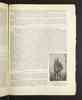
"JOHNNY BURKE NO NECK." Found on the Battlefield of Wounded Knee after the annihiliation of Big Foot's Band.
64
56
"How little I dreamed in the long ago that the lonely path of the scout and the pony express rider would lead me to the place to which you have assigned me to-day. And here, near the banks of the mighty Missouri, which flows onward to the sea, my thoughts revert to the early days of my manhood, when I looked across this rushing tide toward the East, to the Atlantic, where then I supposed that all men were rich and all women happy. My friends, that day has come and gone, and I stand among you a witness that nowhere in the broad universe are men richer in manly integrity and women happier in their domestic kingdom than in our Nebraska. (Great applause.)
"I have sought fortune in many lands, but wherever I have wandered that flag or our beloved State has been unfurled to every breeze. From the Platte to the Danube, from the Tiber to the Clyde, the emblem of our sovereign State has always floated over the Wild West. (Applause.) Time goes on and brings with it new duties and responsibilities, but we old men, we men who are called 'old timers,' cannot forget the trials and tribulations that we had to encounter while paving the path for civilization and national prosperity.
"The whistle of the locomotive has drowned the howl of the coyote, the barb-wire fence has narrowed the range of the cow-puncher, but no material evidence of prosperity can obliterate our contribution to Nebraska's imperian progress. (Applause.)
"Gentlemen of the Directory, I will not assume to comment upon what you have done to make this exposition the peer of all that have gone before. Far abler testimony than I can offer has sped on electric wings to the uttermost parts of the earth that what you have done in the interests of Nebraska has been well done. (Applause.)
"Through your kindness to-day I have tasted the sweetest fruit that grows on ambi tion's tree, and if you will extend that kindness and let me fall back into the ranks those rear ranks, as a high private in those ranks, that will be honor enough for me. (Applause.)
"Now, will you extend that kindness and let me call upon the Wild West, the Congress of Rough Riders of the World, to voice their appreciation for the kindess that you have extended to them to-day?"
At the signal of Colonel Cody the Wild West then gave three ringing cheers for Nebraska and the Trans-Mississippi Exposition. Their band followed with "The Red, White and Blue," and at the last note of the melody the McCook band played the "Star Spangled banner," and the Wild West fell into line for the parade through the grounds, headed by Colonel Cody, mounted upon the splendid chestnut hore, Duke, presented to him by General Miles soon after the batte of Wounded Knee. At the Administration Arch the cavalcade was reviewed by the members of the Executive Committee of the exposition.
THE OLD-TIME LIONS AT LUNCHEON.
The official and popular reception was notably supplemented by an informal luncheon given to the old-timers by Colonel Cody, and never before had such a party of representative pioneers met around the banquet table and exchanged reminiscences of the stirring days of their younger years. At one long table were seated Governor Holocomb at the head and General T. S. Clarkson at the foot, and on the sides ex-Governor John M. Thayer, James E. Boyd and Alvin Saunders, Senator John M. Thurston, Major John M. Burke, John A. Creighton, Alexander Majors, W. A. Paxton, Capt. J. E. North, E. Rosewater, Louis E. Cooke, Col. W. L. Virscher, ex-Secretary of Agriculture Norman J. Coleman of Missouri, and others. Over the champagne General Clarkson, who acted as toastmaster, called upon those present who were more or less given to oratory for sentiments befitting the occasion, and the result was a number of after-dinner speeches that would have done honor to any occasion that has ever been graced by eloquence in words. The theme was the upbuilding of the West, with Colonel Cody as a factor in guidng empire to the region, and, incidentally, reminiscences of pioneer times.
Ex-Governor Thayer expressed pride in the fact that he had commissioned Colonel Cody on his military staff and sent him abroad to acquaint the Old World with Nebraska's apulence of resource, in which the gallant Colonel had far exceeded what could have been hoped for in that time. He had not only carried to the Old World and its people the story of this great West, but had in the meantime become the associate of princes and potentate, who learned from this representative of the West, in a little time, more than decades of [recing?] might have taught them. The ex-Governor closed with an earnest commendation of his gallant staff officer, who, by the way, had been an honor to the military staff of all the succeeding Governors of Nebraska.
65
FROM TIEN-TSIN TO PEKIN - THE BATTLE AND RESCUE OF THE LEGATIONS.
The greatest historic event of 1900 was China's amazingly audacious affront to the civilized world, by her barbaric attack upon the official representatives, at her court, of the United States, Great Britian, Russia, Germany, France, Austria, Italy, Holland, and Spain. Such an outrage upon envoys was unprecedented in the world's history, and nothing else has ever inspired such an universal thrill of indignation.
RESCUE OF PEKIN.
At the time it was generally supposed that the ferocious hostility to foreigners developed by the Chinese was a sudden outbreak, the incitement to which was furnished by a fanatical sevret organization known as the "Boxers," but it was soon apparent, in the march of events, that the demonstration had long been premediated and was secretly approved and afterwards openly encouraged by the Chinese government.
Danger was already in the air as long ago as September, 1898, when the Empress Dowager seized the reins of government fron the then feeble hands of the reformer Emperor Kwang Hsu, and prudent men foresaw terrible consequences from the rapid growth of the "Boxer" movement in Shantung province through 1899. That movement, it is declared by the British Minister, Sir Robert Hart, "was patriotic in origin and justifiable in its fundamental idea." Perhaps it was, but when it passed from idea to action, its manifestation was simply a savage, unreasoning and uncompromising hostility to foreigners. Indifferent to the sentiments of the civilized world and reckless of consequences, the furious "Boxers" sought to exterminate the hated foreigners.
By the latter part of May, 1900, the "Boxers" movement had extended through Pecheli province and reached Pekin, where the conditions were recognized as so threatening that the foreign legations in Pekin called upon the war ships of their respective nationalities, off Taku, for an extraordinary guard of three or four hundred men to protect them.