
51
43
chamberlains. The sunlight fell upon lines of glittering steel, nodding plumes, golden chains, shimmering robes of silk, and all the blazing emblems of pontificial power and glory.
THE WILD WEST MAKE THEIR ENTREE.
Suddenly, a tall and chivalrous figure appeared at the entrance, and all eyes were turned toward him. It was COLONEL W. F. CODY, "BUFFALO BILL." With a sweep of his great sombrero, he saluted the chamberlains, and then strode between the guards with his partner, MR. NATE SALSBURY, by his side.
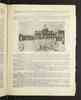
ST. PETER'S AND VATICAN, ROME.
"ROCKY BEAR" led the Sioux warriors, who brought up the rear. They were painted in every color that Indian imagination could devise. Every man carried something with which to make big medicine in the presence of the great medicine man sent by the Great Spirit.
"ROCKY BEAR" rolled his eyes and folded his hands on his breast as he stepped on tip toe through the glowing sea of color. His braves frutively eyed the halberds and two-handed swords of the Swiss Guards.
The Indians and cow-boys were ranged in the south corners of the Ducal Hall, COLONEL CODY and MR. SALSBURY were escorted into the Sextine Chapel by chamberlains, where they were greeted by Miss Sherman, daughter of General Sherman. A princess invited COLONEL CODY to a place in the tribune of the Roman nobles.
He stood facing the gorgeous Diplomatic Corps, surrounded by the Prince and Princess Borghesi, the Marquis Serlupi, Princess Bandini, Duchess di Grazioli, Prince and Princess Massimo, Prince and Princess Ruspoli, and all the ancient noble families of the city.
THE PAPAL BLESSING.
When the Pope appeared in the sedia gestatoria, carried above the heads of his guards, preceded by the Knights of Malta and a procession of cardinals and archibiships, the cow-boys bowed and so did the Indians. "ROCKY BEAR" knelt and made the sign of the cross. The Pontiff learned affectionately toward the rude group and blessed them. He seemed to be touched by the sight.
As the Papal train swept on, the Indians became excited, and a squaw fainted. They had been warned not to utter a sound, and were with difficulty restrained from whooping. The Pope looked COLONEL CODY intently as he passed, and the great scout and Indian fighter bent low as he received the Pontificial benediction.
After the Thanksgiving Mass, with its grand choral accompaniment, and now and then the sound of Leo XIII's voice heard ringing through the chapel, the great audience poured out of the Vatican.

52
ROMAN WILD HORSES
TAMED BY COW-BOYS. RIDDEN IN FIVE MINUTES. HOW "BUFFALO BILL'S" COW-BOYS TAMED THE ROMAN WILD HORSES.
(Per the Commercial Cable to the "Herald.") ROME, 4TH MARCH, 1890.
All Rome was to-day astir over an attempt of "BUFFALO BILL'S" cow-boys with wild horses, which were provided for the occasion by the Prince of Sermoneta.
Several days past the Roman authorities have been busy with the erection of specially cut barriers for the purpose of keeping back the wild horses from the crowds.
The animals are from the celebrated stud of the Prince of Sermoneta, and the Prince himself declared, that no cow-boy in the world could ride these horses. The cow-boys laughed over this surmise, and then offered, at least, to undertake to mount one of them, if they might choose it.
Every man, woman and child expected that two or three people would be killed by this attempt.
The anxiety and enthusiasm were great. Over 2,000 carriages were ranged round the field, and more than 20,000 people lined the spacious barriers. Lord Dufferin and many other diplomatists were on the Terrace, and amongs Romans were presently seen the con sort of the Prime Minister Crispi, the Prince of Torlonia, Madame Depretis, Princess Colonna, Gravina Antonelli, the Baroness Reugis, Princess Brancaccia, Grave Giannotti, and critics from amongst the highest aristocracy. In five minutes the horses were tamed.
Two of the wild horses were driven without saddle or bridle in the Arena. "BUFFALO BILL" gave out that they would be tamed. The brutes made springs into the air, darted hither and thither in all directions, and bent themselves into all sorts of shapes, but all in vain.
In five minutes the cow-boys had caught the wild horses with the lasso, saddled, sub dued and bestrode them. Then the cow-boys rode them round the Arena, whilst the dense crowds of people applauded with delight.
AMERICAN WILD WEST EXHIBITION.
Editorial from the "London Times," Nov. 1, 1887.--The American Exhibition, which has attracted all the town to West Brompton for the last few months, was brought yesterday to an appropriate and dignified close. A meeting of representative Englishmen and Americans was held, under the presidency of Lord Lorne, in support of the movement for establishing a Court of Arbitration for the settlement of disputes between the country and the United States. At first sight it might seem to be a far cry from the Wild West to an International Court. Yet the connection is not really very remote. Exhibition of American products and scenes from the wilder phases of American life certainly tend in some de gree at least to bring Amer ica nearer to England. They are partly cause and partly effect. They are the effect of increased and in creasing intercourse be tween the two countries, and tey tend to promote a still more intimate under standing. The two things, the Exhibition and the Wild West show, supple mented each other. Those who went to be amused often staid to be instructed. The Wild West was irresist ible. COLONEL CODY sud denly found himself the hero of the London season.
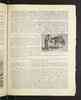
THE FIGHTING CHIEF, KICKING BEAR, AND STAFF, CAMPAIGN 1891. PINE RIDGE.
53
45
Notwithstanding his daily engagements and his punctual fulfillment of them, he found time to go everywhere, to see everything, and to be seen by all the world. All London con tributed to his triumph, and now the close of his show is selected as the occasion for promot ing a great international movement with Mr. Bright, Lord Granville, Lord Wolseley and Lord Lorne for its sponsors. Civilization itslef consents to march onward in the train of "BUFFALO BILL." COLONEL CODY can achieve no greater triumph than this, even if he some day realizes the design attributed to him of running the Wild West Show withing the classic precincts of the Colosseum at Rome.
The association of the cause of international arbitration with the fortunes of the American Wild West is now without its grotesque aspects. But it has a serious import, never theless. After all, the Americans and the English are one stock. Nothing that is American comes altogether amiss to an Englishman. We are apt to think that American life is not picturesque. We have been shown one of its most picturesque aspects. It is true that "RED SHIRT" would be as unusual a phenomenon in Broadway as in Cheapside. But the Wild West for all that is racy of the American soil. We can easily imagine Wall Street for ourselves; we need to be shown the cow-boys of Colorado. Hence it is no paradox to say that COLONEL CODY has done his part in bringing American and England nearer together.
A GREAT PONY-EXPRESS RIDE.
While riding pony-express between Red Buttes and Three Crossings, seventy-six miles, CODY had a dangerous and lonely route, includ ing crossing of the North Platte River, one-half mie wide, often much swollen and turbulent. An average of fiteen miles an hour had to be made, including changes of horses, detours for safety, and time for meals.
On reaching Three Crossings, finding the rider on the next division, a route of eighty-six miles, had been killed during the night before, he made the extra trip on time. This round trip of three hundred and twenty-four miles was made without a stop, except for meals and change of horses, one of the longest and best-ridden pony-express journeys ever made. Buell's History of the Plains.
"MAJOR" BURKES APPEAL FOR A PEACEFUL SOLUTION OF THE INDIAN TROUBLE.
[From the Washington Post.]
Perhaps one of the most eloquent and effective pleas for a peaceful solution of the Indian trouble was that made by MAJOR JOHN M. BURKE, at the famous conference in the Ogallalla camp on the 17th of January, when negotiating for the Indians' surrender with Capt. Lee. The proceedings, as reported for the Department, gives Major Burke's remarks as follows:
"My friends, I came here on the invitation of many of my Ogallalla friends who know me. I am happy to sit down among you to-day, because it is so much quieter than for some weeks. I do not come here in behalf of the Government, or any society, but because I travel and live with the Indians, and they are my friends for many years. When I first heard of this trouble, GEN. CODY ('BUFFALO BILL') sent me to do what I could for you. I have been here eight or nine weeks--have listened heard and seen a great deal. From the first I saw no necessity for this trouble. A great deal of it came from a misunderstanding and the lack of confidence among the Indians as regards the intention of the Government. Our friend, Capt. Lee, does not carry arms, neither do I. While it looked like peace daily you were just like scared birds, ready to stampede at any time. I am going to Washington to see the great counsellors, and I want to be able to say that when I left all was peace, and that the Indians fully understood Gen. Miles' intention. I want you to place every confience in him. When the earth loses soemthing God sends something else, and when God took you friend Gen. Crook he sent you Gen. Miles, who is now your benefactor. The foundation of all good in men is truth and honor. When a man has these foundations he has right, and can stand open handed and talk for his rights. he needs no gun, which is dangerous and causes
54
46
trouble. You have thousands of friends in the East. Gen. Miles and Capt. Lee can reach those friends. I have this confidence: there will be no war on the part of Ge. Miles, if you give up your arms, because through military discipline he can control his men, as soldiers have no interst to shoot indians. Tell your young men to be calm and have confidence in Gen. Miles, who will see you through. But you must discipline and control you young men. Let every man who talks mean what he says, and not talk to evade the question. I, to show you what confidence I have in Gen. Miles that he will not fire upon you and your women and children when you are disarmed, I will promise to live in your camp until you have confidence that the white chief will see no harm come to you. I am glad to hear that some chiefs are going to Washington, and hope, instead of ten, twenty or twenty-five will go. I will be there to see you, and may go with you. I will do all I can in my humble way for you. Let us all work for peace between the white men and the red—not for a moment, a day, a year, but for ever, for eternity."
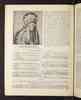
"WHITE CLOUD," Ogallala Sioux, War Chief of the Sioux Nation, Fighting Chief of the Ghost Dancers.
BILL CODY —(BY AN OLD COMRADE.)
You bet I knew him, partner, he ain't no circus fraud, He's Western born and Western bred, if he has been late abroad; I knew him in the days way back, beyond Missouri's flow, When the country round was nothing but a huge Wild Western Show. When the Injuns were as thick as fleas, and the man who ventured through The sand hills of Nebraska had to fight the hostile Sioux; These were hot times, I tell you; and we all remember still The days when Cody was a scout, and all the men knew Bill.
I knew him first in Kansas, in the days of '68, When the Cheyennes and Arapahoes were wiping from the state Old scores against the settlers, and when men who wore the blue, With shoulder-straps and way-up rank, were glad to be helped through By a bearer of dispatches, who knew each vale and hill, From Dakota down to Texas, and his other name was Bill.
I mind met, too, of '76, the time when Cody took His scouts upon the Rosebudl along with General Crook When Custer's Seventh rode to their death for lack of some such aide To tell them that the sneaking Sioux knew how to ambuscade; I saw Bill's fight with "Yellow Hand," you bet it was a "mill," He downed him well at thirty yards, and all the men cheered Bill.
They tell me that the women folk now tak his word as laws. In them days laws were mighty skerce, and hardly passed with squaws, But many a hardy settler's wife and daughter used to rest More quietly because theu knew of Cody's dauntless breast; Because they fel from Laramie way down to Old Fort Sill, Bill Cody was a trusted scout, and all thier men knew Bill.
I haven't seen him much of late, how does he bear his years? They say he's making ducats now from shows and not from "steers," He used to be a judge of "horus," when poured in a tin cup, And left the wine to tenderfeet, and men who feld "well up." Perhaps he cracks bottles now, perhaps he's had his fill. Who cares, Bill Cody was a scout, and all the world knows Bill.
To see him in his trimmin's, he can't hardly look the same, With laundered shirt and diamonds, as if "he run a game;" He didn't wear biled linen then, or flash up diamond rings, The royalties he dreamed of then were only pasteboard kings, But hose who sat behind the queens were apt to get their fill. In the days when Cody was a scout, and all the men knew Bill.
Gridiren Club, Washington, D. C., Feb. 28, 1893.
WM. E, ANNIN, Lincoln (Neb.) Journal.
MACUALAY'S NEW ZEALANDER.—THE LAST OF THE MOHICANS.—THE LAST OF THE BUFFALO
From Manchester Courter, April, 1888
An addition which has just been made to the United States Nationa Museum at Washington affords important subsidiary evidence, if such were needed, of the unique interest attending the extraordinary exhibition at Manchester illustrative of the Wild West. Natu

55
47
ralists have not too soon become alive to the remarkable fact that those shaggy monarchs of the prairie, the ponderous buffalo tribe, are well-nigh extinct. They have dwindled away before the exterminating tread of the hunter and the march of the pioneer of civilization. The prairie no longer shakes beneath the impetuous advance of the mighty herd, and even individual specimens are becoming scarce. The representatives of the Smithsonian Museum in America therefore sent out an expedition into the West in search of what buffaloes there might be remaining, in order that the country might preserve some memento of the millions of the American papers describes this as the transference of a little bit of Montana--a small square patch from the wildest part of the Wild West--to the National Museum. The idea is one which is exactly applicable to COLONEL W. F. CODY's collection, which is approaching its last days of residence among us. Those scenes in which the primeval forest and the vast expanse of prairie are represented, with elk and bison careering about, chased by the hunter and the scout, is a transference from the Wild West which, as we now learn, should be even more interesting to the naturalist than it is to either the artistic or the historical student. We leave out of view for the moment the ordinary spectator who goes only to be amused or entertained, independently of any instruction that may be afforded. These scenes, moreover, are all the more interesting to the ethnological student because of the association with them of the red men who have been indigenous to the prairies and their surroundings. The occupation of Uncas, like Othello's, is gone; palatial buildings and busy streets have succeeded to the wigwam and the hunting grounds, and the successor of Fenimore Cooper may find his representative Indians, not where the hunting knife and tomahawk are needed, but in the arena of mimic battle and adventure. The Indian is going out with the buffalo; mayhap we shall ere long see the last of his descendants, with the contemplative gaze of Macaulay's New Zealander, sitting before the group in the Smithsonian Museum, looking upon the last representatives of the extinct buffalo, fixed in its prairie-like surroundings. These considerations of facts which force themselves upon the imagination, distinctly enhance the interest of those "pictures" from the Wild West presented with such force and realism by the ruling genius who, anent the purport of these relections, is so appropriately named "BUFFALO BILL." In the course of a very short time these pictures will permanently vanish from English soil, as they are to be produced in America soon, and it may be expected that those in arrears in information respecting them, and who appreciate, as they deserve to be appreciated, their instructive features, will give to them a conecentrated attention ere it is too late.
A POSITION DIFFICULT TO ATTAIN.--A "PLAINS CELEBRITY."--A TITLE IMPERISHABLE.
To gain great local and national fame as a "plains celebrity" in the days of old was not an easy task; rather one the most competetive struggles that a young man could possibly engage in. The vast, comparatively unknown, even called Great American Desert of twenty-five and thirty years ago was peopled only by the descendants of the sturdy pioneers of the then Far West--Illinois, Missouri, Arkansas, Iowa, Minnesota, Kansas, etc., born, raised, and used to hardships and danger--and attracted only the resolute, determined adventurers of the rest of the world, seeking an outlet for pent-up natures, imbued with love of daring adventure. Hundreds of men achieved local, and great number national fame for the possession of every manly quality that goes to make up the romantic hero of that, once dark and bloody ground. When is brought to mind the work engaged in, the carving out of the advance paths for the more domestically inclined settler, of the dangers and excitements of hunting and trapping, of carrying dispatches, stage driving, freighting cargoes of immense value, guiding successfully the immense wagon trains, gold hunting--it is east to conceive what a class of sturdy, adventurous young spirits entered the arena to struggle in a daily, deadly, dangerous game to win the "bubble reputation." When such an army of the best human material battled for supremacy, individual distinction gained by the unwritten law of unprejudiced popular promotion possessed unless fairly, openly, and justly won a prize so pure that its ownership, while envied, crowned the victor with the friendship, following an admiration of the contestants. Thus Boone, Crockett, Carson, Beal, Fremont, Cody, Bridger, Kinman, Hickok, Cosgrove, Comstock, Frank North, and others, will live in