
66
Passing rapidly through the, to them, marvelous experience of the railroad, and its flying express train, the sight of towns, villages, cities, over valley, plain, and mountain - to the magic floating house (the steamer), sadly learning, while struggling with mal de mer, the existence of the "big waters" that tradition alone had bruited to incredulous ears, these red men passed the first portion of a tempestuous voyage, which landed them, wonderingly surprised at the sight of thousands of white men peacefully greeting their arrival, in the busy commercial mart of Antwerp.
After introducing the Indians to hotel life for the first time, a tour of the city was made, among the notable points visited being the Cathedral, which grand edifice aroused their curiosity. The grand picture, Rubens' "Descent from the Cross," brought to the minds of all - white men, "friendlies," and "hostiles" - the contributing cause of the late regrettable campaign, the "Messiah craze" - an interest intensified by the fact that the aesthetic - looking "SHORT BULL" and some of the others had been the leading fanatical believers (probably, even apparently, conscientious), promoters and disciples of the still mysterious religious disease that lately agitated the Indian race in America. In fact, after the deathe of "SITTING BULL," the central figures of this stage belief were "SHORT BULL" as the religious leader, and "KICKING BEAR" as the War Chief. Grouped together with "SCATTER," "REVENGE," and others, in moody contemplation of this subject, was the late defier of a mighty nation of 65,000,000 people, nearly all of whom teach or preach the truthfulness of the picture's traditions
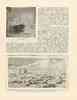
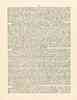
AFTER THE BATTLE, - FIELD OF WOUNDED KNEE. - CAMPAIGN 1890-91.
67
57 a man in two short months tranšported from the indescribably desolate, almost inaccessible natural fortresses of the Bad Lands (Mauvaise Terre) of Dakota to the ancient city of Antwerp, gazing spellbound on the artistic reproduction, by the renowned artist, of the red man's late dream, "The Messiah." Respect for his thoughts and the natural stoical nature of the Indian leaves to future opportunity an interesting interrogative of what passed through the mind of the subtle chief. Suffice it to say that surprise at the white man's many-sided character, and the greatness of his resources in the past and present, was beginning to dawn more and more on the new tourists. Arriving the next day at Strasburg-introduction to the cow-boys, the camp life, the Cathedral, the great clock, the fortifications, etc., was followed by the delight of each brave on receiving his pony; and once more with his trusty friend, the horse, the Ogallala and Brule in a few days felt as though "Richard was himself again." Joining more heartily than was expected in the mimic scenes of the "Wild West," soon the ordinary routine of daily duties seemed a pleasant diversion. A grand reception in Strasburg, the tour resumed to Carlsruhe, Mannheim-including a visit to Heidelberg Castle- Mayence, Wiesbaden, to Cologne (the Rhine legends of Lurline, etc., giving interest to the Peau Rouge en route), Dortmund, Duisburg, Crefeld and Aix-la-Chapelle terminated tour of Germany filled with the most pleasant recollections. The tomb of Charlemagne! (Carolo Magno). The history of this great warrior was interpreted to attentive cars, a lesson being instilled by the relation that after all his glory, his battles, triumphs, and conquests in which he defeated the dusky African prototypes of the present visitors to his tomb, peace brought him to pursue knowledge, to cultivate the arts and sciences, and that after two hundred years of entombment his body was found by Otto, the Saxon, sitting erect upon a granite throne, the iron crown upon his head, imperial scepter in right hand, while his left rested on an open volume of Holy Scriptures, the index finger pointed to the well-known passage," What will it profit a man if he gains the whole world and lose his own soul?" Here, by the grave of the founder of Christianity, stood the latest novitiates to its efforts, who may yet, in following its teachings, it is hoped, make such progress through its aid and education as to furnish one of their race capable of holding the exalted chieftainship-the Presidency of their native land-the Empire of the West. Who can say-why not? Belgium-Brussels, its Paris, brings vividly to mind, in its semblance of language, people, habits, beauty, wealth, culture and appreciation, remembrances of our delightful sojourn in the capital of the how-truly-named La Belle France. Visit Waterloo. From Pine Ridge to historic Waterloo! Our immense success, courteous treatment, the repeated visits and kindly interest of that most amiable lady, the Queen, an enthusiastic horsewoman, her pleasant reference to London in the Jubilee year, combined to increase the gratitude the Wild West voyagers feel for the treatment everywhere received in Europe since, in 1887, we invaded "Old England," and pitched our tents in the World's Metropolis-London. So, after a short season in Antwerp, our motley cargo set sail across the North Sea to make complete our farewell visit to our cousins of the isle, revel in a common language (bringing a new pleasure to the ear), hoping to receive a continuance of that amicable appreciation of our humble efforts that the past seemed to justify. Landing at Grimsby and proceeding to Leeds in Yorkshire, we commenced a provincial tour of Great Britain. The reception everywhere accorded us was so hearty in its nature that a sentiment of relationship insensibly permeated the Yankee exiles. From Leeds we went to Liverpool, the great shipping port, thence to Manchester, where old friendships were renewed and new ones formed-notable event being a benefit to nineteen of the Balaclava survivors (who were indigent), resulting in great success, not only financially, but from an historic point, because of the participation in our performance of three generations, the past, present and future English soldier-in the battle-scarred veterans; the Prince of Wales' Own (Lancers) and the boy cadets of the city. Sheffield with its busy factories was next visited, and the Indian found a new cause for amazement in the world's cutlery city. Stoke-on-Trent, with its marvelous Wedgewood ware works and other innumerable pottery industries, gave another lesson in Caucasian progress, and opened to the red man new wonders in the art of table decoration. Nottingham with its busy once looms, Leicester of historic interest, and Birmingham with its mammoth iron plants, in order challenged the admiration and assisted to educate the son of the forest. Cardiff (Wales), in energy and "git up" quite an American city, having increased in population and wealth 55 percent. in nine years, remains on our ledger as a banner six days' stand, the receipts exceeding f10,000 ($50,000), the R. R. stocks rising on the market and one restaurant alone feeding 15,000 extra dinners to the visiting Welshmen. To Bristol, the famous West of England seaport, and thence to Portsmouth-Devonport. The great naval-
68
58
military-commercial twin cities combined to render our visit to the South of England profitable and enjoyable. Brighton with its beauty in repose and its terror in a cyclone will long be remembered as our last stop before going to Glasgow (Scotland), where the winter was spent in a specially arranged building. Here we were made acquainted with th many sturdy virtues of the Scot, and here 6,000 orphan children, impromptu, sang, "Yankee Doodle" on appearance of the starry flag. Glasgow will ever be remembered for the many piblic and social courtesies extended.
A return to the scene of our London triumphs brought a renewal of all that was pleasant and agreeable in our former experience, and brought our visit to the Old World to a close with the bright compliment under the circumstances (the Court in morning for Prince Albert Victor) of a Royal request to exhibit before her Most Gracious Majesty the Queen of England and Empress of India, at Windsor Castle; who was thust the first and only potentate on earth to view, as yet, the Wild West in conjunction with the Rough Riders of the World.
Leaving England with genuine expressions of regret from thousnads who witnessed our departure, we boarded at Tillbury Docks in London the good American liner, Mohawk, traversing the North Sea, the English Channel and the broad Atlantic. Landing at Jersey City, the usual scenes attendant occurred, with nothing to mar the occasion, if I may except one instance in our little circle, which to a certain extent had its tragic side. It was only a white horse, but a well-known horse; a horse whose picture the public will remember in conjunction with Colonel Cody's, placarded on all walls and exhibited in all windows; a horse who possibly, with his rider, appeared in more cities and before more people of distinction, rank, wealth and character, then ever did steed before. The fact that he was the companion of Colonel Cody's last war horse, "Charley," who died and was buried at sea upon our first return voyage, and that, singular to relate, without any premonitory symptoms of sickness and never looking better in his life, "Billy" walked off the gang-plank, neighed as his hoofs struck his native shore, and dropped dead—is food for thought that each one may assimilate. However small it may seem, this pathetic incident will always be remembered by the returning voyagers, as "Billy" and "Charley" were favorite members of the "Old Guard."
The writer followed the sun on its westward course with his Red Brother, and it would take a chapter to describe the scenes at the grand reception at the foothills of the Rockies upon the return to the Ogallallas of the various bands—among them many of the Ghost Dance prisoners, now changed by experience—where the camp fires and dances of their friends showed the savage nature to possess the same warm sentiment towards loved ones as that which animates more civilized men.
THE powerful, practical, patriotic incluence of Buffalo Bill's Wild West and Congress of Rough Riders of the World as a mighty and masterly National Object Teacher was strikingly manifested in the suggestion, formation, and even the popular naming of the most fearless and famous single military organization in all martial annals—Teddy Roosevelt's Regiment of Rough Riders.
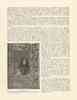
"LITTLE EMMA," INDIAN GIRL, DAUGHTER OF THE OGALLALLA CHIEF, "LONE WOLF."

69
59
[Image]
THE CROWNING DAY IN COLONEL CODY'S LIFE.
NEBRASKA'S OVATION TO HER FAMOUS SON AT THE GREAT OMAHA TRANS-MISSISSIPPI EXPOSITION.
In 1883, the year of its organization and upon a much less comprehensive and colossal scale than it has since attained, Colonel Cody presented his now world-famous "Wild West" at Omaha. Fifteen years later, on the 31st day of last August, and on the same spot previously occupied by his arena, he again appeared, and this time as the invited and honored guest of the State of Nebraska and of the great Trans-Mississippi Exposition. There were gathered to enthusiastically and proudly welcome him some thirty thousand people, including the most prominent officials and political leaders of Nebraska and her representative pioneers and business men. Although within the period of a decade and a half his name had grown to be a household word in every land, he had become the most widely known and lionized man of his generation, had met with continuous ovations from applauding millions in both Europe and America, in which the mightiest of rulers, the most renowned of soldiers, the most distinguished of statesmen and diplomats, the first of savants, and the beauty, wealth, power and culture of the world had participated, yet to him "Cody Day" was infinitely and inexpressibly the most gloriously gratifying triumph of his memorable life, involving the highest compliment ever paid by any sovereign state, community or association to a private citizen.
At eleven o'clock on the morning of that red-letter day, Colonel Cody, leading his "Congress of Rough Riders of the World," and accompanied by the reception committee and guests of honor in carriages, reached the main entrance to the exposition, where he was received by General Manager Clarkson and a delegation of one hundred and fifty mounted chiefs and warriors from the Indian encampment. As the brilliant cavalcade filed into the open space before the grand stand where the official reception was to be held it was greeted with prolonged and vociferous cheers from the vast assemblage, overflowing the plaza and every adjacent vantage point of view. When Colonel Cody dismounted and ascended the platform there was a mighty roar of welcome, at the conclusion of which General Manager Clarkson addressed him as follows:
"Mr. Cody, it is a source of great regret to the President of this exposition that official duties prevent his presence here this morning, and in his behalf he has asked me to give you a most cordial welcome to these exposition grounds. It is extremely fitting, sir, that you should have such a testimonial as this, here, at the very starting point of your earliest career, and as a man who has presented to all parts of America and to foreign countries the customs of the West, and given it a place beside the great Congress of all Nations. We bid you a most cordial welcome here, sir, and assure you that your success in life throughout your career is merited and deserved. (Applause.) I will now introduce Governor Holcomb of the State of Nebraska, who will give you a welcome."
A CAREER WATCHED WITH PERSONAL INTEREST.
In the course of an eloquent tribute, the Governor said: "The large number that have gathered here testify to the interest that we of Nebraska feel in you and in the great enterprise which you have carried on so successfully and so creditably throughout the entire
70
60 world. We have watched with personal interest your career and your movements, and it is a source, I know, of personal pleasure to a large number of the citizens of Nebraska to see you, whom we look upon as one of our fellow citizens, return again and make a triumphal entry into the metropolitan city of the State and into this great exposition that has sprung up here in the last few months. It is fitting, it seems to me, that you should come here at this time, represented as you are by these people from all countries. This entertainment and exhibition which you give, which has been denominated and known as a Wild West show, is an entertainment started and having its inception on Nebraska soil many years ago, begun by a Nebraskan who in his early manhood came into the State in its earlier years, when it was indeed a wild and western State, and few persons perhaps were in this entire western country, this magnificent domain that has developed as no other country under the sun has developed in the last quarter of a century. In your earlier days, Colonel Cody, throughout this western country, you knew what the wild west was, and yet you have seen it gradually subdued by the civilizing influence of mankind, until we have to-day a civilization, not as you give it, showing that which existed a quarter of a century ago, but a civilization embracing all that is best for mankind. I dare say, we witness here to-day what perhaps we will never again witness in the State of Nebraska, or in the western part of our grand United States. We see here the representatives of so many people of so many different countries; we may never again see so many different peoples assembled together as we witness here to-day-the representatives of the original aboriginal tribes of these United States, two dozen or more of those who in years gone by inhabited these broad prairies, chased the buffalo and the deer undisturbed, who have been going further and further toward the setting sun, until to-day we see them here under such circumstances as we now witness. It is an inspiring, an instructive, an educational scene, and we draw lessons from it and appreciate the cause of it. There is a constant change and evolution in the progress of human society, and it more firmly impresses itself upon our minds when we witness this gathering. I extend to you, Colonel Cody, on behalł of the people of the State of Nebraska, your own State, a most cordial welcome on your return to our borders." (Great applause.) In introducing the next speaker, General Clarkson said: "Here is
THE FATHER OF THEM ALL,
Alexander Majors, connected with the very earliest history of Nebraska, and the business father of Colonel Cody." Mr. Majors was given a reception only second in enthusiasm to that which was accorded the hero of the day as he grasped Colonel Cody's hand and turned to speak of the man from the intimate acquaintance of a life-time. He said: "Gentlemen and my boy, Colonel Cody (laughter)-can I say a few words of welcome? Friend Creighton and I came down here together today and he thought I was not equal to the occasion at this time, but I am going to do the best for you that I can. Give me your hand, Colonel. Gentlemen, forty-four years ago this day this fine-looking physical specimen of manhood was brought to me by his mother-a little boy 9 years old and little did I think at that time that the little boy that was standing before me, asking for employment of some kind by which I could afford to pay his mother a little money for his services, was going to be a boy of such destiny as he has turned out to be. (Applause.) In this country we have great men; we have great men at Washington; we have men who are famous as politicians in this country; we have great statesmen; we have had Jackson and Clay, and we had a Lincoln. We have men great in agriculture and in stock growing, and in the manufacturing business, who have made great names for themselves, who have stood high in the nation. We had a Barnum in the show business. Next, and even greater and higher, we have a Cody. (Tremendous applause.) He, gentlemen, stands not at the head of the showmen of the United States of America, but of the world. (Great applause.) Little did I think this, gentlemen, at the time this little boy came to me, standing straight as an arrow; and he came to me and looked me in the face, you know, and I said to my partner, 'We will take this little boy-Mr. Russell was standing by my side-and we will pay him a man's wages because he can ride a pony just as well as a man can.' He was lighter and could do just the same service, just as good service of that kind, when he was a little boy just 9 years old. I remember when we paid him $25 for his first month's work; he was paid