
51
41 trouble. You have thousands of friends in the East. Gen. Miles and Capt. Lee can reach those friends. I have this confidence: there will be no war on the part of Gen. Miles, if you give up your arms, because through military discipline he can control his men, as soldiers have no interest to shoot Indians. Tell your young men to be calm and have confidence in Gen. Miles, who will see you through. But you must discipline and control your young men. Let every man who talks mean what he says, and not talk to evade the question. I, to show you what confidence I have in Gen. Miles that he will not fire upon you and your women and children when you are disarmed, I will promise to live in your camp until you have confidence that the white chief will see no harm come to you. I am glad to hear that some chiefs are going to Washington, and hope, instead of ten, twenty or twenty-five will go. I will be there to see you, and may go with you. I will do all I can in my humble way for you. Let us all work for peace between the white men and the red - not for a moment, a day, a year, but for ever, for eternity."
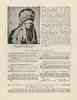
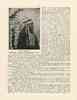
{image} "WHITE CLOUD." Ogallalla Sioux, Was Chief of the Sioux Nation, Fighting Chief of the Ghost Dancers.
BILL CODY. - (BY AN OLD COMRADE./
You bet I knew him, pardner, he ain't no circus fraud, He's Western born and Western bred, if he has been late abroad; I knew him in the days way back, beyond Missouri's flow, When the country round was nothing but a huge Wild Western Show. When the Injuns were as thick as fleas, and the man who ventured through The sand hills of Nebraska had to fight the hostile Sioux; These were hot times, I tell you; and we all remember still, The days when Cody was a scout, and all the men knew Bill.
I knew him first in Kansas, in the days of '68, When the Cheyennes and Arapahoes were wiping from the slate Old scores against the settlers, who wore the blue, With shoulder-straps and way-up rank, were glad to be helped through By a bearer of dispatches, who knew each vale and hill, From Dakota down to Texas, and his other name was Bill.
I mind me, too, of '76, the time when Cody took His scouts upon the Rosebud ; along with General Crook When Custer's Seventh rode to their death for lack of some such aide To tell them that the sneaking Sioux knew how to ambuscade; I saw Bill's fight with "Yellow Hand," you bet it was a "mill," He downed him well at thirty yards, and all the men cheered Bill.
They tell me that the women folk now take his word as laws, In them days laws were mighty skerce, and hardly passed with squaws, But many a hardy settler's wife and daughter used to rest More quietly because they knew of Cody's dauntless breast; Because they felt from Laramie way down to Old Fort Sill, Bill Cody was a trusted scout, and all their men knew Bill.
I haven't seen him much of late, how does he bear his years? They say he's making ducats now from shows and not from "steers," He used to be a judge of "horns," when poured in a tin cup, And left the wine to tenderfeet, and men who felt "well up." Perhaps he cracks a bottle now, perhaps he's had his fill. Who cares, Bill Cody was a scout, and all the world knows Bill.
To see him in his trimmin's, he can't hardly look the same, With laundered shirt and diamonds, as if "he run a game;" He didn't weat biled linen then, or flash up diamond rings, The royalties he dreamed of then were only pasteboard kings, But those who sat behind the queens were apt to get their fill. In the days when Cody was a scout, and all the men knew Bill.
Gridiron Club, WM. E. ANNIN, Washington, D. C., Feb. 28, 1891. Lincoln (Neb.) Journal.
MACAULAY'S NEW ZEALANDER. - THE LAST OF THE MORICANS. - THE LAST OF THE BUFFALO
From Manchester Courier, April, 1888.
An addition which has just made to the United States National Museum at Washington affords important subsidiary evidence, if such were needed, of the unique interest attending the extraordinary exhibition at Manchester illustrative of the Wild West. Natu-
52
42
ralists have not too soon become alive to the remarkable fact that those shaggy monarchs of the prairie, the ponderous buffalo tribe, are well-nigh extinct. They have dwindled away before the exterminating tread of the hunter and the march of the pioneer of civilization. The prairie no longer shakes beneath the impetuous advance of the mighty herd, and even individual specimens are becoming scarce. The representatives of the Smithsonian Museum in America therefore sent out an expedition into the West in search of what buffaloes there might be remaining, in order that the country might preserve some memento of the millions of those animals which not many years ago roamed over the prairies. Twenty-five animals in all captured, six of which have been arranged in a group for exhibition. One of the American papers describes this as the transference fo a little bit of Montana- a small square patch from the wildest part of the Wild West- to the National Museum. The idea is one which is exactly applicable to COLONEL W. F. CODY's collection, which is approaching its last days of residence among us. Those scenes in which the primeval forest and the vast expanse of prairie are represented, which elk and bison careering about, chased by the hunter and the scout, is a transference from the Wild West which, as we now learn, should be even more interesting to the naturalist than it is either the artistic or the historical student. We leave out of view for the moment the ordinary spectator who goes only to be amused or entertained, independently of any instruction that may be afforded. These scenes, moreover, are all the more interesting to the ethnological student because of the association with them of the red men who have been indigenous to the prairies and their surroundings. The occupation of Uncas, like Othello's, is gone ; palatial buildings and busy streets have succeeded to the wigwam and the unting grounds, and the successor of Fenimore Cooper may find his representative Indians, now where the hunting knife and tomahawk are needed, but in the arena of mimic battle and adventure. The Indian is going out with the buffalo ; mayhap we shall ere long see the last of his descendants, with the contemplative gaze of Macaulay's New Zealander, sitting before the group in the Smithsonian Museum, looking upon the last representative of the extinct buffalo, fixed in its prairie-like surroundings. These considerations of facts which force themselves upon the imagination, distinctly enhance the interest of those pictures "from the Wild West presented with such force and realism by the ruling genius who, anent the purport of these reflections, is so appropriately named "BUFFALO BILL." In the course of a very short time these pictures will permanently vanish from English soil, as they are to be produced in America soon, and it may be expected that those in arrears in information respecting them, and who appreciate, as they deserve to be appreciated, their instructive features, will give to them a concentrated attention ere it is too late.
A POSITION DIFFICULT TO ATTAIN. - A "PLAINS CELEBRITY." - A TITLE IMPERISHABLE.
To gain great local and national fame as a "plains celebrity" in the days of old was not an easy task ; rather one of the most competitive struggles that a young man could possibly engage in. The vast, comparatively unknown, even called Great American Desert of twenty-five and thirty years ago was peopled only be the descendants of the sturdy pioneers of the then Far West - Illinois, Missouri, Arkansas, Iowa, Minnesota, Kansas, etc., born, raised, and used to hardships and danger - and attracted only the resolute, determined adventurer or the rest of the world, seeking an outlet for pent-up natures, imbued with love of daring adventure. Hundreds of men achieved local, and great numbers national fame for the possession of every manly quality that goes to make up the romantic hero of that once dark and bloody ground. When is brought to mind the work engaged in, the carving out of the advance paths for the more domestically inclined settler, the dangers and excitements or hunting and trapping, or carrying dispatches, stage driving, freighting cargoes of immense vague, guiding successfully the immense wagon trains, gold hunting - it is easy to conceive what is class of sturdy, adventurous young spirits entered the arena to struggle in a daily, deadly, dangerous game to win the "bubble reputation." When such an ary of the best human material battled for supremacy, individual distinction gained by the unwritten law of unprejudiced popular promotion possessed a value that made its acquirer a "plains celebrity," stamped indelibly with an honored title rarely possessed unless fairly, openly, and justly won- a prize so pure that its ownership, while envied, crowned the victor with the friendship, following the admiration of the contestants. Thus Boone, Crockett, Carson, Beal, Fremont, Cody, Bridger, Kinman, Hickok, Cosgrove, Comstock, Frank North, and others, will live to
53
43
the romance, the poetry, and the history of their each distinctive work forever. The same spirit and circumstances have furnished journalists innumerable, who in the West imbibed the sterling qualities they afterward used to such effect. Notably Henry M. Stanley, who (in 1866) saw the rising sun of the young empire that stretches to the Rockies; Gen. Greenly, of Artic fame (now of Signal Service), and the equally scientific explorer, Lieut. Schwarks, passed their early career in the same school, and often followed "the trial" led by "BUFFALO BILL"; Finnerty (of the "Chicago Times"); "Modoe" Fox and O'Kelly (of the "New York Herald"), 1876; while later on new blood among the scribblers was initiated to their baptism of fire by Harries (of "Washington Star"), McDonough ("New York World"), Bailey (of "Inter-Ocean"), brave young Kelly (of the Lincoln Journal"), Cressy (of the "Omaha Bee"), Seymour ("Chicago Herald"), and Allen (of the "New York Herald"), present in the battle, who were honored by three cheers from "Old White Top" Forsythe's gallant Seventh Cavalry, the day after the battle of "Wounded Knee," as they went charging over Wolf Creek to what came near being a crimson day, to the fight "down at the Mission."
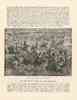
UNITED STATES CAVALRY PRACTICE DRILL.
HIS MILITARY RANK AND REFERENCES.
GENERAL CODY holds his commission in the NATIONAL GUARD of the United States (State of Nebraska), an honorable position, and as high as he can possibly attain. His connection with the Regular United States Army has covered a continuous period of fifteen years, and desultory connection of thirty years, in the most troublous era of Western history, as Guide, Scout and Chief of Scouts- a position unknown in any other service, and for the confidential nature of which see General
54
Dodge's extract on page 10. This privileged position, and the nature of its services in the past, may be more fully appreciated when it is understood that it commanded, besides horses, subsistence and quarters, $10 per day ($3,650 per year), all expenses, and for special service, or "life and death" volunteer missions, special rewards of from $100 to $500 for carrying a single dispatch, and brought its holder the confidence of Commanding Generals, the fraternal refinship of the Commissioned Officers, the idolization of the ranks, and the universal respect and consideration of the hardy pioneers and settlers of the West. "BILL." Cody's children can point with pride to recorded services under the following officers of world-wide and national fame:
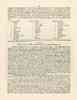
General Sherman " Miles " Crook " Carr " Auger " Bankhead " Fry " Crittenden " Merritt " Switzer " Tony Forsythe " Duncan " Rucker
General Smith " King " Van Vilet " Anson Mills " Reynolds " Harney " Greely " Sherdian " Terry " Emory " Custer " Ord " Hancock
General Royall " Penrose " Brisbin " Sandy Forsythe " Palmer " Dudley " Gibbon " Candy " Blunt " Hayes " Guy Henry " Hazen And others.
The extracts on the following pages speak for themselves, and will form interesting reading as authenticated references.
FROM GEN. "PHIL" SHERIDAN'S AUTOBIOGRAPHY.
GENERAL SHERIDAN refers to his meeting "BUFFALO BILL." "He undertakes a dangerous task," chapter xii., pp. 281-289, in his autobiography, published in 1888. The world renowned cavalry commander maintained continuous friendly relations with his old scout, even to social correspondence, friendly assistance, and recognition in his present enterprise up to the year of his death. After relating his conception of th efirst winter campaign against Indians on the then inhabited and bleak plains, in the winter of 1868, he says, "The difficulties and hardships to be encountered had led several experienced officers of the army and some frontiersmen like old Jim Bridger even went so far as to come out from St. Louis to discourage the attempt. I decided to go in person, bent on showing the Indians that they were not secure from punishment because of inclement weather - an ally on which they had hitherto relied with much assurance. We started, and the very first night a blizzard struck us and carried away our tents. The gale was so violent that they could not be put up again; the rain and snow drenched us to the skin. Shivering from wet and cold I took refuge under a wagon, and there spent such a miserable night that, when morning came, the gloomy predictions of old man Bridger and others rose up before me with greatly increased force. The difficulties were now fully realized, the blinding snow mixed with sleet, the piercing wind, thermometer below zero - with green bushes only for fuel - occasioning intense suffering. Our numbers and companionship alone prevented us from being lost or perishing, a fate that stared in the face of the frontiersmen, guides and scouts on their solitary missions.
"An important matter had been to secure competent guides for the different columns of troops, for, as I have said, the section of country to be operated in was comparatively unknown.
"In those days the railroad town of Hays City was filed with so-called 'Indian Scouts' whose common boast was of having slain scores of redskins, but the real scout - that is, a guide and trailer knowing the habits of the Indians - was very scarce, and it was hard to find anybody familiar with the country south of Arkansas, where the campaign ws to be made. Still, about the various military posts there was some good material to select from, and we managed to employ several men, who, from their experience on the plains in various capacities, or from natural instinct and aptitude, soon became excellent guides and courageous and valuable scouts, some
55
45 plains and passed every experience; herder, hunter, pony-express rider, stage driver, wagon master in the quartermaster's department, and scout of the army, and was first brought to my notice by distinguishing himself in bringing me an important dispatch from Fort Larned to Fort Hays, a distance of sixty-five miles, through a section infested with Indians. The dispatch informed me that the Indians near Larned were preparing to decamp, and this intelligence required that certain orders should be carried to Fort Dodge, ninety-five miles south of Hays. This too being a particularly dangerous route- several couriers having been killed on it- it was impossible to get oneo f the various 'Petes,' 'Jacks,' or 'Jims' hanging around Hays City to take my communication. Cody, learning of the strait I was in, manfully came to the rescue, and proposed to make the trip to Dodge, through he had just finished his long and perilous ride from Larned. I gratefully accepted his offer, and after a short rest he mounted a fresh horse and short rest he mounted a fresh horse and hastened on his journey, halting but once to rest on the way, and then only for an hour, the stop being made at Coon Creek, where he got another mount from a troop of cavalry. At Dodge he took some sleep, and then continued on to his own post- Fort Larned- with more dispatches. After resting at Larned, he was again in the saddle with tidings for me at Fort Hays, General Hazen sending him, this time, with word that the villages had fled to the south of Arkansas. Thus, in all, Cody rode about 350 miles in less than sixty hours, and such an exhibition of endurance and courage at that time of the year, and in such weather, was more than enough to convince me that his services would be extremely valuable in the campaign, so I retained him at Fort Hays till the battalion of the Fifth Cavalry arrived, and then made him "CHIEF OF SCOUTS."
Read through the fascinating book, "Campaigning with Crook (Major-General George Crook, U.S.A.) and Stories of Army Life," due to the graphic and soldierly pen of Captain Charles King, of the U.S. Army; published in 1890.
Incidentally the author refers in various pages to COL. CODY as Scout, etc., and testifies to the general esteem and affection in which "BUFFALO BILL" is held by the army.
The subjoined extracts from the book will give our readers and excellent idea of the military scout's calling and its dangers.
"By Jove, General!" says "BUFFALO BILL," sliding backward down the hill, "now's our chance. Let our party mount here out of sight, and we'll cut those fellows off. Come down every other man of you." Glancing behind me, I see CODY, TAIT and "CHIPS," with five cavalrymen, eagerly bending forward in their saddles, grasping carbine and rifle, every eye bent upon me, watching for the signal. Not a man but myself knows how near they are. That's right, close in, you beggars! Ten seconds more, and you are on them! A hundred and twenty-five yards- a hundred-ninety- "Now, lads, in with you."
There's a rush, a wild ringing cheer; then bang, bang, bang! and in a cloud of dust, CODY and his men tumble in among them, "BUFFALO BILL" closing on a superbly accoutred warrior. It is the work of a minute; the Indian has fired and missed. CODY's bullet tears through the rider's leg into the pony's heart, and they tumble in a confused heap on the prairie. The Cheyenne struggles to his feet for another shot, but CODY's second bullet hits the mark. It is now close quarters, knife to knife. After a hand-to-hand struggle, CODY