
66
54
The Gaucho differs in many respects from the other rouch riders of the only partially civilized sections of the earth. He is the product of a peculiar scheme of existence, and of savage conditions of life, that obtain in no part of the world save on the boundless Llanos of South America.
The Gauchos are the descendants of the early Spanish colonizers of the South American wilds. The fiery Hispanolian temperament, the infusion of the native Indian blood, together with the wild lonely life on the ocean-like pampas, are the conditions responsible for the production of the Gauchos.
The civilization that the Spanish colonists took with them to the Llanos gradually became subdued by the savagery of the new situation, until their descendants, the Gauchos, were as wild and ferocious as the aborigines, the Indians. They were, forsooth, compelled to adopt in no small degree the manners and customs of these latter as a means of a subsistence.
Like the North American indian, the Cow-boy the Vaquero, the Cossack, and the Prairie Scout, now for the first time in history his companion horsemen, the Gaucho is a near approach to the mythical centaur. Like them the Gaucho spends the greater portion of his life on horseback, and is associated with the wild equines of the pampas in even a more intense degree than any of the equestrian races.
In no other part of the world has man been so completely dependent on the horse as on the South American plains. The pampas without horses would be, for the uses of man, as an ocean without ships or boats. Hence this Gaucho breed of centaur is the natural growth of peculiar surroundings.
As the Gauchos are reputed to be the most expert lassoers in the world, considerable interest is manifested in their arrival, not only by the public, but by the Cow-boys, Indians, etc. Apart from their wild fantastic personality of dress, manner and equipment, and their horsemanship, the Gauchos will be interesting as the first to introduce to the public the use of the "bolas," for the capturing of wild animals. This instrument of the chase has been adopted by the Gauchos from the South American Indians, who, from time immemorial, used it for the capture of ostriches, guanacos, and other big game.
The "bolas" consists of a number of rawhide thongs fastened to a central thong, and with an iron ball at each of the ends. The Gaucho can hurl this at a flying horse, cow or ostrich from a distance of sixty feet, and causing it to inextricably entangle about the legs, bring the victim helplessly to the ground. This, therefore, rather than the lasso, is his favorite weapon for the cahse or fighting in war.
When the Dictator Rosas many years ago conquered Buenos Ayres, his success was largely due to the terror inspired by the reputation of his horde of Gauchos and Pampa Indians.
It may be interesting to state that from their primitive mode of existence, the Gaucho makes nearly everything connected with his "outfit," even the rude saddle, from raw-hide; the lasso, the "bolas," and even his boots—which are made from the skin (taken from the knee down, and shaped to the leg and foot while warm) of a freshly killed colt, sewed at the toe, thus forming practically a leather stocking without heel or sole. They are fond of music, are good dancers, retaining in many respects the poetic traditions and tendencies of their Castilian ancestors.
Enough has been said here, however, of their peculiarities. They will prove a welcome acquisition to the "Wild West," for they, no less than the Cossacks, have a distinct role of their own to play in this truly gigantic enterprise of a "Congress of the World's Rough Riders."
FROM ENGLAND TO DAKOTA, THE RIO GRANDE, AMERICA, TO THE CONTINENT OF EUROPE AND RETURN OF "BUFFALO BILL'S WILD WEST" TO GREAT BRITAIN.
Since the visit of "BUFFALO BILL'S" Wild West to England and its remarkable engagement in London, at West Brompton, in 1887, a history and tour have been made such as no organizaton of its magnitude and requirements every accomplished.
A slight reference to this will be instructive and interesting, and the practical mind can, partially, at a glance, recognize the difficulties and arduous duties involved in its completion. A volume would be more fitting to relate its travels, its trials, and triumphant experiences. After the production in an especially erected mammoth building at Manchester, of an allegorical, pantomimic, and scenic representation of the history of American settlement, a return to the United States was made in a charted steamship, Persian Monarch, of 6,000 tons
67
55
burden. The arrival of this vessel, outside of the company's reception, was an event of future commercial importance to the port of New York, from the fact of her being the first passenger ship of her size, draught, and class to effect a landing (at Bechtel's Wharf) directly on the shores of Staten Island, thus demonstrating the marine value of some ten miles of seashore of what in a few short years must be a part of the Greater New York.
After a successful summer season at Erastina, S. I., and New York (originating there, at Madison Square Garden, a now much-copies style of Leviathan spectacle) twice crossing the Atlantic, visiting respectively Philadelphia, Baltimore, and Washington—an uninterrupted season of 2 years and 7 months, starting at St. Louis, Mo., on the Mississippi River, was finished in conjunction with the successful Richmond Exposition on the James River (Virginia).
The members of the organization returned over the vast continent to their perspective localities (ranging from Texas Cow-boy and Vaquero and his southern valley of the Rio Grande, to the Sioux warrior and his weather-beaten foothills of Dakota), to be reunited in the following spring on board s. s. Persian Monarch, bound once more across the Atlantic to Havre, and consigned to the Great Universal Exhibition at Paris.
Sufficiently large grounds were secured from thirty-two different small tenants, at a great expense—two streets being officially authorized to be closed by the municipality so as to condense the whole—in Neuilly (close by the Porte des Ternest, the Bois de Boulogne, and within sight of the Exposition). Expensive improvements were made, grand stand, scenery, a $25,000 electric plant erected, and a beautiful camping ground built.
The opening occurred before an audience said to have equaled any known in the record of Premieres of that brilliant Capitale des Deux Mondes. President Carnot and wife, the Members of his Cabinet families, two American Ministers, Hon. Whitelaw Reid, Hon. Louis MacLean, the Diplomatic Corps, Officers of the United States Marines, etc.—a representative audience, in fact, of ladies and gentlemen of distinction, known the world over, in society, literature, art, professions and commerce, honored the Inauguration by their presence, and launched, amidst great enthusiasm, a seven months' engagement of such pronounced success as to place the Wild West second only in public interest apparently to the great Exposition itself.
68
56
After a short tour in the South of France in the fall, a vessel was chartered at Marceilles, the Mediterranean crossed to Barcelona—landing the first band of American Indians, with accompanying associates, scouts, cow-boys, Mexican horses of Spanish descent, and wild buffaloes, etc., on the very spot where on his return to Spain landed the world's greatest explorer, Christopher Columbus. Here the patrons were demonstratively eulogistic, the exhibition seeming to delight them greatly, savoring as it did of an addenda to their national history, recalling, after a lapse of 400 years, the resplendent glories of Spanish conquests under Ferdinand and Isabella, of the sainted hero, Cristobal Colon—1492, Columbus in America—1890, "BUFFALO BILL" and the native American Indian in Spain !
Recrossing the Mediterranean, via Corsica and Sardinia (encountering a tremendous storm), Naples (the placid waters of whose noble bay gave a welcome refuge) was reached, and in the shadow of "Old Vesuvius," which in fact formed a superbly grand scenic background, another peg in history was pinned by the visit of the cow-boy and Indian to the various noted localities that here abound; the ruins of Herculaneum, Pompeii, and the great crater of "the burning mountains," striking wonder and awe as well as giving geological and geographical knowledge to the stoical "Red man."
Then the "famed of the famous cities" of the world, Rome, was next visited, to be con
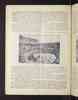
COLLOSSEUM, ROME.
quered through the gentle power of intellectual interest in, and the reciprocal pleasure exchanged by, its unusual visitors, the honor being given to "the outfit," as an organization, of attending a dazzling fête given in the Vatican by His Holiness Pope Leo XIII. and of receiving the exalted Pontiff's blessing. The grandeur of the spectacle, the heavenly music, the entrancing singing, and impressive adjuncts, produced a most profound and impression on the astonished children of the Prairie. The Wild West in the Vatican ! !
The company were photographed in the Colosseum, which stately ruin seemed to silently and solemnly regret that its famed ancient arena was too small for this modern exhibition of the mimic struggle between that civilization (born and emanating from 'neath its very walls) and a primitive people who were ne'er dreamed of in a Rome's world-conquering creator's wildest flights of vivid imaginings.
Strolling through its arena, gazing at its lions' dens, or lolling lazily on its convenient ruins, hearing its interpreted history—of Romulus, of Caesar, of Nero—roamed this band of Wild West Sioux (a people whose history in barbaric deeds equals, if not excels, the ancient Romans), now hand in hand in peace and firmly-centered friendship with the American frontiersman—once gladiatorial antagonists on the Western Plains. They, listening to the tale on the spot of those whose "Morituri te Salutant" was the short prelude to a savage death, formed a novel picture in historic frame ! The Wild West in the Colosseum ! ! !
69
57
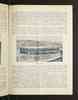
Artistic Florence, practical Bologna, grand and stately Milan, and unique Verona were next added to the list. Verona's superb and well-preserved "Arena," excelling in superficial area the Colosseum and holding 45,000 people, was specially granted for the Wild West's use; and the home of Shakespeare's love-lorn heroine placed another picture in Red man's tour of the native land of his discoverer. The Indians were taken by "BUFFALO BILL" to picturesque architectural skill. They were immortalized by the camera in the Ducal Palace, St. Marc's Piazza, and in the strange street vehicle of the Adriatic's erstwhile pride--the gondola--contributing another interesting object lesson to the distant juvenile members of their tribe--to testify more fully to their puzzles senses the fact of strange sights and marvels whose existence is to be learned of in the breadth of knowledge necessitated by their future existence.
Moving via Innsbruck through the beautifully scenic Tyrol--the Bavarian capital, Munich, with its naturally artistic instincts, gave a grand reception to the beginning of a marvelously successful tour through German-land, which included Vienna (with an excursion on the "Blue Danube"), Berlin, Dresden, Leipsic, Madgeburg, Hanover, Brunswick, Hamburg, Bremen, Dusseldorf, Cologne, along the Rhine past Bonn, Coblentz, "Fair Biegen on the Rhine" to Frankfurt, Stuttgart, and Strasburg. These historic cities--with all their
[Image] ARENA, VERONA.
wealth of legendary interest, art galleries, scientific conservatories, educative edifices, cathedrals, modern palaces, ancient ruins, army man[oe combined]uvrings, fortifications, commercial and varied manufacturing and agricultural industries, and the social, genial, friendly, quiet customs of its people--should form good instruction to the rugged rovers of the American plains--heirs to an empire as much more vast in extent and resources as is the brightness of the diamond, after the skill expended by the lapidary, in dazzling brilliancy to the rude, unpolished stone before man's industry lends value to its existence.
At Strasburg the management decided to close temporarily this extraordinary tour and winter the company. Although in the proximity to points contemplated for a winter campaign (Southern France and the Riviera), this was deemed advisable on account of the first and only attack from envious humanity that the organization had encountered. This subject will be more fully referred to in another chapter, as it necessitated the manly but expensive voluntary procedure of taking the Indians to America, to meet face to face and deny the imputations of some "ten-cent" villagers, whom circumstances of petty political "charity," and "I-am-ism," and native buoyancy permit at times to float temporarily on the surface of a cosmopolite community, and to whose ravings a too credulous public and press give hearing.
The quaint little village of Benfield furnished an ancient nunnery and a castle with stables and a good range; here the little community of Americans spent the winter comfort-
70
ably, being rested and feted by the inhabitants, whose esteem they gained to such an extent that their departure was marked by a general holiday, assisting hands, and such public demonstrations of regret that many a rude cow-boy when once again careering o'er the pampas of Texas will rest his weary steed while memory reverts back to the pleasant days and whole-souled friendships cemented at the foot of teh Vosges mountains in disputed Alsace-Lorraine.
In Alsace-Lorraine ! whose anomalous position menaces the peace, not only of the two countries interested, but of the civilized world; whose situation makes it intensely - even sadly - interesting, as the theatre of that future human tragedy for which the ear of mankind mechanisms of destruction. The lurid-garbed Angel of Devastation hovers, careering through the atmosphere of the seemingly doomed valley, gaily laughing, shrieing exultingly at the white-robed Angel of Peace, as the latter gloomify wanders - payerful, tearful - hopelessly hunting, ceaselessly seeking the return of modern man's boasted newly-created gods : Equity, Justice, Reason!
What a field for the vaunted champions of humanity, the leaders of civilization ! What a neighborhood wherein to sow the seeds of "peace on earth and good will to all men." What a crucible for the universal panacea - Arbitration ! What a test of the efficacy of prayer in damming up the conflicting torrents of Ambition, Cupidity, Passion, and Revenge, which threaten and luxury be eclipsed by eternal notoriety as the Valley of Death !
Leaving the temporary colony under the charge of his director partner, Mr. NATE SASBURY (whose energy found occupation in attending to the details of the future), COL. CODY, the Indians, and your humble servant departed to America, arriving safely ; and after refuting satisfactorily, by the Indians themselves, the base salndors that emanted in the imagination of notoriety-seeking busybodies, proceeded to the seat of the Indian difficulties in the distant State of Dakota. The splendid action of the traveled Indians, and teh record of The Wild West's representatives on the spot, in the mutual interests of an excusably excited people, and of the Governmental authority, as well as of the peaceful solution of a serious situation - has been a matter of journalistic comment so recently as to need no reference here.
After a short, bloody, and mixed campaign, peace was restored, the Government authority was secured, and a selected band of Indians - composed equally of the "active friendly," headed by Chiefs "Long Wolf," No Neck," "Yankton," "Charley," "Black Heart," and the "band of hostages" held by the military under Gen. Nelson A. Miles, at Fort Sheridan, and headed by the redoubtable "Short Bull," "Kicking Bear," "Lone Bull," "Scatter," and "Revenge" - were given special permission to come with "BUFFALO BILL" for a short European tour, and left Philadelphia in teh chartered Red Star Steamer, Switzerland. The significance of this fact should still forever the forked tongue of the human serpents, who without rhyme, truth, or reason, have tried to stain a fair record - which has been justly earned, and by its very prominence, perhaps, difficult to maintain.
Coming direct from the snow-caped hills and blood-stained valleys of teh Mawaise Terre of last winter's central point of interest, it cannot be denied that an added cahpter to Indian history, and the Wild West's peculiar province of truthfully exhibiting the same, is rendered more valuable to the student of primitive man, and to the ethnologists' acquaintance with the strange people whose grand and once happy empire (plethoric in all its inhabitants needed) has been (rightfully or wrongfully) brought thoroughly and efficiently under the control of our civilization, or (possibly more candidly confessed) under the Anglo-Saxon's commercial necessities. It occurs to the writer that our boasted civilization has a wonderful adaptability to the good soils, the productive portions and the rich mineral lands of the earth, while making snail-like pace and intermittent efforts among the frigid haunts of teh Esquimaux, the tangled swamps of Africa, and the bleak and dreary rocks of Patagonia.
A sentimental view is thus inspired, when long personal association has brought the better qualities of the Indian to one's notice, assisting somewhat to dispel the prejudices engendered by years of savage brutal wars (conducted with a ferocious vindictiveness foreign to our methods). The savageness of Indian warfare, born in the victim, and probably instensified by the instinctive knowledge of a despairing weakness, renders desperate the fiery spirit of expiring resistance, which latter (in another cause) might be held up for courage and tenacity as bright as that recorded in the pages dedicated to the heros of Thermopylae.