
56
plains and passed every experience; herder, hunter, pony - express rider, stage driver, wagon mster in the quartermaster's department, and scout of the army, and was first brought to my notice by distinguishing himself in bringing me an important dispatch from Fort Larned to Fort Hays, a distance of sixty-five miles, through a section invested with Indians. The dispatch informed me that the Indians near larned were preparing to decamp, and this intelligence required that certain orders should be carried to Fort Dodge, ninety-five miles south of Hays. This too being a particularly dangerous route - several couriers having been killed on it - it was impossible to get one of the various "Petes," "Jacks," or "Jims" hanging around Hays City to take my communication. Cody, learning of the strait I was in, manfully came to the rescue, and proposed to make the trip to Dodge, though he had just finished his long and perilous ride from Larned. I gratefully accepted his offer, and after a short rest he mounted a fresh horse and hastened on his journey, halting but once ro rest on the way, and then only for an hour, the stop being made at Coon Creek, where he got another mount from a troop of cavalry. At Dodge he took some sleep, and then continued on to his own post - Fort Larned - with more dispatches. After resting at Larned, he was again in the saddle with tidings for me at Fort Hays, General Hazen sending him, this time, with word that the villages had fled to the south of Arkansas. Thus, in all, Cody rode about 350 miles in less than sixty hours, and such an exhibition of endurance and courage at that time of the year, and in such weather, was more than enough to convince me that his services would be extremely valuable in the campaign, so I retained him at Fort Hays till the battalion of the Fifth Cavalry arrived, and then made him Chief of Scouts."
Read through the fascinating book, "Campaigning with Crook (Major-General George Crook, U. S. A.) and Stories of Army Life," due to the graphic and soldierly pen of Captain Charles King, of the U. S. Army; published in 1890.
Incidentally the author refers in various pages to COL. CODY as Scout, etc., and testifies to the general esteem and affection in which "BUFFALO BILL" is held by the army.
The subjoined extracts from the book will give our readers an excellent idea of the military scout's calling and its dangers:
"By Jove, General ! "says 'BUFFALO BILL," sliding backward down the hill," now's out chance. Let our party mount here out of sight, and we'll cut those fellows off. Come down every other man of you."
Glancing behind me, I see Cody, Tait and "Chips," with five cavalrymen, eagerly bending forward in their saddles, grasping carbine and rifle, every eye bent upon me, watching for the signal. Not a man but myself knows how near they are. That's right, close in, you beggars! Ten seconds more and you are on them! A hunreded and twenty fice yards- a hunred - ninety - "Now, lads, in with you."
There's a rush, a wild ringing cheer; then bang, bang, bang! and in a cloud of dust, Cody and his men tumble in amont them, "Buffalo Bill" closing on a superbly accoutred warrior. It is the work of a minute; the Indian has fired and missed. Cody's bullet tears through the rider's leg into the pony's heart, and they tumble in a confused heap on the prairie. The Cheyenne struggles to his feet for another shot, but CODY's second bullet hits the mark. It is now close quarters, knife to knife. After a hand to hand struggle, CODY
57
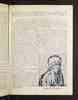
"BUFFALO BILL" AND "BUFFALO CHIPS." - From Page 111.
In all these years of campaigning, the Fifth Cavalry has had varied and interesting experience with a class of men of whom much has been written, and whose names, to readers of the dime novel and the New York Weekly style of literature, were familiar as household words; I mean the "Scouts of the Prairie," as they have been christened. Many thousand of our citizens have been to see "BUFFALO BILL'S" thrilling representations of the scenes of his life of adventure. To such he needs no introduction, and throughout our cavalry he is better known than any general except Miles or Crook.
A motley set they are as a class - these scouts ; hard riding, hard swearing, hard drinking ordinarily, and not all were or unimpeachable veracity. But there was never a word of doubt or question in teh Fifth when "BUFFALO BILL" came up for discussion. He was Chief of Scouts in Kansas and Nebraska in the campaign of 1868-69, when the hostiles were so completely used up by General Carr. He remained with us as chief scout until the regiment was ordered to Arizonia to take its turn at the Apaches in 1871. Five years the regiment was kept among the rocks and deserts of that marvelous land of cactus and centipede; but when we cam ehomeward across the continent and were ordered up to Cheyenne to take a hand in the Sioux ear of 1876, the "Sitting Bull" campaign, the first addition to our ranks was "Buffalo Bill" himself - who sprang from the Union Pacific train at Cheyenne, and was speedily exchanging greetings with an eager group of his old comrades - reinstated as Chief of Scouts.
Of his services durng the campaign that followed, a dozen articles might be written. One of the most thrilling incidents of our fight on the 17th of July with the Cheyenne Indians, on the War Bonnet, was when he killed the warrior "Yellow Hand," in as plucky a single combat on both sides as is ever witnessed. The Fifth had a genuine affection for Bill; he was a tried and true comrade - one who for cool daring and judgment had no superior. He was a beautiful horseman, an unrivaled shot, and as a scout unequaled. We had tried them all - Hualpais and Tontos in Arizonia ; half-breeds on the great plains. We had followed Custer's old guide, "CALIFORNIA JOE," in Dakota, met handsome Bill Hickox ("WILD BILL") in the Black Hills; trailed for weeks after Crook's favorite, FRANK GUARD, with "LITTLE BAT" and "BIG BAPTISTE," three good ones, all over the Big Horn and Powder River country; hunted Nez Perces with COSGROVE and his Shoshones among the Yellowstone mountains, and listened to CRAWFORD'S yarns and rhymes in many a bivouac in the Northwest. They were all noted men in their way, but BILL CODY was the paragon.
This time it is not my purpose to write of him, but for him, of another whom I have not yet named.
James White was his name; a man little known east of the Missiouri, but on the plains he was BUFFALO BILL's shadow. I had met him for the first time at the McPherson station in the Platte Valley, 1871, when he came to me with a horse, and the simple introduction that he was a friend of CODY'S. Long afterward we found how true and staunch a friend, for when Cody joined us at Cheyenne as chief scout, he brought White with him as assistant, and Bill's recommendation secured his immediate employment.
{image}
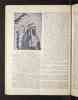
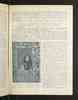
"ROCKY BEAR." Ogallalla Sioux, War Chief of the Sioux Nation, Fighting Chief of the Ghost Dancers.
58
On many a long day's march after that White rode by my side along the flanks of the column, and I got to know him well. A simpler-minded, a gentler frontiersman never lived. He was modesty and courtesy itself, conspicuous mainly because of two or three unusual traits for his class - he never drank, I never heard him swear, and no man ever heard him lie.
For years he had been CODY'S faithful follower, half servant, half "pardner." He was Bill's "Fidus Achates; "Bill was his adoration. They had been boys together, and the hero worship of extreme youth was simply intensified in the man. He copied Bill's dress, his gait, his carriage, his speech - everything he could copy ; he let his long yellow hair fall low upon his shoulders in wistful imitation of Bill's glassy brown curls. He took more care of Bill's guns and horses than he did of his own, and so, when he finally claimed, one night at Laramie, the right to be known by some other title than simple Jim White - something descriptive, as it were, of his attachment for CODY, and lifelong devotion to his idol, "BUFFALO BILL," a grim quartermaster (Morton of the Ninth Infantry) dubbed him "BUFFALO CHIPS," and the name was a fixture. His story was a brief one after that episode. We launched out from Laramie on the 22d of June, and through all the vicissitudes of the campaign that followed, he was always near the fifth. On the Yellowstone Cody was compelled to bid us a reluctant farewell to join General Terry.
A great loss to us was "BUFFALO BILL." He left his "pardner," Jim White, with us to finish the campaign as scout; and we little thought that htose two sworn friends were meeting for theh last time on earth when "BUFFALO CHIPS" bade good-bye to "BUFFALO BILL." "CHIPS" remained in his capacity as scout, though he seemed sorely to miss his "pardner."
It was just two weeks after that we stuck the Sioux at Slim Buttes, soemthing of which I told you in a former chapter. You may remember that the Fifth had ridden in haste to the relief of Major Mills, who had surprised the Indians away in our front early Saturday morning, had whipped them in panicky confusion out of their "tepees" into the neighboring rocks, and then had to fight on the defensive against ugly odds until we rode in to the rescue. As the head of our column jogged in among the lodges, and General Carr directed us to keep on down to face the bluffs to the south, Mills pointed to a ravine opening out into the village, with the warning, "Look out for that gully; there are Indians hidden there, adn they've knocked over some of my men."
Everybody was too busy just then to pay much attention to two or three wounded Indians in a hole. We were sure of getting them when wanted. So placing a couple of sentries where they could warn stragglers away from its front, we formed line along the south and west of the captured village, and got everything ready to resist the attack we knew they would soon make in full force.
General Crook had arrived on the scene, and, while we were waiting for "Lo" to resume the offensive, some few scouts and packers started in to have a little fun "rousting out them Injuns." Half-a-dozen soldiers got permission to go over and join in while the rest of us were hungrily hunting about for something to eat. The next thing, we heard a volley from the ravine, and saw the scouts and packers scattering for cover. One soldier held his ground - shot dead. Another moment, and it became apparent that not one or two, but a dozen Indians were crouching somewhere in that narrow gorge, and the move to get them out assumped proportions. Lieutenant Clark, of General Crook's staff, sprang into the entrance, carbine in hand, and a score of cavalrymen followed, while the scouts and others went cautiosly along either bank, peering warily into the cave-like darkness at the head. A squad came tearing over, just as a second volley came from the concealed foe, and three more of our men by dozens hurried to the scene. The misty air rang with shots, and the chances looked bad for those redskins. Just as this moment, as I was running over from the western side, I caught sight of "CHIPS" on the opposite crest. All alone, he was cautiosly making his way, on hands and knees, toward the head of the ravine, where he could look down upon the Indians beneath. As yet he was protected from their fire by the bank itself - his lean form distinctly outlined against the eastern sky. He reached a stunted tree that grew on the very edge of the gorge, and there he halted, brought his rifle close under his shoulder, in readiness to aim, and then raised himself slowly to his feet, lifitng his head higher, higher, as he peered over. Suddenly a quick, eager light shone in his face, a sharp movement of his rifle, as though he were about to raise it to his shoulder, when, bang !- a puff of white smoke floated up from the head of the ravine, "CHIPS" sprang up convulsively in the air, clasping his hands to his breast, and with one startled, agonizing cry, "Oh, my God, boys!" plunged heavily forward on his face, down the slope - shot through the heart.
59
Two minutes more, what Indians were left alive were prisoners, and that costly experiment at an end. That evening, after the repulse of the grand attack of "ROMAN NOSE" and "STABBER'S" warriors, and 'twas said, hundreds of "CRAZY HORSE'S" band, we buried poor "CHIPS," with our other dead, in a deep revine. "WILD BILL," "CALIFORNIA JOE," "Cosgrove," and "TEXAS JACK" have long since gone to their last account, but, among those who knew them, no scout was more universally mourned than "BUFFALO BILL'S" devoted friend, JIM WHITE.
AS "BUFFALO BILL" SEES IT - HE THNKS IT LOOKS LIKE PEACE IN THE INDIAN COUNTRY.
"Buffalo Bill" telegraphs to the "New York Herald" from Pine Ridge Agency :
"In the Field, via Courier to Telegraph, Pine Ridge Agency, Dakota. "New York Herald:
"Your request for my opinion of the Indian situation is by reason of the complications and the changeable nature of the red man's mind and action a puzzler. Every hour brings out a new opinion. Indian history furnishes no similar situation.
"You must imagine about 5,000 Indians, an unusual proportion warriors, better armed than ever known before, hemmed in a cordon about sixteen miles in diameter, composed of over 3,000 troops, acting like a slowly closing drag net. This mass of Indians is now influenced by a percentage as despairingly desperate and fanatical as the late Big Foot Party, under Short Bull and Kicking Bear. It contains also restrained neutrals, frightened and disaffected Ogallallas, hampered by the powerful Brules, backed by renegades and desperadoes from all other agencies. There are about twenty-five hundred acting and believed to be friendly Indians in and around the Agency. "Such is the situation General Miles and the inilitary confront. Any one of this undisciplined mass is able to precipitate a terrible conflcit from the most unexpected quarter. Each of the component quantities is to be watched, to be measured, to be just to. In fact, it is a war with a most wily and savage people, yet the whites are restrained by a humane and peaceful desire to prevent bloodshed, and save a people from themselves. It is like cooling and calming a volcano. Ordinary warfare shows no parallel. General Miles seems to hold a firm grip on the situation. The Indians know him, express confidence in his honor, truth, and justice to them, and they fear his power and valor as well.
"As the matter now stands, he and they should be allowed, untrammeled even by a suggestion, to settle the affair, as no one not on the spot can appreciate the fearfully delicate position. The chaff must be sifted from the wheat, and in this instance the chaff must be threshold."
"At the moment, so far as words go, I would say it will be peace, but the smoldering spark is visible that may precipitate a terrible conflict any time in the next few days. However it ends, more and prompt attention should be paid in the future to the Sioux Indian; his rights, his compalints, and even his necessities. Respect and consideration should also be shown for the gallant little army, for it is the Indian and soldier who pay the most costly price in the end. I think it looks like peace, and if so, the greater the victory.
"W. F. Cody, 'Buffalo Bill'."
60
THE SITUATION IN THE INDIAN COUNTRY A MARVEL OF MILITARY STRATEGY.
Col. W. F. Cody ("BUFFALO BILL") who is at Pine Ridge, telegraphs the following for the "New York Sun," which expresses his views of the present critical situation:
"The situation to-day, so far as military strategy goes, is one of the best marked triumphs known in the history of Indian campaigns. It speaks for itself, for the usual incidents to an Indian warfare, such as raids on settlers and wide spread devastation, have been wholly prevented. Only one white man has been killed outside the military circle. The presiding genius and his able aides have acted with all the cautions prowess of the hunter in surrounding and placing in a trap his dangerous game, at the same time recognizing the value of keeping the game imprisoned for future reasons. I speak, of course, of the campaign as originally intended to overawe and pacify the disaffected portion of the Ogallallas, Wassahas, and Brules, the Big Foot affair at Wounded Knee Creek being an unlooked-for accident.
CREDITABLE TO GEN. MILES' REPUATION.
"The situation to-day with a desperate band corraled and the possibility of any individiual fanatic running amuck is most critical, but the wise measure ofholding them in a military wall, allowing them time to quiet down and listen to the assurances of such men as Young Man-Afraid-of-His-Horses, Rocky Bear, No Neck, and other progressive Indians, relieves the situationn, so that, unless some accident happens the military end of the active warfare seems a complete, final, and brilliant success, as creditable to General Miles' reputation as it is to the humane and just side of his character.
"Neither should praise be withheld from Gens, Brooke, Carr, Wheaton, Henry, Forsythe, and the other officers, and men of the gallant little army, who stood much priviation. In every instance when I have heard them speak they have expressed great sympathy for their unhappy foe, and regrets for his impoverished and desperate condition. They and the thoughtful people here are now thinking about the future. In fact, the Government and nation are confronted by a problem of great importance as regards remedying the existing evils.
"The larger portion of the Ogalla Sioux have acted nobly in this affair, especially up to the time of the stampede. The Wassahoas and Brules have laid waste the reservation of the Ogallallas, killed their cattle shot their horses, pillaged their houses, burning their ranches; in fact, poor as the Ogallallas were before, the Brules have left them nothing but the bare ground, a white sheet instead of a blanket, with winter at hand and the little accumulations of thirteen years swept away. This much as well as race and tribal dissensions and personal enmity, have they incurred for standing by the Government. These people need as much sympaathy and immediate assistance as any sedtion of country when great calamities arouse the sympaty of the philanthropies and the Government. THis is now th epart of the situation that to me seems the most remarkable. Intelligent and quick legislation can now do more than the bullet. - Col. W. F. Cody ("BUFFALO BILL")
NOT FINISHED