
51
the romance, the poetry, and history of their each distinctive work foever. The same spirit and circumstances have furnished journalists innumerable, who in the West imbibed the sterling qualities they afterward used to such effect. Notably Henry M. Stanley, who (in 1866) saw the rising sun of the young empire that stretches to the Rockies; General Greeley, of Arctic fame (now of signal service), and the equally scientific explorer, Lieut. Schwatka, passed their early career in the same school, and often followed "the trail" led by "BUFFALO BILL"; Finerty (of the "Chicago Times"); "Modoc" Fox, and O'Keely (of the "New York Hearld."), 1876; while last year new blood among the scribblers was initiated to their baptism of fire by Harries (of "Washington Star"), McDonough ("New York Herald"), present in the battle, who were honored by three cheers from "Old White Top" Forsythe, galliant Seventh Cavalry, the day after the battle of "Wounded Knee," as they went charging over Wolf Creek to what came near being a crimson day, to the fight "down at the Mission." That there are still "successors to every king" is assured by the manly scouts so prominent in last winter's rehersal of past (hoped no more future) frontier dramas in such men as FRANK GRUARD, now the most celebrated of the present employed army scouts: of "LITTLE BAT," true as steel, and active as the cougar; PHILIP WELLS, LOUIS SHANGRAU, "BIG BAPTISTE," and JOHN SHANGRU; while the friendly Indians furnish such grand material for any future necessity as "NO NECK," Major "SWORD," "RED SHIRT," and "YANKTON CHARLEY."
BILL COD. - (BY AN OLD COMRADE.)
You bet I know him, pardner, he 'aint no circus fraud, He's Western born and Western bred, if he has been late abraod; I knew him in the days way back, beyond Missouri's flow, When the country round was nothing but a huge Wild Western Show. When the Injuns were as thick as fleas, and the man who ventured through The sand hills of Nebraska had to fight the hostile Sioux; These were hot times, I tell you; and we all remember still, The days when Cody was a scout, and all the men knew Bill.
I knew him first in Kansas, in the days of '68, When the Cheyennes and Arapahoes were wiping from the slate Old scores against the settlers, and when men who wore the blue. With shoulder straps and way up rank, were glad to be helped through By a bearer of dispatches, who knew each vale and hill. From Dakota down to Texas, and his other name was Bill.
I mind me too of '76, the time when Cody took His scouts upon the Rosebud ; along with General Crook ; When Custer's Seventh rode to their death for lack of some such aide To tell them that the sneaking Sioux knew how ot ambuscade: I saw Bill's fight with "Yellow Hand," you bet it was a "mill." He downed him well at Thirty yards, and all the men cheered Bill.
They tell me that the women folk now take his word as laws. In them days laws were might skerce, and hardly passed with squaws. But many a hardly settler's wife and daughter used to rest More quietly because they knew of Cody's dauntless breast; Because they felt from Laramie way down to Old Fort Sill. Bill Cody was a trust scout, and all their men knew Bill.
I haven't seen him much of late, how does he beat his years? They say he's making ducats now from shows and not from "steers." He used to be a judge of "horns," when poured in a tin cup. And left the wine to tenderfeet, and men who felt "way up." Perhaps he cracks a bottle now, perhaps he's had his fill. Who cares Bill Cody was a scout, and all the world knows Bill.
To see him in his trimmin's, he can't hardly look the same. With laundered shirt and diamonds, as if "he run a game;" He didn't were biled linin then, or flash up diamond rings, The royalties he dreamed of then were only pasteboard kinds, But those who sat behind the queens were apt to get their fill, In the days when Cody was a scout, and all the men knew Bill.
Gridiron Club, WM. E. ANNIN. Washington, D. C., Feb. 28, 1891. Lincoln (Neb.) Journal.
GHOST-DANCES IN THE WEST ORIGIN AND DEVELOPMENT OF THE MESSIAH CRAZE AND THE GHOSE-DANCE
PINE RIDGE RESERVATION. - There have often happened, in the history of the human race, incidents that were regarded at the time as most trivial, but have later developed into such important and serious questions as to engage the minds of many learned men in their solution.
That there is some special reason for the series of frenzied dances and incantations which have been continued from time to time in remote portions of the Sioux reservations, no one will deny. It is scarcely probable that a people who own horses and cattle would suddenly, without the slightest warning, return almost to a man to the execution of a dance which is so weird and peculiar, so superstitious and spirit-like, as to rival the far-famed Sun Dance.
This special reason is found in the simple truths of Christianity as taught by a missionary in Utah, but which were distorted to conform with Indian mythology. It was when the medicine men and politicians in the nation began to enlarge upon the wrongs suffered at
52
40 the hands of the whites, the scarcity of food, the presence of the military, that its general aspect was changed from a sacred rite to a warlike demonstration.
When the Ghost or Messiah Dance was first given on Pine Ridge Reservation by the Sioux who had been in Utah on a visit to the Ute Indians, there were many on-lookers. These became interested as the dance proceeded, for such was its influence upon a beholder that he felt an irresistible desire to join the circle.
While the priests are employed in their prayers, the squaws make a good-sized sweathouse. Poles are stuck in the ground and the tops bent together and securely tied. These saplings are strong enough to bear the weight of several hundred pounds. Over the frame work are heaped blankets and robes to such a thickness that no smoke or steam can pass from the interior. A fire is started in a hole in the gorund several feet from the small entrance to the sweat-lodge, and twenty or thirty good-sized stones are placed therein to be heated. When these rocks have become sufficiently hot, the young men who are to partake of the bath, strip with the exception of the breech clout, and crawl through the door. They seat themselves in a circle, with their feet toward the center and their backs against the sides of the lodge. The attendant shoves some of the hot stones inside, and the young men pour water from a hide bucket upon the little stone heap. Steam and vapor arise, completely filling the inclosure. The attendant has meanwhile covered the opening so that no air from the outside may penetrate. As the vapor condesnses, the attendant thrusts more stones within, and thus the operation is continued as long as the youths can stand the confinement. The pipe is also smoked during the sweat. When the young men issue from their bath the perspiration is fairly streaming from every pore. If it is not cold weather they plunge into a pool in the creek near by, but if it be chilly they wrap blankets about their bodies.
Several sweat-houses are erected in order to prepare the young men for the dance. When a good number of young men, say fifty or sixty, have thus prepared themselves, the high priest and his assistants come forward The high priest wears eagle feathers in his hair, and a short skin reaches from his waist nearly to his knees. The assistants are dressed in a similar manner, but wear no ornaments other than the eagle feathers. The dancers wear no ornaments whatever and enter the circle without their blankets, many of them wearing their ordinary clothes.
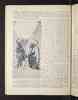
OGALLALLA CHIEFS. PINE RIDGE--SIOUX CAMPAIGN, 1891.
In their other dances, the Omaha, the Old Woman, the Sun, and War Dances, feathers and bangles, weapons, herbs or painted and plaited grasses, porcupine quills, horses' tails and bits of furskins, necklaces, bells, silver desks, etc., are worn in great profusion.
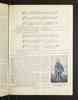
Ghost-dance songs are sung without accompaniment of a drum, as is customary in the other dances. All sing in unison, and the notes, although wild and peculiar, being in a minor key, do not lack melody. The following two songs are sung by them during the dance.
53
41 The words sung in Sioux are: "Ina he kuye misunkala ceya omaniye-e. Ina he kuye. Ate he lo. Ate he lo." As translated by Deputy U.S. Marshal Bartlett, this is: "Come here my mother; my younger brother is walking and crying. Come here my mother; here is the father, here is the father." Here are the notes of another song:
To this strain are used the words: "Ate he ye lo, canupawan ci ci ca hu pi ca yani pi kta lo. Ate he ye lo. Ate he ye lo." Which in English are: "This the father said, he brings the pipe for you, and you will live. This the father said, this the father said."
Philanthropists, while meaning well, from a lack of knowledge of the nature of an Indian treat him in such a sympathetic manner--often selecting the most worthless and lazy Indians to bestow their favors upon--that he becomes puffed up with his own importance. Egotism leads to insolence, and insolence gets him into serious trouble with the agency employees and Westerners in general. The churches are all doing a good work, and it is not my purpose to say much against them, but they should work in unison, not against each other. The Indian cannot understand how so many beliefs could spring from one good book, and, naturally suspicious, when he hears on missionary speak disparagingly of the salvation afforded by a rival church, concludes the whole set are humbugs.
When the commission visited the agency in the summer of 1889, for the purpose of securing signatures to the treaty whereby the Sioux relinquished claim to several million acres of their land, a number of promises were made by the commissioners which were never kept. Not so with the Indians themselves. As they sat about their tepee fires and discussed the affairs of their nation, they often wondered why the increase in rations did not come, why the presents were so long delayed.
An Indian never forgets a promise. Can it be wondered, then, that the Sioux lost what little remaining faith they had in the whites? *The use of the pipe is ceremonial and holy.
"JOHNNY BURKE NO NECK" Found on the Battle Field of Wounded Knee after the annihilation of Big Foot's Hand.
54
As they brooded over their wrongs, the scarcity of rations, and miserable treatment, imagine with what joy hailed the coming of HIm who was to save and rescue them. How they hoped and prayed, only to be deluded and again cast into the depths of despair ! Even this last boon and comfort was refused by their conquerors ; for no sooner had the news of the coming Saviour reached Washington when orders were issued to suppress the worship of any Indian who should dare to pray to his God after the dictates of his own conscience - or at least to stop of the Ghost Dances.
THE ORIGIN OF THE NORTH-AMERICAN INDIAN. A Legend - Respecfully dedicated to Lieut. F. H. HARDIE, 3d Cavalry, U. S. A.
There is a legen 'mong the plumed race. Which strange though it be, their origin does trace To days primeval, when the mighty plan. With touch most wonderful was crowned with man.
With air oracular it has been told. By Chieftains, nature-wise, so very old. Who, solemn sworn, as were their fathers too. This wonderful tradition seal as true.
It was the season when the sighing breez3 Bestrewed the ground with Autumn painted leaves - When Nature robed herself in rich arrap, Her vesture interwove wiht sad and gay.
The buffalo, the elk and fallow deer In quiet grazed, with naught to harm or fear, For yet unborn the stealthy hunter foe. Unwrought the murd'rous flint and arched bow.
Sublimity and grandeur did pervale The sun tipped mountain-top and forest shade, As allence, most profound, with thoughtful train. The Universe spell bound with magic chain.
Lo, the Great Spirit gazed the scene upon And saw perfection in all things but one; There were the hills and dales, and seas and land, And land scapes everywhere supremely grand. And fish and fowl, and beast on mount and plain, But who t' enjoy and over all to reign?
So from the border of a brooklet's way, Lo, the Great Spirit took a piece of claw, And with a tonch and look both sad and sweet, Did mould it into form most exquisite.
Then breathed He on this thing symmetrically formed, When lo, it into life and being warmed, And in the presence of its Maker stood, A female beauty - type of womanhood.
Night came; the constellations bright, Shed o'er the earth their distant, twinkling light. And through their mellow coruscated sheen Cast pearly tears upon this beauty-queen. Who, tired, reposed in quiet on the ground, With senses wrapped in balmy sleep profound.
How passing lovely, how enchanting she, Pure, spotless as her own virginiyt. Like "hit of the vale" or hudding rose Upon the parent - Earth, in sweet repose.
In semblance of a star was one above, Who, gazing on this beauty, fell in love. For who, or which, or what such charms could see And not be filled with love's own ectacy?
And, as the story goes, this brilliant star, Which did outshine the other ones by far, Assuming manly form, rushed from above, And clasped the maiden in the embrace of love.
This flaming star, or sprite, or man, or what, With fullest unrestraint and passions hot, Imprinted fiery kiss, again, again, Before she could her liberty regain.
The maid so courted by the man-like flame, Blushed deep through native modesty, not shame. These blushes overspread the virgin, lo. Were brazen by the wuoer's ardent glow. And thus became entamped indelibly, A signet royal of her modesty.
From her - To+ka+pa - that her cherished name The red man of the Western Prairies came. G. C. C.
To-ka-pa (pronounsed of if spelled To-lail-pah) is a word in the Teton dialogue of the Dakota or Sioux language, signifying first born.
LATE MILITARY REFERENCES. During the past year much has been said relative to Cody, the Wild West, Indians, etc., of an uncalled-for nature, and as "an open confession is good for the soul," we freely admit being annoyed. Who like their motives misconstrued? Who can possibly believe it incompatible with honor to go the even tenor of his inclinations, when none but the hypercritical can possibly find a flaw? If it is correct that "he who preaches the gospel must live by the gospel," most certainly must be who has never held an interest in a Golconda live by that line of enterprise he finds most compatible to embark in, if it be within the bounds of law, order and morality. Therefore it is that this compilation is rendered necessarily pointedly personal in eulogistic extracts as a cross-counter, when a more modest presentation of teh Wild West's status would be justly considred as meeting the requirements. But many noted instances occur to the writer where the purpose would have been best served by the plain statement of facts. The aim of existence is to achieve happiness, and nine-tenths fo mankind would be happy if the other tenth would attend to their own business, or seek information before exploding. To explain a mooted question! GENERAL CODY holds his commission in the NATIONAL GUARD of the United States (States of Nebraska), an honorable position, and as high as he can possibly attain. His connection with the Regular United States Army has covered a continuous period of fifteen years, and desultory connection of thirty years, in the most troblous era of that superb corp's Western History, as Guide, Scout and Chief of Scouts - a position unknown in any other service, and for the confidential nature of which see General
55
Dodge's extract on page 10. This privileged position, and the nature of its services in the past, may be more fully appreciated when it is understood that it commanded, besides horses, subsistence and quarters, $10 per day ($3,650 per year), all expenses, and for special service, or "life and death" volunteer missions, special rewards of from $100 to $500 for carrying a single dispatch, and brought its holder the confidence of Commanding Generals, the fraternal frienship of the Commissioned Officers, the idolization of the ranks, and the universal respect and consideration of the hardy pioneers and settlers of the West. "BILL" CODY'S children can point with pride to recorded services under the following officers of world-wide and national fame:
General Sherman General Smith General Royall " Miles " King " Penrose " Crook " Van Vilet " Brisban " Carr " Anson Mills " Sandy Forsythe " Augur " Reynolds " Palmer " Bankhear " Harney " Dudley " Fry " Greely " Gibbon " Crittenden " Sheridan " Canby " Merritt " Terry " Blunt " Switzer " Emory " Hayes " Tony Forsythe " Custer " Guy Henry " Duncan " Ord " Hazen " Rucker " Hancock and others.
The extracts on the following pages speak for themselves, and will form interesting reading as authenticated references.
FROM GEN. "PHIL" SHERIDAN'S AUTOBIOGRAPHY.
GENERAL SHERIDAN refers to his meeting "BUFFALO BILL." "He undertakes a dangerous task," chapter xii, p. 281 - 289, in his autobiography, published in 1888. The worldrenowned cavalry commander maintained continuous friendly relations with his old scout, even to social correspondence, friendly assistance, and recognition in his present enterprise up to the year of his death. After relating his conception of teh first winter campaign against Indians on the then uninhabited and bleak plains, in the winter of 1868, he says, "The difficulties and hardships to be encountered had led several experienced officers of the army and some frontiersmen like old Jim Bridger, the famous scout and guide of earlier days, to discouraged the project. Bridger even went so far as to come out from St. Louis to discourage the attempt. I decided to go in person, bent on showing the Indians that they were not secure from punishment because of inclement weather - an ally on which they had hitherto relied with much assurance. We started, and the very first night a blizzard struch us and carried away our tents. The gale was so violent that they could not be put up again; the rain and snow drenched us to the skin. Shivering from wet and cold I took refuge under a wagon, and there spent such a miserable night that, when morning came, the gloomy predictions of old man Bridger and others rose up before me with greatly increased force. The difficulties were now fully realized, the blinding snow mixed with sleet, the piercing wind, thermometer below sero - with green bushes only for fuel - occasioning intense suffering. Our numbers and companionship alone prevented us from being lost or perishing, a fate that stared in the face, the frontiersmen, guides and scouts on their solitary missions.
"An important matter had been to secure competent guides for the different columns of troops, for as I have said, the section of country to be operated in was comparatively unknown.
"In those days, the railroad town of Hays City was filled with so-called 'Indian Scouts,' whose common boast was of having slain scores of redskins, but the real scout - that is, a guide and trailer knowing the habits of the Indians - was very scarce, and it was hard to find anybody familiar with the country south of Arkansas, where the campaign was to be made. Still, about the various military posts there was some good material to select from, and we managed to employ several men, who, from their experience on the plains in various capacities, or from natural instinct and aptitude, soon became excellent guides and corageous and valuable scouts, some of them, indeed, gaining much distinction. Mr. William F. Cody ('Buffalo Bill'), whose renown has sine become world-wide, was one of the men thus selected. He received his sobriquet from his marked success in killing buffaloes to supply fresh meat to the construction parties on the Kansas-Pacific Railway. He had lived from boyhood on the