31
29
[Image]
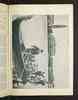
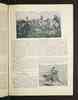
in their 'milling,' that is, swimming in a circle, and, if allowed to continue, would result in the drowning of many. There the daring herder must leave his pony, doff his togs, scramble over their backs and horns to scatter them, and with whoops and yells, splashing, dashing, and didoes in the water, scare them to the opposite bank. This is not always done in a moment, for a steer is no fool of a swimmer; I have seen one hold his own for six hours in the Gulf after having jumped overboard. As some of the streams are very rapid, and a quarter to half-a-mile wide, considerable drifting is done. Then the naked herder has plenty of amusement in the hot sun, fighting green-head flies and mosquitoes, and peeping around for Indians, until the rest of the lay-out is put over--not an easy job. A temporary boat has to be made of the wagon-box, by tacking the canvas cover over the bottom, with which the ammunition and grub is ferried across, and the running-gear and ponies are swum over afterward. Indian fights and horse thief troubles are part of the regular rations. Mixing with other herds and cutting them out, again avoiding too much water at times, and hunting for a drop at others, belongs to the regular routine.
"Buffalo chips for wood a great portion of the way (poor substitute in wet weather) and the avoiding of prairie fires later on, vary the monotony. In fact, it would fill a book to give a detailed account of a single trip, and it is no wonder the boys are hilarious when it ends, and, like the old toper, swears 'no more for me,' only to return and go through the mill again.
"How many, though, never finish, but mark the trail with their silent graves! no one can tell. But when Gabrial toots his horn, the 'Chisolm trail' will swarm with cow-boys. 'Howsomever, we'll all be that,' lets hope for a happy trip, when we say to this planet, adios! J. B. OMOHUNDRO (TEXAS JACK)."
[Image on right]
THE VAQUERO OF THE SOUTHWEST.
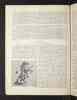
Between the "cow-boy" and the "vaquero" there is only a slight line of demarcation. The one is usually an American, inured from boyhood to the excitements and hardships of his life, and the other represents in his blood the stock of the Mexican, or it may be of the half-breed.
In their work, the methods of the two are similar; and, to a certain extent, the same
32
is true of their associatons. Your genuine vaquero, however, is generally, when off duty, more of a dandy in the style and get-up of his attire han his careless and impetuous compeer. He is fond of gaudy clothes, and when you see him riding well mounted into a frontier town, the first thought of an Eastern man is, that a circus has broken loose in the neighborhood, and this is one of the performers. The familiar broad-rimmed sombrero covers his head; a rich jacket, embroidered by his sweetheart perhaps, envelopes his hsapely shoulders; a sash of blue or red silk is wrapped around his waist, from which protrude a pair of revolvers; and buckskin trousers, slit from the knee to the foot, and ornamented with rows of brass or silver buttons, complete his attire, save that enormous spurs, with jingling pendants, are fastened to the boots, and announce in no uncertain sound the presence of the beau ideal vaquero in full dress.
His saddle is of the pure Mexican tyoe, with high pommel, whereon hangs the inevitable lariat, which his hands is almost as certain as a rifle shot.
Ordinarily he is peaceful young fellow, but when whisky is present in undue proportions, he is a good individual to avoid. Like the cow-boy, he is brave, nimble, careless of his own life, and reckless when occasion requires of those of other people. At heart he is not bad. The dependence on himself which is calling demands, the dangers to which he is subjected while on duty, all compel a sturdy self-reliance, and he is not slow in exhibiting the fact that he possesses it in a sufficient degree at least for his own protection. True types of this peculiar class, seen nowhere else than on the plains, will be among the attractions of the show; and the men will illustrate the methods of their lives in connection with the pursuit and catching of animals, together with the superb horsemanship that is characteristic of their training.
On a Mustang By The Editor of "Texas Siftings."
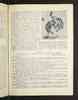
The majority of Texas ponies buch, or pitch, as it is sometimes termed, whenever circunstances seem to demand an exhibition of this facetious break, or the condition of things seemes to justify the sportive caprice. In fact, some ponies buck for hours, only stopping to get breath for a fresh start. Thsi kind is recommended for the use of dyspeptics and invalids suffering from torpidity of liver. A pitching mustang, when working on full time and strictly devoting his attention to business, is the most moving sight I ever behelf. His spine seems to be of whalebone, and he appears to possess all the elements of a steamboat explosion, a high-pressure pile-driver, an earthquake, in addition to the enthusiasm of a county convention. We were glad to find that ours were not bucking ponies, and we congradulated each other on the fortunate circumstance. Of course, as we argued, if there had been any buck in them it would have developed itself at an early stage in the journey. Understand, we were not afraid. I named my pny "Deliberation;" the name seemed so appropriate--no pomp or circumstance about him--and he was so gentle and tranquil; nothing seemed to flurry him. You could throw the reins on his neck and strike a mathc on the pommel of the saddle. I say you could do this, but the after fate of that match would be of no moment to you; you would be otherwise engaged. I regret to say that I tried the experiment. I distinctly remember striking the match. At that moment, however, I was fluently propelled upward; a tornado caught me--whirled me around eleven times. As I came down a pile-driver drove me in the stomach, and I came to eath with that sensation (only intensidied) that a man feels who sits down in what he imagines to be a high chair, and which he afterward thinks was about seven feet lower than his estimate. I saw whole milky ways of constellations that never before existed. I real-
33
31
ized for the first time the dense solidity of the earth, and made the astonishing discovery that under certain circumstances our planet, instead of revolving on its own axis once in every twenty-four hours, can rush around at the rate of at least one hundred revolutions a minute. There is not in the whole range of languages, ancient, modern, or profane, terms sufficiently expressive to describe the state of my feelings, the amount of mud on my person, or the chaotic condition of my brain. As soon as the earth settled down to the usual speed of her diurnal motion, I came to the conclusion that it was not always best to judge by appearances. I had been hastily in bestowing a distinctive cognomen on my erratic steed. He had no more deliberation in him than has a fugitive flea under the searching scrutiny of a determined woman. I re-named him. This time I called him "Dealy," because delay is - but it does not matter.
Come to think of it since, the reason was weak. If, however, the reader should pierce the intricate labyrinth of mental ingenuity that constitutes the conundrum, I trust he will be charitable enough to consider the circumstances connected with its perpetration.
There are times that try men's souls. There are seasons in every Christian's life when he wishes he was not a church member for just about five minutes, that he might have a chance to do the surroundings. Such to me was the trying moment when I gathered my bruised remains together, and, looking around, saw the festive "Delay" quietly eating grass, while a little distance off sat the doctor on his pony complacently whistling, "Earth hath no sorrow that heaven cannot heal."
GENERAL-CONSULATE OF THE UNITED STATES OF AMERICA.
MR. NATE SALSBURY. ROME, 3D MARCH, 1890.
RESPECTED SIR :
The Roman papers report that COLONEL CODY has engaged with Don Onorio Caetani Herzog of Sermoneta, Prince of Teano, etc., etc., that he will to-morrow ride in the Exhibition of this town some of his untamed stallions.
I send you, therefore, some of this gentleman's reference lists, also information as to his family and his horses, which may be of interest at this time.
The great lordly family of the Cahetans is the oldest amongst the noble families of TOme. The Cajetans were once the lords over the entire Roman districts of Velletri (twenty-five miles south of Rome), near the Fondi (on the Terracina side).
They gave two Pontiffs to the Throne of St. Peter, Gelasius II. (1118), and Boniface VII. (1294), and were the close allies of the Colonnas and the Orsini's in their long contests with the Papacy in the eleventh and twelfth centuries.
Their large estates were confiscated by Pope Alexander VI. (1492 - 1503), but were afterward restored under another Pontiff.
The present chief representative of the family is Don Onorio Caetani Herzog Sermoneta, Prince of Teano, etc., etc. He is the son of the late Prince Michael Angelo Caetani, renowned for his studies and commentaries on teh works of the poet Dante, and his manifold services in the interests of Italian culture and art in general.
The family residence in Rome is the Cajetan Palace, where the family pedigree and archives are kept.
These genealogies and documents are the most complete of all the great historic Roman families. Some of the branches of the pedigree are dated back into Cajetan's of the ninth and tenth centuries.
The small village of Cisterna, where the untamed stallions are kept, lies about thirty-one miles south of Rome; it is situated on the same line as the Old Appian Way. The
34
32
archaeological and historic name of the village was "The Three Tavern," where the holy Apostle Paul (in the Book of Acts, chapter xviii, and 15th verse) arrived, and found some of his friends come to meet him on his journey toward Rome.
This ancient site, and the whole surrounding district, is still the property of the Cajetans.
The Prince's horses, which will be chosen for this test from the Cisterna Campagna, are known in Rome as the Cajetan breed, and hold their own for the wildest and most unmanageable in the country.
Whole volumes of illustrious history might be supplied with reference to the Cajetan family and of their richly endowed estate; they have filled a spacious position in the annals of a thousand years. With sincere respect, (Signed), CHARLES M. WOOD, Vice-Consul of the United States of America at Rome, Italy.
"BUFFALO BILL" IN VENICE. (By Telegraph, "New York Herald.") VENICE, 16th APRIL, 1890.
"BUFFALO BILL" and his "Wild West" have made a big show in Venice. This evening the directors have a special invitation on the Grand Canal, where the whole troupe will be shown. COLONEL CODY is taken by the Venetian Prefect in his own private residence. No one can think them, ordinary artists, after they have seen the gathering of different Indians in gondolas, or seen the wonderful sight which presents itself at the Venetian Palace and in the little steamboats that ply between the Pier of St. mark and the Railway Station.
Thousands of Venetians assembled yesterday at Verona, where the Company of the Municipal Authorities of Justice have allowed the use of the Amphitheatre, or the so-called Arena, one of the most interesting structures of Italy, and nearly so with the Colosseum of Rome itself.
Forty-five thousand persons can conveniently find sitting room in this Arena, and for standing room there is also extensive space. As His Royal Highness Victor Emanuel was on a visit here once, 60,000 people were accommodated in it. It is, perhaps, interesting to know that this building is the largest in the world, although the "Wild West" Show quite filled it.
The Amphitheatre (Arena) was built in the year 290 A. D., under Diocletian, and is known in Germany as the Home of the Dietrich of Bern. It is 106 feet high, 168 meters long and 134 meters broad (the Arena itself is 83 meters long, 48 meters broad), the circumference is 525 meters. In the surrounding Amphitheatre (entering by the west side through Arch No. 5, admission one franc, Sunday free), are five-and-forty rows of steps, 18 inches high 26 inches broad, built of gray, or rather reddish yellow limestone, where nearly 20,000 spectators can find places, and where many more people can see by standing on the wooden benches behind them. From an inscription on the second story it will be remembered that Napoleon I. visited this place in 1805. The restoration of the building was by recommendation of that Emperor. A wonderful view is obtained from the higher steps.
THE WILD WEST AT THE VATICAN.--"BUFFALO BILL'S" INDIANS AND COW-BOYS AT THE ANNIVERSARY CEREMONY OF LEO XIII. New York Herald, March 4, 1890.--(From our Special Correspondent.) ROME, March 3.
One of the strangest spectacles ever seen within the venerable walls of the Vatican was the dramatic entry of "BUFFALO BILL" at the head of his Indians and cow-boys this morning, when the ecclesiastical and secular military court of the Holy See assembled to witness the twelfth annual thanksgiving of Leo XIII. for his coronation. In the midst of the splendid scene, crowded with the old Roman aristocracy, and surrounded by walls immortalized by Michael Angelo and Rafael, there suddenly appeared a host of savages in war paint, feathers and blankets, carrying tomahawks and knives.
A vast multitude surged in the great square before St. Peter's early in the morning to witness the arrival of the Americans. Before half-past nine o'clock the Ducal Hall, Royal Hall, and Sextine Chapel of the Vatican, were packed with those who had influence enough to obtain admittance. Through the middle of three audiences, the pathway was bordered with the brilliant uniforms of the Swiss Guards, Palatine Guards, Papal gendarmes and private