
61
59
After all, in what land, in what race, nationality, or community can be found the vaunted vestal home of assured peace? And where is human nature so perfected that circumstances might not awaken the dormant demon of a man's innate savageness?
But then again the practical view of the non-industrious use of nature's cornucopia of world-needed resources, and the inevitable law of the survival of the fittest, must "bring the flattering unction to the soul" of those--to whom the music of light, work, and progress, is the charm, the gauge of existence's worth, and to which the listless must hearken, the indolent attend, the weak imbibe strength from--whose ranks the red man must join, and advancing with whose steps he must march cheerily to the tune of honest toil, industrious peace, and placid fireside prosperity.
Passing rapidly through the, to them, marvelous experience of the railroad, and its flying express train, the sight of towns, villages, cities, over valley, plain, and mountain--to the magic floating house (the steamer); sadly learning, while struggling with mal de mer, the existence of the "big waters" that tradition alone had bruited to incredulous ears, was passed the first portion of a tempestuous voyage. Its teachings were of value in bringing to the proud spirits of the self-reliant Dakotans the terrible power of Nature, and of the white man's marvelous skill, industry, and ability in overcoming the dangers of the deep--the reward of patience being found in a beautifully smooth approach to land. The Sicily Islands and a
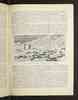
[Image] AFTER THE BATTLE--FIELD OF WOUNDED KNEE--CAMPAIGN 1890-1891
non-fog encumbered journey up the English Channel--unusually bright with sunshine--the grand panorama of England's majestic shores--her passing fleet of countless examples of all kinds of marine architecture, the steaming up of the River Scheldt with its dyked banks and beautifully cultivated fields, opened to the marveling nomad his first edition of Aladdin, and landed him, wonderingly surprised at the sight of thousands of white men peacefully greeting his arrival, in the busy commercial mart of Antwerp.
After introducing the Indians to hotel life for the first time, a tour of the city was made, among the notable points visited being the Cathedral, which grand edifice aroused their curiosity. The grand picture, Ruben's "Descent from the Cross," brought to the minds of all-white men, "friendlies," and "hostiles"--the contributing cause of the late regretable campaign, the "Messiah craze"--an interest intensified by the fact that the aesthetic-looking "SHORT BULL," and some of the others, had been the leading fanatical believers (probably, even apparently, conscientious), promotes and disciples of the still mysterious religious disease that lately agitated the Indian race in America. In fact, after the death of "SITTING BULL," the central figures of this strange belief were "SHORT BULL" as the religious leader, and "KICKING BEAR" as the War Chief. Grouped together with "SCATTER," "REVENGE," and others, in moody contemplation of this subject, was the late defier of a mighty nation of 65,000,000 people nearly all whom teach or preach the truthfulness of the picture's traditions--
62
60
a man in two short months transported from the indescribably desolate, almost inaccessible natural fortresses of the Bad Lands (Mauvaise Terre) of Dakota to the ancient city of Antwerp, gazing spellbound on the artistic reproduction, by the renowned artist, of the red man's late dream, "The Messiah." Respect for his thoughts and the natural stoical nature of the Indian leaves to future opportunity an interesting interrogative of what passed through the mind of the subtle chief. Suffice to say that surprise at the white man's many-sided character, and the greatness of his resources in the past and present, was beginning to dawn more and more on the new tourists. Arriving the next day at Strasburg--introduction to the cow-boys, the camp life, the Cathedral, the great clock, the fortifications, etc., was followed by the delight of each brave on receiving his pony; and once more with his trusty friend, the horse, the Ogallalla and Brule in a few days felt as though "Richard was himself again."
Joining more heartily than was expected in the mimic scenes of the "Wild West," soon the ordinary routine of daily duties seemed a pleasant diversion. A grand reception in Strasburg, the tour resumed to Carlsruhe, Mannheim--including a visit to Heidelberg Castle--Mayence, Wiesbaden, to Cologne (the Rhine legends of Lurline, etc., giving interest to the Peau Rogue en route), Dortmund, Duisburg, Crefeld and Aix-la-Chapelle terminated a tour of Germany filled with the most pleasant recollections. The tomb of Charlemagne! (Carolo Magno). The history of this great warrior was interpreted to attentive ears, a lesson being instilled by the relation that after all his glory, his battles, triumphs, and conquests in which he defeated the dusky African prototypes of the present visitors to his tomb, peace brought him to pursue knowledge, to cultivate the arts and sciences, and that after two hundred years of entombment his body was found by Otto, the Saxon, sitting erect upon a granite throne, the iron crown upon his head, imperial sceptre in right hand, while his left rested on an open volume of Holy Scriptures, the index finger pointed to the well-known passage, "What will it profit a man if he gain the whole world and lose his own soul?" Here, by the grave of the founder of Christianity stood the latest novitiates to its efforts, who may yet, in following its teachings, it is hoped, make such progress through its aid and education as to furnish one of their race capable of holding the exalted chieftainship--the Presidency of their native land--the Empire of the West. Who can say--why not?
Belgium--Brussels, its Paris, brings vividly to mind, in its semblance of language, people, habits, beauty, wealth, culture and appreciation, remembrances of our delightful sojourn in the capital of the how-truly-named La Belle France. Visit Waterloo. From Pine Ridge to historic Waterloo! Our immense success, courteous treatment, the repeated visits and kindly interest of that most amiable lady, the Queen, an enthusiastic horsewoman, her pleasant reference to London in the Jubilee year, combined to increase the gratitude the Wild West voyagers feel for the treatment everywhere received in Europe since, in 1887, we invaded "Old England," and pitched our tents in the World's Metropolis--London. So, after a short season in Antwerp, our motley cargo set sail across the North Sea to make complete our farewell visit to our cousins of the isle, revel in a common language (bringing a new pleasure to the ear), hoping to receive a continuance of that amicable appreciation of our humble efforts that the past seemed to justify. Landing at Grimsby and proceeding to Leeds in Yorkshire, we commenced a provincial tour of Great Britain. The reception everywhere accorded us was so hearty in its nature that a sentiment of relationship insensibly permeated the Yankee exiles. From Leeds we went to Liverpool, the great shipping port, thence to Manchester where old friendships were renewed and new ones formed--a notable event being a benefit to nineteen of the Balaclava survivors (who were indigent), resulting in great success, not only financially, but from an historic point, because of the participation in our performance of three generations, the past, present and future English soldier--in the battle-scarred veterans; the Prince of Wales' Own (Lancers) and the boy cadets of the city. Sheffield with its busy factories was next visited, and the Indian found a new cause for amazement in the world's cutlery city. Stoke-on-Trent, with its marvelous Wedgewood ware works and other innumerable pottery industries, gave another lesson in Caucasian progress, and opened to the red man new wonders in the art of table decoration. Nottingham with its busy lace looms; Leicester of historic interest, and Birmingham with its mammoth iron plants, in order challenged the admiration and assisted to educate the son of the forest.
Cardiff (Wales), in energy and "git up" quite an American city, having increased in population and wealth 55 per cent. in nine years, remains on our ledger as a banner six days' stand, the receipts exceeding [L with stroke]10,000 ($50,000), the R. R. stocks rising on the market and one restaurant alone feeding 15,000 extra dinners to the visiting Welshmen. To Bristol, the famous West of England seaport, and thence to Portsmouth-Devonport. The great naval

64
62
military-commercial twin cities combined to render our visit to the South of England profit able and enjoyable. Brighton with its beauty in repose and its terror in a cyclone will long be remembered as our last stop before going to Glasgow (Scotland), where the winter was spent in a specially arranged building. Here we were made acquainted with the many sturdy virtues of the Scot, and here 6,000 orphan children, impromptu, sang "Yankee Doodle" on the appearance of the starry flag. Glasgow will ever be remembered for the many public and social courtesies extended.
A return to the scene of our London triumphs brough a renewal of all that was pleas ant and agreeable in our former experience, and brought our visit to the Old World to a close with a bright compliment under the circumstances (the Court in mourning for Prince Albert Victor) of a Royal request to exhibit before her Most Gracious Majesty the Queen of Eng land and Empress of India, at Windsor Castle; who was thus the first and only potentate on earth to view, as yet, the Wild West in conjunction with the Rough Riders of the World. This episode has been so lately exploited in the press as to preclude more extended comment.
RETURN, RETROSPECTION AND REVIEW.
Leaving England with genuine expression of regret from thousands who witnessed our departure, we boarded at Tillbury Docks in London the good American liner, Mohawk, traversing the North Sea, the English Channel nd the broad Atlantic in a journey with ex treme comfort, and weighted down with pleasant reminscences of the past and glorious anticipation of feeling of sentiment that permeates every one as he nears his native land and views the grandest of all panoramas, the vision of New York Harbor with its Liberty beacon and its starry flag flying; -- the feeling that inspired Howard Payne, and would cause even the mute to wish to burst forth with the thrill of a bird and the power of a Patti, or a concentrated orchestra, as a relief, in "Home, Sweet Home."
The good ship Mohawk deserves passing mention from the fact that while a nine day boat from London Dock to Jersey City, through her latter-day construction she equals seven or eight days from Queenstown or Southhampton, and does not roll from side to side. We were in a three days' storm of so severe a nature as to cause intense interest in New York on the arrival of several "ocean greyhounds." Stories of battened-down hatches, passengers prevented from going on deck, and in fact several crazed through excitement; yet the writer must sat that with the exception of the "uphill and down dale" motion, the Mohawk during the height of the three days' storm, was never sufficiently moved to render unstable the under-pinning of a two-year-old babe.
Entering the harbor just in time of the evening to "anchor" in view of Greater New York, the ocean traveler can imagine the scene of Indians, Cow-boys, Mexicans, Scouts, Frontiersmen and Staff as we rode at anchor in view of the flickering lights, and what rumor said would possibly soon be one of the objective points to present the enlarged aggregation of Rough Riders of the World we had developed into, and probably for the last time present a "page of passing history" of which so cosmopolitan a city is acknowledged to be innocently ignorant.
Landing at Jersey City, the usual scenes attendant occurred with nothing to mar the occasion, if I may except one instance in our little circle, which to a certain extent had its tragic side. It was only a white horse, but a well-known horse; a horse whose picture the public will remember in a conjunction with Colonel Cody's, placarded on all walls and exhibited in all windows; a horse who possibly, with his rider, appeared in more cities and before more people of distinction, rank, wealth, and character, than ever steed before. The fact that he was the companion of Colonel Cody's last war horse, "Charley," who died and was buried at sea upon our first return voyage--and that, singular to relate, without any premonitory symptoms of sickness and never looking better in his life, "Billy" walked off the gang-plank, neighed as he hoofs struck his native shore, and dropped dead--is food for thought that each one may assimilate. However small it may seem, this pathetic incident will always be remembered by the returning voyagers, as "Billy" and "Charley" were favorite members of the "Old Guard."
The writer followed the sun on its westward course with his Red Brother, and it would take a chapter to describe the scenes at the grand reception at the foothills of the Rockies upon the return to the Ogallallas of the various bands--among them many of the Ghost Dance prisoners, now changed by the experience--where the camp fires and dances of their friends showed the savage nature to possess the same warm sentiment towards loved ones as that which animates more civilized men.

65
63
After returning from the "Bad Lands" and joining Colonel Cody--who, upon coming from London had gone direct to his home in North Platte--in company with Major Mildmay and Colonel McGibbon, of her Majesty's Grenadier Guard, a hasty trip was made to the Grand Canyon of the Colorado through upper Arizona and Utah. It was pleasant to return to the rugged camp life, and it gave res as it gave refreshment to mind and body, as this was a visit to one of the more interesting picturesque sections of God Almighty's eath. This last tast of Nature from the actual Wild West was greatly appreciated, not only by the visit ers, but by the American Scout himself, and his mind brought back memories when his child hood home was on the banks of the Missouri River, and there existed a vacuum as regards its civilization from there to the apex of the Rocky Mountains.
Finishing this slight recreation after a six year's trip in Europe and a campaign with General Miles in the West, attention was turned to a reorganization eclipsing past efforts for an ethnological, military, racial combination of horsemen from all quarters of the globe--to be in conjunction with the "Wild West" features--and now known as the "Congress of Rough Riders of the World," for presentation at the World's Fair, Chicago. Mr. Nate Sals bury, the able and energetic manager and partner of Colonel Cody, with that forethought and judgement that has characterized his career, had succeeded in securing (at an enormous rental) one of the most valuable squares of ground in the immediate proximity to Jackson Park, so accessible in location and so convenient to the marvelous Exhibition as to become quickly indentified as an adjunct to the same. Animated interest was at once enlisted in sub jects neglected in the organization of that grandest of international expositions--the Ameri can Indian, and primitive and military horsemen; and so great was the instantaneous and phenomenal success that the Wild West became publicly and semi-officially recognized as "the World's Fair's most populat annex."
The two fitted each other from the fact that the stupendous collection of $300,000,000 worth of exhibits and architectural from-work, eclipsing in effect and artistic delicacy the dream of the whildest enthusiast, combining, as it did, the constructive developments and arsistic beauties of ages of edificial experiences and education--represented the development of man's progressive possibilities in art, science and mechanism to such an exceeding degree as to leave forever on the pages of civilization's grandest achievement the fame of the "White City" of that West whose aboriginal owners and their primitive confreres-repre senting the nomadic past--were an educative, thoughtful sentimental and pathetic key to the Golconda adjoining, as they in primitive garb impressed the multitudes with the starting point of man by their lingering still on the scene of life to such an extent as to leave the little less famous and always to be remembered annex, "Buffalo Bill's Tented City."
Encouraged by this success (notwithstanding the enormous investment necessary to its proper placing), Messrs, Cody and Salsbury determined to find a situation accessible and convenient to the most favorably located of cities, the cosmopolitan centre of the nine teenth century's progress and the no doubt future Metropolis of the Globe,
"GREATER NEW YORK."
The point selected includes what is now called Ambrose Park, adjoining 39th Street Ferry, South Brooklyn, where the present colossal improvements have been erected on a spot of interest--in fact, his toric ground. On what is now 35th Street and Third Avenue commenced the decisive game of strategy between the Father of our Country (German George Washington) and the English general Lord Cornwallis, and known in the annals of that heroic struggle for liberty of the American people as the "Battle of Long Island." The engagement concluded, General Washington took advan tage of the recessibilty of this point to evade the superior re-enforcements of the evening
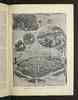
OFF ANTWERP.