

41
39 the bright and Happy Hunting Grounds, to be sorry for our sings, to institute a Messiah Dance among our people at Pine Ridge, and to keep up this dance until the Lord himself shall appear."
When the Ghost or Messiah Dance was first given on Pine Ridge Reservation by the Sioux who had been in Utah on a visit to the Ute Indians, there were many on-lookers. These became interested as the dance proceeded, for such was its influence upon a beholder that he felt an irresistible desire to join the circle.
The largest camp of the dancers prior to the departure for the North was located upon Wounded Knee Creek. Other camps of considerable extent existed upon White Clay Creek, four miles from the agency headquarters, upon Porcupine and Medicine Root streams. Nearly five hundred persons were leaping up and down, or rolling upon the earth, at one time, in an enormous circle. The earth is packed as firm as a cemented cellar bottom, so rendered by the thousands of feet that stamped furiously upon the surface, and for a space of three hundred and fifty feet in diameter there is not a vestige of grass, nor the indication of the smallest shrub.
When the medicine men took the Ghost Dance under their charge one man was appointed "High Priest," to have entire control of the ceremonies. His four assistants were likewise invested with power to start or stop the dance at will. They were given authority to punish any person who should refuse to obey their commands.
While the priests are employed in their prayers, the squaws make a good-sized sweathouse. Poles are stuck in the ground and the tops bent together and securely tied. These saplings are strong enough to bear the weight of several hundred pounds. Over the framework are heaped blankets and robes to such a thickness that no smoke or steam can pass from the interior. A fire is started in a hole in the ground several feet from the small entrance to the sweat-lodge, and twenty or thirty good-sized stones are placed therein to be heated. When these rocks have become suffieciently hot, the young men who are to partake of the bath, strip with the exception of the breech clout, and crawl through the door. They seat themselves in a circle, with their feet toward the center and their backs against the sides of the lodge. The attendant shoves some of the hot stones inside, and the young men pour water from a hide bucket upon the little stone heap. Steam and vapor arise, completely filling the inclosure. The attendant has meanwhile covered the opening so that no air from the outside may penetrate. As the vapor condenses, the attendant thrusts more stones within, and thus the operation is continued as long as the youths can stand the confinement. The pipe is also smoked during the sweat. When the young men issue from their bath the perspiration is fairly streaming from every pore. If it is not cold weather they plunge into a pool in the creek near by, but if it be chilly they wrap blankets about their bodies.
Several sweat-houses are erected in order to prepare the young men for the dance. When a good number of young men, say fifty or sixty, have thus prepared themselves, the high priest and his assistants come forward. The high priest wears eagle-feathers. The dancers wear no ornaments whatever and enter the circle without their blankets, many of them only wearing their ordinary clothes.
That Indians should lay aside all ornaments and finery and dance without the trappings which they so dearly love, proves conclusively that some powerful religious influence is at work.
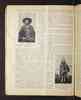
"SITTING BULL" The celebrated Uncapapa Sioux Chief, killed in 1891.
42
40 In their other dances, the Omaha, the Old Woman, the Sun, and War Dances, feathers and bangles, weapons, herbs or painted and plaited grasses, porcuine quills, horses' tails and bits of furskings, necklaces, bells, silver disks, etc, are worn in great profusion.
The candidates for "conversion" do not fast, as has been stated by several writers who have not thoroughly investigated the subject. After they have come forth from the sweat-house they are ready to enter the sacred circle. The high priest runs quickly from the village to the open space of ground, five or six hundred yards distant, and stationing himself, near the sacred tree, begins his chant as follows:
"Hear, hear you all persons!" "Come, hurry up and dance, and when you have finished running in the circle, tell these people what you have seen in the spirit land.
"I myself have been in the spirit land, and have seen many strange and beautiful things, all of which the great Wakantanka rules over, and which my eyes tell me are good and true."
As the speaker proceeds the men and women leave their tepees and crowd to the dance-ground. They dorm two or three circles, according to the number of persons who wish to participate, and, grasping hands with fingers interlocked ("Indian grip"), the circles begin to move around toward the left. They rub their palms in dust or sand to prevent slipping, for it is considered unlucky for one to break connections.
The sacred tree needs a few words of explanation. It is a nearly straight sapling thirty or forty feet high, trimmed of branches to a height of several feet. To the topmost twigs is attached a small white flag or canvas strip, supposed to be an emblem of purity, together with some of colors. The base of the tree is wrapped with rushes and flags to a thickness of about five feet. Between the reeds the dancers from time to time thrust little gifts or peace-offerings. These offerings are supposed to allay the anger of the Great Spirit, and are given in perfectly good faith by the poor natives. They consist of small pieces of calico, bags of tobacco, or pipes. During the heat of excitement, those worshipers most deeply affected cut small particles of flesh from their arms, and thrust these, also, between the rushes of the holy tree.
Henry Hunter (The Weasel "Itonkasan") informs me that after the dance had been running some days, the rushes covering the base of the tree were literally besmeared with human blood!
As the circle moves toward the left, the priest and his assistants cry out loudly for the dancers to stop a moment. As they pause he raises his hand toward the west, and, upon all the people acting similarly, begins the following remarkable prayer:
"Great Spirit, look at us now. Grandfather and Grandmother have come. All these good people are going to see Wakantanka, but they will be brought safely back to earth. Everything that is good you will see there, and you can have these things by going there. All things that you hear there will be holy and true, and whenyou return you can tell your friends how spiritual it is."
As he prays, the dancers cry aloud with all the fervor of religious fanatics. They moan and sob, many of them exclaming: "Great Father, I want you to have pity upon me."
One can scarcely imagine the terrible earnestness of these people. George E. Bartlett, the United States Deputy Marshal of this district, and Mr. Sweeney, one of the Agency school teachers, the chief herder, Mr. John Dar,, and others, have informed me
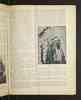
"JOHNNY BURKE NO NECK." Found on the Battle Field of Wounded Knee after the annihilation of Big Foot's Band.
43
41 that during their extended experience on the Agency, of many years' duration, they have witnessed many of these dances. They describe the scene of the dance, especially at night, as most weird and ghostlike. The fires are very large, and shed a bright reflection all around. The breasts of the worshippers heave with emotion; they groan and cry as if they were suffering great agony, and as the priest begs them to ask great Wakantanka to forgive their sins, such a cry of despair and anguish arises as to deeply affect even the whites prsent. Bartlett said that, in his opinion, men could not be more in dead earnest nor pray harder than did these poor children of the plains.
After prayer and weeping, and offerings have been made to the sacred pole, the dance is started again. The dancers go rather slowly at first, and as the priests in the center begin to shout and leap about, the dancers partake of the enthusiasm. Instead of moving with a regular step, each person jumps backward and forward up and down, as hard as he or she can without relinquishing their hold upon their hand. One by one the dancers fall out of the ranks, some staggering like drunken men, others wildly rushing here and there, almost bereft of reason. Many fall upon the earth to writhe about as if possessed of demons, while blinded women throw their clothes over their heads and run through brush or against trees. The priests are kept busy waving eagle-feathers in the faces of the most violent worshipers. The feather is considered sacred, and its use, together with the mesmeric glance and motion of the priest, soon causes the victim to fall into a trance or deep sleep. Whether this sleep is real or feigned the writer does not pretend to say, but sufficiently deep is it that whites visiting the dance have been unable to rouse the sleepers by jest or blow.
Unquestionably the priests exercise an influence over the more susceptible of the dancers akin to hypnotism. One of the young men, who told me that the priest:
"Looked very hard at us. Some of the young men and women could not withstand his snake-like gaze, and did whatever he told them."
If this does not describe the manner in which a "professor" of mesmerism influences his pupils, nothing can.
Regarding what is seen by the converts when in the spirit land there is much speculation. I have secured interviews with three prominent chiefs touching upon this matter, and before relating what they told me I wish to call especial attention to the strong resemblance of their visions to the teachings of the Saviour in the New Testament.
"When I fell in the trance a great and grand eagle came and carried me over a great hill, where there was a village such as we used to have before the whites came into the country. The tepees were all of buffalo hides, and we made use of the bow and aroow, there being nothing of white man's manufacture in the beautiful land. Nor were any whites permitted to live there. The broad and fertile lands stretched in every direction, and were most pleasing to my eyes.
I was taken into the presence of the great Messiah, and he spoke to me these words:
"My child, I am glad to see you. Do you want to see your children and realtions who are dead?"
"I replied: 'Yes, I would like to see my relations who have been dead a long time." The God then called my friends to come up to where I was. They appeared riding the finest horses I ever saw, dressed in superb and most brilliant garments, and seeming very happy. As they approached, I recognized the playmates of my childhood, and I ran forward to embrace them while the tears of joy ran down my cheeks.
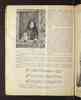
CHIEF "NO NECK." Ogallalla Sioux. Famous Warrior. A Friendly. A Leading Government Scout in Last Campaign.
44
"We all went together to another village, where there were very large lodges of buffalo hide, and there held a long talk with the great Wakantanka. Then he had some squaws prepare us a meal of many herbs, meat, and wild fruits and 'wasna' (pounded beef and choke-berries). After we had eaten, the Great Spirit prayed for our people upon the earth, and then we all took a smoke out of a fine pipe ornamented with the most beautiful feathers and porcupine quills. Then we left the city and looked into a great valley where there were thousands of buffalo, deer, and elk feeding.
"After seeing the valley, we returned to the city, the Great Spirit speaking meanwhile. He told me that the earth was now bad and worn out; that we needed a new dwelling place where the rascally whites could not disturb us. He further instructed me to return to my people, the Sioux, and say to them that if they would, be constant in the dance, and pay no attention to the whites, he would shortly come to their aid. If the high-priests would make for the dancers medicine-shirts and pray over them, no harm could come to the wearer; that the bullets of any whites that desired to stop the Messiah Dance would fall to the ground without doing any one harm, and the person firing such shots would drop dead. He said that he had prepared a hole in the ground filled with hot water and fire for the reception of all white men and non-believers.
"With these parting words I was commanded to return to earth" The above story was related by Lone Wolf, as heard by him from a ghost dancer. It is a literal translation, MUSIC OF THE DANCE,-- There are intermissions every hour in the progress of the dance, and during these pauses several pipes are passed around. Each smoker blows a cloud upward toward the supposed dwelling-place of the Messiah. He inhales deep draughts of the fragrant smoke of red willow-bark into his lungs, blows it out through his nose, and then passes the pipe to his neighbor.
The songs are sung without accompaniment of a drum, as is customary in the other dances. All sing in unison, and the notes, although wild and and peculiar, being in a minor key, do not lack melody. The Weasel (Itonkasan) has given me the following two songs as sung by his people during the dance.
Music Notes The words sung in Sioux are: Ina he kuye misunkala ceya omaniye-e. Ina he kuye. Ate he lo. Ate he lo. As translated by Deputy U.S. Marshal Bartlett, this is:
"Little Emma." Indian Girl. Daughter of the Ogallalla Chief, "Lone Wolf."
45
Come here my mother; my younger brother is walking and crying. Come here my mother; here is the father, here is the father. Here are the notes of another song:
Music Notes
to this strain are used the words: Ate he ye lo, canupawan ci ci ca hu pi yani pi kta lo. Ate he ye lo. Ate he ye lo. Which in English are: This the father said, he brings the pipe for you, and you will live. This the father said, this the father said. Just after the dancers have been crying and moaning about their sins the priests strike up the first song, in which all join, singing with deafening loudness. Some man or woman may be at this moment at the tree, with his or her arms thrown about the rushes, sobbing as if the heart would break; or another may be walking and crying, wringing his hands, or going through some motion to indicate the deepest sorrow for his transgressions. So the singer cries aloud to his mother to be present and aid him. The appeal to the father refers, of course, to the Messiah, and its use in this connection is supposed to give emphasis to the demand for the mother's presence, and hasten her coming.
the second song requires a longer explanation. It expresses in brief the goodness of the father. Some one of the dancers has come to life from the trance, and has just related his or her experience in the other world. The highpriest, enlarging upon the importance of this fact, runs about the interior of the circle handing several pipes around, exclaiming that these pipes were received direct from the Great Spirit, and that all who smoke them will live. The people are worked up to such a pitch of religious frenzy that their minds are now willing to receive any utterance as truth indisputable, so they pass around the pipes, singing the song meanwhile. The repetition of the words, "This the father said," gives more weight to the song.
The vision of Little Horse is still more remarkable. Through the Weasel he said:
"Two holy eagles transported me to the Happy Hunting Grounds. They showed me the Great Messiah there, and as I looked upon his fair countenance I wept, for there were nail-prints in his hands and feet where the cruel whites had once fastened him to a large cross. There was a small wound in his side also, but as he kept himself covered be seen when he shifted his blanket, He insisted that we continue the dance and promised me that no whites should enter his city nor partake of the good things
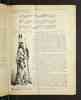
"KICKING BEAR." Ogallalla Sioux, War Chief of the Messiah Craze, Fighting Chief of Ghost Dancers.