
31
29
wise engaged. I regret to say that I tried the experiment. I lighted a match--at least I think I did--but there was a haziness about the subsequent proceedings that prevents accuracy of statement. I distinctly remember striking the match. At that moment, however, I was fluently propelled upward; a tornado caught me--whirled me around eleven times. As I came down a pile-driver drove me in the stomach, and I came to earth with that sensation (only intensified) that a man feels who sits down in what he imagines to be a high chair, and which he afterward things was about seven feet lower than his estimate. I saw whole milky ways of constellations that never before existed. I realized for the first time the dense solidity of the earth, and made the astonishing discovery that under certain circumstances our planet, instead of revolving on its own axis once in every twenty-four hours, can rush around at the rate of at least one hundred revolutions a minute. There is not in the whole range of languages, ancient, modern, or profane, terms sufficiently expressive to describe the state of my feelings, the amount of mud on my person, or the chaotic condition of my brain. As soon as the earth settled down to the usual speed of her diurnal motion, I came to the conclusion that it was not always best to judge by appearances. I had been hasty in bestowing a distinctive cognomen on my erratic steed. He had no more deliberation in him than has a fugitive flea under the searching scrutiny of a determined woman. I re-named him. This time I called him "Delay," because delay is--but it does not matter.
Come to think of it since, the reason was weak. If, however, the reader should pierce the intricate labyrinth of mental ingenuity that constitutes the conundrum, I trust he will be charitable enough to consider the circumstances connected with its perpetration.
There are times that try men's souls. There are seasons in every Christian's life when he wishes he was not a church member for just about five minutes, that he might have a chance to do justice to the surroundings. Such to me was the trying moment when I gathered my bruised remains together, and, looking around, saw the festive "Delay" quietly eating grass, while a little distance off sat the doctor on his pony, complacently whistling, "Earth hath no sorrow that Heaven cannot heal."
GENERAL-CONSULATE OF THE UNITED STATES OF AMERICA.
MR. NATE SALSBURY. ROME, 3D MARCH, 1890.
RESPECTED SIR:-
The Roman papers report that COLONEL CODY has engaged with Don Onorio Caetani Herzogs of Sermoneta, Prince of Teano, etc., etc., that he will to-morrow ride in the Exhibition of thos town some of his untamed stallions.
I send you, therefore, some of this gentleman's reference lists, also information as to his family and his horses, which may be of interest at this time.
The great lordly family of the Cajetans is the oldest is the oldest amongst the noble families of Rome. The Cajetans were once the lords over the entire Roman districts of Velletri (twenty-five miles south of Rome), near Fondi (on the Terracina side).
They gave two Pontiffs to the Throne of St. Peter, Gelasius II. (1118), and Boniface VII. (1294), and were the close allies of the Connas and the Orsinis, in their long contests with the Papacy in the eleventh and twelfth centuries.
Their large estates were confiscated by Pope Alexander VI. (1492-1503), but were afterward restored under another Pontiff.
The present chief representative of the family is Don Onorio Caetani Herzog of Sermoneta, Prince of Teano, etc., etc. He is the son of the late Prince Michael Angelo Caetani, renowned for his studies and commentaries on the works of the poet Dante and his manifold services in the interests of Italian culture and art in general.
The family residence in Rome is the Cajetan Palace, where the family pedigree and archives is key.
These genealogies and documents are the most complete of all the great historic Roman families. Some of the branches of the pedigree are dated back into Cajetans of the ninth and tenth centuries.
The small village of Cisterna, where the untamed stallions are kept, lies about thirty-one miles south of Rome; it is situated on the same line as the old Appian Way. The archaeological and historic name of the village was "The Three Taverns," where the holy Apostle Paul (in the Book of Acts, chapter xviii, and 15th verse) arrived, and found some of his friends come to meet him, on his journey toward Rome.
This ancient site, and the whole surrounding district, is still the property of the Cajetans.
The Prince's horses, which will be chosen for this test from the Cisterna Campagna, are known in Rome as the Cajetan breed, and hold their own for the wildest and unmanageable in the country.
32
30
It is said that this breed shows a local crossing with a Saracen breed (which was intriduced into these parts by the Saracens in the Middle Ages), and also a touch of English full blood.
Whole volumes of illustrious history might be supplied with reference to the Cajetan family and of their richly endowed estate; they have filled a spacious position in the annals of a thousand years. With sincere respect, (Signed) CHARLES M. WOOD,
Vice-Consul of the United States of America at Rome, Italy.
ROMAN WILD HORSES.
TAMED BY COW-BOYS, RIDDEN IN FIVE MINUTES. HOW "BUFFALO BILL'S" COW-BOYS TAME THE ROMAN WILD HORSES.
(Per the Commercial Cable to the "Herald.") ROME, 4TH MARCH, 1890
All Rome was to-day astir over an attempt of "BUFFALO BILL'S" cow-boys with wild horses, which were provided for the occasion by the Prince of Sermoneta.
Several days past the Roman authorities have been busy with the erection of specially-cut barriers for the purpose of keeping back the wild horses from the crowds.
The animals are from the celebrated stuff of the Prince of Sermoneta, and the Prince himself declared that no cow-boy in the world could ride these horses. The cow-boys laughed over this surmise, and then offered at least to undertake to mount one of them, if they might choose it.
Every man, woman, and child expected that two or three people would be killed by this attempt.
The anxiety and enthusiasm was great. Over 2,000 carriages were ranged round the field, and more than 20,000 people lined the spacious barriers. Lord Dufferin and many other Diplomatists were on the Terrace, and amongst Romans were presently seen the consort of the Prime Minister Crispi, the Prince of Torlonia, Madame Depretis, Princess Colonna, Gravina Antonelli, the Baroness Reugis, Princes Brancaccia, Grave Giannotti, and critics from amongst the hgihest aristocract. In five minutes the horses were tamed.
Two of the wild horses were driven without saddle or bridle in the Arena. "BUFFALO BILL." gave out that they would be tamed. The brutes made springs into the air darted hither and thither in all directions, and bent themselves into all sorts of shapes, but all in vain.
In five minutes the cow-boys had caught the wild horses with the lasso, saddled, subdued, and bestrode them. Then the cow-boys rode them round the Arena, whilst the dense crowds of people applauded in delight.
"BUFFALO BILL" IN VENICE
(By Telegraph, "New York Herald.") VENICE, 16TH APRIL, 1890
"BUFFALO BILL" and his "Wild West" have made a big show in Venice. This evening the directors have a special invitation on the Grand Canal, where the whole troupe will be shown. COLONEL CODY is taken by the Venetian Prefect in his own private residence. No one can think them ordinary artists, after they have seen the gathering of different Indians in gondolas, or seen the wonderful sight which presents itself at the Venetian Palace, and in the little steamboats that ply between the Pier of St. Mark and the Railway Station.
Thousands of Venetians assembled yesterday at Verona, where the Comany of the Municipal Authorities of Justice hace allowed the use of the Amphitheatre, or the so-called Arena, one of the most interesting structures of Italy, and nearly so with the Colosseum of Rome itself.
45,000 persons can conveniently find sitting room in this Arena, and for standing room there is also extensive space. As His Royal Highness Victor Emanuel was on a visit here one, 60,000 people were accommodated in it. It is, perhaps, interesting to know that this building is the largest in the world, although the "Wild West" Show quite filled it.
The Amphitheatre (Arena) was built on the year 290 A.D., under Diocletian, and is known in Germany as the Home of the Dietrich of Bern. It is 106 feet high, 168 meters long, and 134 meters broad (the Arena itself is 83 meters long, 48 meters broad), the circumference is 525 meters. In the surrounding Amphitheatre (entering by the west side through Arch No. 5, admission one franc, Sunday free), are five-and-forty rows of steps, 18 inches high, 26 inches broad, built of grey, or rather reddish yellow limestone, where nearly 20,000 spectators can dins places, and where many more people can see by standing on the wooden benches behind them. From an inscription on the second story, it will be remembered that Napoleon I. visited this place in 1805. The restoration of the building was by recommendation of that Emperor. A wonderful view is obtained from the higher steps.
THE WILD WEST AT THE VATICAN.--"BUFFALO BILL'S" INDIANS AND COW-BOYS AT THE ANNIVERSARY CEREMONY OF LEO XIII.
New York Herald, March 3, 1890.--(From our Special Correspondent.) ROME, March 3.
One of the strangest spectacles ever seen within the venerable walls of the Vatican was the dramatic entry of "BUFFALO BILL" at the head of his Indians and cow-boys this morning,
33
31
when the ecclesiastical and secular military court of the Holy See assembled to witness the twelfth annual thanksgiving of Leo XIII, for his coronation. In the midst of the splendid scene, crowded with the old Roman aristocracy, and surrounded by walls immortalized by Michael Angelo and Rafael, there suddenly appearted a host of savages in war paint, feathers and blankets, carrying totmahawks and knives.
A vast multitude surged in the great square before St. Peter's early in the morning to witness the arrival of the Americans. Before half-past nine o'clock the Ducal Hall, Royal Hall, and Sextine Chapel of the Vatican were packed with those who had influence enough to obtain admittance. Through the middle of the three audiences, the pathway was bordered with the brilliant uniforms of the Swiss Guards, Palatine Guards, Papal gendarmes and private chamberlains. The sunlight fell upon lines of glittering steel, molding plumes, golden chains, shimmering robes of silk, and all the blazing emblems of pontifical power and glory.
THE WILD WEST MAKE THEIR ENTREE.
Suddenly, a tall and chivalrous figure appeared at the entrance, and all eyes were turned toward him. It was COLONEL W. F. CODY, "BUFFALO BILL," With a sweep of his great sombrero, he saluted the chamberlains, and then strode between the guards with his partner, MR. NATE SALSBURY, by his side.
"ROCKY BEAR" led the Sioux warriors who brought up the rear. They were painted in every color that Indian imagination could devise. Every man carried something with which to make big medicine in the presence of the great medicine man sent by the Great Spirit.
"ROCKY BEAR" rolled his eyes and folded his hands on his breast as he stepped on tiptoe through the glowing sea of color. His braves furtively eyes the halberds and twto-handed swords of the Swiss Guards.
The Indians and cowboys were ranged in the south corners of the Ducal Hall, COLONEL CODY and MR. SALSBURY were escorted into the Sextine Chapel by chamberlains, where they were greeted by Miss Sherman, daughter of General Sherman. A Princess invited COLONEL CODY to a place in the tribune of the Roman nobles.
He stood facing the gorgeous Diplomatic Corps, surrounded by the Prince and Princess Borghesi, the Marquis Serlupi, Princess Bandini, Duchess di Grazioli, Prince and Princess Massimo, Prince and Princess Ruspoli, and all the ancient noble families of the city.
THE PAPAL BLESSING.
When the Pope appeared in the sedia gestatoria, carried above the heads of his guards, preceded by the Knights of Malta and a procession of cardinals and archbishops, the cowboys bowed and so did the Indians. "ROCKY BEAR" knelt and made the sign of the cross. The Pontiff leaned affectionately toward the rude groups and blessed them. He seemed to be touched by the sight.
As the Papal train swept on, the Indians became excited, and a squaw fainted. They had been warned not to utter a sound, and were with difficulty restrained from whooping. The Pope looked at COLONEL CODY intently as he passed, and the great scout and Indian fighter bent low as he received the Pontifical benediction.
After the Thanksgiving Mass, with its grand choral accompaniment and now and then the sound of Leo XIII's voice, heard ringing through the chapel, the great audience poured out of the Vatican.
A GREAT PONY-EXPRESS RIDE.
While riding Pony-Express between Red Buttes and Three Crossings, seventy-six miles, CODY had a dangerous and lonely route, including crossing of the North Platte river, one-half mile wide, often much swollen and turbulent. An average of fifteen miles an hour had to be made, including changes of horses, detours for safety, and time for meals.
On reaching Three Crossings, finding the rider on the next division, a route of eighty-six miles, had been killed during the night before, he made the extra trip on time. This round trip of three hundred and twenty-four miles, was made without a stop, except for meals and change of horses, one of the longest and best-ridden pony-express journeys ever made. --Buell's History of the Plains
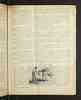
{"OLD CHARLIE" --DIED AT SEA, 1888.}
34
32
AMERICAN WILD WEST EXHIBITION.
Editorial from the London "Times," Nov. 1, 1887. --The American Exhibition, which has attracted all the town to West Brompton for the last few months, was brought yesterday to an appropriate and dignified close. A meeting of representative Englishmen and Americans was held, under the presidency of Lord Lorne, in support of the movement for establishing a Court of Arbitration for the settlement of disputes between this country and the United States. At first sight it might seem to be a far cry from the Wild West to an International Court. Yet the connection is not really very remote. Exhibitions of American products and scenes from the wilder phases of American life certainly tend in some degree at least to bring America nearer to England. They are partly cause and partly effect. They are the effect of increased and increasing intercourse between the two countries, and they tend to promote a still more intimatet understanding. The twto things, the Exhibition and the Wild West Show, supplemented each other. Those who went to be amused often staid to be instructed. The Wild West was irresistible. COLONEL CODY suddenly found himself the heero of the London season. Not withstanding his daily engagements and his punctual fulfillment of them, he found time to go everywhere, to see everything, and to be seen by all the world. All London contributed to his triumph, and now the close of his show is selected as the occasion for promoting a great international movement with Mr. Bright, Lord Granville, Lord Wolseley and Lord Lorne for its sponsors. Civiliazation itself consents to march onward in the train of "BUFFALO BILL," COLONEL CODY can achieve no greater triumph than this, even if he some day realizes the design attributed to him of running the Wild West Show withing the classic precincts of the Colosseum at Rome.
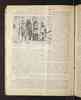
{THE FIGHTING CHIEF, KICKING BEAR AND STAFF, CAMPAIGN 1891, PINE BRIDGE.}
This association of the cause of international arbitration with the fortunes of the American Wild West is not without its grotesque aspects. But it has a serious import, nevertheless. After all, the Americans and the English are one stock. Nothing that is American comes altogether amiss to an Englishman. We are apt to think that American life is not picturesque. We have been shown one of its most picturesque aspects. It is true that "RED SHIRT" would be as unusual a phenomenon in Broadway as in Cheapside. But the Wild West for all that is racy of the American soil. We can easily imagine Wall Street for ourselves; we need to be shown the Cowboys of Colorado. Hence it is no paradox to say that COLONEL CODY has done his part in bringing America and England nearer together.
"MAJOR" BURKE'S APPEAL FOR A PEACEFUL SOLUTION OF THE INDIAN TROUBLE.
[FROM "WASHINGTON POST."
Perhaps one of the most eloquent and effective pleas for a peaceful solution of the Indian trouble was that made by MAJOR JOHN M. BURKE at the famous conference in the Ogalalla camp on the 17th of January, when negotiating for the Indians' surrender with Capt. Lee. The proceedings, as reported for the Department, gives Major Burke's remarks as follows:
"My friends, I came here on the invitation of many of my old Ogalalla friends who know me. I am happy to sit down among you to-day, because it is so much quieter than for some weeks. I do not come here in behalf of the Government or any society, but because I travel and
35
33
live with the Indians, and they are my friends for many years. When I first heard of this trouble, GEN. CODY ('BUFFALO BILL') sent me to do what I could for you. I have been here eight or nine weeks--have listened, heard, and seen a great deal. From the first I saw no necessity for this trouble. A great deal of it came from a misunderstanding and the lack of confidence among the Indians as regards the intention of the Government. Our friend, Capt. Lee, does not carry arms, neither do I. While it looked like peace daily you were just like scared birds, ready to stampede at any time. I am going to Washington to see the great counsellors, and I want to be able to say that when I left all was peace, and that the Indians fully understood Gen. Miles' intention. I want you to place every confidence in him. When the earth loses something God sends something else, and when God took your friend Gen. Crook he sent you Gen. Miles, who is now your benefactor. The foundation of all good in men is truth and honor. When a man has these foundations he has right, and can stand open-handed and talk for his rights. He needs no gun, which is dangerous and causes trouble. You have thousands of friends in the East. Gen. Miles and Capt. Lee can reach those friends. I have this confidence there will be no war on the part of Gen. Miles, if you give up your arms, because through military discipline he can control his men, as soldiers have no interest to shoot Indians. Tell your young men to be calm and have confidence in Gen. Miles who will see you through. But you must discipline and control your young men. Let every man who talks mean what he says, and not talk to evade the question. I, to show you what confidence I have in Gen. Miles that he will not fire upon you and your women and children when you are disarmed, I will promise to live in your camp until you have confidence that the white chief will see no harm come to you. I am glad to hear that some chiefs are going to Washington, and hope instead of ten, twenty or twenty-five will go. I will be there ro see you, and may go with you. I will do all I can in my humble way for you. Let us all work for peace between the white men and the red--not for a moment, a day, a year, but for ever, for eternity."
IMPROVED BY TRAVEL. --CHAMBERLAIN, S. D., DECEMBER 13.
The large number of Indians who have been abroad for the last few years with "BUFFALO BILL'S" Wild West show are doing some good work among the unruly Indians belonging to Rosebud and Pine Ridge agencies, and to their efforst as much as to any one thing can a prevention of an immediate outbreak among the red men be attributed. These Indians emphatically refused to listen to any proposition from the hostiles looking to their joining team, but have continued to act as peacemakers at all times since their return, and they are untiring in their efforst to bring about a peaceful settlement of the present difficulty. These Indians act in marked contrast to some of those educated as many of the latter are among the hostiles.
MAJOR BURKE. --HE TALKS ON THE RECENT TROUBLES AT PINE RIDGE AGENCY.
MAJOR BURKE, the widely and favorably known business manager of "COLONEL CODY'S" Wild West aggregation, spent Sunday in the city, having just returned from Pine Ridge agency. The Major spent from the first day until after the surrender at the seat of the Indian war and did more than any other civilian at the Agency in the interest of peace and a speedy settlement of the trouble. Indeed, he was the central figure at Pine Ridge among the civilians, and even among the officials was a much deferred-to character of acknowledged power with the troubled children of the hills and plains.
"The Bee's dispatches have so fully and accurately reported the situation," said the major, "and they keep up so nearly to the last hour each day that I really ahve nothing new to say. The army and Indians now have a perfect respect for each other, and I think this will continue, for a time at least. The whole matter should I think, be left to General Miles and the appropriation committee of congress. I would not venture, as matters now stand, to predict how long we are to have this running peace. In fact, I scarcely think that any one who feels like speaking for the future in the matter. As to the sending of chiefs to Washington, well that may and I hope will result advantageiously. I have great faith in General Miles' judgment, and I think the president, the commissioner of Indian Affairs and congress will listen to them with much interest. We have had a very wild time at Pine Ridge, one of the most critical in all the history of Indian affairs, and with the whole country I fervently hope for a final settlement that will result in permanent peace."
MAJOR BURKE left last night for North Platte. He will return here on Thursday, and on Wednesday leave for Washington. He has great cause for congratulation on the manner in which those Indians whom he has taken over Europe have conducted themselves during the trying scenes just passed. At all times they were found earnest and patient advocates of peace