

26
24
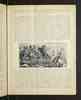
behind, and another at the driver's foot-board. The coach was intended to seat twenty-one men--the driver and two men beside him, twelve inside, and the other six on top. As it now stands, the leather blinds of the windows are worn, the paint is faded, and it has a battered and travel-stained aspect that tells the story of hardship and adventure. Its trips began in 1875, when the owners were Messrs. Gilmour, Salsbury & Co. Luke Laramie, Rawhide Buttes, Hat or War Bonnet Creek, the place where "BUFFALO BILL" killed the Indian Chief, "Yellow Hand," on July 17, 1876, Cheyenne River, Red Canyon, and Custer. Owing to the long distance and dangers, the drivers were always chosen for their coolness, courage and skill.
In its first season the dangerous place on the route were Buffalo Gap, Lame Johnny Creek, Red Canyon, and Squaw Gap, all of which were made famous by scenes of slaughter and the deviltry of the banditti. Conspicuous among the latter were "Curley" Grimes, who was killed at Hogan's Ranch; "Peg-Legged" Bradley; Bill Price, who was killed on the Cheyenne River; "Dunk" Blackburn, who is now in the Nebraska State Prison, and others of the same class, representing the most fearless of the road agents of the West.
On the occasion of the first attack the driver, John Slaughter, a son of the present marshal of Cheyenne, was shot to pieces with buckshot. He fell to the ground, and the team ran away, escaping with the passengers and mail, and safely reached Greeley's Station. This occurred at White Wood Canyon, where it is now buried. The old coach here received its "baptism of fire," and during the ensuing summer passed through a variety of similar experiences, being frequently attacked. One of the most terrific of these raids was made by the Sioux Indians, but the assualt was successfully repelled, although the two leading horses were killed. Several commercial travelers next suffered from a successful ambush, on which occasion a Mr. Liebman, of Chicago, was killed, and his companion shot through the shoulder.
After this stormy period it was fitted up as a treasure coach, and naturally became an object of renewed interest to the rubbers; but owing to the strong force of what is known as "shotgun messengers" who accompanied the coach, it was a long time before the bandits succeeded in accomplishing their purpose. Among the most prominent of these messengers were Scott Davis, a splendid scout, and one of the self-appointed undertakers of many of the lawless characters of the neighborhood; Boone May, one of the best pistol shots in the Rocky Mountain regions, who killed Bill Price in the streets of Deadwood, together with "Curley" Grimes, one of the road agents; Jim May, a worthy brother--a twin in courage if not in birth. Few men have had more desperate encounters than he, and the transgressors of the law have had many an occasion to feel the results of his keen eye and strong arm whenever it has become necessary to face men who are prepared to "die with their boots on." Still another of these border heroes (for such they may be justly termed) is Gail Hill, now the deputy sheriff of Deadwood, and his frequent companion was Jesse Brown, an old-time Indian fighter, who has a record of incident and adventure that would make a book. These men constituted a sextette of as brave fellows as could be found on the frontier, and their names are all well known in that country.
At last, however, some of them came to grief. The bandits themselves were old fighters. The shrewdness of one party was offset by that of the other, and on an unlucky day the celebrated Cold Spring tragedy occurred. The station had been captured, and the road agents secretly occupied the place. The stage arrived in its usual manner, and without suspicion of danger the driver, Gene Barnett, halted at the stable door. An instant afterward a volley was delivered that killed Hughey Stevenson, sent the buckshot through the body of Gail Hill, and dangerously wounded two others of the guards. The bandits then captured the outfit, amounting to some sixty thousand dollars in gold.
On another occasion the coach was attacked, and , when the driver was killed, saved by a woman--Martha Canary, better known at the present time in the wild history of the frontier as "Calamity Jane." Amid the fire of the attack, she seized the lines, and, whipping up the team, safely brought the coach to her destination.
When "BUFFALO BILL" returned from his scout with Gen. Crook, in 1876, he rode in this self-same stage, bringing with him the scalps of several of the Indians whom he had met. When afterward he learned that it had been attacked and abandoned, and was lying neglected on the plains, he organized a party, and, starting on the trail, rescued and brought the vehicle into camp.
With the sentiment that attaches to a man whose life has been identified with the excitement of the Far West, the scout has now secured the coach from Col. Voorhees, the manager of the Black Hills stage line, and hereafter it will play a different role in its history from that of inviting murder and being the tomb of its passengers. And yet the "Deadwood Coach" will
27
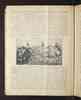
25 play no small part in the entertainment that has been organized by "BUFFALO BILL" and partner for the purpose of representing some of the most starling realities of Western life, in a vivid representation of one of the Indian and road agents' combined attacks. ---- THE COW-BOYS. Among the many features of the Wild West not the least attractive will be the advent in the East of a band of veritable "cow-boys", a class without whose aid the great grazing pampas of the West would be valueles, and the Eastern necessities of the table, the tan-yard, and the factory would be meager. These will be the genuine cattle-herders of a reputable trade, and not the later misnomers of "the road" who in assuming, an honored title, have tarnished it in the East, while being a fact the cow-boys' greatest foe, the thieving, criminal "rustler". To Wilke's Spirit of March, the editor is indebted for a just tribute and description of the American ranchman:- "The Cow-Boy.--- The cowboy! How often spoken of, how falsely imagined, how greatly despised (where not known), how litle understood! I've been there considerable. How sneeringly referred to, and how little appreciated, although his title has been gained by the possession of many of the noblest qualities that form the romantic hero of the poet, novelist, and historian; the plainsman and the scout. What a school it has been for the latter! As tall oaks from little acorns grow, the cow-boy serves a purpose, and often develops into the most celebrated ranchman, guide, cattle-king, Indian-fighter, and dashing ranger. How old Sam Houston loved them, how the Mexican hated them, how Davy Crockett admired them, how the Comanches feared them, and how they were taught at school to admire the deceased little Georde, in exploring adventures, and though not equaling him in the 'cherry-tree goodness,' were more disposed to kick against the bull-dozing of teachers, parents, and guardians.
"As the rebellious kid of old times filled a handkerchief (always a handkerchief, I believe) with his all, and followed the trail of his idol, Columbus, and became a sailor bold, the more ambitious and adventurous youngster of later days freezes on to a double-barreled pistol and steers for the bald prairie to seek fortune and experience. If he don't get his system full it's only because the young man weakens, takes a back seat, or fails to become a Texas cow-boy. If his Sunday school ma'am has not impressed him throughly with the chapter about our friend Job, he may at first be atonished, but he'll soon learn the patience of the old hero, and think he pegged out a little too soon to take it all in, As there is generally openings, likely young fellows can enter, and not fail to be put through. If he is a stayer, youth and size will be disadvantage for his start in, as certain lines of the business are peculiarly adapted to the light young horsemen, and such are highly esteemed when they become thorough knowledge of the business, and a natural instinct to devine every thought, trick, intention, want, habit, or desire of his drove, under any and all circumstances. A man might be brought up in the States swinging to a cow's tail, yet, taken to Texas, would be as useless as a last year's bird's nest with the bottom punched out.
28
26
The boys grow old soon, and the old cattle-men seem to grow young; thus it is that the name is applied to all who follow the trade. The boys are divided into range-workers and branders, road drivers and herders, trail-guides and bosses.
"As the railroads have now put an end to the old-time trips, I will have to go back a few years to give a proper estimate of the duties and dangers, delights and joys, trials and troubles, when off the ranch. The ranch itself and the cattle trade in the State still flourish in their oldtime glory, but are bing slowly enroached upon by the modern improvements that will, in course of time, wipe out the necessity of his day, the typical subject of my sketch. Before being counted in and fully indorsed, the candidate has had to become an expert horseman, and test the many eccentricities of the stubborn mustang; enjoy the beauties, learn to catch, throw, fondle--oh! yes, gently fondle (but not from behind)--and ride the 'docile' little Spanish-American plug, an amusing experience in itself, in which you are taught all the mysteries of rear and tear, stop and drop, lay and roll, kick and bite, on and off, under and over, heads and tails, hand springs, triple somersaults, standing on your head, diving, flip flaps, getting left (horse leaving you fifteen miles from camp--Indians in the neighborhood, etc.), and all the funny business included in the familiar term of 'bucking;" then learn to handle a rope, catch a calf, stop a crazy cow, throw a beef steer, play with a wild bull, lasso an untamed mustang, and daily endure the dangers of a Spanish matador, with a little Indian scrape thrown in, and if there is anything left of you they'll christen it a first-class cow-boy. Now his troubles begin (I have been worn to a fizzled end many times before I began); but after this he will learn to enjoy them--after they are over.
"As the general trade on the range has often been described, I'll simply refer to a few incidents of a trip over the plains to the cattle markets of the North, through the wild and unsettled portions of the Territories, varying in distance from fifteen hundred to two thousand miles--time, three to six months--extending through the Indian Territory and Kansas to Nebraska, Colorado, Dakota, Montana, Idaho, Nevada and sometimes as far as California. Immense herds, as high as thirty thousand or more in number, are moved by single owners, but are driven in bands of from one to three thousand, which, when under way, are designated 'herds.' Each of these has from ten to fifteen men, with a wagon driver and cook, and the 'kingpin of the outfit,' the boss, with a supply of two or three ponies to a man, an ox team, and blankets; also jerked beef and corn meal--the staple food. They are also furnished with mavericks or 'doubleess-owned' yearlings for the fresh meat supply. After getting fully under way, and the cattle broke in, from ten to fifteen miles a day is the average, and everything is plain sailing in fair weather. As night comes on, the cattle are rounded up in a small compass, and held until they lie down, when two men are left on watch, riding round and round them in opposite directions, singing or whistling all the time, for two hours, that being the length of each watch. The singing is absolutely necessary, as it seems to soothe the fears of the cattle, scares away the wolves or other varmints that may be prowling around, and prevents them from hearing any other accidental sound, or dreaming of their old homes, and if stopped would, in all
29
27
probability, be the signal for a general stampede. 'Music hath charms to soothe the savage breast,' if a cow-boy's compulsory bawling out lines of his own composition:
Lay nicely now, cattle, don't heed any rattle. But quietly rest until morn; For if you skedaddle, we'll jump in the saddle, And head you as sure as you're born.
can be considered such,
Some poet may yet make a hit On the odds and ends of cow-boys' wits.
"But on nights when 'Old Prob' goes on a spree, leaves the bung out of his water-barrel above, prowls around with his flash-box, raising a breeze, whispering in tones of thunder, and the cow boy's voice, like the rest of the outfit, is drowned out, steer clear, and prepare for action. If them quadrupeds don't go insane, turn tail to the storm, and strike out for civil and religious liberty, then I don't know what 'strike out' means. Ordinarily so clumsy and stupid-looking, a thousand beef steers can rise like a flock of quail on the roof of an explodinig powder mill, and will scud away like a tumble weed before a high wind, with a noise like a receding earthquake. Then comes fun and frollic for the boys!
"Talk of 'Sheridan's ride, twenty miles away!' That was in the daytime, but this is the cow-boy's ride with Texas five hundred miles away, and them steers steering straight for home; night time, darker than the word means, hog wallows, prairie dog, wolf and badger holds, ravines and precipices ahead, and if you do your duty, three thousand stampeding steers behind. If your horse don't swap ends, and you hang to them until daylight, you can bless your lucky stars. Many have passed in their checks at this game. The remembrance of the few that were foot loose on the Bowery a few years ago will give an approximate idea of the three thousand raving bovines on the war path. As they tear through the storm at one flash of lightning, they look all tails, and at the next flash all horns. If Napolean had had a herd at Sedan, headed in the right direction, he would have driven old Billy across the Rhine.
"The next great trouble is in crossing streams, which are invariably high in the driving season. When cattle strike swimming water they generally try to turn back, which eventuates in their 'millin,' that is, swimming in a circle, and, if allowed to continue, would result in the drowning of many. There the daring herder must leave his pony, doff his togs, scramble over their backs and horns to scatter them, and with whoops and yells, splashing, dashing, and didoes in the water, scare them to the opposite bank. This is not always done in a moment, for a steer is no fool of a swimmer; I have seen one hold his own for six hours in the Gulf after having jumped overboard. As some of the streams are very rapid, and a quarter to half-a-mile wide, considerable drifting is done. Then the naked herder has plenty of amusement in the hot sun, fighting green-head flies and mosquitoes, and peeping around for Indians, until the rest of the lay-out is put over--not an easy job. A temporary boat has to be made of the wagon-box, by tacking the canvas cover over the bottom, with which the ammunition and grub is ferried across, and the running-gear and ponies are swum over afterward. Indian fights and horse thief troubles are part of the regular rations. Mixing with other herds and cutting them out, again avoiding too much water at times, and hunting for a drop at others, belongs to the regular routine.
"Buffalo chips for wood a great portion of the way (poor substitute in wet weather) and the avoiding of prairie fires later one, vary the monotony. In fact, it would fill a book to give a detailed account of a single trip, and it is no wonder the boys are hilarious when it ends, and, like the old toper, 'swears no more for me,' only to return and go through the mill again.
"How many, though, never finish, but mark the trail with their silent graves! no one can tell. But when Gabriel toots his horn, the 'Chisholm trail' will swarm with cow-boys. 'Howsomever, we'll all be thar,' let's hope for a happy trip, when we say to this planet, adios!
J. B. OMOHUNDRO (TEXAS JACK)."
----------------------------------------------------
THE VAQUERO OF THE SOUTHWEST.
Between the "cow-boy" and the "vaquero" there is only a slight line of demarcation. The one is usually and American, injured from boyhood to the excitements and hardships of his life, and the other represents in his blood the stock of the Mexican, or it may be of the half-breed.
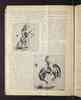
In their work, the method's of the two are similar; and, to a certain extent, the same is true of their associations. Your genuine vaquero, however, is generally when off duty, more of a dandy in the style and get-up of his attire than his careless and impetuous compeer. He is fond of gaudy clothes, and when you see him riding well mounted into a frontier town, the first thought of an Eastern man is, that a circus has broken loose in the neighborhood, and this is one of the performers. The familiar broad-rimmed sombrero covers his head; a rich jacket, embroidered by his sweetheart perhaps, envelopes his shapely shoulders; a sash of blue or red silk is wrapped
30
28
around his waist, from which protrude a pair of revolvers; and buckskin trousers, slit from the knee to the foot, and ornamented with rows of brass or silver buttons, complete his attire, save that enormous spurs, with jingling pendants, are fastened to the boots, and announce in no uncertain sound the presence of the beau-ideal vaquero in full dress.
His saddle is of the pure Mexican type, with high pommel, whereon hangs the inevitable lariat, which in his hands is almost as certain as a rifle shot.
Ordinarily he is a peaceful young fellow, but when the whisky is present in undue proportions, he is a good individual to avoid. Like the cow-boy, he is brave, nimble, careless or his own life, and reckless, when occasion requires, of those of other people. At heart he is not bad. The dependence on himself which his calling demands, the dangers to which he is subjected while on duty, all compel a sturdy self-reliance, and he is not slow in exhibiting the fact that he possesses it in a sufficient degree at least for his own protection. True types of this peculiar class, seen nowhere else than on the plains, will be among the attractions of the show; and the men will illustrate the methods of their lives in connection with the pursuit and catching of animals, together with the superb horsemanship that is characteristic of their training.
------------------------
ON A MUSTANG.
FBY THE EDITOR OF "TEXAS SIFTINGS."
The majority of Texas ponies buck, or pitch, as it is sometimes termed, whenever circumstances seem to demand an exhibition of this facetious break, or the condition of things seems to justify the sportive caprice. In fact, some ponies will buck for hours, only stopping to get breath for a fresh start. This kind is recommended for the use of dyspeptics and invalids suffering from torpidity of liver. A pitching mustang, when working on full time and strictly devoting his attention to business, is the most moving sight I ever beheld. His spine seems to be of whalebone, and he appears to possess all the elements of a steamboat explosion, a high-pressure piledriver, an earthquake, in addition to the enthusiasm of a county convention. We were glad to find that ours were not bucking ponies, and we congratulated each other on the fortunate circumstance. Of course, as we argued, if there had been any buck in them it would have developed itself at an early stage in the journey. Understand, we were not afraid. I named my pony "Deliberation;" the name seemed so appropriate--no pomp or circumstance about him--and he was so gentle and tranquil; nothing seemed to flurry him. You could throw the reins on his neck and strike a match on the pommel of the saddle. I say you could do this, but the after fate of that match would be of no moment to you; you would be other-