
56
54
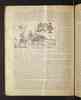
COSSACKS WITH THE WILD WEST.
In the pursuance of their intention to assemble together at the World's Fair, a congress of the representative horsemen of the world, MESSRS. CODY and SALSBURY have had their agents in all parts of the earth, looking for rough riders who could compete with our excel the original riders of the Wild West, the native product of America. In the Russian Cossack they found a horseman whose style was new, novel and striking, and one who could compete with the finest in the world. These Cossacks, in the picturesque garb of the Caucasus, form the latest acquisition of the Wild West. They are a troop of "Cossacks of the Caucasian Line," under the command of Prince Ivan Makharadze.
The Prince and his comrades, it is interesting to the public to know, belong to the same branch of the great Cossack family, the Zaporogians, immortalized by Byron's "Mazeppa." Mazeppa was the hetman or chief, of the Zaporogian community of the Cossacks of the Ukraine.
When Byron's famous hero came to grief at the battle of Poltava, the Cossacks fled to the Crimea, then Turkish territory, to avoid the vengeance of Peter the Great. Subsequently they were deported to the Kuban, and settled along the river as military colonists, to defend the Russian frontier against the marauding tribes of the Caucasus.
On this dangerous frontier the qualities of horsemanship that made the name of Mazeppa and his warlike followers household words throughout the whole of Europe, became still further developed in the following generations, so that the Kuban Cossacks quickly became, in many respects, the most remarkable riders in the world.
On their lithe steppe horses, as fierce and active as themselves, they proved themselves more than worthy of their sires. During the heroic struggle of the Circassian mountaineers to maintain their independence against Russia, the sons of Mazeppa's Zaporogians were found to be the only Cossacks sufficiently skillful to cope with Schamyl's wild mountain horsemen on equal terms. The Done Cossacks were lancers, and the Circassians quickly learned to dodge within their guard, and cut them down, they being among the most expert swordsmen in the world.
But the descendants of Mazeppa's Cossacks were equally expert with the sword, and so, in the matter of arms, as of horsemanship, met the enemy on equal terms. For many years the Cossacks of the Caucasian line were engaged in perpetual border warfare with the Circassian tribes. Their fighting was a series of little cavalry combats, surprises and raids, similar to the American Indian frontier wars, the finest school for the development of military horsemanship the world has seen since the days of Saladin and Coeur-de-Lion. Graduates from this fierce, wild school of saddle and sabre, the Cossacks of the Caucasian line have long enjoyed the reputation of being the flower of that vast horde of irregular cavalry, the Cossack military colonies, that have been planted along the southern frontier of the Russian Empire, from the Crimea to the Chinese border on the Pacific.
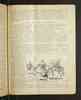
Circassian blood plainly crops out in the Cossacks of the Buffalo Bill Wild West arena. Indeed, some of them look like Circassian, even more than the Cossack. The infusion of Circassian, Georgian and Mingrelian blood, began with stirring drama of strife and romance in the days of Schamyl. Part of the policy of Russia was the suppression of the trade in Circassian beauties for the harems of Turkey, then carried on in small Turkish vessels in the Black Sea. A Cossack coastguard service was organized for the purpose, consisting of fleets of rowboats concealed in the creeks and inlets of the Caucasian coast, whence they could pounce out on the slave ships.
57
55
The vessels usually contained from forty fifty Circassian, Georgian and Mingrelian slave girls, lovely creatures selected for the harems of the Sultan and the wealthy Pashas of Constantinople. The slaves thus captured were given to the Cossacks of the Kuban for wives; hence the sons and daughters of Schamyl's fierce opponents are as much Circassian as Cossack. The combination is a "strain" of horsemanship that has produced starling and unique results in the form of riders capable of really marvelous feats of a kind never before seen outside of Russia. Visitors to the Wild West who have marveled at the skill of th Indians and the Cowboys with the bucking mustangs, will marvel anew at the striking performances of these descendants of the famous "Mazeppa". SOUTH AMERICAN GAUCHOS AT THE "WILD WEST". The latest additions to BUFFALO BILL'S "WILD WEST" make the sixth delegation to the "Congress of the Rough Riders of the World", which MESSERS CODY and SALBURRY are organizing in order to present the different schools of horsemanship at the Chicago World's Fair. Having seen the performances of the Cowboy, the Indian, the Vaquero, and lastly, of the Cossacks of the Caucasian line, our appetites are considerably whetted at the prospect of seeing how wild life of the South American Pampas contrasts with theirs. To the student of human progress, of racial peculiarities, of national characteristics the Gaunchos are a subject of investigation as remarkable as anything modern history has to show. The Gaucho are the descedants of the early Spanish colonizers of the South American wilds. The fiery Hispanolian temperament, the infusion of the native Indian blood, together with the wild lonely life on the ocean-like pampas, are the conditions responsible for the production of the Gauchos. Like the North American Indian, the Cowboy, the Vaquero, the Cossack, and the Prairie Scout, now for the first time in history his companion horsemen, the Gaucho is a near approach to the mythical centaur. Like them the Gaucho spends the greater portion of his life on horseback, and is associated with the wild equines of the pampas in even a more intense degree than any of the equistrian races. In no other part of the world has man been so completely dependent on the horses as on the South American plains. The pampas without horses would be, for the uses of man, as an ocean without ships or boats. Hence this Gaucho breed of centaur is the natural growth of peculiar surroundings. As the Gauchos are reputed to be the most experts lassoers in the world, considerable interest is manifested in their arrival, not only by the public, but by the Cowboys Indians, etc. Apart from their wild fantastic personality of dress, manner, and equipment, and their horsemanship, the Gauchos will be interested as the first to introduce to the public the use of the "bolas", for the capturing of wild animals. This instrument
58
56
of the chase has been adopted by the Gauchos from the South American Indians, who, from time immemorial, used it for the capture of ostriches, guanacos, and other big game.
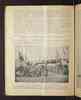
The "bolas" consists of a number of rawhide thongs fastened to a central thong, and with an iron ball at each of the ends. The Gaucho can hurl this at a flying horse, cow, or ostrich, from a distance of sixty feet, and, causing it to inextricably entangle about the legs, bring the victim helplessly to the ground. This therefore, rather than the lasso, is his favorite weapon for the chase or fighting in war.
When the Dictator Rosas many years ago conquered Buenos Ayres, his success was largely due to the terrror inspired by the reputation of his horde lf Gauchos and Pampa Indians.
It may be interesting to state that from their primitive mode of existence, the Gaucho makes nearly everything connected with his "outfit," even the rude saddle from raw hide, the lasso, the "bolas," and even his boots--which are made from the skin (taken from the knee down, and shaped to the leg and foot while warm) of a freshly killed cult, sewed at the toe, thus forming practically a leather stocking without heel or sole. They are fond of music, are good dancers, retaining in many respects the poetic traditions and tendencies of their Castilian ancestors.
Enough has been said here however, of their peculiarities. They will prove a welcome acquisition to the "Wild West," for they, no less than the Cossacks, have a distinct role of their own to play this truly gigantic enterprise of a "Congress of the World's Rough Riders."
FROM ENGLAND TO DAKOTA, THE RIO GRANDE AMERICA, TO THE CONTINENT OF EUROPE AND RETURN OF "BUFFALO BILL'S WILD WEST" TO GREAT BRITIAN.
Since the visit of "BUFFALO BILL'S" Wild West to England and its remarkable engagement in London, at West Brompton, in 1887, a history and tour have been made, such as no organization of its magnitude and requirements ever accomplished.
IMAGE JUBILEE YEAR 1887, EARL'S COURT, LONDON.--FAREWELL, 1892.
A slight reference to this will be instructive and interesting, and practical mind can, partially, at a glance, recognize the difficulties and arduous duties involved in its completion. A volume would be more fitting to relate its travels, its trials, and triumphant experiences. After the production in an especially erected mammoth building at Manchester, of an allegorical, pantomimic
59
57
Image
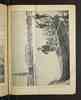
"BUFFALO BILL" AND THE FIRST AMERICAN INDIANS THAT HAVE VISITED VENICE.
60
58
and scenic representation of the history of American settlement, a return to the United States was made in a chartered steamship, Persian Monarch, of 6,000 tons burden. The arrival of this vessel, outside of the company's reception, was an event of future commercial importance to the port of New York, from the fact of her being the first passenger ship of her size draught, and class to effect a landing (at Bechtel's Wharf) directly on the shores of Staten Island, thus demonstrating the marine value of some ten miles of seashort of what in a few short years must be a part of the Greater New York.
After a successful summer season at Erastina, S.I. and New York (originating there, at Madison Sqaure Garden, a now much copied style of Leviathan spectacle) twice crossing the Atlantic, visiting respectively Philadelphia, Baltimore, and Washington--an uninterrupted season of 2 years and 7 months, starting at St. Louis, Mo., on the Mississippi River, was finished in conjuction with the successful Richmond Exposition on the James River (Virginia).
The members of the organization returned over the vast continent to their respective localities (ranging from Texan Cowboy and Vaquero and his southern valley of the Rio Grande, to the
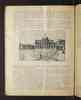
Image ST. PETER'S AND VATICAN, ROME.
Sioux warrior and his weather beaten foothills of Dakota), to be reuinited in the following spring on board s.s. Persian Monarch, bound once more across the Atlantic to Havre, consigned to the Great Universal Exhibition at Paris.
Sufficiently large grounds were secured from thirty-two different small tenants, at a great expense--two streets being officially authorized to be closed by the municipality so as to condense the whole--in Neuilly (close by the Porte des Ternes, the Bois de Boulogne, and within sight of the Exposition). Expensive improvements were made, grand stand, scenery, a $25,000 electric plant erected, and a beautiful camping ground built.
The opening occurred before an audience said to have equaled any known in the record of Premieres of the brilliant Capitale des Deux Mondes. President Carnot and wife, and the Members of his Cabinet and families, two American Ministers, Hon. Whitelaw Reid, Hon. Louis MacLean, the Diplomatic Corps, Officers of the United States Marines, etc., etc.--a representative audience, in fact, of ladies and gentlemen of distinction, known the world over, in society, literature, art, professions and commerce, honored the Inauguration by their presence, and launched, amidst great enthusiasm, a seven months' engagement of such pronounced success as to place the Wild West second only in public interest apparently to the great Exhibition itself.
After a short tour in the South of Frnace in the fall, a vessel was chartered at Marseilles, the Mediterranean cross to Barcelona--landing the first band of American Indians, with accompanying associates, scouts, cow-boys, Mexican horses of Spanish descent, and wild buffaloes, etc.,