
26
the trailers discovered his object. The result and the closely following of "the ride" are thus related in J.W. Buell's authenticated "History of the Heroes of the Plains" (page 302):
Upon seeing the fleeting scout, there were no further grounds for suspecting his motives; so the Indians, who were mounted one excellent ponies, dashed after him as though they were impelled by a promise of all the whisky and bacon in the Big Father's commissary for his scalp. Bill was trying to save his hair, and the Indians were equally anxious to secure it, so that the ride, prompted by these diametrically opposed motives, was as furious as Tam O'Shanter's. After running over about three miles of ground, Bill turned his head, only to be horrified by the sight of his pursuers gaining rapidly on him. He now sank the spurs a little deeper into his head, only to be horrified by the inch of the reins, and succeeded in increasing the speed of his animal, which appeared to be sailing under a second wind.
It was thus the chase continued to Ash Grove, four miles from Fort Larned, at which point Bill was less than half a mile ahead of the Indians, who were trying to make line shots with him and his mule as a target. Reaching Pawnee Fork, he dashed into that stream, and as he gained the opposite shore, and was rounding a thick clump of trees, he was rejoiced to meet Denver Jim, a prominent scout, in company with a private soldier, driving a wagon towards the post.
A moment spent in explanation determined the three men upon an ambush. Accordingly, the wagon was hastily driven into the woods, and posting themselves at an advantageous point they awaited the appearance of the red-skinned pursuers. "Look out!" said Bill, here they come, "right over my trail." True enough, the twelve painted warriors rode swiftly around the clump of brush, and the next instant there was a discharge of shots from the ambush which sent two Indians sprawling on the ground, where they kicked out their miserable existence. The others saw the danger of their position, and making a big circle, rode rapidly back toward their war party.
When the three men reached Larned, Buffalo Bill and Denver Jim each displayed an Indian scalp as trophies of a successful ambush, and at the same time apprised Capt. Parker of the hostile character of Santanta and his tribe.
On the following day about eight hundred warriors appeared before the fort, and threatened to storm it, but being met with a determined front they circled around the post several times, keeping the soldiers inside until their village could move off. Considerable fear was entertained at the fort, owing to the great number of hostile Indians who practically invested it, and it was deemed by Capt. Parker as of the utmost importance to send dispatched to Gen. Sheridan, informing him of the situation. Fort Hays was sixty-five miles distant from Fort Larned, and as the country was fairly swarming with the worst kind of "bad" Indians, Capt. Parker tried in vain to find some one who would carry the dispatches, until the request was made to Buffalo Bill. This expedition was not within Bill's line of duty, and presented dangers that would have caused the boldest man to hesitate; but finding all the couriers absolutely refusing to perform the necessary service, he agreed to deliver the message, provided he could select the horse that he wanted to ride. Of course this requirement was readily assented to, and at ten o'clock at night, during a terrible storm, the brave scout set out, knowing that he had to run a very gauntlet of hostiles, who would make many sacrifices if by so doing they could lift his coveted scalp.
The profound darkness of the night afforded him some security from surprise, but his fears of riding into an Indian camp were realized when he reached Walnut Creek. A barking dog was the first intimation of his position, but this was speedily followed by several Indians pursuing him, being directed by the sounds of his horse's feet. By hand riding, and good dodging, however, he eluded these, and meeting with no further mishap than being thrown over his horse's head by reason of the animal suddenly stepping into a gopher hole, he reached Fort Hayes shortly after daylight, and delivered the dispatches he carried before Gen. Sheridan had arisen from bed.
After delivering the message Bill went over to Hays City, where he was well acquainted, and after taking some refreshments lay down and slept for two hours. Thinking then that Gen. Sheridan might want to ask him some questions regarding the condition of affairs at larned, he returned to the fort and reported to him. He was somewhat astonished to find that Gen. Sheridan was as anxious to send a messenger to Fort Dodge, ninety-five miles distant, as Captain Parker had been to communicate with his superior officer at Fort Hays, and more surprised was he to find that of the numerous couriers and scouts at the fort, not one could be induced to carry the General's dispatch, though the sum of five hundred dollars was offered for the service. Seeing the quandary in which Gen. Sheridan was placed, Bill addressed that official and said:
"Well, General, I'll go over to the hotel and take a little more rest, and if by four o'clock you have not secured some one to carry your dispatches, I will undertake to do it."
The General replied: "I don't like to ask so much of you, for I know you are tired; but the matter is of great importance, and some one must perform the trip. I'll give you a fresh horse, and the best at the fort, if you'll undertake it."
"All right, General, I'll be ready at four o'clock," replied Bill, and then he went over to the hotel; but meeting with many friends, and the "irrigating" being good, he obtained only the rest that gay companionship affords. As the appointed time Bill was ready, and receiving the dispatches at the hands of Gen. Sheridan, he mounted his horse and rode away for Fort Dodge. After his departure there was much debate among the scouts who bade him good-bye respecting the probability of his getting through, for the Indians were thick along the whole route, and only a few days before had killed three couriers and several settlers. Bill continued his ride all night, meeting with no interruption, and by daylight next morning he had reached Saw-Log Crossing, on Pawnee Fork, which was seventy-five miles from Fort Hays. A company of colored cavalry, under Major Cox, was stationed here, and it being on the direct route to Fort Dodge, Bill carried a letter with him from Gen. Sheridan, requesting Major Cox to furnish him with a fresh horse upon his arrival there. This the Major did; so, after partaking of a good breakfast, Bill took his remount and continued on to Dodge, which point he gained at ten o'clock in the morning, making the ninety-five miles in just eighteen hours from the time of starting.
The commanding officer at Fort Dodge, after receiving the dispatches, remarked:
"I am very glad to see you, Cody, and I'll tell you that the trip just made is one of the most fortunate I know of. It is almost a miracle how you got through without having your body filled as full of holes as a pepperbox. The Indians are swarming all around within fifty miles of here, and to leave camp voluntarily is almost equal to committing suicide. I have been wanting to send a message to Fort Larned for several days, but the trip is so dangerous that I can't find any one who will risk it, and I wouldn't blame the bravest man for refusing.
"Well, Major, I think I might get through to Larned; in fact, I want to go back there, and if you will furnish me with a good horse I'll try to carry your message."
"I don't think it would be policy for you to make the trip now, especially since you have done so much hard riding already. Besides, the best mount I could give you would be a Government mule."
"All right. Major, I don't want the best; second-best is good enough for me, so trot out your mule. I'll take a little nap, and in the meantime have your hostler slick up the mule so that he can slide through with me like a greased thunderbolt should the rods jump on us."
Bill then went off, and after "liquidating" in true Western style, lay down in the Major's quarters, where
(25)
27
he slept soundly until nearly five o'clock in the evening, when, having replenished his canteen, he mounted the patient mule and set our for Fort Larned, which was sixty-five miles East of Fort Dodge.
After proceeding as far as Coon Creek, which was nearly half way, Bill dismounted for the purpose of getting a drink of water. While stooping down the mule got frightened at something and jerked loose, nor did the stupid animal stop, but followed the trail, keeping ahead of the weary and chagrined scout for thirty-five miles. Half a mile from the Fort Bill got within rifle range of his exasperating steed and gave him a furlough to the eternal grazing grounds.
After reaching Larned -- carrying the bridle and saddle himself -- Buffalo Bill spent several hours in refreshing sleep, and when he awakened he found Gen. Hazen trying to induce some of the couriers to take his dispatches to Gen. Sheridan, at Fort Hays. Having been warmly and very justly praised for the long and perilous rides he had just completed, Bill again proffered his services to perform the trip. At first Gen. Hazen refused to dispatch him on the mission, saying: "This is like riding a free horse to death; you have already ridden enough to kill an ordinary man, and I don't think it would be treating you properly to permit you to make this additional journey."
But when evening came and no other volunteer could be engaged, as a matter of last resort Bill was given a good horse and the dispatches entrusted to him for transmission. It was after nightfall when he started on this last trip, and by daylight the next morning he was in Fort Hays, where he delivered the dispatches. Gen. Sheridan was profoundly astonished to see Bill before him again in so short a time, and after being informed of his wonderful riding during the three days, the General pronounced it a feat that was never equaled; and even now Gen. Sheridan maintains that no other man could accomplish the same distance under similar circumstances. To this day the rides here described stand on record as the most remarkable ever made. They aggregated three hundred and fifty-five miles in fifty-eight riding hours, or an average of more than six miles an hour, including an enforced walk of thirty-five miles. When it is considered that all this distance was made in the night time, and through a country full of hostile Indians, without a road to follow, or a bridge to cross the streams, the feat appears too incredible for belief were it not for the most indisputable evidence, easily attainable, which makes disbelief impossible.
Gen. Sheridan was so favorably impressed with the self-sacrificing spirit and marvelous endurance of Buffalo Bill, and being already acquainted with his reputation as a brave man, that he called the scout to his headquarters directly after receiving Major Hazen's dispatches, and said:
"Cody, I have ordered the Fifth Cavalry to proceed against the Dog Soldier Indians, who are now terrorizing the Republican River district, and as the campaign will be a very important one, I want a first-class man to guide the expedition. I have therefore decided to appoint you guide, and also Chief of scouts of the command." ________
ON A MUSTANG. BY THE EDITOR OF TEXAS SIFTINGS.
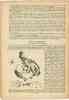
The majority of Texas ponies buck, or pitch, as it is sometimes termed, whenever circumstances seem to demand an exhibition of this facetious break, or the condition of things seems to justify the sportive caprice. In fact, some ponies will buck for hours, only stopping to get breath for a fresh start. This kind is recommended for the use of dyspeptics and invalids suffering from torpidity of liver. A pitching mustang, when working on full time and strictly devoting his attention to business, is the most moving sight I ever beheld. His spine seems to be of whalebone, and he appears to possess all the elements of a steamboat explosion, a high pressure pile-driver, an earthquake, in addition to the enthusiasm of a county convention. We were glad to find that ours were not bucking ponies, and we congratulated each other on the fortunate circumstance. Of course, as we argued, if there had been any buck in them it would have developed itself at an early stage in the journey. Understand, we were not afraid. I named my pony "Deliberation"; the name seemed so appropriate -- no pomp or circumstance about him -- and he was so gentle and tranquil; nothing seemed to flurry him. You could throw the reins on his neck and strike a match on the pommel of the saddle. I say you could do this, but the after fate of that match would be of no moment to you; you would be otherwise engaged. I regret to say that I tried the experiment. I lighted a match -- at least I think I did -- but there was a haziness about the subsequent proceedings that prevents accuracy of statement. I distinctly remember striking the match. At that moment, however, I was fluently propelled upwards; a tornado caught me -- whirled me around eleven times. As I came down a pile-driver drove me in the stomach, and I came to earth with that sensation (onlyl intensified) that a man feels who sits down in what he imagines to be a high chair, and which he afterwards thinks was about seven feet lower than his estimate. I saw whole milky ways of constellations taht never before existed. I realize for the first time the dense solidity of the earth, and made the astonishing discovery that under certain circumstances our planet, instead of revolving on its own axis once in every twenty-four hours, can rush around at the rate of at least one hundred revolutions a minute.
(26)
28
There is not in the whole range of languages, ancient, modern, or profane, terms sufficiently expressive to describe the state of my feelings, the amount of mud on my person, or the chaotic condition of my brain. As soon as the earth settled down to the usual speed of her diurnal motion. I came to the conclusion that it was not always best to judge by appearances. I had been hasty in bestowing a distinctive cognomen on my erratic steed. He had no more deliberation in him than has a fugitive flea under the searching scrutiny of a determined woman. I re-named him. This time I called him "Delay," because delay is -- but it does not matter.
Come to think of it since, the reason was weak. If, however, the reader should pierce the intricate labyrinth of mental ingenuity that conundrum, I trust he will be charitable enough to consider the circumstances connected with its prepetration.
There are times that try men's souls. There are seasons in every Christian's life when he wishes he was not a church member for just about five minutes, that he might have a chance to do justice to the surroundings. Such to me was the trying moment when I gathered my bruised remains together, and, looking around, saw the festive "Delay" quietly eating grass, while a little distance off sat the doctor on his pony, complacently whistling, "Earth hath no sorrow that Heaven cannot heal." __________
EVERY INCH A FRONTIERSMAN.
The Supremacy of Buffalo Bill in Sport and in Work.
The canvas city of the plains and its motley inhabitants of Indians, scouts, greasers, and Castilians now occupying the Park is quite a study to the visitor, especially so if the privilege be enjoyed during the hours when, in the abandon of everyday life, when the crowd of auditors have not assembled, and unrestricted, the little community revels in its usual Western modes of amusement and social intercourse. Then it is the favorite leader, known to romance as the knight of the plains -- and to his familiars by even a stronger and more enduring title -- "Buffalo Bill," is seen at his best. Raised on the frontier, he has passed through every grade and won fame in each line, while to be proficient in one brings celebrity sufficient to gratify most ambitions. Thus it is he holds supremacy in fact, and receives from his associates an adoration surpassing even his public popularity. Visitors to the camp early the other morning found him joining in every frolic, game, and contest with each and all, and generally excelling. In shooting, in running, in jumping, in trials of strength, feats of agility, horsemanship, handling the ribbons behind four or six, riding the vicious, manipulating the revolver, etc., tackling each specialist, and coming to the front with a generous modesty admired by the defeated.
On Monday, before the auditors, when the big bull buffalo threatened to make things more lively than was desirable, and when one of the most expert ropists had missed at a very necessary moment, up dashed Cody, and, with one of those extraordinary efforts tha stirring emergency necessitates, he made an "underthrow," with the lasso, and, in the nick of time, caught the right hind ankle of the infuriated beast, throwing him, and gaining a salvo of plaudits from the audience, and ringing cheer from Mexicans, Indians, and cowboys. In the camp, when the champion handler of the bull-whackers' whip, Old Nelson, finished a trial, Bill took the same and made the welkin ring as if a Gatling gun was working, and as he finished Sergeant John Ryan, formerly of the 7th U. S. Calvary, under Col. Custer, who had often followed him on the trail of the Sioux, exclaimed: "Didn't I tell you he was every inch a prairie-man?" -- Boston Herald.
Genl. Dave Cook, of Denver, Col., says: -- "As one who has traveled in the States and territories from which he has brought so many representatives; as one who has been with the Indian in their homes in the wilderness; as one who has ridden horses, and with the cowboys of Texas helped to herd and to lasso wild cattle; as one who has been stopped and made to dismount from a Wild West stage coach, we can say taht this bringing thousands of miles of the West to our doors is the grandest realism ever presented. We should call it Cody's Wild West Realism.
"It is not a show. It is a resurrection, or rather an importation of the hottest features of wild Western life and pioneer incidents to the East, that men, women and children may see, realize, understand and forever remember what the Western pioneers met, encountered, and overcame. We see pictures of Washington at Valley Forge, and crossing the Delaware. Pictures of the landing of Columbus, the discovery of the Mississippi by De Soto, pictures of the landing of the Pilgrim Fathers, the battle of Bunker Hill, surrender of Cornwallis, etc., etc. They represent on canvas or plate what once transpired as great historical incidents. Here we have not pictures, but actual, living, powerful, very much alive and in earnest delegates from the West, all of whom have most effectively participated in what they here reproduce as a most absorbing entertainment.
"Indeed, New York has never before seen so remarkable, enjoyable, and educational an exhibition as this, to the credit of all concerned be it said. It brings the West to the East, and brings its livnig, everyday pictures just as they are, with the real heroes and heroines of the times that try the souls of men, and that are fast passing away.
"Men travel thousands of miles to see even one of these incidents in the West -- here for two hours they are passing in review with rapidity and remarkable realistic intensity.
"Those who fail to witness to exhibition and to study the reserved forces of its great projector, will lose far more than they can gain by one or more trips West or a hundred trips to Europe." __________
CODY'S WONDERFUL PONY-EXPRESS RIDE. (Buell's History of the Plains.)
While riding Pony-Express between Red Buttes and Three Crossings, a distance of seventy-six miles, Cody had a most dangerous, long, and lonely route, including the perilous corssing of the North Platte river, one half-mile wide, and, though generally shallow, in some places twelve feet deep; often much swollen and turbulent. An average of fifteen miles an hour had to be made, including changes of horses, detours for safety, and time for meals.
Once, upon reaching Three Crossings, he found that the rider on the next division, who had a route of eighty-six miles, had been killed during the night before, and he was called on to make the extra trip until another rider could be employed. This was a request the compliance with which would involve the most taxing labors, in an endurance few persons are capable of; nevertheless young Cody was promptly on hand for the additional journey, and reached Rocky Ridge, the limit of the second route, on time. This round trip, of three hundred and twenty-four miles, was made without a stop, except for meals and change of horses, and every station on the route was entered on time, the longest and best-ridden pony-express journey ever made.
(27)
29
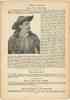
"BUCK" TAYLOR.
King of the Cow-boys.
Wm. Levi Taylor, known to his associates as "Buck," was born at Fredericksburgh, Gillespie County, Texas, and is now about thirty years of age. Frontiersmen come from all grades of society and from all classes of people, who develop peculiarities of their early surroundings and circumstances; therefore, it is seldom the Eastern public meet face to face one so thoroughly "to the manner born," or who is so completely a typical Westerner by ancestry, birth, and heritage of association as this noted herdsman, whose eminence is based on the sterling qualities that rank him as a "King of the Cow-boys." His family lived in Taos, in the Lone Star State, when tributary to Mexico; fought for its independence with Crockett and Col. Travis at the Alamo, where a grandfather and uncle fell - under Sam Houston at San Jacinto, and after success had crowned a new empire with liberty, but two male members of the family were left, "Buck's" father and a younger brother. Joining the Texas cavalry at the outbreak of the late war, his father was killed in one of the first skirmishes, and in two years after, his mother dying, left him when about eight years old dependent upon his ranchman uncle and good luck to wrestle for existence. Texas - always famous for the immense herds of cattle roaming at will over the vast and fertile plains, was then, as now, the supply camp of the trade - gave unusual facilities; in fact, required the cultivation of sturdy qualities to follow daily a life so replete with privations, hardship, and danger that it is a marvel to the luxuriously raised how a man can voluntarily assume it, much less come to actually like it to infatuation. Still this solitary life, with its excitements and adventures, has its charms for its votaries, who, often knowing of none other, neber weary of its continuous duties, trials, and exposures. Taylor from his childhood then knew of no other ambition than to try and excel in his occupation, and inheriting a strong physique, he early became hardy and proficient in horsemanship, lassoing, and general "cow sense." Becoming able, he soon became famous as the "boss of the outfit" on the ranges and on the trail, conducting vast herds over the "Chisholm" to the Northern markets, leading in the stampede, excelling on the round-up, and gaining such distiction as a rider and tamer of the mustang and bronco that his surname has become absolute amoung his confreres, and he is known from Idaho to the Rio Grande by the cognomen of "Buck," a title worthily won in a profession of great risk and danger, and which his appearance in daily public exhibitions gives a very good idea of, but when seen in the corral among herds of the obstrinate equines, challenges the admiration of the spectator and the envy of his kind. His remarkable dexterity won the attention of Major North and Buffalo Bill, and they secured his services for several seasons on their rance on the Dismal River, where his feats of strength, easily throwing a steer by the horns or tail, lassoing and tying single-handed, his mastery of wild horses, caused his engagement with the review of prairie-land, "The Wild West." Standing six feet three and a half inches, with a powerful, well-proportioned frame, possessed of a strength that is marvelous, he is a fine representative of his class. Amiable as a child, "Buck's" genial qualities, combined with his well-known abilities, make him a favorite not only with his fellows, but on his first visit East last summer easily had the same position accorded him by an admiring public.
"BILL BULLOCK,"
One of the leaders amoung the cow-boys, is a half-breed Sioux, and a good combination of the best blood of that justly-famed fighting nation, allied, through Indian rites and ceremonies, with the blue blood of the East, For daring, intrepidity, and skill, he is unsurpassed, possessing the sterling qualities that cause admiration in the races, red, and white.
CAPT. FRED MATTHEWS,
Who manipulates the ribbons of the Old Deadwood Coach, is a man who all his life "has been thar" on the Overland and other routes, passing through every stage, and gaining a reputation in the West second to none, and equaling his old friend and compatriot, "Hank Monk."
THE LIGOWSKY CLAY PIGEONS
Have been adopted as a Standard Target by the National Gun Association an incorporated organization composed of the best sportsmen in the country. Send stamp for details to the Secretary, Box 1, 292, Cincinnati, Ohio, U.S.A.
30
BUFFALO BILL'S WILD WEST IN LONDON.
The attendance of visitors to this extraordinary exhibition of the realism of life on the frontier seems to increase with each day's performance. The grand stands are packed long before the hour of commencement, and the throng elsewhere on the grounds is, in its size, a spectacle of crowded humanity worthy of remembrance. There has never been in or near this city any attraction of any sort which has had, "rain or shine," such an uninterrupted succession of immense and constantly-increasing audiences, and, it can be truthfully added, no attraction which, in subject and in the realisms of its illustrations, is more deserving of patronage.
It is not a matter of wonder, then, that, after witnessing Buffalo Bill's "Wild West," Mark Twain should have become "enthused ," and written to the famous scout, Mr. Cody, these lines: -
"I have now seen your 'Wild West' show two days in succession, and have enjoyed it thoroughly. It brought vividly back the breezy, wild life of the great plains and the Rocky Mountains, and stirred me like a war-song. Down to its smallest details the show is genuine - cowboys, vaqueros, Indians, stage-coach, costumes, and all; it is wholly free from sham and insincerity, and the effects produced upon me by its spectacles were identical with those wrought upon me a long time ago by the same spectacles on the frontier. Your pony expressman was as tremedous an interest to be yesterday as he was twenty-three years ago, when he used to come whizzing by from over the desert with his war news; and your bucking horses were even painfully real to me, as I rode one of those outrages once for nearly a quarter of a minute. It is often said on the other side of the water that none of the exhibitions which we send to England are purely and distinctively American. If you will take the 'Wild West" show over there, you can remove that reproach."
"The Wild West," with its wonderful gathering of vaqueros, cowboys, hunters, Indians, sharpshoters, and its transcripts of real life in the far West - -the robbery of the Deadwood coach - hunting the buffalo - the Indians' attack on the settler's cabin and their repulse - and a score of other illustrations - make up a panorama of events which are but pages in the history of the American frontier.
The number of visitors during the past week aggregated - according to the returns - a total of 193,960 - and the present week doubtless will go beyond 200,000, in the actual estimate.