
21
A PRACTICAL "ALL-ROUND SHOT."
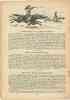
In contradistinction to the many so-called "fancy shots" that have for years been before the public, Buffalo Bill is what may be termed a "practical marksman," and where that expression's full meaning is understood, he is looked on as a marvelous "all-round shot." That is, a man of deadly aim in any emergency, with any weapon- a small Derringer, a Colt's, a shot-gun, a carbine, a blunderbuss, or a rifle- at any foe red or white; at any game- chicken, jack-rabbit, antelope, deer, buffalo, bear, or elk; at the swiftest birds or soaring eagle; on foot, in any position; on horseback, at any speed. To be such a marksman is only the result of years of necessity for exercising the faculties of instantaneous measurement of distance, acuteness of vision- in fact, an eagle eye and iron nerves- to think quick, to resolve, to fire, to kill. As a hunter these gifts have rendered him famous, and gained him plauditis from admiring officers, nobleman, sportsmen, and competitors in the chase, and compelled the respect and fear of his implacable Indian foes. That he exists to-day is the result of the training that enables a man in the most startling exigency to command himself, and to meet the circumstances face to face, whatever they may be, and achieve, by cool precision, deserved victory in the field, and embellish history with deeds of heroism. Mr. Cody will give an exhibition of his ability by shooting objects thrown in the air while galloping at full speed, executing difficulties that would receive commendation if accomplished on foot, and which can only be fully appreciated by those who have attempted the feat while experiencing a rapid pace when occupying "a seat in the saddle."
_______________________________
CODY SAVES WILD BILL
"After a very long march, full of hardships and sufferings, Gen. Penrose's camp was found on the Palodora in a most distracted condition. Gen. Carr's arrival was none too soon, as the amished men were sustaining life on the last carcasses of their draught animals. In a few weeks Black Kettle's depredations necessitated a pursuit... The consilidated command discovered the Indians on the Cimarron, and a terrific battle ensued... In this fight Buffalo Bill and Wild Bill did almost the work of a regiment; braver men never went into an action, both fighting as through they were invulnerable. In the fury and rout which followed the first charge Wild Bill gave chase to Black Kettle, head chief of the Cheyennes, engaged and overtook the fleeing red warrior, stabbing him to death. But the accomplishment of this heroic action would have cost him his own life, had not Buffalo Bill ridden with impetuous daring into the very midst of fully fifty Indians, who had surrounded Wild Bill, intent one ither his capture or death. The two daring and intrepid scouts plunged furiously into the midst of the Indians, each with a revolver in either hand, and literally carved their way through the surging mass of redskins, leaving a furrow of dead Indians in their wake. Such fighting, such riding, and such marvelous intrepidity combined, were doubtless never equaled, and if but this act alone were credited to the valor of Wild Bill and Buffalo Bill, their names would deserve inscription on Fame's enduring monument."- Buel's History.
__________________________ THE DUEL WITH YELLOW HAND.
While Generals Merrit and Carr, guided by Buffalo Bill, were operating so successfully against the hostiles, the news of the annihilation of the gallant Custer's entire band was received through Indian sources first, and soon after corroborated by reliable reports. The actions of the war parties were so daring, their impudence so annoying, that their dash and bravery lacked either cunning or discretion. Their elation was as tantalizing as was the sadness and sorrow of the command sincere, over this unheard-of disaster. Confidence, however, was soon restored, and the bitter feelings of revenge were satiated by an episode that occured on the 17th of July,1876, at War Bonnet Creek, - our favorite scout earning imperishable honors by his individual lowering of the vaunted savages; prowess, hand to hand. With the news of the disaster came a report from Col. Santon, of the Fifth Cavalry, information Gen. Merritt that eight hundred Cheyenne warriors had left the Red Cloud Agency to join Sitting Bull on the Big Horn, and instructing him to join Gen. Crook at Fort Fetterman.
Instead of following the strict letter of the order Gen. Merritt, with Buffalo Bill as his chief of scouts, concluded to intercept the Cheyennes, a most commendable purpose, which happily justified his good judgement.
Selecting five hundred of his best men and horses, Gen. Merritt made a forced match toward War BonnetCreek, which he knew the Indians must cross, and at a point, too which he estimated it would be easy to reach in advance of them.
On July 17th the command reached the creek, and Buffalo Bill was sent out to discover if the Cheyennes had yet effected a crossing, but finding no trail he continued scouting for some distance, and was rewarded by seeing
(20)
22
a large body of Indians approaching from the South. Bill rode rapidly back to camp to acquaint Gen. Merritt of his discovery, whereupon the calvary was ordered to mount and hold themselves in readiness, while Bill and the General should ride out on a tour of observation. Selecting a high knoll, by the use of field glasses the Cheyennes were plainly seen riding directly towards Gen. Merritt's camp. Presently a large party of Indians were observed to leave the main body and ride at a furious pace northward, and scanning the surroundings critically to ascertain the cause, Bill saw mounted soldiers, evidently couriers, trying to reach Gen. Merritt's camp. In order not to apprize the Indians of the presence of the regiment, Bill suggested to the General the advisability of waiting until the couriers should come near the command, when, having led the Indians some distance from the main party, he would take the other scouts and cut them off so as to insure their capture.
Gen. Merritt approving of Bill's idea, the latter rode back to camp, selected fifteen men, and hurried to a place of concealment, where he waited for the pursuers. It was but a few moments before the couriers dashed by with the Indians not more than two hundred yards in the rear. Bill and his men leaped out of their ambush and sent a rattling fire after the Indians, three of whom were killed; the rest turned and ran back to the main party, which had halted upon hearing the rapid firing.
After stopping for a few moments the Cheyennes renewed their march, thinking they were opposed by a small body that would offer no particular resistance. Another advance party of Indians was sent out form the main body, and as they approached near, Bill and his men charged them; but the Indians, seeing their numbers were superior, made a stand, and a lively fight ensued. Each side then drew off, and while they stood studying their opportunities, one of the Indians richly dressed in a chief's ornamentation, large war bonnet, capped with eagle's feathers, and carrying a Winchester rifle, rode out from his squad several rods, and made the following speech, addressing Buffalo Bill, whome he had seen before, and heard much of:
"Me know you, Pa-he-has-ka (the Indian for "long hair"), you great chief, kill many Indians; me great chief, kill many pale faces; come on now fight me."
Here was a direct challenge, and Buffalo Bill was not the man to decline it. He had met such challenges before; so he shouted back to the chief:
"I'll fight you; come on ; let Indians and white men stand off and see the Red Chief and long Hair fight with rifles."
This was a genuine novelty, and of such an exciting nature that the troops advanced to a position commanding a view of the battle ground, while the Indians rode up also sufficiently close to witness the combat.
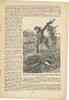
DEATH OF YELLOW HAND--CODY'S FIRST SCALP FOR CUSTER. On the 17th of July, 1876, at Hat or War Bonnet Creek, W.F. Cody ("Buffalo Bill") fought and killed the Cheyenne Chief, Yellow Hand, in a single-handed encounter, in front of Gen. Wesley Merritt, Gen. E. A. Carr, the Fifth United States Cavalry, and the Chief's band of 800 warriors, and thus scored the first scalp for Custer.
When everything was in readiness, Bill advanced on horseback about fifty yards towards his opponent, and then the two started towards each other on a dead run. They were scarcely thirty yards apart when both their rifles were discharged simultaneously. The Indian's horse fell dead, having been struck by the bullet from Bill's rifle, and at the same time the latter's horse stepped into a hole and tumbled over; thus they were both dismounted. Bill was not hurt by the fall, and springing to his feet, faced his recovered antagonists, now not more than twenty paces distant. Again the two fired almost simultaneously, but the Indian missed, while Bill's aim was good, his bullet planting itself in the chief's breast. As the Indian reeled and fell Bill leaped on him, and in the next instant had thrust his bowie-knife into the warrior's heart. With a skillful movement Bill tore the war-bonnet off his victim's head and then scalped him in the most gentlemanly and dexterous manner. Then, holding up the bonnet and reeking cap-sheaf, he exclaimed:
23
"The first scalp for Custer!"
Following this now historical event, the main body of Cheyennes charged down on Bill, and would have killed him had not the cavalry been so near that they intercepted the savages before they could reach him.
Finding that the Indians could not now be ambushed, Gen. Merritt ordered his troops to charge, and a running fight ensued for a distance of thirty miles, the Cheyennes retreating toward the Red Cloud Agency, to which point the pursuit was continued. Upon arriving at the agency, a thousand dissatisfied Indians were found discussing the advisability of joining Sitting Bull, but they offered no hostility to the Fifth Cavalry, which stood ready to fight the entire Cheyenne tribe.
At Red Cloud Bill learned that the name of his victim in the rifle duel was Yellow Hand, son of Cut Nose, once of the leading Cheyenne chiefs. - Life on the Plains.
CODY'S CORRAL; OR, THE SCOUTS AND THE SIOUX. BY "BUCKSKIN SAM."
A mount-inclosed valley, close sprinkled with fair flowers, As if a shattered rainbow had fallen there in showers; Bright-plumaged birds were warbling their songs among the trees, Or fluttering their tiny wings in the cooling Western breeze. The cottonwoods, by mountain's base, on every side high tower, And the dreamy haze in silence marks the sleepy noontide hour. Easy, south, and north, to meet the clouds the lofty mounts arise, Guarding this little valley - a wild Western Paradise. Pure and untrampled as it looks, this lovely flower-strewn sod - One scarce would think that e'er, by man, had such a sward been trod; But yonder, see those wild mustangs by lariat held in check, Tearing up the fairest flora, which fairies might bedeck; And, near a campfire's smoke, we see men standing all around - 'Tis strange, for from them has not come a single word or sound. Standing by cottonwood, with arms close-folded on his breast, Gazing with his eagle eyes up to the mountain's crest, Tall and commanding is his form, and graceful is his mien; As fair in face, as noble, has seldom here been seen. A score or more of frontiersmen recline upon the ground, But starting soon upon their feet, by a sudden snort and bound! A horse has sure been frightened by strange scent on the breeze, And glances now by all are cast beneath the towering trees. A quiet sign their leader gives, and mustangs now are brought; And, by swift-circling lasso, a loose one fast is caught. Then thundering round the mountain's dark adamantine side, A hundred hideous, painted, and fierce Sioux warriors ride; While, from their throats, the well-known and horrible death-knell, The wild, blood-curdling war-whoop, and the fierce and fiendish yell, Strikes the ears of all, now ready to fight, and even to die, In that mount-inclosed valley, beneath that blood-red sky! Now rings throughout the open, on all sides clear and shrill, The dreaded battle-cry of him whom men call Buffalo Bill! On, like a whirlwind, then they dash - the brave scouts of the plains, Their rifle-barrels soft caressed by mustangs' flying manes! On, like an avalanche, they sweep through the tall prairie grass; Down, fast upon them, swooping, the dread and savage mass! Wild yells of fierce bravado come, and taunts of deep despair; While, through the battle-smoke, there flaunts each feathered tuft of hair. And loudly rings the war-cry of fearless Buffalo Bill; And loudly rings the savage yells, which make the blood run chill! The gurgling death-cry mingles with the mustang's shrillest scream, And the sound of dull and sodden falls and bowie's brightest gleam. At length there slowly rises the smoke from heaps of slain, Whose wild war-cries will never more ring on the air again. Then, panting and bespattered from the showers of foam and blood, The scouts have once more halted 'neath the shady cottonwood. In haste, they are re-loading, and preparing for a sally, While the scattered foe, now desperate, are yelling in the valley. Again are heard revolvers, with their rattling, sharp report; Again the scouts are seen to charge down on that wild cohort. Sioux fall around, like dead reeds when fiercest northers blow, And rapid sink in death before their hated pale-face foe! Sad, smothered now is music from our brave Buffalo Bill, Who, through the thickest carnage charged ever in the van, And cheered faint hearts around him, since first, the fight began! Deeply demoralized, the Sioux fly fast with bated breath, And glances cast of terror along that vale of death; While the victors quick dismounted and looking all around, On their dead and mangled enemies, whose courses strewed the ground. "I had sworn I would avenge them" - were the words of Buffalo Bill - "The mothers and their infants they slew at Medicine Hill. Outwork is done - done nobly - I looked for that from you; Boys, when a cause is just, you need but to stand firm and true! " - Beadle's Weekly
A stirring life picture of a battle between the whites and Indians, showing the tactics and mode of warfare of each, will be given by the skilled members of both races in Buffalo Bill's representation of scenes in "The Wild West."
THE PAWNEES ASTONISHED
W. F. Cody, although having established his right to the titile of "Buffalo Bill" for years before, had not had opportunity to convince the Pawnees of the justice of the claim previous to the time of the following incident. A short while previously a band of marauding red-skin renegades from that nation, while on a stealing excursion near Elisworth, had occasion to regret their temerity and cause to remember him to the extent of three killed, which fact for a time resulted in an enemy that needed something out of the usual run to establish him in their favor. While on a military expedition, under Gen. E. A. Carr, upon the Republican, he met Major North and the Pawnee scouts. One day, a herd of Buffalo were descried, and Cody desired to join in the hunt. The Indians objected, telling the Major "the white talker would only scare them away." Seventy-three Indians attacked the herd and killed twenty-three. Later in the day another herd were discovered, and Major North insisted that hte white chief have a chance to prove his skill. After much grumbling, they acquisced grudgingly, and with ill-concealed smiles of derision consented to be spectators. Judge of their surprise, when Cody charged the herd, and single-handed and alone fairly amazed them by killing forty-eight buffalo in thirty minutes, thus forever gaining their admiration and a firm friendship that has since often accured to his benefit.
(22)
24
Colonel Royal's Wagons.
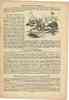
Once upon the South Fork of the Solomon, Col. Royal ordered Cody to kill some buffalo that were in sight to feed his men, but declined to send his wagons until assured of the game. Bill rounded the herd, and, getting them in a line for camp, drove them in and killed seven near headquarters; or, as the Colonel afterwards laughingly remarked, "furnishing grub and his own transportation."
The Bow and Arrow.
The bow is the natural weapon of the wild tribes of the West. Previous to the introduction of fire-arms, it was the weapon supreme of every savage's outfit--in fact, his principal dependence, backed by personal skill in its use, for sustenance for himself and his pappooses. It still retains its favor, as it is not always safe to rely on the white man's mechanism, as in case of lack of ammunition or deranged lock or trigger, time and location prevent it being "mended." As a weapon of economy, it is also to be commended, as the hunting arrow is made so that the rear shoulders of the long, tapering blade slope backward, thus facilitating its withdrawal from the wounded game. On the other hand, in the war arrow, the rear shoulders slope forward, forming barbs, as it is intended to remain and eventually kill. The possession, therefore, of fire-arms has not affected the Indian's love of this reliable weapon of the chase, which, being his first childish plaything, is still, no matter how well armed or rich he may be, an indispensable possession. At short distances it is a terribly effective arm, and the Indian expert can seize five to ten arrows in his left hand, and dispatch them with such rapidity that the last one will be on its flight before the first one touches the ground. In close quarters they prefer to rely on it to depending on the rifle, as it can be of deadly force at thirty to forty yards, and creating a bad wound at much greater distance. In buffalo hunting, where the horseman can approach near, it is invaluable and economic, and is often buried to the feathers. "Two Lance," an Indian chief, during the Grand Duke's hunt, sent an arrow clear through a bison, Alexis retaining the light-winged messenger of death as a souvenir of his hunt on the American Plains.
THE CLAY PIGEONS.
A device has been invented that is well calculated to put to a severe test the best of marksmen. It may be described as follows:
In deference to the humanitarian sentiment, these matches are all shot at Ligowsky "clay pigeons," an ingenious mechanical contrivance that furnishes an exact imitation of the bird's flight, and produces all the exciting and pleasurable sensation induced by fine marksmanship when live birds are used. Ladies and children can, therefore, witness and enjoy this unique exhibition with no violence to the feelings, while the expert and experienced sportsman can still appreciate the excellence of the shooting, the clay pigeons heightening rather than diminishing the sport.
The pigeons are made of red clay, in the shape of a saucer. They measure four inches in diameter, and are a trifle over an inch in depth. They are very thin and light. Each of them has a flat handle of iron at its side about an inch long. The traps from which they are thrown give every variety and eccentricity of direction to the pigeons projected from them. They are made of iron, and consist of an arm revolved by a spring around a short upright column. At the end of the arm is an apparatus that holds the handle of the pigeon. The trap is set by forcing back the arm and securing it by a drop-catch. When the line attached to the catch is pulled the arm is released, and the spring that works it hurls the pigeon into the air. A joint in the middle of the supporting column enables the trap to be so set that it will throw the pigeon to any desired altitude within the possibilities of the spring. As they are projected sidewise, with the concave side down, their form enables them to float through the air for a distance and with a rapidity that the balls do not attain to. They can be made to describe a long and low or a short and high flight, and as their course is affected by a breeze or sudden gust of wind, as well as by the manner in which the trap is set, a shooter can never anticipate what direction any given pigeon will take. The Ligowsky Clay Pigeons were adopted by the National Gun Association at the Convention at New Orleans.
THE RIFLE AS AN AID TO CIVILIZATION.
There is a trite saying that "the pen is mightier than the sword." It is an equally true one that the bullet is the pioneer of civilization, for it has gone hand in hand with the axe that cleared the forest, and with the family Bible and school book. Deadly as has been its mission in one sense, it has been merciful in another; for without the rifle-ball we of America would not be to-day in possession of a free and united country, and mighty in our strength.
And so has it been in the history of all people, from the time when David slew Goliath, down through the long line of ages, until, in modern times, science has substituted for the stone from David's sling the terrible missiles that now decide the fate of nations. It is not, therefore, so harsh an expression as it seems to be at first sight, that it is indeed the bullet which has been the forerunner of growth and development.
It is in the far West of America, however, an erson and the household of the venturesome settler, the guide, the scout, and the soldier; for nowhere else in Christendom is it so much and so frequently a neccessity for the preservation of life and the defence of home and property. It is here, too, among the hunter on the plains and in the Rocky Mountains, (23)
25
that one sees the perfection of that skill in marksmanship that has become the wonder of those who are not accustomed to the daily use of weapons. Yet if it were not possessed- if there were not the quick eye, the sure aim, coolness in the moment of extreme danger, whether threatened by man or beast- life in that section would be of little value, and a man's home anything but a safe abiding place.
There are exceptional cases of men like Buffalo Bill, Major North, and others, whose names are more or less familiar among the mighty hunters of the West, who excel in the use of rifle and pistol, and to which, time and time again, they and those around them have owed their lives. And they are the worthy successors of a long line of marksmen whose names are also "familiar as household words". Who does not recall David Crockett and his death-dealing rifle in the Alamo? Daniel Boone, of Kentucky, and the heroic exploits that have been written concerning them in the early pages of our country's history?
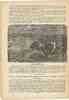
It is to the end that the peole of the East, or rather those who are not acquaninted with the rough life of the border, and especially that portion of it in which the rifle plays so important a part, may personally, witness some of the feats of Western life "a series of shooting exhibitions. The manner in which buffalo are haunted, the exciting chase at a close quarters, the splendidly-trained horses who participate in the chase, the hunt for elk, the stealthy devices of Indians in capturing the fleet-footed animals-- all these will be illustrated in a manner that has never been witnessed East of the Mississippi River.
(IMAGE)
THE BUFFALO The buffalo is the true bison of the ancients. It is distinguished by an elevated stature, measuring six to seven feet at the shoulder, and ten to twelve feet from nose to tail. Many there are under the impression that the buffalo was never an inhabitant of any country save ours. Their bones have been discovered in the superficial strats of temperate Europe; they were common in Germany in the eighth century. Primitive man in America found this animal his principal means of substinence, while to pioneers, hunters, emirgants, settlers, and railroad builder this fast-disappearing monarch of the plains was invaluable. Messrs. Cody & Co. have a herd of healthy speciment of this hardy bovine in connection with their instructive exhibition, "The Wild West".
Cody's Famous Ride, 355 Miles in 58 Hours, through a Hostile Country. In the spring of 1868, at the outbreak of the violent Indian war, General Sheridan, from his headquarters at Havs City, dispatched Cody as guide and scout to Captain Parket at Fort Larned. Several bands of Comanches and Kiowas were in the vicinity, and Buffalo Bill, after guiding General Hazen and an escort of twenty men to Fort Sarah, thirty miles distant, started to return to Larned alone. At Pawnee Rock about half way, he found himself suddenly surrounded by about forty warriors. By professionals of friendship and warm greeting of "How! how!" Bill saw he could alone depend on cunning and strategy to escape. Being taken before Santanta, whom Bill knew was expecting a short time before a large herd of cattle which had been promised by General Hazen, he boldly complained to the wily chief of his treatment, and informed him that he had been ordered to find him and deliver "a big heap lot who-haws". The cupidity of old Santana enabled Bill to regain his arms and made for the purpose. Although declining an escort, he was followed, much to his alarm, by a dozen well-mounted red-skins. Keeping up "a heap of thinking", Coy at last reached a depression that hid him from view, and succeeded, by putting the mule at his highest speed, in getting fully a mile in advance before
(24)