
26
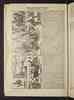
FRANK WHEELAN, "Utah Frank," (THE GREAT INDIAN FIGHT & HORSESHOE.)
Was born on the banks of the Missouri, and raised at Trader's Point, about eight miles below where now stands the city of Council Bluffs, at a time when the primitive state of that section was almost unmolested. He has followed "the march of empire" in its westward course, and always at the head of the column–riding pony express when a boy from Nebraska City (then the fitting-out depot for "prairie schooner" caravans across the Great Desert) to the Otoe Agency. At the breaking out of the Pike's Peak excitement Frank endured the well-known vicissitudes attendant on a perilous journey to and return from the most disappointing of Eldorados. Fought the savages with General Sully's command, and was in the first party attacked by the Indians in the great outbreak on the South Platte, his partner being the first white man killed, and only by determined fighting and good horse-flesh saved his own scalp. Drove stage on the Overland Route under Old Slade, Hi Kelly, and others, gaining a reputation for ability and courage in the most dangerous and trying times of that memorable line. Was considered a reliable train-wagon master, during which occupation he received his first idea of a locomotive on the completion of the U.P.R.R. to the Forks of the Platte and the arrival of the first "iron horse," indicating with others a ranch on the Horseshoe, twenty-eight miles north of Fort Laramie, where occurred the most startling experience of his life; one, the recounting of which will ever be a part of the history of the sanguinary border–in which his gallant and successful struggle against odds, while being well authenticated, will seem more like fiction than fact. Acticipating the result, the ranch building was connnected by an underground passage with a bush-covered ravine about sixty feet behind it, with a carefully concealed entrance, the ravine running down the hill to the bottom. One morning in January, 18888, a band of sixty savages were descried, who surrounded the place and demanded flour, bacon, and provisions and captured the horses. Being sure of their fate, Wheeling, Marion Thornburg, John Smith, and Bill World determined "to stand them off," and being well-armed, fought them all day successfully, killing two and wounding the others, with only a slight flesh-wound to Frank. At night they succeeded in setting fire to the cabin, compelling the little garrison to retreat. When all was still, the gloating victors, thinking the fire had done its work of death, dancing around and laughing around the blazing pile. Waiting until well bunched together, the quartet opened a fusillade from their repeating rifles with a murderous energy, born of desperation, so deadly effective and surprising, that consternation reigned supreme. Shouting, yelling, shrieking, balloing, down the hill they scrambled, rolled, or fell, while on an almost parallel line went the four avengers, re-loading as they ran. Assembling at the bottom, a hasty but noisy council was being held, at short range from the gallant four, when, at a quiet signal from Frank, five deadly volleys were poured into the crowd, which seemed doubly demoralizing. In the confusion thus created, and assisted by an unusually dark night out on the level plains–spurred by a glimmer of hope, encouraged by a chance for life–sped the little party, and arrived at a ranch kept by two men named Jones and Harper. Hastily waking them, only to find their horses gone, and refreshing up, a start was made for the fort. In the morning the Indians re-appeared, and a running fight for two mniles ensued, Jones and Harper both being killed and Thornburg severely wounded. Reaching a polut where a stand could be made, sand was thrown up for breast-workers, and the now despondent fugitives prepared to sell their loves at the
27
highest price that total resignation to the evitable could command. All day long was one strategy after another tried, Thornburg receiving another wound, Smith a bad one in the shoulder, and World one in the arm. Jones and Harper's ranch being well stocked with provisions and whisky, created a diversion, however, and at evening the reds withdrew and held high carnival, as it was afterwards learned, resulting in a row among themselves. A cold, rainy night added to their fortunes, and wounded, foot-sore, yet thankful, they made the fort, survivors of one of the greatest fights in the annals of white and Indian warfare, and living examples of what may be accomplished by "those who never say die." The Indians accord it as the most stubborn and destructive fight they ever had, acknowledging seventeen killed outright and a great many wounded, and after hostilities ceased, looked with wonder on "the heroes of the Horseshoe."
Going to the Sweet Water mines, Frank scouted for the Second Cavalry, Major Gordon, and in '73 was on the Yellowstone with General Custer, and is known as "Utah" Frank. Being an all'round prairie man, he will be found in almost all the scenes represented in Buffalo Bill's Wild West.
-----------------------------------------
The Buffalo.
The Buffalo is the true bison of the ancients. It is distinguished by an elevated stature, measuring six to seven feet at the shoulders and ten to twelve feet from nose to tail. Many there are under the impression that the buffalo was never an inhabitant of any country save ours. Their bones have been discovered in the superficial strata of temperate Europe; they were common in Germany in the eighth century. Primitive man in America found this animal his principal his principal means of subsistence, while to pioneers, hunters, emigrants, settlers, and railroad builders this fast-disappearing monarch of the plains was invaluable. Messrs. Cody & Co. have a herd of healthy specimens of this hardy bovine in connection with their instructive exhibition, "The Wild West."
-------------------------------------
Cody's Corral; or, the Scouts and the Sioux. BY "BUCKSKIN SAM."
A mount-inclosed valley, close sprinkled with fair flowers, As if a shattered rainbow had fallen there in showers; Bright-plumaged birds were warbling their songs among the trees, Or fluttering their tiny wings in the cooling Western breeze. The cottonwoods, by mountain's base, on every side high tower, And the dreamy haze in silence marks the sleepy noontide hour. East, south, and north, to meet the clouds the lofty mounts arise, Guarding this little valley--a wild Western Paradise Pure and untrampled as it looks, this lovely flower-strewn sod- One scarce would think that e'er, by man, had such a sward been trod. But yonder, see those wild mustangs by [?] held in check, Tearing up the fairest flora, which fairies might bedeck; And, near a camp fire's smoke, we see men standing all around- 'Tis strange, for from them has not come a single word or sound, Standing by cottonwood, with arms close folded on his breast, Gazing with his eagle eyes up to the mountain's crest, Tall and commanding is his form, and graceful is his mien; As fair in face, as noble, has seldom here been seen. A score of more of frontiersmen recline upon the ground, But starting soon upon their feet, by sudden snort and bound! A horse has sure been frightened by strange scent on the breeze, And glances now by all are cast beneath the towering trees. A quiet sign their leader gives, and mustangs now are brought; And, by swift-circling lasso, a loose one fast is caught. Then thundering round the mountain's dark [aclamantine?] side, A hundred hideous, painted, and fierce Sioux warriors ride; While from their throats, the well-known and horrible death-knell, The wild, blood-curdling war-whoop, and the fierce and fiendish yell Strikes the cars of all, now ready to fight, and e'en to die, In that mount-inclosed valley, beneath that blood-red sky! Now rings throughout the open, on all sides clear and shrill, The dreaded battle cry of him whom men call Buffalo Bill! On, like a whirlwind, then they dash--the brave scouts of the plains Their rifle barrels soft caressed by mustangs' flying manes! On, like an avalanche, they sweep through the tall prairie grass; Down, fast upon them, swooping, the dread and savage mass! Wild yells of fierce bravado come, and taunts of deep despair; While, through the battle-smoke, there flaunts each feathered tuft of hair, And loudly rings the war-cry of fearless Buffalo Bill; And loudly ring the savage yells, which make the blood run chill! The gurgling death-cry mingles with the mustang's schrillest scream, And sound of dull and sodden falls, and bow e's brightest gleam. At length there slowly rises the smoke from heaps of slain, Whose wild war-cries will nevermore ring on the air again. Then, panting and bespattered from the showers of foam and blood, The scouts have once more halted 'neath the shady cottonwood. In haste they are reloading, and preparting for a rally, While the scattered foe, now desperate, are yelling in the valley. Again are heard revolvers, with their rattling, sharp report; Again the scouts are seen to charge down on that wild cohort. Sioux fall around, like dead reeds when fiercest northers blow, And rapid sink in death before their hated pale-face foe! Sad, smothered now is music from the mountain's rippling rill, But wild hurrahs instead are heard from our brave Buffalo Bill, Who, through the thickest carnage, charged ever in the van, And choered faint hearts around him, since first the fight began! Deeply demoralized, the Sioux fly fast with hated breath, And glances cast of terror along that vale of death; While the victors quick dismounted, and looking all around, On their dead and mangled enemies, whose corses strewed the ground. "I had sworn I would avenge them"--were the words of Buffalo Bill- "The mothers and their infants they slow at Medicine Hill. Our work is done--done nobly--I looked for that from you; Boys, when a cause is just, you need but to stand firm and true!" --Beadle's Weekly.
A stirring life picture of a battle between the whites and Indians, showing the tactics and mode of warfare of each will be given by the skilled members of both races in Buffalo Bill's representation of scenes in "The Wild West."
28
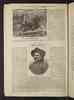
JOHN NELSON--"Cha-Sha-Sha-na-po-ge-o". AND HIS INDIAN FAMILY.
Scenes in the Wild West.
Will be one of the objects of interest in the camp of "The Wild West." To the majority of dwellers in the realms of civilization it is hard to realize that hundreds of our own race and blood, very often intelligent and even accomplished men, gladly exchange all the comforts and advantages of our mode of life for the privations and danger, relieved by the freedom and fascinations of the nomads of the Plains. Such, however, is the fact, and many by their marrying into the tribe are adopted as members, achieve tribal honors and possess great influence for good or evil, generally becoming interpreters, through whom all government communications pass. Among the most honored and reliable of these in his section in John Nelson, who, by general honesty of character and energy, has gained fame and respect among whites and Indians. Being a thorough Plainsman, years ago his standing as a train guide was most enviable, being sought for by all. He guided Brigham Young and the Mormons across the then "Great Desert" to their present location in Utah. He married Chief Lone Wolf's daughter of the Ogallala tribe, has six children whom he supports in comfort by hunting, being especially expert as a trapper of beaver and otter. Nelson is a representative of the best class of "Squaw Men."
------------------------------------------------
WHITE BEAVER. [From "Heroes of the Plains.]
The life of White Beaver (Dr. D. Frank Powell) bears all the colors and shades of an idyllic romance; his character stands out upon the canvas of human eccentricities in striking originality, and finds never its counterpart, save in stories of knight-errantry, when hearts, names, and titles were the prizes bestowed for daring deeds evolved from generous sentiments. His has been the tenor of uneven ways with characteristics as variable as the gifts in Pandora's box. A born plainsman, with the rough, rugged marks of wild and checkered incident, and yet a mind that feeds on fancy, builds images of refinement, and looks out through the windows of his soul upon visions of purity and fields eylsian. A reckless adventurer on the boundless prairies, and yet in elegant society as amiable as a school-girl in the ball-room; evidencing the polish of an aristocrat, and a cultured mind that shines with vigorous lustre where learning displays itself. A friend to be valued most in direst extremity, and an enemy with irreplacable, insatiable, and revenged animosities. In short, he is a singular combination of opposites, and yet the good in him so predominates over his passions that no one has more valuable friendships and associations than these strange complexities attract to him. He is an ideal hero, the image which rises before the ecstatic vision of a romancer, and he impresses himself upon the millions who know his reputation as a brave and chivalrous gentleman.
A description of White Beaver is not difficult to give, because of his sinking features; those who see him once are so impressed with his bearing that his image is never forgotten. He is almost six feet in height, of large frame, and giant muscular development; a full, round face, set off by a Grecian nose, a handsome mouth, and black eyes of penetrating brilliancy. His hair is long, and hangs over his shoulders in raven ringlets. In action he is marvellously quick, always decisive, and his endurance almost equals that of a steam engine. His appearance is that of a resolute, high-toned gentleman, conscious of his power, and yet his deference, I may say amiability, attracts every one to him. He is, in short, one of the hardsomest as well as most powerful men among the many great heroes of the plains.
In addition to his other qualifications peculiarly fitting him for a life on the plains, he is an expert pistol and rifle shot; in fact, there are perhaps not a half-dozen persons in the United States who are his superiors; his precision is not so great now as it once was, for the reason that during the past three or four years he has had but very little practice, but even now he would be regarded as expert among the most skillful. For dead-center shooting at stationary objects he never had a superior; his eyesight is more acute than an eagle's, which enables him to distinguish and hit the head of a pin ten paces distant, and this shot he can perform now nine times out of ten. Any of his office employees will hold a copper cent between their fingers and let him shoot it our of ten paces, so great is their confidence in his skill; he also shoots through finger-rings held in the same manner. One very pretty fancy shot he does is splitting a bullet on a knife-blade, so exactly equally dividing it that the two parts will strike in a given mark; he also suspends objects by a hair, and at ten paces cuts the hair, which of course he cannot see, but shoots by judgment. Several persons have told me that they have seen him shoot a fish-line in two while it was being dragged swiftly through the water.
White Beaver and Buffalo Bill have been bosom friends and fellow-plainsmen since boyhood. History records no love between two men greater than that of these two foster brothers.
29
The Ligowsky Clay Pigeons have been adopted as a Standard Target by The National Gun Association, and incorporated organization composed of the best sportsmen in the country. Send stamp for details to the Secretary, Box 1292, Cincinnati, Ohio.
-----------------------------------------
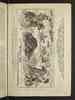
AN EXCITING SCENE IN THE PRELIMINARY PREPARATIONS! Lassoing and capturing Wild Buffalo, to be brought over 2,000 miles from their native pastures to assist in adding realism to the great "Wild West."
