
21
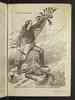
On the 17th of July, 1876.
(Image)
DEATH OF YELLOW HAND - CODY'S FIRST SCALP FOR CUSTER.
22
The Bow and Arrow.
The bow is the natural weapon of the wild tribes of the West. Previous to the introduction of firearms it was the weapon supreme of every savage's outfit, in fact his principal dependence, backed by personal skill in its use, for sustenance for himself and his pappooses. It still retains its favor, as it is not always safe to rely on the white man's mechanism, as in case of lack of ammunition or deranged lock or trigger, time and location prevent it being "mended." As a weapon of economy it is also to be commended, as the hunting arrow is made so that the rear shoulders of the long tapering blade slope backward, thus facilitating its withdrawal from the wounded game. On the other hand, in the war arrow, the rear shoulders slope forward, forming barbs, as it is intended to remain and eventually kill. The possession, therefore, or firearms has not affected the Indian's love of this reliable weapon of the chase, which being his first childish plaything is still, no matter how well armed or rich he may be, an indispensable possession. At short distances it is a terribly effective arm, and the Indian expert can seize five to ten arrows in his left hand and dispatch them with such rapidity that the last will be on its flight before the first touches the ground. In close quarters they prefer to rely on it to depending on the rifle, as it can be or deadly force at thirty to forty yards, and creating a bad wound at a much greater distance. In buffalo hunting, where the horseman can approach near, it is invaluable and economic, and is often buried to the feathers. "Two Lance." an Indian chief, during the Grand Duke's hunt, sent an arrow clear through a bison, Alexis retaining the light-winged messenger of death as a souvenir of his hunt on the American Plains.
The Pawnees Astonished.
W.F. Cody, although having established his right to the title of "Buffalo Bill" for years before, had not had opportunity to convince the Pawnees of the justice of the claim previous to the time of the following incident. A short while previously a band of marauding red-skin renegades from that nation, while on a stealing excursion near Ellsworth, had occasion to regret their temerity and cause to remember him to the extent of three killed, which fact for a time resulted in an enmity that needed something out of the usual run to establish him in their favor. While on a military expedition under Gen. E. A. Carr upon the Republican he met Major North and the Pawnee scouts. One day a herd of buffalo were described, and Cody desired to join in the hunt. The Indians objected, telling the Major "the white talker would only scare them away." Seventy-three Indians attacked the herd and killed twenty-three. Later in the day another herd were discovered, and Major North insisted that the white chief have a chance to prove his skill. After much grumbling, they [acquiseed?] grudgingly, and with ill-concealed smiles of derision consented to be spectators. Judge of their surprise, when Cody charged the herd, and single-handed and alone fairly amazed them by killing forty-eight buffalo in thirty minutes, thus forever gaining their admiration and a firm friendship that has since often accrued to his benefit.
Colonel Royal's Wagons.
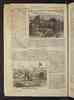
Once upon the South Fork of the Solomon. Col. Royal ordered Cody to kill some buffalo that were in sight to feed his men, but declined to send his wagons until assured of the game. Bill rounded the herd, and, getting them in a line for camp, drove them in a line for camp, drove them in and killed seven near headquarters; or, as the colonel afterwards laughingly remarked, "furnishing grub and his own transportation.
Chasing Meat into Camp.
23
An Indian's Religion.
The Indian is as religious as the most devout Christian, and lays as much stress on form on form as a Ritualist. He believes in two Gods, equals in wisdom and power.
One is the Good God. His function is to aid the Indian in all his undertakings, to heap benefits upon him, to deliver his enemy into his hands, to protect him from danger, pain, privation. He directs the successful bullet, whether against an enemy or against the "beasts of the field." He provides all the good and pleasurable things in life. Warmth, food, joy, success in love, distinction in war, all come from him.
The other is the Bad God. He is always the enemy of each individual red man, and exerts to the utmost all his powers of harm against him. From him proceed all the disasters, misfortunes, privations, and discomforts of life. All pain, suffering, cold, disease, the deadly bullet, defeat, wounds, and death.
The action of these two Gods is not in any way influenced by questions of abstract right or morality as we understand them.
The Good God assists in everything he wishes or proposes to do. If it is to steal a horse or the wife of a friend, to kill another Indian or raid a settlement, it is the Good God to whom he turns for countenance, and by his assistance accomplishes his purpose.
Every thwarted thought or desire is attributed to the influence of the Bad God.
He believes not an hour passes without a struggle between these two Gods on his personal account.
The Indian firmly believes in immortality, and life after death, but the power of these Gods does not extend to it. They influence only in this life, and the Indian's condition after death does not depend either on his own conduct while living, or on the will of either of the Gods.
All peccadilloes and crimes bring, or do not bring, their punishment in this world, and whatever their character in life, the souls of all Indians reach, unless debarred by accident, a paradise called by them "The Happy Hunting Grounds."
There are two ways in which an Indian's soul can be prevented from reaching this paradise. One method is by strangulation. The Indian believes the soul escapes from the body by the mouth, which opens itself at the moment of dissolution to allow a free passage. In case of strangulation, either by design or even accident, the soul can never escape, but remains with or hovering near the remains, even after complete decomposition.
As the soul is always conscious of its isolation and its exclusion from the joys of paradise, this death has peculiar terrors, and he infinitely prefers to suffer at the stake, with all the tortures that ingenuity can devise, than die by hanging.
The other eternal disaster is by scalping the head of the dead body. This is annihilation; the soul ceases to exist. This accounts for the eagerness of Indians to scalp all their enemies, and the care they take to avoid being scalped themselves. Not infrequently Indians do not scalp slain enemies, believing that each person killed by them, not scalped, will be their servant in the next world. It will be found invariably that the slain foe were either very cowardly or very brave. The first he reserves to be his servant, because he will have no trouble in managing him, and the last to gratify his vanity in the future state by having a servant well known as a renowned warrior in this world.
This superstition is the occasion for the display of the most heroic traits of Indian character. Reckless charges are made and desperate chances taken to carry off unscalped the body of a loved chief, a relative, or friend. Numerous instances have occurred where many were killed in vain efforts to recover and carry off unscalped the bodies of slain warriors. Let the scalp be torn off and the body becomes mere carrion, not even worthy of burial. A Homer might find many an Indian hero as worthy of immortal fame as Achilles for his efforts to save the body of his friend, and no Christian missionary ever evinced a more noble indifference to danger, than the savage Indian displays in his efforts to save his friend's soul and ensure him a transit to the "Happy Hunting Grounds." -Col. Dodge in Our Wild Indians.
---------
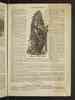
WALLUPI-Champion Vaquero Rider, Born in Mexico, and is descended from the best Castillian and native stock, dating through the history of the section along the Rio Grande. He possesses all the sterling qualities that the higher bred rancheros are famed. As a Pony Express Rider, Herdsman, and Horseman, he stands unexcelled.
24
"CON" GRONER, THE COWBOY SHERIFF OF THE PLATTE.
Sheriff Groner, of Lincoln County, Neb., is one of those characters that is essential to the development of the growing civilization of the West, in sections so lately settled and organized that society is just beginning to take permanent root and battle for supremacy with the "transient state of affairs that always originally exists. When the heterogeneous elements that go to compose a new settlement, the temporary character of the locaters' intentions, the universal custom of carrying deadly weapons, the recklessness of some, the timidity of others, among a budding community, who at the start are mostly strangers to each other, are taken into account, an idea may be had of the peculiar qualities necessary to a position where the holder almost alone represents all there is to be recognized of law. It is then that force of character, strength of mind and body, promptness and decision, bravery and discretion, can only fill the bill, support law and order, detect and punish crime and hold the law's representative "to the front." That "Con" Gromer has been there successfully his repeated election for six consecutive years to the helm of law in the large county of Lincoln testify.
Born in Columbiana County, Ohio, removed to the western part of the State when a child, we find him when but a little over sixteen years of age, spurred by youthful patriotism, answering the nation's call by enlisting in Company D, 72d Ohio Regiment, under Colonel R. P. Buckland, when he "went to the front and stayed that." Participating in thirteen general battles, amongst them Fort Donelson, Tupolo, Vicksburg, Holly Springs, Corinth Guntown, Shiloh, besides skirmishes innumerable, he was wounded seven times, once at Fort Donelson, at Tupolo, Miss., and struck five times at the memorable engagement of Shiloh, each and all wounds being severe, the last severing the cords of the right leg, which impeded his walking but did not prevent his retention of a "seat in the saddle." Appointed by his comrades as a forager, he was so successful and displayed such recklessness as one of the "famous bummers" that he was appointed to the position of scout and as such accompanied General Sherman on his great "march to the sea."
Passing through such an experience while so young, it cannot be wondered at that the spirit of restlessness gained ascendancy and prompted him to look to the West for that excitement and adventure that war's impress had made almost second nature. He wandered westward, and, as bull-whacker, section guard, surveyor's and engineer's help, he was at the advance posts during the construction of the Union Pacific Railroad. Like hundreds engaged in that great work, at its completion, his infatuation for "the line" and the future prospects of the new country became his anchor, and be located at a point that is now the growing city of North Platte, then a water station in the midst of a hostile people, and for years liable to raids from the red man. At that time no necessity arose that did not find Groner, with his military experience and cool judgment, an able member of the little community, and space will not permit reference to the innumerable episodes and thrilling experiences of the early days passed at the south and north forks of the Platte. As fireman and engineer on the Union Pacific Railroad, when, from prowling savages, bad white men, road agents and train robbers, the situation meant more than the technical ability to attend the throttle-valve, "Con" was never found wanting, exhibiting the personal traits that made him honored and respected by the officials and citizens.
Rapid settlement and growing grazing interest that the fertile resources of the valley have now made an important center, having overpowered the interests of the redskins, the rapidly accumulating wealth in stock, etc., attracted a more insidious and difficult foe to know, to meet and foil, in the person of the desperado, the rustler, the horse-thief and "bad man of the border," whose strength developed itself until "society was howling chaos." Law-abiding citizens of the village and the cattle-men of the county combining to cure the evil, decided that a man of nerve, resolution, of known courage and interest almost as large as some of the Eastern States.
The position at the time was an unenviable one, as, owing to the lack of restraint and that "something in the life of a cowboy which develops in some the highest virtues, in others germinates the most ignoble vices. In these latter the idea of enjoyment is to fill up with bad whisky, mount the mustang, tear through the streets, whooping, yelling, flourishing and firing pistols, reckless of their own lives, disregarding the lives of others, spoiling for a fight, they become perfect terrors, and their visits to the frontier towns of Kansas and Nebraska are regarded as a calamity second only to a western tornado."
Sheriff Groner, with rare discretion and judgment, and while allowing "the boys plenty of latitudes," soon eradicated this annoyance and at the same time cemented a friendship with the cowboys and their interests that has assisted him often in his official necessities, been invaluable to him on the trail of thieves, and gained him such an overwhelming majority at each election through their staunch adherence that he has long been known throughout the West as "Con Groner, the Cowboy Sheriff." Law and order established at home, with "the boys" to back him on the ranges, Sheriff Groner soon became the Nemesis of the lawless. Over fifty murderers, more than that number of horse-thieves, cattle-cutters, burglars, and outlaws have been caught and convicted through his efforts, notably the Doc Middleton and his allied gangs, and when "Doc" in conjunction with Jesse James's party surrounded North Platte in their contemplated attack on the Union Pacific train at Garnett station, six miles east, Groner's strategy frustrated their plans, captured six, scattered the rest, and saved the train. He has followed horse-thieves 1,900 miles through Nebraska, Idaho and Montana, through sand hills, deep canyon, strange valleys, up mountain peaks, in forest [fastneases?], facing the fierce blizzards, sleeping out at night with his saddle blanket for a bed, his saddle for a pillow, his horse and rifle for companions, and hardly ever failed to bag his game. Accompanying Buffalo Bill on many a trail, he comes east now to see the country and assist in the scenes with which he is so familiar, after having assisted in securing tranquility to his section. From his wounds he receives $24 a month pension, and has a well-stocked horse ranch six miles from the Platte, a charming wife and boy, and is held in high esteem by his neighbors and fellow-citizens and officials of Nebraska, Wyoming, Montana and Colorado, who hold in kindly remembrance the good services of "The Cowboy Sheriff."
------------------------
"BILL BULLOCK."
One of the leaders among the cowboys, is a half-breed Sioux, and is a good combination of the best blood of that justly famed fighting nation, allied, through Indian rites and ceremonies, with the blue blood of the East. For daring, intrepidity, and skill, he is unsurpassed, possessing the sterling qualities that cause admiration in the races, red and white.
Capt. FRED MATHEWS.
Who manipulates the ribbons of the Old Deadwood Coach, is a man who all his life "has been that" on the Overland and other routes, passing through every stage, and gaining a reputation in the West second to none and equalling his old friends and compatriots, "Hank Monk,"
Lines inspired on witnessing the Prairie Chief caressing his baby daughter:
LITTLE IRMA CODY.
Only a baby's fingers, patting a brawney cheek, Only a laughing dimple in the chin so soft and sleek, Only a cooling babble, only a frightened tear, But it maketh a man both brave and kind To have them ever near.
The hand that seemed harsh and cruel, Nerved by a righteous hate, As it left the heart of Yellow Hand, In revenge of Custer's fate, Has the tender touch of a woman, As rifle and knife laid by He coos and tosses the baby Darling "apple of his eye."
Richmond.
25
The Rifle as an Aid to Civilization.
There is a trite saying that "the pen is mightier than the sword." It is an equally true one that the bullet is the pioneer of civilization, for it has gone hand in hand with the axe that cleared the forest, and with the family bible and school book. Deadly as has been its mission in one sense, it has been merciful in another; for without the rifle ball we of America would not be to-day in possession of a free and united country, and mighty in our strength.
And so it has been in the history of all people, from the time when David slew Goliath, down through the long line of ages, until, in modern times, science has substituted for the stone from David's sling the terrible missiles that now decide the fate of nations. It is not, therefore, so harsh an expression as it seems to be at first sight, that it is indeed the bullet which has been the forerunner of growth and development.
It is in the far West of America, however, and along our frontier, that the rifle has found its greatest use and become a part of the person and the household of the venturesome settler, the guide, the scout, and the soldier; for nowhere else in Christendom is it so much and so frequently a necessity for the preservation of life and the defence of home and property. It is here, too, among the hunters on the plains and in the Rocky Mountains, that one sees the perfection of that skill in marksmanshipthat has become the wonder of those who are not accustomed to the daily use of weapons. Yet if it were not possessed-- if there were not the quick eye, the sure aim, coolness in the moment of extreme danger, whether threatened by man or beast -- life in that section would be of little value, and a man's home anything but a safe abiding place.
There are exceptional cases of men like Buffalo Bill, Maj. North, and others, whose names are more or less familiar among the mighty hunters of the West, who excel in the use of rifle and pistol, and to which, time and time again, they and those around them, have owed their lives. And they are the worthy successors of a long line of marksmen, whose names are also "familiar as household words." Who does not deserve recall David Crockett and his death-dealing rifle in the Alamo? Daniel Boone, of Kentucky, and the heroic exploits that have been written concerning them in the early pages of our country's history?
It is to the end that the people of the East, or rather those who are not acquainted with the rough life of the border, and especially that portion of it in which the rifle plays so important a part, may personally witness some of the feats of Western men, that Messrs, Cody & Co. have determined to introduce in their "great realistic pictures of Western life" a series of shooting exhibitions.
The manner in which buffalo are hunter, the exciting chase at close quarters, the splendidly trained horses who participate in the chase, the hunt for elk, the stealthy devices of Indians in capturing the fleet-footed animals -- all these will be illustrated in a manner that never have been witnessed east of the Mississippi River.
The Clay Pigeons.
A device has been invented that is well calculated to put to a severe test the best of marksmen. It may be described as follows:
In deference to the humanitarian sentment, [fuse?] matches are all shot at Ligowsky "clay pigeons," an ingenious mechanical contrivance that furnishes an exact imitation of the bird's flight, and produces all the exciting and pleasurable sensation induced by fine worksmanship when live birds are used. Ladies and children can, therefore, witness and enjoy this unique exhibition with no violence to the feelings, while the expert and experienced sportsman can still appreciate the excellence of the shooting, the clay pigeons heightening rather than diminishing the sport.
The pigeons are made of red clay, in the shape of a saucer. They measure four inches in diameter, and are a trifle over an inch in depth. They are very thin and light. Each of them has a flat handle of iron at its side about an inch long. The traps from which they are thrown give every variety and eccentricity of direction to the pigeons projected from them. They are made of iron, and consist of an arm revolved by a spring around a short upright column. At the end of the arm is an apparatus that holds the handle of the pigeon. The trap is set by forcing back the arm and securing it by a drop-catch. When the line attached to the catch is pulled the arm is released, and the spring that works it hurls the pigeon into the air. A joint in the middle of the supporting column enables the trap to be so set it will throw the pigeon to any desired altitude within the possibilities of the spring. As they are projected sidewise, with the concave side down, their form enables them to float through the air for a distance and with a rapidity that the balls do not attain to. They cna be made to describe a long and low or a short and high flight, and as their course is affected by a breeze or sudden gust of wind, as well as by the manner in which the trap is set, a shooter can never anticipate what direction any given pigeon will take. The Ligowsky Clay Pigeons were adopted by the National Gun Association, at the Convention at New Orleans.
Indian Names of States.
Massachusetts, from the Indian language, signifying the country about the great hills.
Connecticut was Mohegan, spelled originally Quon-eh-ta-cut, signifying "a long river."
Florida gets its name from Kasquas de Flores, or "Feast of the Flowers."
Alabama comes from an Indian word, signifying "the land of rest."
Mississippi derived from its name from that of the great river, which is in the Nachez tongue, "The Father of Waters."
Arkansas is derived from the word Kansas, "smoky waters," with the French prefix of "ark," a bow.
Tennessee is an Indian name, meaning "The river with a big bend."
Kentucky also is an Indian name, "Kin-tuk-se," signifying at the head of the river.
Ohio is the Shawnee name for "The beautiful river."
Michigan's name was derived from the lake, the Indian name for fish-weir or trap, which the shape of the lake suggested.
Indiana's name came from that of the Indians.
Illinois's name is derived from the Indian word "Illini" (men) and the French affix "ois," making "Tribe of men."
Wisconsin's name is said to be the Indian name for a wild, rushing channel.
Missouri is also an Indian name for muddy, having reference to the muddiness of the Missouri river.
Kansas is an Indian word for smoky water.
Iowa signifies, in the Indian language, "The droway ones," and Minnesota "A cloudy water."