

11
THE HUNT OF THE BISON.
The late-lamented "Texas Jack" gave the following laconic, yet realistic description of this exciting sport in Wilkes' Spirit, March 26, 1877: Fort McPherson, Neb., March 1, 1877.
DEAR SPIRIT: My old friends, W. F. Cody ("Buffalo Bill") and Major North, paid me a visit the other evening, having returned from a successful hunting trip. The camp fire tête à tête reminded me of my first buffalo hunt with Indians. If I don't get like the butcher's calf and "kind o' give out," I'll try and give you an idea of one of the most exciting scenes I ever saw or read of, not excepting my school-boy impression of Andy Jackson's hoo-doo at New Orleans. I thought I had seen fun in a Texas cattle stampede, been astonished in a mustang chase: but it wasn't a marker, and it made me believe that Methuselah was right when he suggested that the oldest could "live and learn." It is a pity the old man didn't stick it out. He could have enjoyed this lesson.
A few years ago I was deputized United States Agent, under Major North, to accompany a party of Pawnee and Ponca Indians. Although "blanket Indians" (living wild), they have for a long time been friends of the Government, and have done excellent service under command of the justly celebrated Major Frank North, whose famed Pawnee scouts (now at Sidney, Neb.) have always been a terror to the Sioux nation. Owing to their hatred of each other, it is necessary to send an agent with them to prevent "picnics," and also to settle disputes with the white hunters. As Major North was in poor health at that time, this delicate task fell to me.
As I don't like to be long-winded, I'll pass over the scenes and incidents of wild Indian camp life. the magnificent sight of a moving village of "nature's children," looking like a long rainbow in the bright colors of their blankets, beads, feathers, war paint, etc., etc., as it would form a full chapter, and skip an eleven-days' march from the Loup River Reservation to Plum Creek, on the North Platte, where our runners reported.
Early in the evening, as we were about making camp, my old friend, Baptiste, the interpreter, joyfully remarked: "Jack, the blanket is up three times -- fun and fresh meat to-morrow."
There was a great powwowing that night, and all the warriors were to turn out for the grand "buffalo surround," leaving the squaws and papooses in the village.
Just before daybreak, there was a general stir and bustle on all sides, giving evidence of the complete preparations making for the coming events. As it was dark, and I busied in arranging my own outfit, thinking of the grand sight soon
12
to be witnessed and wondering how I would "pan out" in the view of my "red brothers." I had not noticed the manner of their own arrangements in an important particular that I will hereafter allude to.
At a given signal all started, and when the first blue streaks of dawn allowed the moving column to be visible I had time to make an inspection of the strange cavalcade, and note peculliarities. I saw at once, placed a disadvantage, the "white brother."
I had started fully equipped--bridle, saddle, lariat, rifle, pistol, belt, etc--and astride of my pony. They with as near nothing in garments as Adam and Eve, only breech clout and moccasins, no saddle, no blanket, not even a bridle, only a small mouth rope, light bow and a few arrows in hand-- in facr not an ounce of weight more than necessary and unlike myself, all suddling along at a marvelous rate, leading their fiery ponies, so I'm to reserve every energy for the grand event in prospect.
Taking it all in at a glance, your "humble servant," quite abashed. Let go all holts and slipped off his critter, feeling that the Bronch looked like a government pack mule. I at once mentally gave up the intention of paralyzing my light-rigged side pards in the coming contest. As they were all walking, I thought the buffalo were quite near, but what was my surprise was mile after mile was scored. That I gradually found myself dropping slowly but surely behind, and so as not to get left, compelled every now and then o count and lope to the front, there to percieve from the twinkling eyes of friend "Lo" a smile that his otherwise solid face gave not evidence of. how deep an Indian can think, and it was not to be surface plain, I believe has never been thoroughly measured. I just imagine this "lick" kept up with apparent ease by them for ten or twelve miles, and you measured. Just imagine this "lick" kept up with apperant ease by them for ten or twelve miles, and you may get a partial idea of your friend Jack's tribulations.
Fortunately, I kept up, wbut at what an expense of muscle, verging on a complete "funk," you can only appreciate by a similar spin.
About this time a halt was made, and you bet I was mighty glad of it. Suddenly two or three scouts rode up. A hurried council was held during which the pipe was passed. Everything seemed to be now arranged and, after a little further advance again a hannd, when amid great but suppressed excitement, every Indian mounted his now almost frantic steed whuch eagerly seeking to edge his way without observation to the front.
About two hundred horses almost abreast in the front line, say one hundred and fifty wedging in hald way between formed a hald second line and one hundred struggling for place-- a third line: the chiefs in front gesticulating, pantomiming and with slashing whips, keeping back the excited mass, whose plunging panting ponies, as impatient as their masters, fretted, frothed, and foamed-- both seemed moulded into one being, with only one thought, one feeling, one ambition, as with flashing eye they waited for the signal, "Go," to let their pent up feelings speed on to the honors of the chase.
13
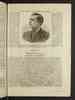
Mr. NATE SALSBURY, Director.
Born in 1846, February 18th, in Freeport, Ill., the family being descendants of the early Vermont settlers, went out with the First Illinois troops; served through the entire Rebellion; was the youngest enlisted soldier in the Army of the Cumberland; wounded three times; is a member of Post H, G. A. R., Department of Massachusetts, went on the stage in '68; has acted before every English-speaking public in the world.
The Amusement Department will be under the personal supervision of this eminent actor, whose successful career is now a matter of American Stage History. Years of continued success as a caterer to the amusement-loving public of this country, Australia, India, and Europe, both as actor and manager, is a guarantee that the "Wild West" will be presented in a manner and styled commensurate with his well-known managerial ability and artistic judgment. Mr. Salsbury long ago invested heavily in the cattle business in Montana, and is now part owner of one of the largest and most valuable ranches in the Northwest. During his reported visits to the same he became impressed with the [acvne?], and episodes witnessed, and thought of the feasibility of presenting them as far as practicable to the citizens of the East. An interchange of opinions with Mr. Cody disclosed a similar intention, so that to the fertile brains of Messrs. Cody and Salsbury, we are indebted for the first conjuring up of this novel project. They spoke of it years ago, and Salsbury went to Europe to see if it would be advisable to take such a show on the continent. Meanwhile, with Mr. Salsbury's knowledge, "Buffalo Bill' started the enterprise to see if it could be made successful in this country. Last year's experiences were proof that it could, and now all bands will join in getting up a Wild West" show that will be remarkable in all respects." - Denver Republican.
"BUCK" TAYLOR.
King of the Cowboys.
Wm. Levi Taylor, known to his associates as "Buck," was born at Fredericksburgh, Gillespie County, Texas, and is now about thirty years of age. Frontiersman comes from all grades of society and from all classes of people, who develop peculiarities of their early surroundings and circumstances; therefore it is seldom the Eastern public meet face to face one so thoroughly "to the manor bora" or who is so completely a typical Westerner by ancestry, birth and heritage of association as this noted herdsman, whose eminence is based on the sterling qualities that rank him as a "King of the Cowboys." His family lived in Taos, in the Lone Star State, when tributary to Mexico; fought for its independence with Crockett and Col. Travis at the Alamo, where a grandfather and uncle fell-- under Sam Houston at San Jacinto, and after success had crowned a new empire with liberty, but two male members of the family were left, "Buck's" father and a younger brother. Joining the Texas Cavalry at the outbreak of the late war his father was killed in one of the first skirmishes, and in two years after, his mother dying, left him when about eight years old dependent upon his ranchman uncle and good luck to wrestle for existence. Texas-- always famous for its immense herds of cattle roaming at will over the vast and fertile plains, was then, as not, the supply camp of the trade -- gave unusual facilities; in fact, required the cultivation of sturdy qualities to follow daily life so replete with privations, hardship and danger that it is a marvel to the luxuriously raise how a man can voluntarily assume it, much less come to actually like it to infatuation. Still this solitary life, with its excitements and adventures, has its charms for its votaries, who, often knowing of none other, never weary of its continuous duties, trials and exposures. Taylor from his childhood then knew no other ambition than to try and excel in his occupation, and inheriting a strong physique, he early became hardy and proficient in horsemanship, lassoing, and general "cow-sense." Becoming able, he soon became famous as a "boss of the outfit" on the ranges and on the trail, conducting vast herds over the "Chisholm" to the Northern markets, leading in the stampede, excelling on the round-up, and gaining such distinction as a rider and tamer of the mustang and broncho that his surname has become obsolete among his confreres and he is known from Idaho to the Rio Grande by the cognomen of "Buck," A title worthily won in a profession of great risk and danger, and which his appearance in daily public, exhibitions gives a very good idea of, but when seen in the corral among herds of the obstinate equines, challenges the admiration of the spectator and the envy of his kind. His remarkable dexterity won the attention of Major North and Buffalo Bill and they secured his services for several seasons on their ranch on the Dismal River, where his feats of strength, easily throwing a steer by the horns or tail, lassoing and tying single-handed, his mastery of wild horses, caused his engagement with the review of prairie-land, "The Wild West." Standing six feet three and a half inches, with a powerful, well-proportioned frame, possessed of a strength that is marvelous, he is a fine representative of his class. Amiable as a child, "Buck's" genual qualities combined with his well-known abilities make him a favorite not only with his fellows, but on his first visit East last summer easily had the same position accorded him by an admiring public.
14
THE WILD WEST
Buffalo Bill
ROCKY MOUNTAIN & PRAIRE EXHIBITION
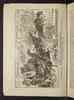
HISTORICAL COACH OF THE DEADWOOD LINE.
The Indians attack on which will represented in Buffalo Bill's "Wild West," and also its rescue by the Scouts and Plainsmen.
15
A Historical Coach of the Deadwood Line.
The denigens of the Eastern States of the Union are accustomed to regard the West as the region of romance and adventure. And, in truth, its history abounds with thrilling incidents and surprising changes. Every inch of the beautiful country has been won from a cruel and savage foe by danger and conflict. In the terrible wards of the border which marked the early years of the Western settlements, the men signalized themselves by performing prodigies of valor, while the women, in their heroic courage and endurance, afforded a splendid example of devotion and self-sacrifice. The history of the wagon trains and stage coahces that proceded the railway is written all over with blood, and the story of suffering and disaster, often it has been repeated, is only known in all of its horrid details to the bold frontiersmen, who, as scouts and rangers, penetrated the strongholds of the Indians, and, backed by the gallant men of the army, became the arant couriers of Western civilization and the terror of the red man.
Among the most stirring episodes in the life of the Western pioneer are those connected with the opening of new lines of travel, for it is here, among the trails and canyons, where lurk the desperadoes of both races, that he is brought face to face with danger in its deadliest forms. No better illustration of this fact is furnished than in the history of the famous DEADWOOD COACH, the scarred and weather beaten veteran of the original "star rout" line of stages, established at a time when it was worth a man's life to sit on its box and journey from one end of its destination to the other. The accompanying picture affords an idea of the old relic, and it is because of its many associations with his own life that it has been purchased by "Buffalo Bill" and added to the attractions of his "GREAT REALISTIC EXHIBITION OF WESTERN NOVELTIES."
It will be observed that it is a heavily-built Concord stage, and is intended for a team of six horses. The body is swung on a pair of heavy leather underbraces, and has the usual thick "perches," "Jacks," and brakes belonging to such a vehicle. It has a large leather "boot" behind, and another at the driver's footboard. The coach was intended to seat twenty-one men-- the driver and two men beside him, twelve inside, and the other six on the top. As it now stands the leather blinds of the window are worn, the paint is faded, and it has a battered sad travel stained aspect that tells the story of hardship and adventure. Its trips began in 1875, when the owners were Messrs Gilmour, Salisbury & Co. Luke Voorhees is the present manager. The route was between Cheyenne and Deadwood, via Fort Laramie, Rawhide Button Hat or War Bonnet Creek, the place where Buffalo Bill killed the Indian Chief "Yellow Hand" July 17, 1876. Cheyenne River, Red Canyon, and Custer Owing to the long distance and dangers, the drivers were always chosen for their coolness, courage, and skill.
In its first season the dangerous places on the route were Buffalo Gap, Lame Johnny Creek, Red Canyon, and Squaw Gap, all of which were made famous by scenes of slaughter and the deviltry of the banditti.