
6
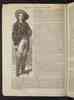
Was born in Scott County, Iowa, from whence his father. Isaac Cody, emigrated a few years afterwards to the distant frontier territory of Kansas, settling near Fort Leavenworth. While still a boy his father was killed in what is now known as the "Border War," and his youth was passed amid all the excitements and turmoil incident to the strife and discord of that unsettled community, where the embers of political contentions smoldered until they burst into the burning flame of civil war. This state of affairs among the white occupants of the territory, and the ingrained ferocity and hostility to encroachment from the native savage, created an atmosphere of adventure well calculated to educate one of his natural temperament to a familiarity with danger and self-reliance in the protective means for its avoidance.
From a child used to shooting and riding, he at an early age became a celebrate pony express rider, then the most dangerous occupation on the plains. He was known as a boy to be most fearless and ready for any mission of danger, and respected by such men then engaged in the express service as Old Jule and the terrible Slade, whose correct finale is truthfully told in Mark Twain's "Roughing It." He accompanied General Albery Sidney Johnston on his Utah expedition, guided trains overland, hunted for a living, and gained his sobriquet by wrestling the laurels as a buffalo hunter from all claimants--notably Cornstock, in a contest with whom he killed sixty-nine buffalo in one day to Comstock's forty-six--became scout and guide for the now celebrated Fifth Cavalry (of which General E. A. Carr was major), and is thoroughly identified with that regiment's Western history; was chosen by the Kansas Pacific Railroad to supply meat to the laborers while building the road, in one season killing 4,862 besides door and antelope; and was chief of scouts in the department that protected the building of the Union Pacific. In these various duties his encounters with the red men have been innumerable, and are well authenticated by army officers in every section of the country. In fact wherever you meet an army officer, there, you meet an admirer and indorser of Buffalo Bill. He is, in fact, the representative man of the frontier men of the past--that is, the representative man of the frontiersmen of the past--that is, not the bar-room brawler or bully of the settlements, but a genuine specimen of Western manhood--a child of the plains, who was raised there, and familiar with the country previous to railroads, and when it was known on our maps as the "Great American Desert." By the accident of birth and early association, a man who became insensible inured to the hardships and dangers of primitive existence and possessed of those qualities that afterward enabled him to hold positions of trust and without his knowing or intending it, made him nationally famous.
Gen. Richard Irving Dodge, Gen. Sherman's chief staff, correctly states in his "Thirty Years Among Our Wild Indians"; "The success of every expedition against Indians depends to a degree, on the skill, fidelity, and intelligence of the man employed as scouts, for not only is the common habitually dependent on them for good routes and comfortable camps, but the officer in command must rely on them almost entirely for their knowledge of the position and movements of the enemy."
Therefore, besides mere personal bravery, a scout must possess the moral qualities associate with a good captain of a ship--full of self-reliance in his own ability to meet and overcome any unlocked for difficulties, to be a thorough student of nature, a self-taught weather prophet, a geologist by experience, an astronomer by necessity, a naturalist, and thoroughly educated in the warfare, stratagems, trickery, and skill of his implacable Indian foe. Because in handling expeditions or leading troops on him alone depends correctness of destination, avoidance of dangers, protection against sudden storms, the finding of game, grass, woods, and water, the lack of which, of course, is more fatal than the deadly bullet. In fact, more lives have been lost on the plains from incompetent guides than ever the Sioux and Pawnee destroyed.
Our best Indian-fighting officers are quick to recognize these traits in those claiming frontier lore, and to no one in the military history of the West has such deference been shown by them than to W. F. Cody, as is witnessed by the continuous years of service he has passed, the different commands he has served, the expeditions and campaigns he has been identified with his repeated holding, when he desired, the position of "Chief of Scouts of United States Army," and the intimate associations and contact resulting from it with Gen. W. T. Sherman (with whom he was at the making of the Comanche and Kiowa treaty), Gen. Phil. Sheridan (who was often given him special recognition and chosen him to organize expeditions, notably that of the Duke Alexis), old Gen. Harney, Gens, W. S. Hancock, Crook, Pope, Miles, Ord, Augur, Terry, McKenzie, Carr, Forsythe, Merritt, Brisbin, Embry, Gibbon, Royal, Hazen, Duncan, Palmer, Pembroke, and the hate-lamented Gen. Custer. His history, in fact, would be almost a history of the middle West, and, though younger, equaling in term of service and in personal adventure Kit Carson, Old Jim Bridger, California Joe, Wild Bill, and the rest of his dead and gone associates.
7
As another evidence of the confidence placed in his frontiersmanship, it may suffice to mention the celebrities whose money and position most naturally sought the best protection the Western market could afford, and who chose to place their lives in the keeping: Sir George Gore, Earl Dunraven, James Gordon Bennett, Duke Alexis, Gen, Custer, Lawerence Jerome, Remington, Professor Ward of Rochester. Professor March of Yale College, Major J. G. Hecksher, Dr. Kinglsey (Canon Kingsley's brother), and others of equal rank and distinction. All books of the plains, his exploits with Carr, Miles, and Crook, published in the New York Herald and Times in the summer of 1876, when he killed Yellow Hand in front of the military command in an open handed fight, are too recent to refer to.
The following letter of his old commander and celebrated Indian fighter, Gen. E. A. Carr, written years ago relative to him, is a tribute as a generous as any brave man has ever made to one of his position:
"From his services with my command, steadily in the field, I am qualified to bear testimony as to his qualities and character.
"He was very modest and unassumming. He is a natural gentleman in his manners as well as in character and has none of the roughness of the typical frontiersman. He can take his own part when required, but I have never heard of his using a knife or a pistol, or engaging in a quarrel where it could be avoided. His personal strength and activity are very good, and his temper and disposition are so good that no one has reason to quarrel with him.
"His eyesight is better than a good field glass; he is the best trailer I ever heard of, and also the best judge of the 'lay of country' - that is, he is able to tell what kind of country is ahead, so as to know how to act. He is a perfect judge of distance, and always ready to tell correctly how many miles it is to water, or to any place, or how many miles have been marched. ****
"Mr. Cody seemed never to tire and was always ready to go, in the darkest night or the worst weather, and usually volunteered, knowing what the emergency required. His trailing, when following Indians looking for stray animals or game, is simply wonderful. He is a most extraordinary hunter.
"In a fight Mr. Cody is never noisy, obstreperous, or excited. In fact, I never hardly noticed him in a fight, unless I happened to want him, or he had something to report, when he was always in the right place, and his information was always valuable and reliable.
"During the winter of 1866 we encountered hardships and exposure in terrific snow storms, sleet, etc., etc. On one occassion that winter Mr. Cody showed his quality by quietly offering to go with some dispatches to Gen. Sheridan, across a dangerous region, where another principal scout was reluctant to risk himself.
"Mr. Cody has since served with me as post guide and scout at Fort McPherson, where he frequently distinguished himself. ****
"In the summer of 1876 Cody went with me to the Black Hills region, where he killed Yellow Hand. Afterwards he was with the Big Horn and Yellowstone expedition. I consider that his services to the country and the army by trailing, finding, and fighting Indians and thus protecting the frontier settlers, and by guiding commands over the best and most practicable routes, have been far beyond the compensation he has recieved."
Thus it will be seen that notwithstanding it may sometimes be thought his fame rests upon the pen of the romancer and novelist, ahd they never been attracted to him (and they were solely by his sterling worth), W. F. Cody would none the less have been a character in America history. Having assisted in founding substantial peace in Nebraska, where he was honored by being elected to the Legislature (while away on a hunt), he has settled at North Platte, to enjoy its fruits and minister to the wants and advancements of the domestic circle with which he is blessed. On the return to civil life of his old praire friend, Major North, in rehearsing the old time years agone on the Platte, the Republican, and the Medicine, they concluded to reproduce some of the interesting scenes on the plains and in the "wild west".
The history of such a man, attractive as it already has been to the most distinguished officers and fighters in the United States Army, must prove doubly so to the men, women, and children who have heretofore found only in the novel the hero of rare exploits, on which imagination so loves to dwell. Young, sturdy, a remarkable specimen of manly beauty, with the brain to conceive the nerve to execute. Buffalo Bill per excellence is the exemplar of the strong and unique traits that characterize a true American frontiersman.
Across the Continent With the Fifth Cavalry.
Captain George F. Price's history of this famous regiment recounts its experience from the time it was known as the Second Dragoons to the present, giving the historical record of its officers, among whom are numbered many of the most distinguished military leaders known in our national anuals, such as Gen. Albert Sydney Johnson, Gen. George H. Thomas, Gen. Robert E. Lee, Gen. John Sedgwick, Generals Hardee, Emory, Van Dorn, Merritt, Carr, Royall, Custer and others of equal note. Besides alluding is many of its pages to incidents, adventures and conduct of the favorite guide and scout of the regiment, W. F. Cody ("Buffalo Bill"). Captain Price completes a narrative of brave men and daring deeds by "flood and field" with following biographical sketch (page 583) of W. F. Cody, "Buffalo Bill."
W. F. CODY - BUFFALO BILL.
"William F. Cody was born in Scott County, Iowa. He removed at an early age to Kansas, and was employed as a herder, wagonmaster, and pony express rider. He went to Pike's Peak during the excitement which followed the discovery of gold in Colorado, but, failing of success, returned to Kansas and became a trapper on the Republican River. In the fall of 1861, he was a government scout and guide at Fort Larnel, Kan, and in 1862 served as a scout and guide for the Ninth Kansas Cavalry, being chiefly employed in Arkansas and Southwestern Missouri. In 1863 he enlisted in the Seventh Kansas Cavalry, and served in Tennessee, Mississippi and Kansas, and participated in several battles. He was made a non-commissioned officer and served as a scout for his regiment after the battle of Tupelo. He was honorably discharged at the end of the war and engaged in various business pursuits until the spring of 1867, when he made a contract, for a monthly compensation of five hundred dollars, to deliver all the buffalo meat that would be needed for foor purposes for a number of laborers on the Kansas Pacific Railway in Western Kansas, and during this engagement - a period of less than eighteen months - he killed four thousand, two hundred and eighty buffaloes. This remarkable success gained for him the name of Buffalo Bill. When hunting buffalo, Cody would ride his horse whenever possible, to the right front of a herd, shoot down the leaders, and crowd their followers to the left until they began to run in a circle, when he would soon kill all that required. Cody again entered the Government service in 1868 as a scout and guide, and after a series of dangerous sides as bearer of important dispatches through a country which was infested with hostile Indians, was appointed by Gen. Sheridan chief scout and guide for the fifth Cavalry, which had been recently ordered from reconstruction duty in the Southern States for a campaign against the hostile Sioux and Cheyennes. He joined a detachment of the regiment at Fort Hays, Kansas, and was engaged during the fall of 1865 in the conflicts on Bearer and Shuter Creeks and north branch of Siormon River. He then served the Canadian River expedition during the winter of 1861-62, and became deservedly suspicous for cheerful service under dispiriting circumstances and the successful discharge of important duties. He with a battalion of the regiment across the country from Fort Kyon, Col, to Fort McPherson, Neb, during May.
8
1869, and was engaged en route in the combat at Bearer Creek, Kan., where he rendered an important and brilliant service by carrying dispatches from a detached party to the cavalry camp after a soldier courier had been driven back by the Indians and again at Spring Creek, Neb., three days later, where, when the advance guard under Lieutenant Babcock was surrounded by a large force of the enemy, he was distinguished for coolness and bravery."
Cody was appointed chief scout and guide for the Republican River expedition of 1869, and was conspicuous, daring the pursuit of the Dog Soldiers, under the celebrated Cheyenne chief, Tall Bull, to Summit Springs, Col. He also guided the Fifth Cavalry to a position whence the regiment was enabled to charge upon the enemy and win a brilliant victory. He afterwards participated in the Niobrara pursuit, and later narrowly escaped death at the hands of hostile Sioux on Prairie Dog Creek, Kan., September 26, 1869. He was assigned to Fort McPherson when the expedition was disbanded, and served at that station (was a Justice of Peace in 1871) until the Fifth Cavalry was transferred to Arizona. He served during this period with several expeditions, and was conspicuous for gallant conduct in the Indian combat at Red Willow and Birdwood Creeks, and also for successful services as chief scout and guide of the buffalo hunt which was arranged by General Sheridan for the Grand Duke Alexis of Russia.
Cody was then assigned to duty with the Third Cavalry, and served with that regiment until the fall of 1872, when he was elected a member of the Nebraska Legislature, and thus acquired the title of "Honorable." But, accepting the advice of Eastern friends, he resigned his seat in the Legislature and also his position of scout and guide at Fort McPherson, and proceeded to Chicago, where he made his first appearance as an actor in a drama entitled "The Scouts of the Plains," winning an instant success.
He continued in the theatrical business until the beginning of the Sioux war in 1876, when he discharged his company, hastened to Cheyenne, Wyo., joined the Fifth Cavalry, which had recently returned from Arizona, and was engaged in the affair at War Bonnet (Indian Creek), Wyo., where he killed in a hand-to-hand combat the Cheyenne chief, Yellow Hand. He then accompanied the Fifth Cavalry to Goose Creek, Mon., and served with the Big Horn and Yellowstone expedition until September, when business engagements compelled him to return to the Eastern States. Cody abundantly proved during this campaign that he had lost none of his old-time skill and daring in Indian warfare. He enjoys a brilliant reputation as a scout and guide, which has been fairly earned by faithful and conspicuous service.
He is modest and unassuming and free from the common faults of the typical frontierman. His present lucrative business has made him widely known throughout the country. He has valuable property interests at North Platte, Neb., and is part owner of an extensive cattle ranch on Dismal River, sixty-five miles north of North Platte, having for a partner in the business Major Frank North, who is well known as the whilom commander of the celebrated Pawnee scouts.
William F. Cody is one of the best scouts and guides that ever rode at the head of a column of cavalry on the prairies of the Far West. His army friends, from general to private, hope that he may live long and prosper abundantly.
Should this wild Sioux again go on the war-path, Cody, if living, will be found with the cavalry advance, riding another "Buckskin Joe" and carrying his Springfield rifle, "Lucretia," across the pommel of his saddle.
FROM COL. DODGE'S "THIRTY YEARS AMONG THE INDIANS," PAGE 628.
"Of ten men employed as scouts nine will prove to be worthless; of fifty so employed one may prove to be really valuable, but, though hundreds, even thousands of men have been so employed by the Government since the war, the number of really remarkable men among them can be counted on the fingers. The services which these men are called on to perform are so important and valuable that the officer who benefits by them is sure to give the fullest credit; and men honored in official reports come to be great men on the frontier. Fremont's reports made Kit Carson a renowned man. Custer immortalized California Joe. Custer, Merritt, and Carr made William F. Cody (Buffalo Bill) a plain's celebrity 'UNTIL TIME SHALL BE NO MORE.' "
A Legislator.
Phocian Howard journalistically recalls the fact: -- "We were present in the Nebraska Legislature when Mr. Cody's resignation was read, and knowing his practical qualities, his thorough knowledge of important questions then demanding attention in border legislation, his acquaintance with the Indian problem -- the savage's deadly foe in battle, their generous friend in peace -- great was our disappointment in his refusing to continue in political life, choosing to be what he really is -- a true 'Knight of the Plains.'
"On the frontier, even there his name a household word, deservedly is the famous scout popular throughout the land, standing as he has, a leader among the manly pioneer barrier between civilization and savagery, risking all, that the 'Star of Empire might force its westward way.'
"We know Bill Cody well, having been with him in three campaigns among the Indians, the last being the memorable Custer campaign under Crook, on the Big Horn, against the Sitting Bull Sioux, and we bear kind witness that Buffalo Bill is the idol of the army and frontiersman, and the dread and terror of the war-bonneted Indian. At the last session of the Nebraska Legislature he received a large complimentary vote for United States Senator."
A Pen Picture.
Curtis Guild, proprietor and editor of the conservative Commercial Bulletin, Boston, writes: -- "Raised on the frontier, he has passed through every grade, and won fame in each line, while to be proficient in one brings celebrity sufficient to gratify most ambitions. Thus it is he holds supremacy in fact, and receives from his associates an adoration surpassing even his public popularity. Visitors to the camp, early the other morning, found him joining in every frolic, game, and contest , with each and all, and generally excelling. In shooting, in running, in jumping, in trials of strength, feats of agility, horsemanship, handling the ribbons behind four or six, riding the vicious, manipulating the revolver, etc., tackling each specialist, and coming to the front with a generous modesty admired by the defeated.
"No lover of the human race, no man with an eye for the picturesque, but must have enjoyed the very sight of these pioneers of civilization. Never was a finer picture of American manhood presented than when Buffalo Bill stepped out to show the capabilities of the Western teamster's whip. Tall beyond the lot of ordinary mortals, straight as an arrow, not an ounce of useless flesh upon his limbs, but every muscle firm, and hard as the sinews of a stag, with the frank, kindly eye of a devoted friend, and a natural courtly grace of manner which would become a marshal of France, Buffalo Bill is from spurs to sombrero one of the finest types of manhood this continent has ever produced. Those who had expected to meet a different class of men, must have been pleasantly surprised in these genuine sons of the plains, every one of whom was stamped with the natural easy grace and courtesy of manner which marks the man who is born a gentleman."
As an Educator.
The nationally known Brick Pomeroy thus writes: -- "One of the pronounced, positive strong men of the West is Hon. Wm. F. Cody of Nebraska, known quite generally the world over as 'Buffalo Bill.' A sturdy, generous, positive character, who as hunter, guide, scout, government officer, member of the legislature, and gentleman, rises to the equal of every emergency into which his way is opened or directed. Quick to think and to act, cool in all cases of pleasure or extreme danger; versatile in his genius; broad and liberal in his ideas; progressive in his mentality, he can no more keep still or settle down into a routine work incidental to office or farm life, than an eagle can thrive in a cage. Born and reared in the
9
West, he has from love of adventure sought the fields of daring in the West. As a pioneer and agent, he has done most excellent service for the Government. He has fought with and killed in single-handed combat the bravest of Indian chiefs engaged in battle. As a depictor of life in the Wild West he ranks high, and is still rising.
"The true Western man is free, fearless, generous, chivalrous. Of this class, Hon. Wm. F. Cody 'Buffalo Bill,' is a bright representative. As a part of his rushing career he has brought together material for what he correctly terms a Wild West Exhibition. I should call if the Wild West Reality. The idea is not merely to take in money from those who witness a very lively exhibition, but to give people in the East a correct representation of life on the plains, and the incidental life of the hardy, brave, intelligent pioneers, who are the first to blaze the way to the future homes and greatness of America. He knows the worth and sturdiness of true Western character, and as a lover of his country wishes to present as many facts as possible to the public, so that those who will, can see actual pictures of life in the West, brought to the East for the inspection and education of the public.
" 'Buffalo Bill' has brought the Wild West to the doors of the East. There is more of real life, of genuine interest, of positive education in this startling exhibition, than I have ever before seen, and it is so true to nature and life as it really is with those who are smoothing the way for millions to follow. All of this imaginary Romeo and Juliet business sinks to utter insignificance in comparison to the drama of existence as is here so well enacted, and all the operas in the world appear like pretty playthings for emasculated children by the side of the setting of reality, and the music of the frontier as so faithfully and extensively presented, and so cleverly managed by this incomparable representative of Western pluck, coolness, bravery, independence and generosity. I wish every person east of the Missouri river could only see this true graphic picture of wild western life; they would know more and think better of the genuine men of the West.
"I wish there were more progressive educators like Wm. Cody in this world.
"He deserves well for his efforts to please and to instruct in matters important to America, and incidents that are passing away never more to return."
BUFFALO BILL AT HOME.
HIS GREAT SUCCESS ABROAD.
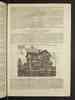
North Platte should be congratulated on the possession of a citizen whose prominence of position is not bounded by his township, his country, or his State, but whose name is a household word, whose pictures are familiar to, and whose character is known, not only throughout the nation, but has adorned pages, and interested the readers, of foreign works and publications. We allude to our fellow-citizen, Hon. W. F. Cody, whose sobriquet of "Buffalo Bill" represents a popularity only bounded by the area of American territory, and to which we, who live by his own fireside, may testify his worthy possession and to the modesty of its wearing. His late return from a successful presentation to the East of some of the animated daily scenes and incidents that go to form the passing history of "The Wild West" should be noted, as are events of importance, as it marks a new era in the history of amusements: that for originality, adherence to truth in "holding the mirror up to nature," and a fidelity to fact that is the "true aim of art." The reception accorded to his "show that is not a show but an Illustration," in the cultured cities of the East, notably Boston, Chicago, Newport, New York, Philadelphia, Cincinnati, and Cleveland, must be gratifying to all in North Platte, in fact, in Nebraska, where, in the incipiency of the scheme, over a year ago, he demonstrated by courage, pluck, and perseverance, its feasibility by its introduction in the festivities of our national birthday celebration, and on the following natal day presented it on the shores of the Atlantic, to the plaudits of over 25,000 delighted Bostonians. The magnitude of the undertaking, the minutia necessary to organizing, the bringing together from all points the best marksmen in the world, securing admirable and fitting representatives of the cattle trade, getting wild buffalo, elk, steers, mules, ponies, specimens of the red terrors of the prairie, and other features of interest, known only to the pampas of the West, necessitating special trains of cars for transportation, and driving the strange cavalcade through confined Washington street, Boston, in six weeks after leaving the Platte, was an accomplishment that stamps Cody as a wonder in energy, and gained for him the admiration and encomiums from the entire press of the East, recognition from the elite of American society, encouragement from representatives of education, and the endorsement of his methods by the S. P. C. A. and its noted president, Professor Henry Bergh. -- North Platte Telegraph.
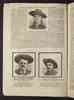
10
"THE COWBOY KID" - The Boy Marksman.
Johnnie Baker was born at O'Fallan's Bluffs, on the banks of the South Platte river, in Western Nebraska, in the year 1870. His father is the well-known "Old Lew Baker, the ranchman," and was the owner of Lew Baker's O'Fallon's Bluff Ranch, in its day an important land-mark. This place was one of the most noted on the great overland trail, - the scenes, incidents, Indian attacks, etc., belonging to exhaustive pages in the early history of that, in old times, exposed and dangerous section. Here Johnnie's babyhood was passed in unconscious proximity to dangers, seldom courted by the most sturdy, and his first "bug-a-boo" was not of the maternal Imagining, but an existing fact, continually threatening, in the shape of the heartless savage Sioux. Cradled amid such pioneer surroundings, and dandled on the knees of all the most celebrated frontiermen, the genuine old buckskin trappers, -- the first frontier invaders, -- his childhood witnessed the declining glories of the buffalo-hunters' paradise (it being the heart of their domain), and the advent of his superior, "the long horn of Texas," and his necessary companion, "The Cowboy."
The appearance of these brave, generous, free-hearted, self-sacrificing, rough riders of the Plains, literally living in the saddle, enduring exposure, hunger, risk of health and life as a duty to the employer, gave him his first communion with society beyond the sod-cabin threshold, and impressed his mind, as well as directed his aspirations, to an emulation of the manly qualities necessary to be ranked a true American Cowboy. Under the circumstances, what better tutors? and as a result who so qualified, who so fit, to be presented as the juvenile representative of the fast-fading frontier, than Johnnie Baker, the Cowboy Kid?
When the Pony Express, the Stage Coach, and the wagon-trains were supplanted by the steam-horse, Baker's station became useless, and "Old Lew" moved bag and baggage to North Platte, a little town of magical railroad growth. Here he built a fine house, which became the headquarters of the "old-timers," and many a tender-foot can remember the thrilling incidents related of "life on the trail," -- a life that now belongs alone to history and to romance, -- while Old Lew dispensed hospitality like a prince. But the ways of "city life," a too-big heart, of which the "shiftless, genial affinities" and rounders took due advantage, caused his former prosperity to be a remembrance only, and Johnie to work manfully, for one of his age, to lend a helping hand. Perfectly at home in the saddle, he was never content unless with some Cowboy outfit, or at Mr. Cody's (whose homestead, extensive horse and cattle ranches, are near), where his active spirit found congenial associations until he became recognized as "Buffalo Bill's boy." In the winter months he occasionally went to school, and being an apt scholar, has a fair education. Mr. Cody, on organizing his distinctively American exhibition to illustrate truthfully life in the far West, with the aid of only genuine characters to portray scenes in which they have figured, could not leave little Johnnie out -- for who more to "the manor born," and entitled to a place? The frontier answers, none. He can be seen every day with the Wild West, mounted on his fiery little mustang, riding, roping, shooting, -- repeating on the mimic scene his own experience, and the boyhood life of his elder, more famed associates, and any boy of his own age who can excel him shooting, riding, and lassoing, can "break every man in the outfit," as there are none who will not risk their pile on "THE COWBOY KID."
Major FRANK J. NORTH, THE WHITE CHIEF OF THE PAWNEES, Died 14th March, 1885.
A man whose honor was "the finest sense Of justice which the human mind can frame, Intent each lurking frailty to disclaim And guard the way of life from all offense."
Capt. D. L. PAYNE, THE CIMARRON SCOUT AND OKLAHOMA RAIDER, Died 28th November, 1884.
His house was known to all the vagrant train ; He chid their wanderings, but relieved their pain ; The long-remembered beggar was his guest, Whose beard descending, swept his aged breast.