
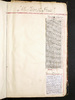
Page 1
New York Press
Daily News
AMUSEMENTS.
WINDSOR THEATER.
It is encouraging to the frequenters of our east side theaters, where we have so magnificent a temple of the drama as that with the above title, to recognize the positive improvements which theatrical representations have recently undergone in this elegant and spacious establishment. We had hardly recorded the clever representation of "A Celebrated Case," with a cast of signal excellence, when we were attracted to the first production in the same theater of a drama written by Mr. John A. Stevens, one of its managers, entitled "The Prairie Waif," and prepared expressly for exhibition by the new dramatic combination organized by Buffalo Bill. The title is an expressive one, and suggests the story on which it is founded, as well as the character of the artists engaged in its performance. It manifests also an improvement in the taste of the chief actor, and a disposition to make the east side theaters consonant with the desires of the people who frequent them, and who would become more numerous as the character of the plays represented in them acquired additional literary and dramatic merit. In "The Prairie Waif" we have a well-digested plot and an exceptional list of entertaining and talented artists. Mr. Cody, who prides himself in his accepted name of Buffalo Bill, assumes the chief character, and does so with a full recognition of its stage demands. His style of acting has been conformed to a better model, and he has selected for his company artists who are mindful of the public demands for clever acting. His elocution is more comformable to good taste, and his stage associates have been chosen for their personal qualifications as well as for their dramatic experience and skill. In "The Prairie Waif" we have several artists who are worthy of name, and whose noviciate has doubtless been perfected in the school which introduced the thrilling drama of "The Danites" to theatrical consideration. Of these we may mention as worthy of note R. C. White, Harry Clifton and G. T. James, who have made that drama their model for imitation. A pretty and interesting young lady of no common pretentions to both beauty and talent, named Miss Lizzie Fletcher, assumes the responsibility of representing Onita, the heroine of the play, while the comedy part is judiciously assigned to Miss Connie Thompson, who may be said to have been almost literally born on the stage, and is the daughter of parents who were at one time noted as talented artists, both in this city and in some of our larger Western theatrical towns. In the selection of this drama its comedy necessities have been liberally supplied by the engagement of Mr. Jule Keen, who is assigned to the low comedy dialect part of Hans, in which Miss Connie Thompson plays the opposite character of Sadie. These are the main characters who appear conspicuously in the plot of the drama, and who contribute their by no means unwelcome aid to render it an exciting and impressive entertainment. Mr. Cody's participation in the performance deserves more than mere passing mention. He has become an actor who has learnt the valuable secret of repose, and has cultivated an elocution which is devoid of the bombast so peculiar to artists of limited experience. The story of the play is especially sympathetic and picturesque, and the scenes are surrounded by an atmosphere of romance that adds to its effectiveness; while Mr. Cody does not fail to avail himself of the use of accomplishments as a rifle shot, which imparts an additional interest to the stirring incidents of the representation. The lighter portions of the performance are made especially amusing by the comic humor of Mr. Keen and Miss Connie Thompson, the latter of whom adds several comic songs to her repertoire, and sings them with humor and spirit. As Mr. Cody's benfit will take place here to-morrow night, an opportunity will be afforded the numerous frequenters of the house to pay him such a professional compliment as he justly deserves.
Evening Telegram
Windsor Theatre--"The Prairie Waif."
Buffalo Bill made a triumphant debut in a new play entitled the "Prairie Waif," which was produced for the first time at the Windsor Theatre last night. It was written especially for him by Mr. John A Stevens, and is one of the best of that kind of lurid Western blood and thunder drama we have seen for sometime. Buffalo Bill, of course, was the central figure, and deservedly obtained the recognition of the large audience present. His sharp-shooting was very good, and his acting was vigorous and natural. By the way, it is but just to say of this Western hero that he has wonderfully improved as an actor. Some of the points he made last night were effective and artistic. Buffalo Bill will do well in a first class Western drama. He was ably supported by the following ladies and gentlemen, and the management put the piece well on the stage:-- Buffalo Bill, Hon. W. F. Cody; Mark Stanley, R. C. White; Jim Hardie, a Danite, Harry Clifton; Jack Hardie. a Danite, George T. James; Hans. Jule Keen; Captain Russell, C. Wilson Charles; General Brown, Ralph Delmore; E. Overton, a sutler, Robert Neil; Lone Deer, William Wright; Major Saunders, Harry Irving; Yellow Hand, Cheyenne chief, Charles Vedder; Lieutenant White, E. Booth; Jack Cass, Jerry; Onita, Miss Lizzie Fletcher; Sadie, Miss Connie Thompson. Miss Lizzie Fletcher and Miss Connie Thompson deserve special mention.

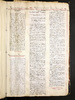
Page 3
Milwaukee Chronicle AMUSEMENTS. AT THE ACADEMY Last evening at the Academy of Music the Buffalo Bill combination presented the popular drama entitled, "Prairie Waif" or "a story of the far west," to an immense audience, the house being packed from parquette to gallery and even standing room being at a premium. This troupe is one of the most popular traveling, and the play one of the best border dramas ever placed upon the stage. It is different from those presented here before by the same company from the absence of vulgar expressions in it. The plot is simple, yet very instructive, interesting, and laughable. Onita, a little praire flower, is captured by the redskins and Mormons, and after ten years time, is discovered by Buffalo Bill, rescued and taken back to her father, after thrilling skirmishes and desperate encounters. Buffalo Bill of course, is the central figure, and deservedly obtained the applause of the large audience present. His sharp shooting was excellent and his acting vigorous and natural. Some of the points he made last night were very effective and artistic and it is but just to say that he has wonderfully improved as an actor, and is now the champion frontier character of the stage. Mark Stanley, and also Jim and Jack Hardy were well represeted. Hans, Old Dutch personified, "takes the cake." This character is depicted by Jule Keene who is one of the best Dutch comedians in this country, and provoked continual meriment throughout. Onita, the flower of the occasion, was represented by Miss Lizzie Fletcher, who won the respect and admiration of the entire audience, and is a firs class actress. The part of Sadie, was well taken by Miss Connie Thompson. To-night will conclude this successful engagement and doubtless the house will be filied.
A demonstrative audience last evening completely filled the Academy of Music on the opening night of Buffalo Bill's combination. The manner in which the drama of "Pairie Waif" was placed on the boards more than fulfilled the expectations of the audience, which testified its appreciation of the many thrilling scenes with which this play abounds, by frequent , and most hearty applause. The leading role of "Buffalo Bill," by the Hon. Win. F. Cody, was eminently successful, if the frequent bursts of applause with which he is greeted by any criterion. The rendition of the character of "Onita," the heroine and "Prairie Waif," by Miss Lizzie Fletcher was exceptionably good, as may also be said of the "Sadie" of Miss Connie Thompson, both of whom did full justice to their parts. The irrpressible "Hans," by Jule Keen, produced the most excessive laughter, particularly in the scene in which he exhibits the most self-sufficient complacency on being rescued from death by a blood thirsty Indian. Harry Clifton and George T. James, as the Danities, are also deserving of mention. The Mark Stanley, of R. C. White; the Gen. Brown of Robert Neill; the Lone Deer of William Wright, and the Yellow Hand, of Harry Melmer, were each portrayed with the faithfulness intended by the author of the play. One of the chief attractions of the evening was the fine exhibition of markmanship by Buffalo Bill, in which the many difficult feats performed drew forth from the audience many marked tokens of appreciation. The war dance of the Indians was given with terrible zest, and was followed by the medicine dance, none the less weird than the other distorted attitudes. Altogether the performance was well appreciated by the audience. The matinee this afternoon was also attended with a large and well pleased audience. Those who desire to see a play of sensational and romantic scenes, mingled with not a little of genuine fun, would do well to attend the last performance of Buffalo Bill to-night.
BUFFALO BILL'S BLARNEY. A SENTINEL SCALPER WITH THE SCOUT AND HIS BIG INDIANS.
A HAPPY RECOGNITION PRESERVES HIS REMAINING HAIR-- CODY'S OPINION OF THE ARMY AND THE THIEVING AGENTS-- MISUSED REDSKINS-- SITTING BULL AND CAPT. JACK-- ANOTHER INDIAN WAR INEVITABLE.
According to the bills, "Hon. W. F. Cody" has been playing at the Academy of Music for two nights and a matinee in a grand spectacular sort of drama, in which "Buffalo Bill" was the hero, and which "Buffalo Bill" was the hero, and which is replete with stage thunder, red fire, scalp dances and Cheyenne warriors. Buffalo Bill, being none other than Mr. Cody himself, is well known as a frontiersman, scout and Indian slayer, and the idea suggested itself that perhaps some information of interest concerning the vexed Indian problem could be obtained from him. Accordingly, a bald- headed member of The Sentinel's staff was detailed to interview him, being convinced that by reason of his barrenness he could face the savage warriors with impunity. At the close of the matinee, yesterday, the reporter in question waited in the hall-way for an introduction to the presence of the great scout of the western wilds. Mr. Cody was
Washing Off His War Paint when the b.h. reporter timidly rapped at the door of his dressing room. A remarkably savage warrior pulled the door partially ajar and in choice Cheyenne inquired: "Well, now, what's the matter with you?" "A reporter would like to interview Mr. Cody." Mr. Cody appeared, slightly disarranged, and begged a few moments' time to arrange his toilet. Meantime, the painted savage was closely scanning the reporter's features, as if in search of some strawberry mark. At last a broad smile illuminated his swarthy face and he said: "Hallo, old man! I haven't seen you before since the fire. Come in!" Feeling that the remnant of is scalp was safe, the reporter entered, and the wild warior introduced him to the scout of the westen wilds, who received him a cordial greeting, and at once asked after his friend Capt. Charley King, late adjutant of the Fifth United States Cavalry.
The reporter informed Mr. Cody that Capt. King was now at the State University at Madison, employed in teaching the young idea how to shoot according to the practise regulations of the amy.
"I should like to see Charley," said Buffalo Bill. "He is a brave man and a splendid soldier. He was present at my killing of Yellow Hand, the Cheyenne Chief, which we have introduced in our play. He was
A Splendid Little Officer, brave as a lion. Always volunteering for posts of danger, and always ready to go to the front."
By this time Mr. Cody was in his civilized costume, and the reporter looked him over. Tall, straight as an arrow, handsome in feature and pleasing in address, he is the idea of physial manhood, and his conversation is much more easy and fluent than one would suppose possible. Taking a seat, he signified his readiness to be interviewed, and the reporter proceeded:
"Mr. Cody, do you know anything about Ouray's successor?"
"No; I don't even know who he is. I have paid no attention to the Utes lately. I understand Ouray is dead, and I know nothing later."
"You are familiar with the Utes, are you not?"
"Not so much so as I am with the Cheyennes, Arapahoes and Sioux. At the late Ute war, however, I was the first one Gen. Sheridan telegraphed to, to go forward as scout. I have been a guide in the Department of the Platte for eighteen years. I was in fifty-two fights in which the Fifth Cavalry, Capt. King's regiment, were engaged. King, however, was away much of that time, on detached service."
"Are you familiar with Ute character?"
"The Indians are all about the same in character. I think they have been badly used. I have led the army against them as a scout, but always with regret. They have their side of the story. For honesty and virtue, I think the Indians are ahead of the whites. They have been ROBBED BY THIEVING AGENTS, ever since Grant's administration. I hope for a change in the Indian policy, with a change of administration, which I think sure to come. For a hundred years the government has been trying to find out what to do with the Indians, and they don't know now. I never knew a treaty with them but what was first broken by the whites. You saw the dispatch this morning about Capt. Payne? I skirmished with him for years. He wanted me to go with him into the Indian Territory, but I thought it was wrong. We have no right to take their lands away without pay."
"What is your idea about turning them over to the War Department?"
"It would do with some. With others it would not. Those self-sustaining Indians should be allowed the same privileges as the whites, and treated as well, so long as they behave themselves. They should have the same laws. You can't drive a wild Indian into civilization. They must be led into it.
THE UTE WAR
was brought on by the whites. The miners went into their reservations because there was gold there. Some Indians were killed and some whites. Then they called for troops and Thornburg came with his men--and got licked. They say Indians are treacherous. If they get away with the white officers I think they are good soldiers. They never got ahead of me by jumping out from behind rocks. I think Capt. Jack the general in America. With seventy-five men he kept a whole army back for forty-seven days.
"Do you think the Utes any more treacherous than the balance?"
"No, I do not. Nor any more than the whites. Where is the white man who would not fight if everything was taken away from him? I'm dog-goned if I wouldn't. Give every man a show. They were here first, and have a better right here than we have."
"Do you know Sitting Bull, Mr. Cody?"
"I knew him when I was a boy. Of his recent movements I know nothing except through the press. I have not seen him for many years."
"Is he, as report says, an educated man?"
'No, sir! He can't speak a word of English. Do you know how he got his name? The Indians take their names from some transaction in their lives. Well, one time he shot a buffalo in the loins, and it fell on it haunches. He mounted its back, and thus got
THE NAME OF SITTING BULL."
"Is he intelligent?"
"He is a great warrior. He handles his men well and has a thorough knowledge of the country."
"What do you think of the future of the Sioux?"
"I think they will all drift back again."
"Do you think Sitting Bull will ever become civilized?"
"I can't tell. He says he will never surrender, but others have said so and still have given up. Do you know, I think there will be another general Indian war before this thing is settled. There are a great many dissatisfied Indians."
"Do you think the army large enough for such an emergency?"
"Oh, yes! The standing army might be larger, but the militia system is growing so that in a short time a magnificent army could be raised. They are all learning to shoot, too. Another war, and the privates would pretty much all know which end of the gun goes off."
"You are confident
THERE WILL BE ANOTHER WAR?"
"Oh, yes. And they will make it warm, too. The Indians are all well armed, and, according to the old adage, they believe 'in time of peace prepare for war.' They are all the time hiding away ammunition."
"Would you turn out, in such an event, if called on?
"Oh I suppose so; but it would be with regret. You see, my own home would be in danger. Dakota, Wyoming, and northwesten Nebraska would suffer badly. There are many Sioux there."
Mr. Cody then related instances of thieving on the part of agents, that had come within his knowledge, asserting that by giving the War Department control of the uncivilized savages this sort of thing would stop.
Anybody who imagines Buffalo Bill to be no more than a howling terror of the plains makes a mistake.
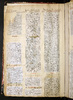
Page 4
[Paper is ripped in half for the first paragraph]
Buffalo Bill is, of course, the central figure in the play, and like all leading characters in such plays he did his part to perfection. Aside from his admirable physique and handsome person he possesses very fair dramatic qualities, all of which he brings into service. His ability as a rifle shot has passed into a proverb, therefore nothing need be said of that part of the performance. But there was another person in the play, Onita (Miss Lizzie Fletcher), who charmed the audience by her readings and the excellence of her acting in the difficult part assigned to her. Harry Clifton and Geo. T. James, as the Danites, and C. W. Charles, as Capt. Russell, were also well up in their parts. The play as a whole was pleasing, but not in any sense above the average of plays of its class.
Buffalo Bill Last Night. We didn't expect to see so good a performance as we did at Rouse's Hall last night. Buffalo Bill never before was so well equipped to do his many admirers justice. His support is first-class throughout, and his play is agreeable strong. One particularly pleasing feature of the piece is a seeming lack of blood and thunder, and Buffalo Bill will doubtless win friends on this account, besides occupying a higher place in the profession. Oneta was very well rendered, indeed, by the pretty little Miss Lizzie Fletcher, while Sadie, Captain Russel, Hans and the other donkey, proved entertaining and fine. "The 'Prairie Waif'" is a good play, and is replete with strong situations and dramatic effects. Buffalo Bill cannot help making a success of it, and if he ever comes to Peoria again the people will substantiate the sentiment more emphatically than words.
POPE'S-- Buffalo Bill and his new play, The Prairie Waif, are the attractions at this theater. The engangement opened last night very auspiciously, the drama, the star and the supporting company-- including the hair-lifting Cheyenne Indians-- seeming to fully please the large audience. The play is of the thrilling border type that fills the atmosphere with gunpowder smoke, and calls on the imagination to revel in scenes of gore. It has many remarkable and picturesque scenes, in which the hero scout is the noble central figure; and throughout the four acts of which it is constituted teaches the strength of right and the beauty of a brave and dauntless spirit, besides throwing a charm of romance and poetry around the western hills and prairies, and in addition giving Buffalo Bill as opportunity to do some fancy rifle shooting, and knock over painted savages with the ease and rapidity with which civilizen individuals knock down ten-pins, Buffalo Bill does his work well, and the company acquit themselves with agreeable credit. Miss Lizzie Fletche plays Onita, the Prairie Waif, and Miss Connie Thompson, Sadie. Buffalo Bill every night.
GRAND OPERA HOUSE. There was a fair-sized audience at this theatre last night to greet the first appearance of "Buffalo Bill" in his new drama entitled the "Prairie Waif." While not possessing the strength of plot which characterizes "Unknown" this play abouds in thrilling situations and gives ample opportunity for the different members of the company to display their specialities. "Buffalo Bill" himelf. of course, is the centre of attraction, and he is ably assisted by the Cheyenne Indians. There is a good deal of pathos about the piece and nothing at all objectionable. The "Prairie Waif" will occupy the boards agian to-night.
Buffalo Bill. At the appearance of the company of which the above noted character is manager and chief attraction, at the opera house last evening, there was a very fair dress circle audience and a particularly good gallery crowd. "The boys" were out in force, and their continuous applause testified that they were well pleased. In this respect the entire audience, went a step further than is common with with La Crosse people, and gave the more noticeable situations and speeches very heart praise. The play could not avoid being a trifle gory, and attended throughout with the incense of burned powder, from the location of the scenes and the character of events depicted; but this was what the audience expected and wanted, and there was a liberal seasoning of love-making, fun, and fine sentiment to make all savory to the appetite, and on the whole agreeable. But two ladies are required, Onita the Prairie Waif and Sadie the smart utility woman, without whom no Lizzie Fletcher, in the former character, excellently sustained the difficulties of an exacting role, wherein the author was continually forgetting that his heroine was a child of the forest, and ought not to be familiar with the ten thousand stage phrazes of which the familiar society drama is constructed. She made the most of the situation and pleased the audience. Miss Connie Thompson, as Sadie, was, if she will forgive the phraze "immense" and her love passage with Hans on the one hand and the Irish captain on the other, were generally funny. Both of of these last mentioned characters are worthy of special mention. Jule Keen is a funny fellow in his speech, his make-up and actions and gave the audience many a good laugh. Mr. White as Mark Stanley is deserving praise for a most excellent representation of a difficult character. Messrs. White and Clifton of the Danites were also excellent. Mr. Cody is his own distinctive character of "Buffalo Bill" would have attracted applause from the audience at every apperance, on account of his striking appearance, on account of his striking appearance and the general interest felt in him, even had he not deserved it by a spirited and stirring presentation of the character so familiar to him of the scout and hunter. The accessories of pretty scenery, fine costumes and a trio of Indians, whose genuineness is beyond question, completes an entertainment which the public will make no mistake in patronizing liberally.
BUFFALO BILL And his company in "The Prairie Waif," had a tremendous house Thursday night, and gave a performance that was cheered and applauded at almost every passage. Where the expressions of approval were so marked and vociferous on the part of the audience, it scarcely remains necessary for a newspaper to say anything one way or another as to the merits of the performances. "Bill" may be certain of a house every time he may choose to come to Peoria.
Pope's. This evening Buffalo Bill (Hon. W. F. Cody) commences a week's engagement in John A. Stevens' new play "The Prairie Waif." In addition to the thrilling melodramatic effects there will be a band of genuine Cheyenne Indians. Buffalo Bill is sure to draw the rural visitors.
Buffalo Bill at the Opera House To Night Buffalo Bill and his company of 24 artists arrived here from Milwaukee on the noon train in their special car. They will appear at the Opera House this evening in the new drama entitled the Prairie Waif, written expressly for him and taken from scenes in real life-- the scene of the second act being a fac simile of his home in Utah. The entire scenery for the piece is from Leary & Co., New York, which the company bring with him. Buffalo Bill has many old friends in this city among the army officers, among whom he claims Gen. Terry and Geo. Gibbons, Capt. King and others of the staff who were in command of the gallant Fifth cavalry during the campaign of the 1876 on the frontier, at which time Mr. Cody (Buffalo Bill) was the chief of scouts. It was during that year that the well remembered Custer massacre occurred, of which Buffalo Bill was the first to bring the dispatches, and from which the news spread over the entire country as fast as telegraph wires could work. Also in that memorable campaign Buffalo Bill killed the famous Indian warrior, Yellow Hand, during the fight of the War Bonnet River. Capt. King, speaking of Buffalo Bill, says: "During the campaign that followed a dozen articles might be written. I remember well one fight of the 17th of July, on the War Bonnet River. I see Bill closing on a superbly accoutred warrior. It is the work of a moment; the Indian has fired and missed; Cody's bullet has torn through the Indian's leg into his horse's heart, and they tumble into a confused heap on the prairie; the chief struggles to his feet for another shot, but Bill's second bullet crashes through his brain and the famous chief Yellow Hand drops lifeless in his tracks, and Buffalo Bill cries, "The first scalp for Custer." The Fifth had a genuine affection for Bill. He was a tried and true comrade, one who for cool daring and judgement had no superior. He was a beautiful horseman, an unrivalled shot, and as a scout was unequalled. We have tried them all; our western scouts are all noted men in their way. But Buffalo Bill was the Paragon.
For this evening Mr. Cody (Buffalo Bill) has tendered the boxes of the opera house to Gen. Terry and Gen. Gibbon and staff, and Capt. King, who is [?]tationed at Madison and comes here to day especially to see his friend.
The entire company will be at their best this evening, and without a doubt the performance will be the event of the season. Their engagment at the Academy of Music, Milwaukee, Tuesday and Wednesday of this week was the largest receipts that have been played in the house for years. On account of the late arrival of the company in town today and the long and tedious ride from Milwaukee, the parade was impossibly.
Bill's rifle practice to-night on the stage will be worthy of witnessing, to say nothing of the lively drama that will render it picturesque.
BUFFALO BILL. A good audience greeted the Buffalo Bill Company at the Opera House Saturday evening, but the audience was no more than the play and the company deserved. "The Prairie Waif" is the best play that has been put on the boards by the renowned Indian fighter, being filled with thrilling incidents and flashes of humor. Mr. Cody appears to good advantage as the "Buffalo Bill" of the play, and his exhibitions of fine shooting were received with applause. "Oneta," the Prairie Waif, was the part taken by Miss Lizzie Fletcher, in which she displayed many fine qualities as an actress. Miss Connie Thompson did "Sadie" in a vivacious manner, eliciting applause. Jule keene as "Hans" and the Jack-ax, Jerry, kept the house in an uproar of good humor. The entire support was good, every one of them being actors of high order. The scenic effects were realistic, and the wild western scenes were shockingly vivid. The company is sure of a warm reception should it return to Springfield.
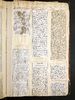
Page 5
At this place Mr. William Cody is playing a star engagement as the personal hero of a four-act drama, written for him by Mr. John A. Stevens, entitled "The Prairie Waif." There is rather more body, coherence, and character to this piece than is usual with the border dramas in which Buffalo Bill has erstwhile displayed his agile form and flowing hair. His heroic speeches, noble acts, fearless adventures, and crack-shots arouse the packed gallery to the very fever of enthusiasm and win for himself tumults of applause. He
Miss Lizzie Fletcher and Miss Connie Thompson are good in their parts, the latter being a sprightly soubrette of a very agreeable manner. Mr. Jule Keen, but for a cold, gives a good bit of character performance as Hans, a German suitor of Sadie, and Mr. Charles makes a roaring, good-natured offset as the Irish lover of the same fortunate maid. The other parts are fairly well cast, so that the support may bereckoned good throughout. The piece is put on the stage in a commendable way, the sets and scenes being very good. It is unneccessary to detail the plot of the piece minutley. These plays invariably have the same adjuncts and accessories. This, however, introduces a girl who was stolen from her parents at an early age, and who happens [word] an heiress. This fact some knavish Mormons discover, and attempt to improve by getting possession of the girl. Buffalo Bill figures as the rescuer and defender, and is rewarded by the hand and heart of the enraptured miss. The best of results follow, as a matter of courses, the waif being eventually restored to civilization and her father. Large audiences nightly.
Buffalo Bill's Best. The Buffalo Bill company played to a good house, here last night, though not what it should have been, according to the merits of the actors and play. However, it was better than most companies get at the intial performance.
The play throughout was fall of interest, and though the scene was laid in the far west, there was nothing rough about it. It is a play much like Frank Mayo's "Davy Crockett," but far more pleasing; the audience roaring and cheering a full accompaniment to the play from beginning to end.
Mr. Cody is a refined actor and a magnificent type of manhood. His features and voice are more like those of a man raised in a college, than one reared among the wilds of the western country. The play, having been written for him, gives him an opportunity to show off his talents to advantage.
Miss Fletcher, who personated Onita, has for years been a favorite in the theatres where she has taken the part of the leading lady, and is making new friends throughout the country. Her every action bespeak for her the true title of a lady.
Jule Keen, as Hans, vas goot. No better German comedian has been here for years. Miss Thompson was just the lady to be on the stage with Hans. The two make a team hard to beat.
There is no need of striving to speak of all the good characters; as we would then have to speak of them all. The company is well selected and we hope that Buffalo Bill will give Aurora another call and reap the harvest he will have awaiting him after last night's performance. His custom is to visit towns where he is known once a year; always with a good company and good play. In that way he gains the confidence of the people and they pack his houses for him. Aurora can hereafter be counted among the latter.
The magnificent orchestra is a big help.
BUFFALO BILL. His Reception at Union Hall Last Evening a Fine One. The Buffalo Bill combination was again welcomed to our city last evening by one of the largest audiences that has gathered in Union hall since his last apperance in Burlington. The benches fairly groaned under the weight of the crowd, while the old gallery creaked like a tavern sign-- even standing room was at a premium. In fact, it was so close that many of the boys had to go down stairs between the acts. But then Buffalo Bill always depends on Burlington for a full eight hundred majority. The present combination is really an improvement on the troupe traveling last season, and the play, a five act drama entitled, "Prairie Waif," or a "Story of the Far West," gave general satisfaction. It is one of the best border dramas ever presented here, being a simple but interesting plot, but each scene is full of thrilling encounters and laughable scenes characteristic of life in the [word] west. The stage appointments are good, although displayed at a disadvantage in Union hall. Of course a girl is captured by the Indians, and after much planing, and following trails though the wilderness, considerable "injun" fighting and daredevil skirmishes the maiden is rescued; falls in love with the hero who takes her from the clutches of the red skins, and then every thing is lovely-- until she is captured again the next night. Buffalo Bill is the central figure and should be, for his acting is not only good, but his fancy shooting is fine. Jules Keen, as Hans the Dutchman, is simply immense. Miss Maggie Fletcher as Onita, shows good training as an actress in emotional scenes. Sadie is well sustained by Miss CorrieThompson. We have not the space to mention all, suffice it to say that the persons named have good support. The play is free from vulgar expressions which alone commends it. No doubt Buffalo Bill will get a good house wherever he goes, at least he will have no difficulty getting one when he comes to Burlington.
BUFFALO BILL. Chatterton's Opera House. The Opera House was well filled on Saturday night with a highly amused audience at the entertainment of the only re-enactor of his own life scenes now on the stage. Much of the play of "Prairie Waif" is founded on the daring adventures, narrow escapes, and risky expeditions passed through by the adventurous William F. Cody, and through which he gained the title of "Buffalo Bill." There is no question that "Bill" has been improving in stageisms, and that very much of the amatuer style of his stage talk has worn away, and his attitudes are painless in comparison to the "Buffalo Bill" of a few years ago. "Onita," the Waif, will compare favorably with many more pretentious ladies in the exhibition of the emotional, while her natural ease of movement and adaptation to the various conditions of life through which she passes from the captive in the wilderness to the womanly grace she gave her noble rescuer, in the last act is superior acting to many stars. The "Sadie" of Miss Thompson, and the "Hans" of Jule Keen, kept the audience in a roar of laughter, while both in song and dance they displayed considerable artistic merit. The "Ingines" were good, never missing a step in their dance, a note in their song, a tap of their "tom tom," nor a shake of their bean gourd. The balance of the company sustained their parts well, and in Jack Cass' case most excellently. He walked the stage like a thing of life, and seemed to enjoy it about as well as those for whom he furnished the fun.
Buffalo Bill (Hon. W. F. Cody.) A large and appreciative audience assembled at the opera house last evening to see Buffalo Bill and his company in the new drama, "The Prairie Waif," and judging from the many outbursts of applause, there was not one among the vast crowd but what was more than satisfied. The play, without any exception, is the best he has ever had, and his support was excellent, far exceeding his former efforts. The leading role of Buffalo Bill by Hon. W. F. Cody, was eminently successful. He has much improved as an actor, and some of the points he made would have done credit to the best of the profession. Oneita, the heroine and Prairie Waif, by Miss Lizzie Fletcher, was exceptionally good, who fairly charmed the audience by her splendid portrayal of the character. Leslie, by Miss Carrie Thompson, was a fine piece of acting, and her songs and dances assisted by Mr. Jule Kerne, as "Hans" the merry Dutchman, kept the audience in a roar of laughter. Harry Clifton and George T. James, as the Danites, are also deserving of mention. The "Mark Stanley" of R. G. White, the "Gen. Brown" of Robert Neill, the "Lone Deer" of William Wright and the "Yellow Hand" of Harry Melmer were each portrayed with the faithfulness intended by the author of play. One of the chief attractions of the evening was the fine exhibition of markmanship by Buffalo Bill, in which the many difficult feats performed drew forth from the audience many marked tokens of appreciation. The war dance of the Indians was given with the terrible zest, and was followed by the medicine dance, none the less weird than the other in the distorted attitudes, not forgetting the jackass (Jerry). Well, we should smile. We not only smiled but laughed, and roared until oursides ached. The manner in which the piece was placed upon the stage reflects great credit upon the company, and the fine scenic effects throughout the piece, especially the scene of the second act, which is a fac simile of Buffalo Bill's home in Utah, were excellent. The play is free from vulgar expressions, which alone commends Buffalo Bill, every year he visits us to crowded houses, and no wonder, for every time he comes he has something new, and that which excels that of his former visits. If other managers would do likewise they would surely profit by it. Buffalo Bill and company remain in town over Sunday, and are quartered at the St. Nicholas. They leave for Jacksonville on Monday by the first train, and then good-by, Buffalo Bill, until next season, when the citizens of Springfield will welcome you back, and full houses shall be yours.
BUFFALO BILL. -- Durley Hall, last evening, contained one of the largest audiences of the season to witness the performance of Buffalo Bill and his splendid company, who appeared in "The Prairie Waif," "A Story of the Far West," which in many respects was one of the best dramas of border life ever presented upon a Bloomington stage. Buffalo Bill was the principal attraction of the evening, and the character which the famous scout sustained gave the audience an insight of life upon the Western plains, and his acting was natural as well as original, a strong improvement being noticed since his last appearance in Bloomington, Mr. Cody was well supported. Onita, the little prairie flower, was represented by Miss Lizzie Fletcher, who won the admiration of the entire audience for her splendid acting.
BUFFALO BILL. The Buffalo Bill combination appeared at the Opera House last night before a large and enthusiastic audience. Buffalo Bill's new play, Prairie Waif was presented and was enthusiasticly received throughout. It may be truthfully said that the play is the best that Buffalo Bill has yet presented in Quincy. The support was excellent. The second act was made interesting by the scenery carried by the company and by the wonderful rifle shots of Buffalo Bill. The play is an excellent one of its kind and pleased the large audience. Buffalo Bill is popular in Quincy and is always sure of a large audience.