
151
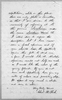
capillitium, while in this plant there are only plates or [?], so that I am driven to the necessity of referring it to the genus Secotium under the name Secotium Warnei Pk. I intend soon to repair the description but I have never seen a fresh specimen and if you should have the opportunity again this fall to send me a few I would like it. Alcoholic specimens would not help me much as I would like the colors of the young plant. If you do not have such opportunity have you any notes of colors and prevailing shape. It appears to vary much in shape and some in stem.
Very truly Yours Chas. H. Peck.
152
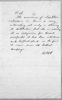
P. S. The occurrence of S[?] rubesceus in Iowa is very interesting not only in showing its distribution but also in indicating it as indigenous, for Gerard suspected it had been introduced a la ballast plants as he found it near some old ballast droppings.
C. H. P.
154
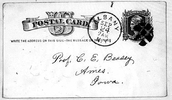
State Mu. Nat. Hist. Sept. 23d 1881
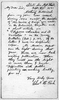
My Dear Sir:
Nothing Botanical from my pen was issued during 1880 except the decriptions of "New Species of Fungi" you mention in the Botanical Gazette and a short article on "Polyporus volvatus and its Varieties" in the Torrey Bulletin (Oct.) p. 102. Of the latter I have no duplicate copies. No Museum Report saw the light during that year. Three are now back waiting publication. When they will see the light is more than I know. Difficulties with public printing are working badly for us.
Very truly Yours
Chas. H. Peck.
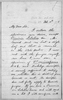
155
State Mus. Nat. Hist.
Albany, N.Y., Feb. 10th 1881
My Dear Sir:
I enclose the specimens you desire, except Puccinia Lobeliae Ger. Mr. Gerard sent me but a single leaf and that is mounted in the State Herbm. I never met with the fungus myself, nor have I ever seen a specimen of P. microsperma [B. & C.?] and Berkeley's description is scarcely sufficient to satisfy me whether this is distinct from Gerard's or not. The description does not fully apply to Gerard's fungus. If you have a Puccinia or Lobelia leaves and will send me a bit I will compare with